F1 Virtual Grand Prix Series: A Comprehensive Review of Its Challenges and Future Potential
The global pandemic of 2020 brought the world to a standstill, including the vibrant world of Formula 1. With real-world races postponed indefinitely, F1 swiftly launched the Virtual Grand Prix series, an ambitious esports initiative designed to entertain fans and keep the sport’s spirit alive. Over eight races and 240 virtual laps, this digital championship offered a unique blend of competitive sim racing and celebrity entertainment. As the series concluded, it left behind a rich tapestry of thrilling moments, frustrating setbacks, and crucial lessons for the future of Formula 1 in the virtual realm. Though it crowned an unofficial champion in Williams’ George Russell and saw Nicholas Latifi as the only driver to complete every lap, the series ultimately presented a mixed bag of success and missed opportunities.
From its inception, the Virtual Grand Prix series aimed to bridge the gap between real-world racing and the burgeoning esports community. The initial races garnered significant attention, driven by the novelty of F1 drivers competing from their homes. Fans were eager for any motorsport action, and the virtual format provided an immediate solution. However, as the series progressed, it became evident that simply replicating the F1 experience digitally was a complex challenge, fraught with technical, competitive, and engagement hurdles. This retrospective analysis delves into the series’ performance, examining what worked, what didn’t, and how Formula 1 can refine its approach to virtual racing moving forward.
The Genesis and Initial Promise of Virtual F1
Credit is undoubtedly due to Formula 1 for conceiving and launching the Virtual Grand Prix series with remarkable speed. In a period of unprecedented uncertainty, the organization acted decisively to offer fans a semblance of racing action. The inaugural race, while a somewhat chaotic affair with a sparse grid of just two current F1 drivers, nonetheless hinted at significant potential. It demonstrated the capability of F1 to adapt and innovate, leveraging its official game, F1 2019, to create an interactive experience. This early promise suggested that with refinement, the virtual series could evolve into a compelling alternative, offering unique on-track spectacles that real-world aerodynamics often prevent.
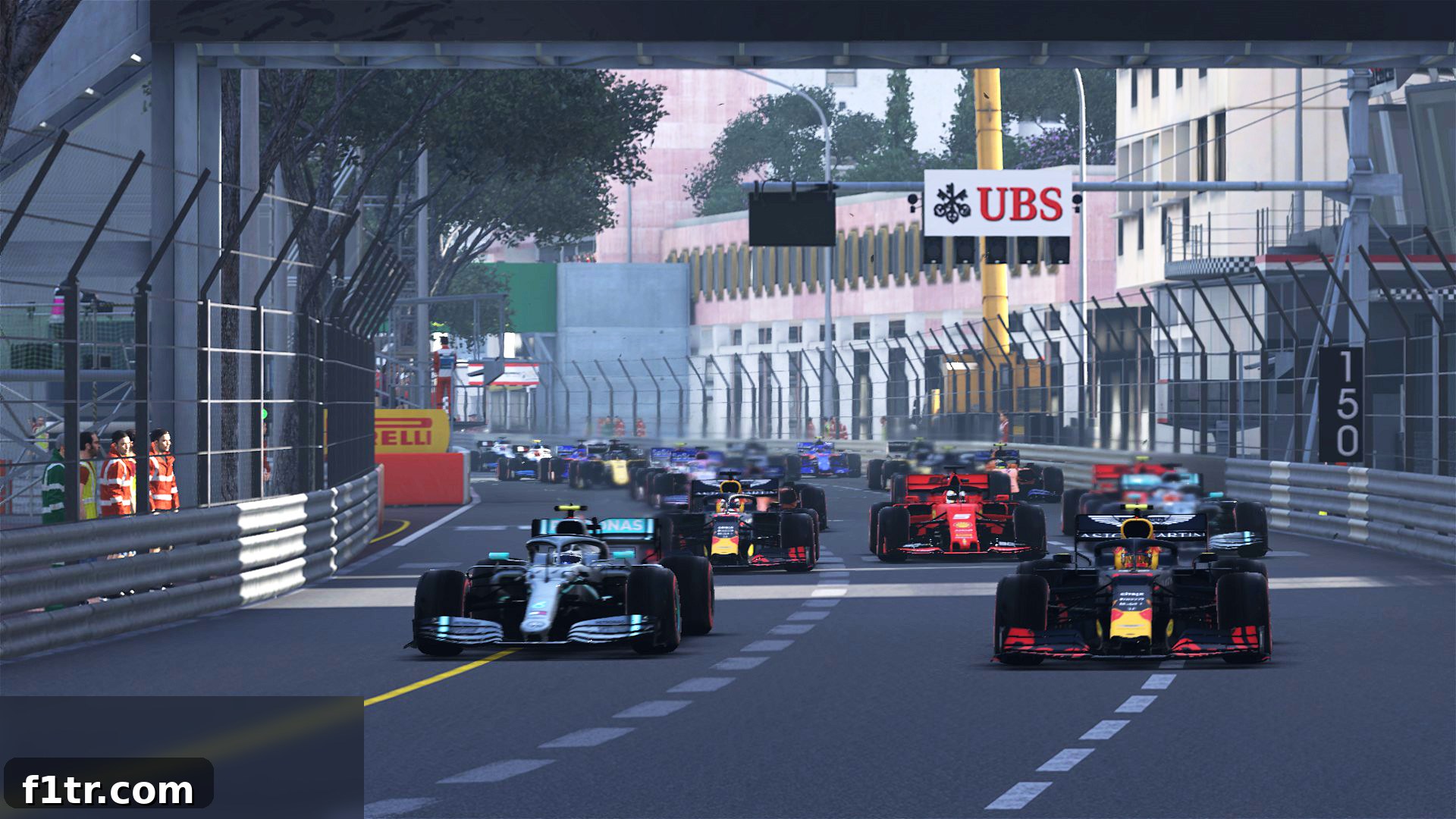
Indeed, there were moments of genuine excitement that transcended the virtual divide. The thrilling battle for the lead between Charles Leclerc and Alexander Albon at a virtual Interlagos, where they exchanged positions repeatedly with aggressive yet clean overtakes, stood out as a highlight. Such duels, often rare in modern F1 due to aero wash and DRS limitations, showcased the distinct advantages of sim racing. These moments gave fans a glimpse of pure, unadulterated racing, reminding them of the inherent thrill that drew them to the sport. However, these flashes of brilliance were often overshadowed by what many racing enthusiasts would describe as “bumper car silliness,” particularly on tracks like Monaco where damage settings were frequently disabled, leading to unrealistic and often comical collisions.
Navigating Driver Engagement and the Choice of Game
One of the most significant challenges for the F1 Virtual Grand Prix series was consistently attracting and retaining a full roster of active Formula 1 drivers. While other motorsport series, such as IndyCar, NASCAR, and Formula E, managed to rally strong participation for their respective virtual championships, F1 struggled to muster similar enthusiasm. The grid rarely featured more than eight current F1 racers, peaking at this number for the Monaco and Azerbaijan rounds. This lack of consistent top-tier driver involvement quickly became a focal point of fan criticism and a major factor in the series’ fluctuating appeal.
A primary reason cited for this participation gap was the choice of game: F1 2019. While Formula 1 is naturally committed to using its official licensed game, this decision inadvertently alienated a segment of the F1 driver community, particularly those who are avid sim racers themselves. Drivers like Max Verstappen openly stated their preference for more realistic simulation platforms such as iRacing. Romain Grosjean and Sebastian Vettel, despite investing in simulators for virtual racing, chose to compete in other series, highlighting a perceived gap in realism or competitive experience offered by the F1 game. Even star performers like Lando Norris, who initially gained significant traction through his entertaining Twitch streams during the series, candidly expressed reservations about the game’s shortcomings and opted out of the finale, citing connection issues and general dissatisfaction. This reluctance among top drivers significantly impacted the series’ credibility and competitive edge.
The reliance on F1 2019 also imposed limitations on the overall broadcast and gameplay experience. Viewers frequently noted restrictive camera angles, inconsistent feed quality, and a complete absence of in-race replays. These technical constraints often detracted from the professional presentation expected of a Formula 1 branded event, making it difficult for casual viewers to follow the action and for hardcore fans to appreciate the nuances of the virtual racing. The game’s inherent characteristics, while suitable for a mainstream gaming audience, proved less ideal for a high-stakes competitive esports series featuring real-world professionals.
The Spectator Experience: Viewership Trends and Audience Expectations
The most direct measure of the Virtual Grand Prix series’ success was its viewership, particularly the engagement on platforms like YouTube. The initial rounds enjoyed a significant “look-in” audience, with the Bahrain event attracting approximately 1.9 million viewers. This healthy initial turnout indicated a strong fan appetite for live motorsport content during the lockdown. The second race, bolstered by the addition of several new drivers, largely retained this audience, suggesting a promising start for F1’s foray into large-scale virtual events.
However, this early peak proved unsustainable. The viewership figures experienced an alarmingly steep and persistent decline, showing little sign of stabilizing. For instance, the Azerbaijan Virtual Grand Prix, a circuit known for reliably entertaining races in the real world, garnered just 444,000 views at the time of writing. The series finale saw an even sharper drop, attracting only 336,000 viewers. This significant erosion of the audience base meant that the combined viewership for the latter four races of the series was actually lower than that of the opening race alone. This trend starkly illustrated a disconnect between the series’ offerings and audience expectations.
Critical Analysis: Why the Decline in Engagement?
Numerous factors contributed to this concerning drop in viewership. A prevalent complaint among dedicated F1 fans was the series’ decision to allocate a substantial number of virtual seats to non-drivers. While the intention might have been to broaden appeal by inviting celebrities, athletes from other sports (such as football or golf), and social media influencers, this strategy ultimately backfired. Fans, particularly those tuning in for serious racing, expressed significant disappointment at the lack of a full grid composed of professional racers.
The irony was that a wealth of capable drivers from junior series, including Formula 2 and Formula 3, were readily available and eager to participate, as demonstrated by their own successful parallel virtual championships. However, these talented young drivers, who represented the future of F1, were often overlooked in favor of guest celebrities. While F1 correctly avoided inviting top-tier esports sim racers, who would likely have outclassed most real drivers (with the notable exception of George Russell), a more balanced approach involving a robust roster of current, past, and future F1-calibre drivers would have offered a more authentic and competitive proposition. Furthermore, it was particularly disappointing that despite the growing prominence of initiatives like the W Series, F1 failed to include a single female racer across its eight virtual events.
Moreover, the Virtual Grand Prix series adopted a relatively conservative approach compared to other iRacing-based series, which embraced a spirit of experimentation. The Australian Supercars series, for instance, ‘traveled’ to Silverstone and successfully attracted Max Verstappen, while IndyCar ‘returned’ to historic circuits like Motegi. NASCAR even raced on North Wilkesboro for the first time since 1996. These series capitalized on the virtual format to explore unique track and car combinations, generating fresh narratives and excitement. F1, by largely sticking to its official game and established F1 circuits, missed an opportunity to inject similar novelty and appeal. However, it is worth noting that F1 successfully avoided some of the dramatic pitfalls that befell other series, such as intentional crashes or drivers losing their real-world seats over virtual racing antics, demonstrating a more controlled and professional environment.
The Series Finale: A Disappointing End and Missed Opportunities
The series reached its peak with the Virtual Dutch Grand Prix at Interlagos, a prime example of unexpected brilliance arising from a title/venue mismatch (much like the Nürburgring hosting the Luxembourg Grand Prix). This race delivered the best virtual action F1 had produced, hinting at what could be achieved with the right circumstances. However, this high point was not sustained. The series finale unfortunately ended with George Russell’s dominant performance against a “meagre field” of real-world drivers. Only four current F1 racers showed up, falling short of the incorrectly announced five, which had included Valtteri Bottas.
This sparse attendance for the finale underscored a broader issue: a significant portion of the F1 community, both drivers and fans, had gravitated towards other virtual motorsport events. Notably, many top-tier drivers opted to compete in the Virtual Le Mans 24 Hours, a testament to the appeal of more rigorous and high-profile sim racing competitions. Pierre Gasly, in an impressive display of commitment, attempted to participate in both events concurrently but was ultimately disqualified from the Virtual Grand Prix due to an accumulation of penalties. This mass exodus of talent towards alternative virtual races strongly suggested that F1’s initial assumption – that there was a substantial audience primarily interested in watching F1 drivers race against celebrities – was fundamentally flawed. Both the dedicated audience and many real F1 drivers ultimately sought out more competitive and authentic sim racing experiences elsewhere.
Looking Ahead: The Future of F1 Esports and Virtual Racing
Despite the challenges and criticisms, it would be a significant missed opportunity if Formula 1 were to abandon its experiments with virtual races entirely. The lessons learned from the inaugural Virtual Grand Prix series are invaluable, providing a clear roadmap for future improvements. The imminent release of F1 2020, the new edition of the official game, offers a fresh start and addresses many previous concerns. According to George Russell, who extensively tested the new title, its handling model represents a “significant improvement” over the F1 2019 version, promising a more realistic and engaging driving experience.
Furthermore, F1 2020 features at least one new circuit, Zandvoort, which was scheduled to host a real-world Grand Prix in 2020 but couldn’t due to the pandemic. This presents a perfect opportunity. While the actual 2020 Dutch Grand Prix may not have taken place, a Virtual Dutch Grand Prix could be held at its correct, iconic location, showcasing the new game and satisfying fan anticipation. If Formula 1 decides to host additional virtual races, either as standalone events or as part of a new series, the strategic imperative is clear: focus on authenticity and serious competition.
The future success of F1’s virtual racing initiatives hinges on several key adjustments: prioritizing a full grid of current F1 drivers, complemented by F1 legends and promising junior talent; providing a high-quality, professional broadcast experience; and, most importantly, ensuring that the racing itself is competitive and engaging. Moving forward, the emphasis should unequivocally be on “drivers only,” allowing the true competitive spirit of Formula 1 to shine through in the virtual arena. By embracing these lessons and leveraging the improved technology of new game titles, F1’s virtual future could be as thrilling and respected as its real-world counterpart.
F1 2020: Zandvoort and Hanoi Race Footage Highlights
Note: All F1 2020 images and footage shown here depict the game in an unfinished, pre-release state.
Support Independent F1 Journalism
>> Discover how you can contribute and enjoy an ad-free experience
Related F1 Season Articles
- Grosjean to make F1 test return tomorrow for first time since Bahrain horror crash
- Pictures: Wrecked chassis from Grosjean’s Bahrain fireball crash to go on display
- Bottas vs Rosberg: Hamilton’s Mercedes team mates compared after 78 races each
- F1 revenues fell by $877 million in Covid-struck 2020 season
- Hamilton and Mercedes finally announce new deal for 2021 season
Browse all 2020 F1 season articles