Advert | Become a Supporter & go ad-free
AlphaTauri Blames F1 Tyre Rules for Gasly’s Russian GP Result Against Leclerc
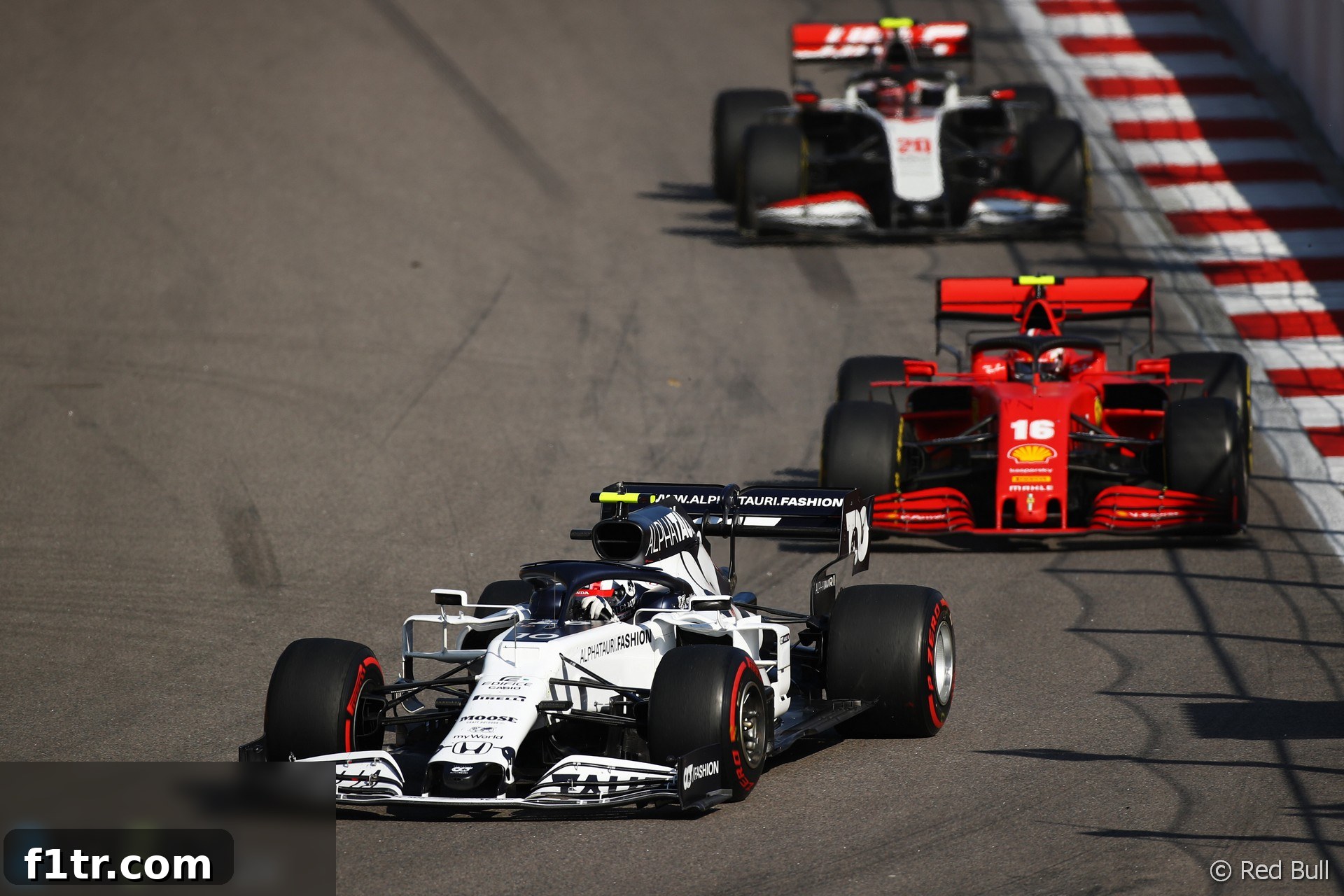
AlphaTauri team principal Franz Tost voiced his frustration following the 2020 Russian Grand Prix, asserting that Ferrari’s Charles Leclerc only managed to finish ahead of AlphaTauri driver Pierre Gasly due to restrictive Formula 1 tyre regulations. Tost argued that the mandatory use of older tyres for Q3 qualifiers placed Gasly at a significant disadvantage compared to Leclerc, who started the race on a fresh set.
The incident highlighted a critical aspect of Formula 1 strategy: the delicate balance between qualifying performance and race-day tyre choice. While Gasly demonstrated superior pace in qualifying, out-qualifying Leclerc and securing an impressive ninth spot on the grid, this very achievement became a strategic handicap once the race began.
The Q3 Tyre Rule: A Double-Edged Sword for Midfield Teams
Under the specific F1 regulations at the time, any driver reaching the third and final qualifying session (Q3) was mandated to start the Grand Prix on the set of tyres with which they achieved their fastest lap time in Q2. For Pierre Gasly, this meant lining up for the Russian Grand Prix on a set of used soft compound tyres. Soft tyres offer maximum grip and speed for qualifying but are known for their rapid degradation over a race stint, necessitating earlier pit stops.
Conversely, Charles Leclerc, who qualified 11th (promoted from 12th after Alexander Albon’s penalty) and therefore did not advance to Q3, enjoyed the strategic freedom to choose his starting tyres. Ferrari opted to equip Leclerc’s car with a brand-new set of medium compound tyres. Medium tyres are more durable than softs, allowing for longer initial stints and greater flexibility in race strategy.
“It was a distinct disadvantage to qualify ninth or tenth,” explained Tost, emphasizing the irony of strong qualifying performance leading to a compromised race strategy. “It would have been far more beneficial to finish qualifying 11th and start on the prime [medium] tyre.”
Race Day Dynamics: Tyre Strategy Dictates Outcome
The disparity in tyre choice immediately manifested on race day. Despite Gasly’s initial strong start, keeping Leclerc firmly behind him in the opening laps, the inherent limitations of his used soft tyres quickly became apparent. Gasly was forced into the pits much earlier than Leclerc to switch from the rapidly degrading softs to a more durable compound. This early stop put him into traffic, disrupting his rhythm and costing valuable track position.
Leclerc, on the other hand, masterfully managed his new medium tyres. Their superior longevity allowed him to extend his first stint significantly, running an additional 10 laps before making his mandatory pit stop. When Leclerc finally pitted, he rejoined the track a comfortable seven seconds ahead of Gasly, effectively leapfrogging the AlphaTauri driver and cementing his advantage.
Tost was unequivocal in his assessment: “Look what Leclerc did. Ferrari were objectively slower than us in terms of raw pace that weekend, but they possessed a significant strategic advantage by starting on the medium tyre. This enabled him to stay out much longer, creating a substantial gap by the time Pierre had to make his compulsory tyre change from the option [soft] to the base [medium].” He concluded, “Pierre then lost crucial time battling through traffic. This was precisely why Leclerc ultimately finished in front of us, despite our qualifying superiority.”
The Virtual Safety Car Gamble: A Strategic Miscalculation
The race threw another curveball in the form of a Virtual Safety Car (VSC) period, prompting AlphaTauri to attempt a strategic gamble with Gasly. The team saw an opportunity for what they hoped would be a “free” pit stop – a stop made under VSC conditions where the entire field significantly reduces speed, theoretically minimizing the time lost in the pits relative to rivals. The aim was to equip Gasly with fresh tyres for a late charge, capitalizing on the temporary slowdown.
However, the VSC period proved to be shorter than AlphaTauri had anticipated. As Gasly entered the pit lane, the VSC ended prematurely, meaning he lost more time than expected compared to competitors who stayed out. This unfortunate timing saw Gasly lose positions to both Alexander Albon and Lando Norris, forcing him to fight his way back through the field.
Despite the setback, Tost maintained that the VSC incident did not ultimately cost Gasly a finishing position. “We decided to pit him because it was a pit stop that, on paper, offered a minimal time penalty,” Tost explained. “Our initial estimation was that the VSC would last longer. It was only, I think, about 10 seconds, which was less than we expected. However, with the advantage of fresh tyres, Pierre was able to comfortably overtake Albon and Norris once more, eventually finishing in the position he would have occupied regardless.” This resilience demonstrated Gasly’s fighting spirit, but it underscored the challenges of real-time race strategy in F1.
Team Dynamics and Driver Performance: Gasly vs. Kvyat
Adding another layer to AlphaTauri’s race analysis was Gasly’s performance relative to his teammate, Daniil Kvyat. Kvyat, like Leclerc, had failed to reach Q3 and therefore started the race on a fresh set of tyres, enjoying the same strategic flexibility that benefited the Ferrari driver. Kvyat ultimately finished ahead of Gasly, further illustrating the impact of starting tyre choices.
When questioned about Gasly potentially closing the gap to Kvyat, Tost was realistic. “I don’t believe he could have closed the gap to Daniil,” he stated. “Daniil was comfortably in front, so we didn’t really gain anything in that intra-team battle.” However, Tost did allude to the speculative benefits of Gasly’s late-race fresh tyres, hinting at a potential advantage had a Safety Car emerged in the closing laps. “You never know, perhaps there would have been a Safety Car or similar incident in the final laps, and then he would have had new tyres, which would have been a significant advantage.” This highlights the constant strategic calculations and ‘what-if’ scenarios inherent in Formula 1.
Reflecting on F1’s Strategic Chess Game and the 2020 Season
Franz Tost’s comments from the 2020 Russian Grand Prix encapsulate the intricate strategic chess game that is Formula 1. The Q3 tyre rule, designed to add an extra layer of strategic complexity and potentially mix up the grid, often created unforeseen advantages and disadvantages. For teams like AlphaTauri, battling in the competitive midfield, a strong qualifying performance could paradoxically lead to a more challenging race if it locked them into an inferior tyre strategy.
The 2020 F1 season itself was unique, heavily impacted by the global pandemic, leading to a revised calendar and intense competition. Drivers like Pierre Gasly, who had shown flashes of brilliance throughout the season (including a memorable win at Monza), were consistently pushing the limits of their machinery. The frustration expressed by Tost underscored the fine margins that separate success from disappointment in Formula 1, where regulations, strategy, and a touch of luck all play pivotal roles in the final outcome. The Russian Grand Prix served as a stark reminder that sometimes, outperforming your rivals in qualifying isn’t enough; the rules of the game can be just as influential.
Advert | Become a RaceFans supporter andgo ad-free
Go ad-free for just £1 per month>> Find out more and sign up
Advert | Become a RaceFans supporter andgo ad-free
2020 F1 Season: More Insights and Headlines
- Grosjean to make F1 test return tomorrow for first time since Bahrain horror crash
- Pictures: Wrecked chassis from Grosjean’s Bahrain fireball crash to go on display
- Bottas vs Rosberg: Hamilton’s Mercedes team mates compared after 78 races each
- F1 revenues fell by $877 million in Covid-struck 2020 season
- Hamilton and Mercedes finally announce new deal for 2021 season
Browse all 2020 F1 season articles