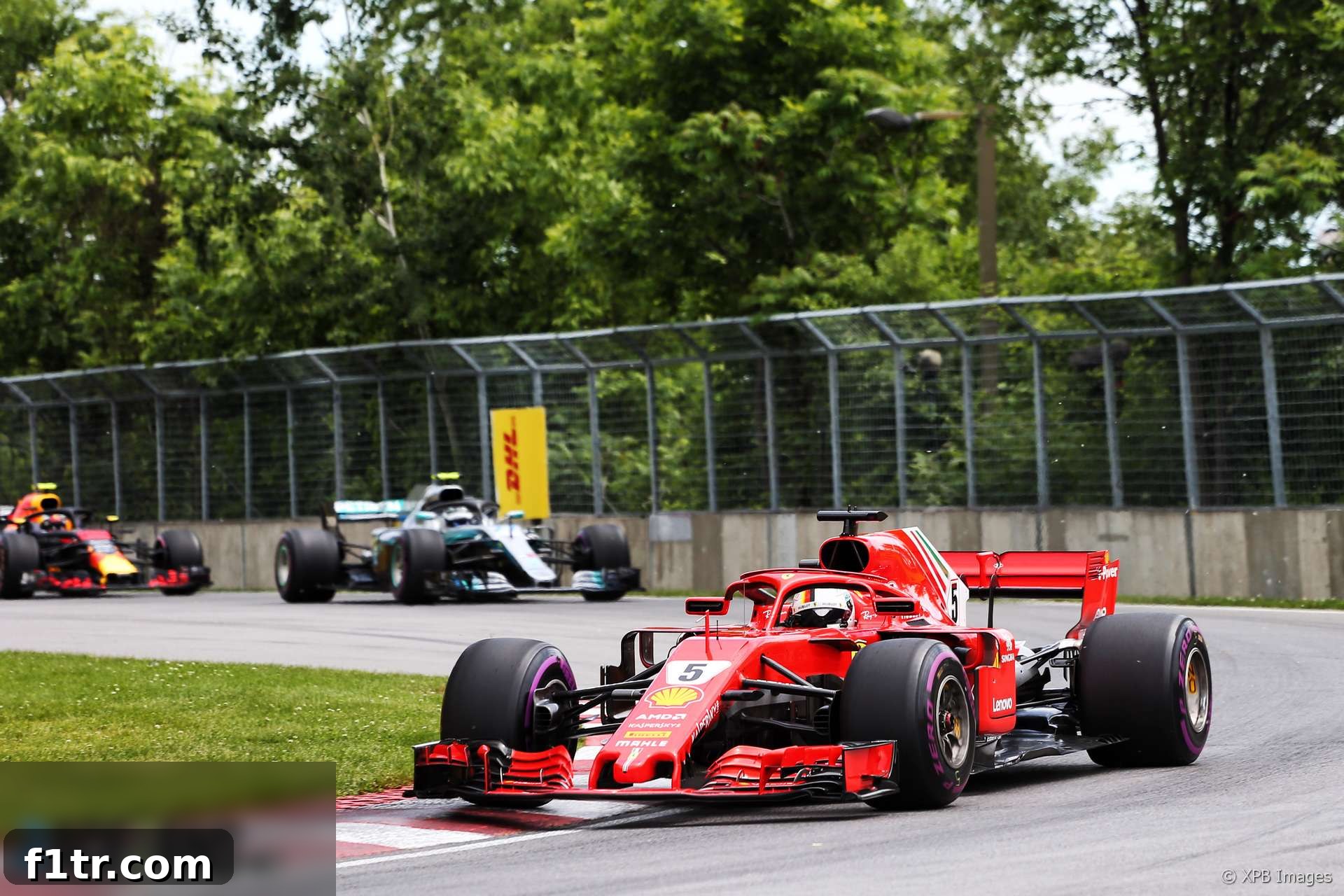
The 2018 Formula 1 Canadian Grand Prix proved to be a memorable race for Sebastian Vettel, securing a crucial victory that strengthened his championship bid. However, the event was not without its moments of high drama and unusual challenges, both on and off the track. A particular incident involving the chequered flag, waved prematurely, cast a shadow of confusion and concern over the closing moments of the race, prompting a significant reaction from the race winner himself.
As Vettel crossed the finish line on what he believed was the final lap, a wave of relief and triumph washed over him. Yet, a peculiar incident unfolded seconds earlier that could have had serious implications. Celebrity guest model Winnie Harlow was tasked with waving the chequered flag to signal the end of the race. However, a significant mix-up occurred, resulting in the flag being shown one lap too early, on lap 69 instead of the scheduled 70. While most drivers might have been caught off guard by such an error, Vettel, astute and experienced, immediately recognized the mistake. Despite his awareness, he expressed profound concern that unsuspecting fans might interpret the premature signal as the race’s conclusion and potentially rush onto the live track, creating a hazardous situation for all involved.
“I knew that there was another lap because I have the lap count on the dash and I have the lap count on the pit board,” Vettel recounted, highlighting the meticulous preparation and information flow available to Formula 1 drivers. This dual verification system, displaying lap counts both on his steering wheel dashboard and the pit board, ensured he was fully aware that the race had not yet reached its official conclusion. He immediately sought confirmation from his team over the radio, receiving the clear instruction to “no, keep going.” This prompt communication was vital in preventing any confusion on his part.
The immediate concern for Vettel wasn’t merely about completing an extra lap, but rather the potential safety hazard posed by the erroneous flag. “Then I was a bit worried that nobody runs on the track. But it was all OK,” he added, expressing his relief that no fans were put in harm’s way. This incident underscored the critical importance of precise protocol in Formula 1, where split-second decisions and accurate signals are paramount to ensuring the safety of drivers, marshals, and spectators alike. A premature chequered flag is a rare but serious procedural error that could have led to a catastrophic situation, reminding everyone of the fine margins within which the sport operates. The FIA, F1’s governing body, later acknowledged the mistake, emphasizing the need for stricter adherence to race control procedures to prevent such incidents from recurring.
Advert | Become a Supporter & go ad-free
Beyond the external drama of the chequered flag, Sebastian Vettel faced his own internal battles during the latter half of the Canadian Grand Prix. He revealed that he was significantly distracted in the second stint of the race, not by rivals, but by persistent technical issues with his Ferrari SF71H. These challenges necessitated frequent and complex changes to his car’s settings, demanding an extraordinary level of concentration and adaptability from the four-time world champion.
“There was a point in the second stint where I had to switch on and off a lot of sensors. I think there was a small issue in the background,” Vettel explained. Modern Formula 1 cars are immensely complex machines, bristling with hundreds of sensors that monitor every aspect of performance, from engine parameters and brake temperatures to tyre wear and aerodynamic loads. A malfunction in any of these sensors can trigger alarms, provide erroneous data, or even force drivers to manually override systems to maintain optimal performance or prevent further damage. The “small issue” Vettel referred to likely involved a sensor providing inconsistent readings or failing altogether, requiring him to engage in troubleshooting maneuvers mid-race.
The steering wheel of an F1 car is not merely a device for steering; it’s a highly sophisticated control panel with dozens of buttons, rotary dials, and switches. Drivers must adjust parameters such as brake bias, differential settings, engine modes, energy recovery system (ERS) deployment, and fuel mixture, often multiple times per lap, depending on track conditions, tyre degradation, and race strategy. When a technical glitch arises, this already demanding task becomes exponentially more difficult. Vettel’s frustration was palpable: “At [one] point I was close to saying when am I allowed to drive again and focus on driving because I was looking down and changing so many settings.” This candid admission highlights the immense mental strain placed on drivers, who must simultaneously push the car to its absolute limit, navigate the intricate dance of racing lines and braking points, and act as highly skilled engineers managing complex onboard systems. Maintaining focus and defending his lead under such circumstances was a testament to Vettel’s supreme skill and mental fortitude, showcasing why he is considered one of the sport’s greats.
Despite these internal struggles and external distractions, Vettel and his Ferrari team meticulously controlled the race, particularly through a well-executed strategy that capitalized on a strong first stint. This early phase of the race proved to be absolutely crucial in setting the tone and creating a buffer that would serve them well later on.
“The first stint was crucial because we were able to open a gap, we were able to save fuel, manage the tyres and that helped us in the second stint to manage even more so,” Vettel elaborated. By establishing a significant lead early on, Vettel gained the strategic advantage of “clean air,” allowing him to run at his own pace without being hindered by turbulent air from rival cars. This enabled optimal tyre management, minimizing degradation and extending their lifespan. Critically, it also provided the opportunity for effective fuel saving. In contemporary Formula 1, fuel saving is not simply about lifting off the throttle; it involves sophisticated management of engine mapping, ERS deployment, and coasting techniques, all orchestrated with the race engineer. Carrying less fuel translates to a lighter car, which is inherently faster and more agile, particularly towards the end of a stint.
This disciplined approach contrasted sharply with the situation faced by his closest competitor. “I think Valtteri [Bottas] was running a bit out of fuel towards the end which for us wasn’t the case because we were saving fuel all the way,” Vettel noted. Fuel consumption is a finely balanced act in F1, with teams aiming to start the race with the minimum viable amount of fuel to save weight. If a driver pushes too hard or encounters unexpected conditions, they might find themselves critically low on fuel in the final laps, forcing them to lift and coast significantly, thereby losing pace. Vettel’s consistent fuel saving from the outset meant he avoided this predicament, allowing him to maintain a strong pace to the very end of the race without compromising performance or risking a penalty for under-fuelling. The strategic foresight and execution by Ferrari, combined with Vettel’s ability to manage his car and race according to plan, were pivotal in securing this hard-fought victory.
Advert | Become a RaceFans supporter andgo ad-free
2018 F1 season
- F1 feared “death knell” for Drive to Survive after Ferrari and Mercedes snub
- McLaren staff told us we were “totally crazy” to take Honda engines in 2018 – Tost
- ‘It doesn’t matter if we start last’: How Red Bull’s junior team aided Honda’s leap forward
- Honda’s jet division helped F1 engineers solve power unit problem
- McLaren Racing losses rise after Honda split
Browse all 2018 F1 season articles
Ultimately, the 2018 Canadian Grand Prix was a showcase of Sebastian Vettel’s multifaceted abilities as a Formula 1 driver. From his quick thinking and safety awareness regarding the premature chequered flag to his remarkable capacity to manage complex technical issues within the cockpit while maintaining blistering pace, and his strategic mastery of fuel and tyre management, Vettel demonstrated why he was a formidable contender for the championship that year. His victory in Montreal was not just a testament to raw speed, but to a holistic understanding of racing, proving that even under pressure and unexpected circumstances, a true champion finds a way to control the race and emerge victorious.