F1 Insider: McLaren’s 2023 Driver Dynamics, Aston Martin’s Rising Star, and Key Motorsport Debates
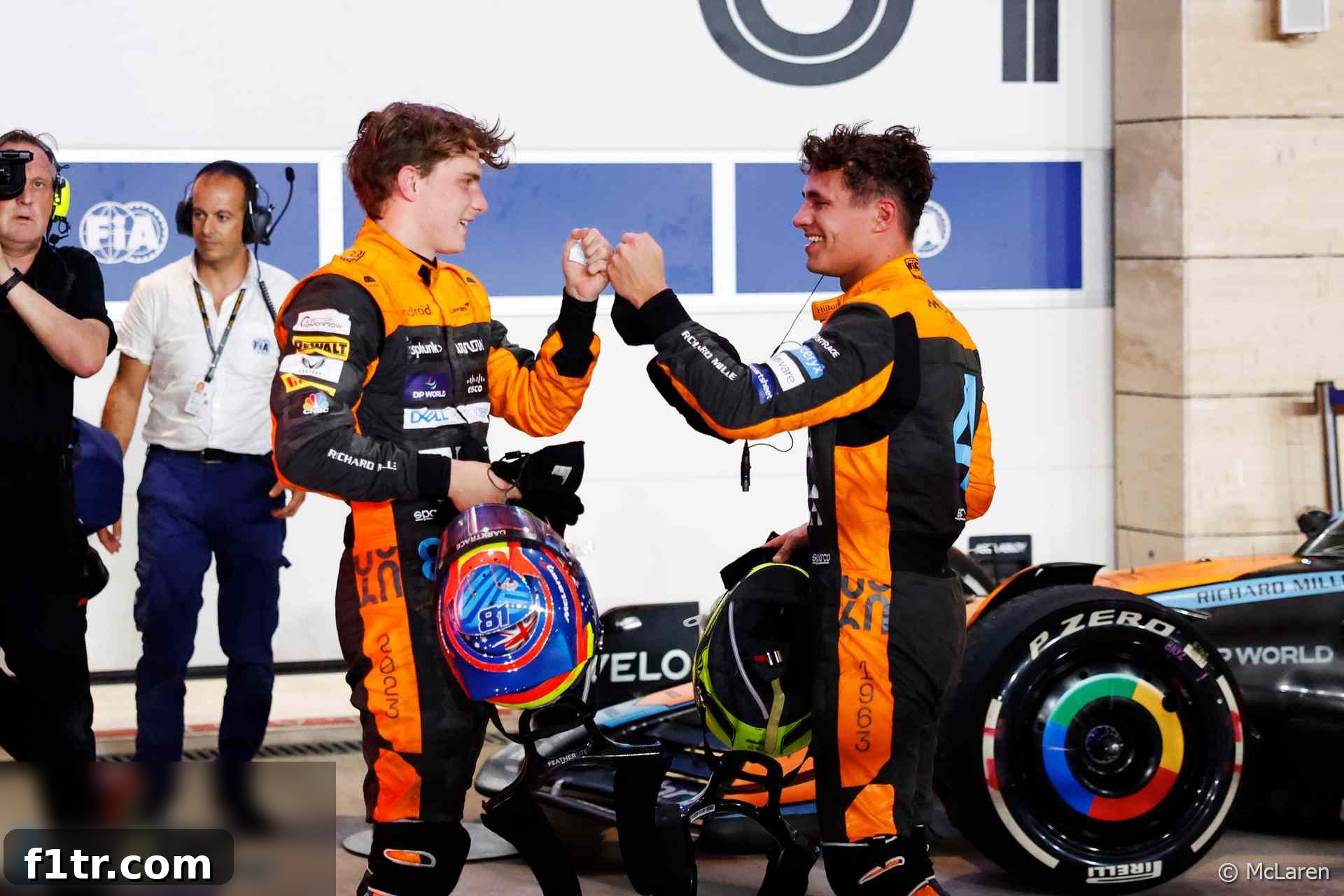
In a comprehensive round-up of the recent Formula 1 landscape, McLaren Racing CEO Zak Brown expressed his satisfaction with the significantly closer and more competitive contest between his two highly talented drivers during the 2023 F1 season. This shift marks a new era for the Woking-based outfit, highlighting a positive internal rivalry that is driving the team forward and setting the stage for even greater achievements.
F1 Briefings: Key Insights from the Paddock
Piastri’s Impact: A New Dynamic at McLaren
Oscar Piastri “Keeping Lando Norris on His Toes” – Zak Brown
McLaren’s strategic decision to bring in Oscar Piastri as Daniel Ricciardo’s replacement, despite Ricciardo having a year left on his contract, proved to be a pivotal move for the team. Zak Brown openly shared his views on the immediate and profound impact Piastri has had, noting that the young Australian rookie has presented a much stronger and more consistent challenge to established star Lando Norris.
“Lando hadn’t been challenged by his team mate in the last couple of years on a regular basis,” Brown stated in an insightful interview with Track Limits. “But I think Oscar’s keeping Lando on his toes, which is exactly what we want to see within a top-tier racing team. This internal competition is incredibly healthy; it pushes both drivers to elevate their performance levels, constantly seeking out marginal gains, ultimately benefiting the team’s overall trajectory and competitiveness on the track.”
Brown further elaborated on the unexpected synergy that has developed between Norris and Piastri, emphasizing a crucial technical advantage for McLaren’s engineering team. “I think the significant benefit is that they both like a very similar race car setup, providing consistent and complementary feedback from the two. The last thing you want is to have two drivers whose feedback directly contradicts, with one reporting persistent understeer and the other struggling with oversteer – that leaves engineers guessing and slows down crucial development. So, I think we’re significantly benefiting from having two very fast drivers who are also incredibly technical and aligned in their understanding of the car’s behaviour. This alignment streamlines our development process, allowing McLaren to make more precise and effective upgrades throughout the demanding Formula 1 season.” The improved driver pairing has clearly been a catalyst in McLaren’s strong mid-season resurgence.
Despite the tough business decisions inherent in Formula 1, Brown also took a moment to express his continued admiration for Daniel Ricciardo. “It’s truly great to see Daniel doing so well at AlphaTauri because he’s a great, great guy and an exceptional talent. His victory at Monza in 2021 was monumental, as he won me my first race as McLaren CEO, a moment I’ll always cherish. I’ll always have a soft spot for him, and we sincerely wish him nothing but the best in his continued career in motorsport.” This sentiment reflects the often-tough but respectful nature of decisions made within Formula 1’s highly competitive and fast-paced environment.
Drugovich’s Indispensable Role at Aston Martin
Felipe Drugovich: A “Near Race Driver” Asset for Aston Martin
While last year’s Formula 2 champion, Felipe Drugovich, will not be making the immediate jump to a full-time F1 race seat next season, his contributions as a test and simulator driver for Aston Martin have garnered immense praise and proven indispensable. The team has been thoroughly impressed by the depth and quality of his work throughout the year, a crucial role that included two mandatory appearances in official practice sessions, fulfilling an important FIA requirement for young drivers, with his most recent outing occurring at the season-ending Abu Dhabi Grand Prix.
“For us to have a driver who is fully ready to step into a Formula 1 car at a moment’s notice is incredibly important in modern Formula 1, given the intensity of the season, the unforgiving nature of the machinery, and the potential for unforeseen circumstances,” explained Aston Martin’s Performance Director Tom McCullough. “The work he’s doing for us now in the simulator is truly impressive, offering invaluable data and development direction. Felipe is not just strong; he possesses a remarkable work ethic and an exceptional understanding of vehicle dynamics, which means we’re already extracting significant value from his input even before he steps onto a race track in competition.”
McCullough further highlighted the tangible benefits of Drugovich’s limited but impactful track time: “When he drove the AMR23 again on Friday in Abu Dhabi, the data he provided was absolutely cracking data – precise, comprehensive, and highly actionable. The current regulations compel us to run a young driver in a certain number of FP1 sessions, and Felipe is a superb choice for this pivotal role. His capabilities mean it’s almost like having another fully-fledged race driver providing feedback, pushing the limits, and contributing to our technical understanding, which is invaluable for our ongoing development efforts and long-term planning.” Drugovich’s dedication and technical proficiency are proving crucial for Aston Martin as they continue to refine their current machinery and prepare for future seasons, underscoring the vital, albeit often unseen, work of development drivers.
Stay informed with the latest happenings and discussions shaping the exhilarating world of motorsport.
Motorsport Insights: A Curated Collection of Key Articles
Explore a selection of compelling motor racing links and discussions from leading publications, offering diverse perspectives on the sport’s biggest topics:
A Problem at the Heart of Formula One (The Economist)
‘Formula 1 hopes that improving technology — for example, machines that can remove carbon from the air, cutting reliance on programmes that involve tree-planting — may allow for more convincing offsets by the end of the decade. Maybe this will happen. Quite likely, it won’t.’ This critical piece from The Economist delves into the ongoing and complex challenge of sustainability within Formula 1. While the sport has made significant strides in hybrid engine technology, introducing E10 fuel and committing to reducing its overall carbon footprint, the article robustly questions the effectiveness and long-term viability of current carbon offsetting strategies. It highlights the ambitious goals set by F1 to achieve Net Zero Carbon by 2030, but also raises pertinent concerns about whether technological advancements alone can genuinely address the profound environmental impact of a global sport that involves extensive travel and resource consumption. The debate between technological solutions and more fundamental operational changes continues to be a central theme for F1’s future narrative and public image, impacting its relevance in a climate-conscious world.
Arnoux Avverte la Ferrari: ‘Per Vincere Serve la Macchina, Non i Soldi’ (La Gazzetta dello Sport – Italian)
‘Sainz’s problem is that he is too irregular. I think he struggled more than Leclerc with tyre degradation. What amazes me is the great race in Singapore, compared to other less brilliant ones.’ Legendary former Ferrari driver René Arnoux offers a candid and unvarnished assessment of the Scuderia’s performance and persistent challenges. His blunt advice underscores a fundamental, enduring truth in Formula 1: ultimate success hinges primarily on having a superior, well-developed car, not merely an extensive budget. Arnoux’s comments also touch upon the individual performance of Carlos Sainz, noting his perceived inconsistency throughout the 2023 season and suggesting he struggled more with tyre management compared to his highly-rated teammate Charles Leclerc. The reference to Sainz’s standout victory in Singapore serves to highlight the fluctuating nature of both the team’s and driver’s form, sparking further debate about Ferrari’s strategic direction, car development philosophy, and driver dynamics for the crucial upcoming 2024 F1 season.
Vinicius Tessaro Crowned Brazilian F4 Champion at Interlagos (Formula Scout)
‘In his second year with Cavaleiro Sports, the driver from Formosa (Goias) sat at the top of the points table from the opening round onwards and won six times, matching the number the inaugural champion Pedro Clerot reached last year.’ Formula Scout reports on the exciting conclusion of the Brazilian F4 Championship, where Vinicius Tessaro secured the coveted title at the iconic Interlagos circuit. This news highlights the vital and often overlooked role of junior formula categories in nurturing the next generation of motorsport talent. Tessaro’s consistent performance and impressive six victories throughout the season demonstrate the kind of dominance, maturity, and raw speed required to climb the increasingly competitive motorsport ladder. Such championships are crucial proving grounds, offering young drivers the essential platform to develop their racecraft, gain invaluable experience, and achieve recognition, potentially paving their way towards international single-seater series and, ultimately, the pinnacle of Formula 1.
Finger weg von BoP und Reversed Grid! (Auto Motor und Sport – German)
‘So please stay away from such artificial elements of tension. A reversed starting order is just as much a no-go for Formula 1 as a BoP or (Balance of Performance) placement weights. The sport drifts to the level of wrestling.’ This strong editorial from Auto Motor und Sport vehemently argues against the potential introduction of artificial performance equalizers like Balance of Performance (BoP) or controversial reversed grid formats in Formula 1. The author expresses a deep concern that such measures, often proposed in the name of increasing entertainment value, would fundamentally undermine the sporting integrity, meritocracy, and engineering excellence that have historically defined F1. The stark comparison to wrestling emphasizes the perception that F1 risks becoming an over-scripted spectacle rather than a genuine competition where the best team and driver win through pure speed, technical innovation, and strategic prowess. This ongoing debate reflects a significant tension between purists who value the sport’s technical challenge and competitive authenticity, and those who advocate for radical rule changes to boost unpredictability and fan engagement, sometimes at the cost of traditional F1 values.
We always endeavour to credit original sources and provide diverse perspectives. If you have a tip for a compelling link relating to single-seater motorsport to feature in our next round-up, please send it to us via the contact form.
Social Media Pulse: Voices from the F1 Community
Catch up on notable posts and updates from X (formerly Twitter), TikTok, and other influential social media platforms that capture the essence of the motorsport world:
As the 2023 season comes to an end, let’s take a moment to thank all of our marshals, officials and volunteers who worked hard throughout the season to make racing stronger and safer.
From the Fédération Internationale de l’Automobile to all of you: thank you. pic.twitter.com/SQXkgRYpRn— FIA (@fia) December 17, 2023
The Fédération Internationale de l’Automobile (FIA), the governing body of motorsport, took to social media to extend a heartfelt thank you to the unsung heroes of motorsport: the marshals, officials, and countless volunteers. This deeply appreciated message underscores the monumental and often perilous effort behind every single Grand Prix, acknowledging the immense dedication of these individuals who work tirelessly in all weather conditions and often without public recognition to ensure the safety and smooth operation of racing events. Their contributions are absolutely vital, forming the backbone of the sport and allowing drivers to compete at the highest level of human and mechanical endeavor. Without their professionalism, vigilance, and unwavering commitment, the thrilling spectacle of Formula 1 would simply not be possible, highlighting the community spirit that underpins global motorsport.
- For more official F1 accounts and key personalities to follow, consult our comprehensive F1 Twitter Directory, your guide to staying connected with the F1 universe.
Community Voice: Comment of the Day
The Evolving Landscape of F1 Driver Careers
While the grid for the highly anticipated 2024 F1 season will not feature any true rookies, a particularly thought-provoking comment from user Brell-9W sheds light on a positive and crucial shift in how Formula 1 teams currently approach driver development and retention. Brell-9W praises current team bosses for granting promising drivers like Logan Sargeant and Zhou Guanyu ample time and opportunity to prove their capabilities and adapt to the pinnacle of motorsport, a stark and welcome contrast to previous eras of rapid turnover.
I, for one, am glad that Formula One is now a series that values experience. We have gone from the days in the 2010s where there was constant churn seemingly for the sake of it, spearheaded by Helmut Marko and his ‘young driver programme’, and imitated by others. I think of names like Alguesuari, Buemi, Vergne, di Resta, Kobayashi, Nasr, Wehrlein, and more, drivers who were there for two, at most three years, and suddenly dropped, without seeing how they would have developed or fared in stronger teams. Most of these drivers were improving steadily, and were never offered a further chance.
Let’s appreciate the job the current Formula 1 drivers are doing, some of them in underwhelming cars, and realise there are very few out there who could match them.
Brell-9W
Brell-9W’s compelling argument points to a significant and beneficial evolution in F1’s approach to driver careers. The 2010s, particularly under the pervasive influence of Red Bull’s Helmut Marko and his famously demanding young driver programme, saw a rapid turnover of promising talent. Drivers such as Jaime Alguersuari, Sébastien Buemi, Jean-Éric Vergne, Paul di Resta, Kamui Kobayashi, Felipe Nasr, and Pascal Wehrlein often found themselves out of a seat after just a couple of seasons, regardless of their evident potential, steady improvement, or flashes of brilliance. This “churn” meant that many promising talents never had the crucial chance to fully mature, adapt, or showcase their true abilities within competitive machinery, leaving many wondering what might have been.
Today, there appears to be a greater emphasis across the paddock on giving drivers a longer runway, allowing them to adapt, learn, and organically grow within the immensely complex and high-pressure environment of Formula 1. This newfound patience acknowledges the immense technical complexity of modern F1 cars and the unique mental and physical pressures of the sport. It fosters a more stable and supportive environment, potentially leading to stronger, more experienced, and more consistently performing grids in the long run. Brell-9W rightly encourages appreciation for the current crop of F1 drivers, many of whom are consistently extracting maximum performance from cars that might not be top-tier contenders, underscoring the extraordinary skill level, resilience, and adaptability required to simply compete, let alone succeed, in Formula 1.
Happy Birthday!
Wishing a very happy birthday to Julio Mv and Nat Lockwood! May your special day be filled with joy and celebration, surrounded by fellow motorsport enthusiasts.
On This Day in Motorsport History
- Thirty years ago, on this very day, the motorsport world remembered Helm Glockler, a notable figure from an earlier era of Formula 1 history. Glockler’s sole F1 race appearance came a remarkable 40 years prior at the German Grand Prix. Although he famously did not start the main race itself, that specific event nonetheless holds a unique place in the annals of history for setting the record for the most starters in a single Formula 1 Grand Prix. This historical note serves as a fascinating reminder of the rich tapestry, quirky facts, and sometimes unusual records that define motorsport’s captivating past, often overlooked in the modern era.