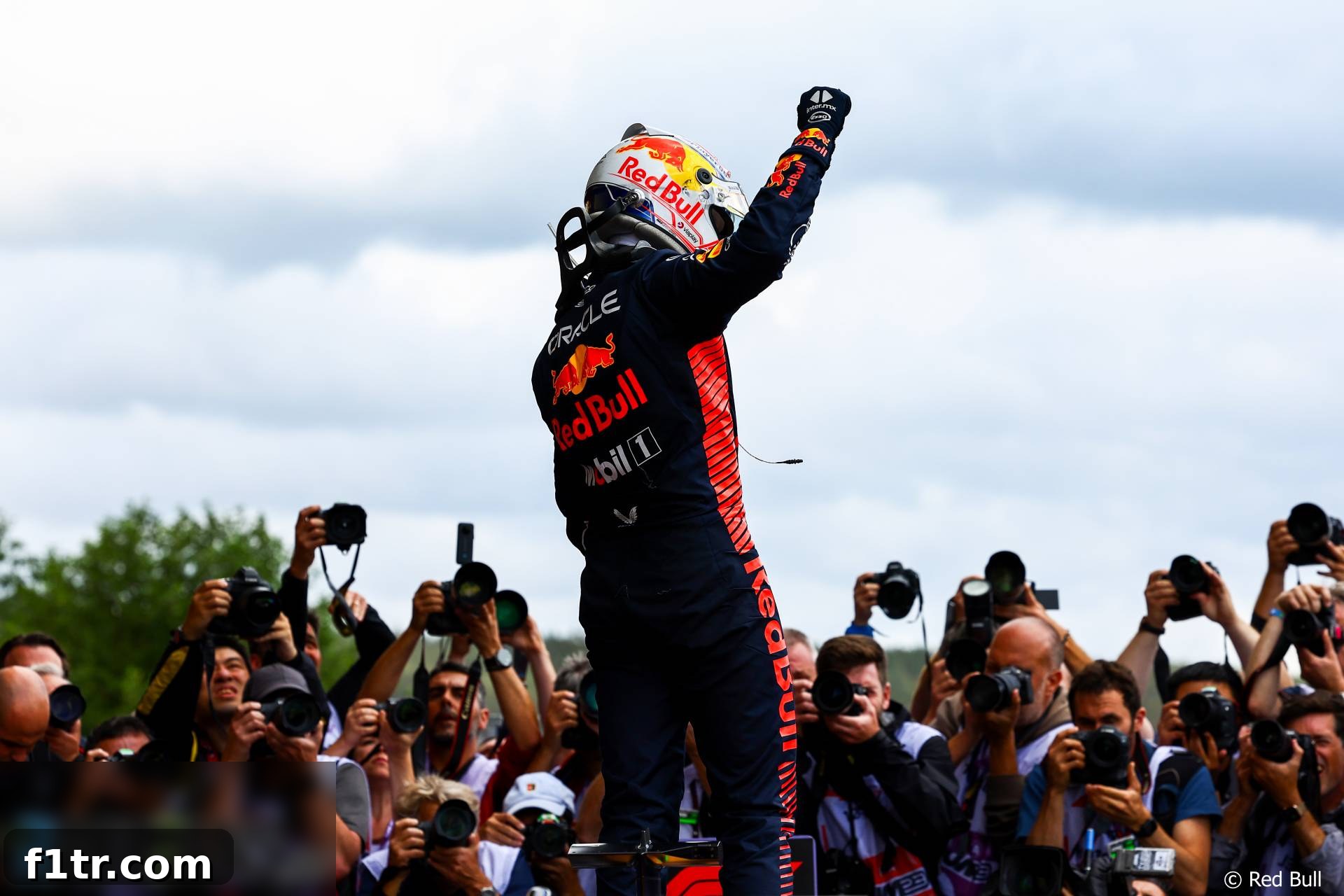
Long-suffering Formula 1 fans will vividly recall the 2021 world championship battle as a thrilling anomaly. That season delivered an unprecedented spectacle, culminating in Max Verstappen securing his maiden world title and Lewis Hamilton being agonizingly denied a record-breaking eighth crown. The intense rivalry, sharp twists, and relentless turns between the two titans kept the global audience captivated, with race after race serving up nail-biting drama that pushed the championship fight to a dramatic conclusion in Abu Dhabi. Mercedes’ seven-year reign of dominance finally ceded to Red Bull, and with the sweeping technical regulation changes introduced for 2022, there was widespread optimism for a new era of unpredictable, close-quarters racing at the pinnacle of motorsport.
Advert | Become a Supporter & go ad-free
The Unprecedented Dominance of Red Bull Racing: A New Era?
However, the hopes for sustained, competitive racing did not fully materialize. While the 2022 season initially saw glimmers of a multi-team fight, particularly from Ferrari, it was Red Bull Racing that ultimately emerged as the dominant force. Though not entirely unbeatable, Max Verstappen secured an impressive 15 victories out of 22 races, with his teammate Sergio Perez adding two more wins. The remaining five races were distributed among Charles Leclerc (three wins for Ferrari), Carlos Sainz Jnr (a maiden victory at Silverstone for Ferrari), and George Russell (a breakthrough win in Brazil for Mercedes). While Red Bull’s ascendancy was clear, the fact that other teams still managed to claim victories offered some solace, preventing a complete monopoly on the top step of the podium.
The 2023 season, however, has unveiled a vastly different and arguably more concerning narrative. Through the initial twelve rounds, Red Bull Racing has proven literally unassailable. Max Verstappen has claimed victory in all but two races, with his teammate Sergio Perez securing those remaining two wins. This remarkable performance raises an inevitable, critical question as Formula 1 enters the latter half of its championship calendar: Can Red Bull Racing complete the entire 2023 season unbeaten? And, if such an unprecedented feat is achieved, what might be the long-term ramifications for the sport’s burgeoning popularity?
From Anomaly to Absolute Control
The transition from the fiercely contested 2021 season to the near-total domination of 2023 has been stark. The technical regulations designed to level the playing field inadvertently propelled Red Bull to an almost insurmountable advantage. The RB19, masterfully designed by Adrian Newey and his team, combined with the sublime talent of Max Verstappen, has created a package that has simply outclassed the competition. Verstappen’s relentless pursuit of perfection and his ability to extract every ounce of performance from his machinery has cemented his status as one of the sport’s all-time greats, evident in his consecutive drivers’ titles and his seemingly effortless charge towards a third. This level of performance is truly historic, placing the RB19 firmly in contention as one of the most dominant cars ever built.
F1’s Popularity Paradox: Boom Amidst Monotony?
Over the past half-decade, Formula 1 has experienced an unprecedented surge in popularity, particularly within the crucial United States market. Much credit for this boom has been attributed to the success of Netflix’s “Drive to Survive” docuseries, which introduced a new generation of fans to the drama, personalities, and high stakes of the sport. This impact was vividly demonstrated by the overwhelming crowds that flocked to the inaugural Miami Grand Prix in 2022 and the record attendances at the United States Grand Prix in Texas. Furthermore, the sport’s expansion in the US continues with the highly anticipated Las Vegas Grand Prix set to become the third F1 race hosted in America this season, underscoring the market’s strategic importance.
The “Drive to Survive” Phenomenon and Worrying Trends in Viewership
The tangible evidence of this growth was undeniable. The 2022 Miami Grand Prix, broadcast on ABC, one of America’s largest television networks, shattered records with a staggering 2.6 million viewers. However, the subsequent 2023 season saw a striking dip, as ABC’s viewership for the same race declined by a significant 25%. While the two Red Bulls were separated by only six points in the championship standings heading into this year’s Miami event, it’s plausible that the audience drop was directly linked to Red Bull’s overwhelming success, having won 22 of the previous 27 Grands Prix leading up to that race. Such a predictable outcome, even for new fans, can dampen enthusiasm.
F1 CEO Stefano Domenicali, however, remains steadfast in his belief that Red Bull’s current dominance will not negatively impact the sport’s overall popularity, especially among new and casual viewers. He contends that any dip in viewership or engagement reflects more “avid” fans switching off, rather than a broad disinterest from the expanding new demographic. “What is interesting to see in the new markets when the new audience is coming in, is that [Red Bull’s dominance] is not a real important factor,” Domenicali stated. He further elaborated, “It’s more for the avid fans that if you see a car that is dominant, that’s creating a level of less interest. For the new market, for the new fans that are coming to the business, this is not really very important.” This perspective suggests a strategic pivot towards broad appeal over hardcore fan satisfaction, a delicate balance to maintain for any sport experiencing rapid growth.
Advert | Become a RaceFans supporter andgo ad-free
Echoes of the Past: Dominance in F1 History
Dominant periods are certainly not a novel phenomenon in Formula 1’s rich history. Fans have witnessed eras defined by the supremacy of McLaren with legends like Alain Prost and Ayrton Senna, the unparalleled success of Ferrari led by Michael Schumacher, and more recently, the sustained excellence of Lewis Hamilton and Mercedes. However, it is impossible to overlook that the current Red Bull era coincides with a critical and unprecedented moment of global growth for the sport, adding a unique layer of scrutiny to its impact.
Recalling Legendary Eras and A New Kind of Dominance?
Speaking during the British Grand Prix weekend, Mercedes CEO and Team Principal Toto Wolff openly acknowledged the concern from a “fan’s perspective” that sustained Red Bull dominance, with one team consistently occupying the top step of the podium, could lead to disengagement. “I look at it and say, ‘yeah, the risk is there’,” Wolff conceded, drawing parallels to Mercedes’ own dominant spell. “But the risk was there over the eight years that we were winning, and I would have said the same thing back then.” He emphasized the meritocratic nature of the sport: “You have the same team, the same driver winning all over, it becomes less variable. But as I said then, being in the positive situation, I would also say today that this is a meritocracy. And it’s honest. When a team and the driver are just so far ahead, it’s because they’re simply doing a better job than everybody else, within the regulatory framework. And there is no way around it.”
While Red Bull’s position as the sport’s premier team is beyond debate, with Verstappen having secured the last two drivers’ titles and the RB19 set to be remembered as one of the most dominant cars in F1 history, a crucial distinction emerges when comparing it to, say, the intensely fought Hamilton-Nico Rosberg years of Mercedes’ stranglehold. The Mercedes era, though dominant, was frequently spiced up by fierce intra-team battles, providing a compelling narrative and unpredictable outcomes within the silver arrow camp. Hamilton and Rosberg delivered memorable clashes, culminating in Rosberg’s title victory in 2016 before his unexpected retirement. Even Valtteri Bottas, brought in to partner Hamilton, offered consistent performances despite being outmatched for the title. In contrast, the last two seasons have seen Verstappen dominate virtually single-handedly, with Sergio Perez struggling to consistently challenge his teammate, thereby reducing the internal team rivalry that often kept fans on the edge of their seats.
Wolff highlighted this specific difference: “I don’t know whether our dominance was similar or less. I think we had years where we did it in the same way, but at least we had two cars that were fighting each other so that caused a little bit of entertainment for everyone and that’s not the case at the moment.” He concluded by placing the onus squarely on the competitors: “It’s up to us to fight back. Did we expect that gap? Certainly not. I think with the last step of the upgrade it seems they have another advantage that they were able to exploit. But again it always gets me back to the point of we’ve just got to dig in and do the best possible job.”
Advert | Become a RaceFans supporter andgo ad-free
Navigating the Future: No Quick Fixes
When any single team achieves such overwhelming dominance in a championship, it’s an understandable consequence that rivals and, at times, even sections of the fan base, will voice their complaints. Red Bull Racing has performed in a league of its own this season, and the team now stands a serious threat of making history by potentially winning all 22 Grands Prix on the 2023 calendar – an unprecedented clean sweep that would solidify their place in the annals of motorsport.
FIA’s Stance Against Intervention and Existing Efforts to Level the Playing Field
Despite this potential historical achievement, any suggestion that the FIA or Formula 1 would intervene mid-season with rule changes to curb Red Bull’s advantage has been firmly dismissed. F1 CEO Stefano Domenicali articulated this stance on F1’s “Beyond the Grid” podcast, stating, “It’s not correct, because we cannot be seen as part of the manipulation. This is not correct, and this is not fair. I am not [imagining] at all this kind of approach.” Domenicali emphasized the cyclical nature of Formula 1, where periods of dominance are eventually followed by other teams rising to prominence. “F1 has been always a sport where there have been cycles, where teams were very dominant and then some others came into the equation.” His objective, therefore, is not to artificially halt a dominant team but to ensure that “these cycles in the future will be shorter.” He expressed confidence in the competitors: “I’m sure that the other teams are watching how they can catch up with their development in the context of the budget cap. It will be interesting to see if the development curve of the team that today is leading will slow down because, at the end of the day, they did a better job in the shorter term. That will be very interesting to see in the next couple of months.”
It’s also crucial to remember that Formula 1 has already implemented significant measures in recent seasons specifically designed to level the playing field. The aerodynamic testing allowance, for instance, grants the championship’s top team only 70% of the total testing allowance compared to the team that finishes seventh in the constructors’ championship, with a sliding scale for teams in between. This progressive system aims to give less successful teams more opportunities to develop their cars. Furthermore, the introduction of the budget cap was a monumental step to equalize the financial advantage historically held by larger, wealthier teams over those with more limited resources. And yet, despite these strategic interventions, Red Bull continues to pull away from the competition, showcasing the profound effectiveness of their current operational model and design philosophy.
The Onus on the Challengers
Ultimately, this ‘problem’ of dominance is not Red Bull’s fault; rather, it reflects the current inability of other teams to match their performance. It would be disingenuous to criticize Red Bull for meticulously building the fastest car or to claim that Max Verstappen is undeserving of his third world title this season. The responsibility firmly lies with powerhouses like Ferrari, Mercedes, Aston Martin, and even the resurgent McLaren to elevate their game. For 2023, both the drivers’ and constructors’ titles seem entirely beyond reach for any rival, prompting many teams to likely shift their focus to the development of next year’s cars, if they haven’t already. However, one thing is certain: catching Red Bull Racing and Max Verstappen will be an immense challenge for anyone in the foreseeable future.
Advert | Become a RaceFans supporter andgo ad-free
Looking Ahead: The Challenge for Formula 1
The current Formula 1 landscape presents a fascinating paradox: record-breaking viewership and global expansion are set against a backdrop of near-unprecedented single-team dominance. While the sport’s leadership expresses confidence in its long-term appeal, the challenge for competitors to close the gap on Red Bull and Max Verstappen is immense. Sustaining the interest of both new casual fans and dedicated enthusiasts will depend heavily on whether the grid can deliver closer racing and more varied winners in the seasons to come, ensuring the thrilling spectacle of F1 remains captivating for all.
2023 F1 season
- FIA president cleared of alleged interference in two 2023 races
- First week viewing figures for new Drive to Survive season fall again
- Max who? Drive to Survive season six prefers its favourite faces
- RaceFans’ complete 2023 season review
- The F1 drivers who pulled off the 10 biggest charges through the field in 2023
Browse all 2023 F1 season articles