Formula 1’s governing body, the FIA, has officially confirmed the precise metric it will employ to quantify the phenomenon of ‘porpoising’ on F1 cars. This critical development paves the way for the enforcement of a new technical directive, which is scheduled to come into effect during this month’s highly anticipated French Grand Prix.
Advert | Become a Supporter & go ad-free
The announcement follows an earlier technical directive issued to all ten Formula 1 teams just before the recent Canadian Grand Prix in Montreal. This initial directive was a direct response to growing safety concerns surrounding the severe vertical oscillations, commonly known as porpoising, that have plagued many cars since the introduction of the radical new aerodynamic regulations for the 2022 season. These groundbreaking rules, designed to promote closer racing, ushered in a new era dominated by ground effect aerodynamics, which inadvertently brought back this historic challenge.
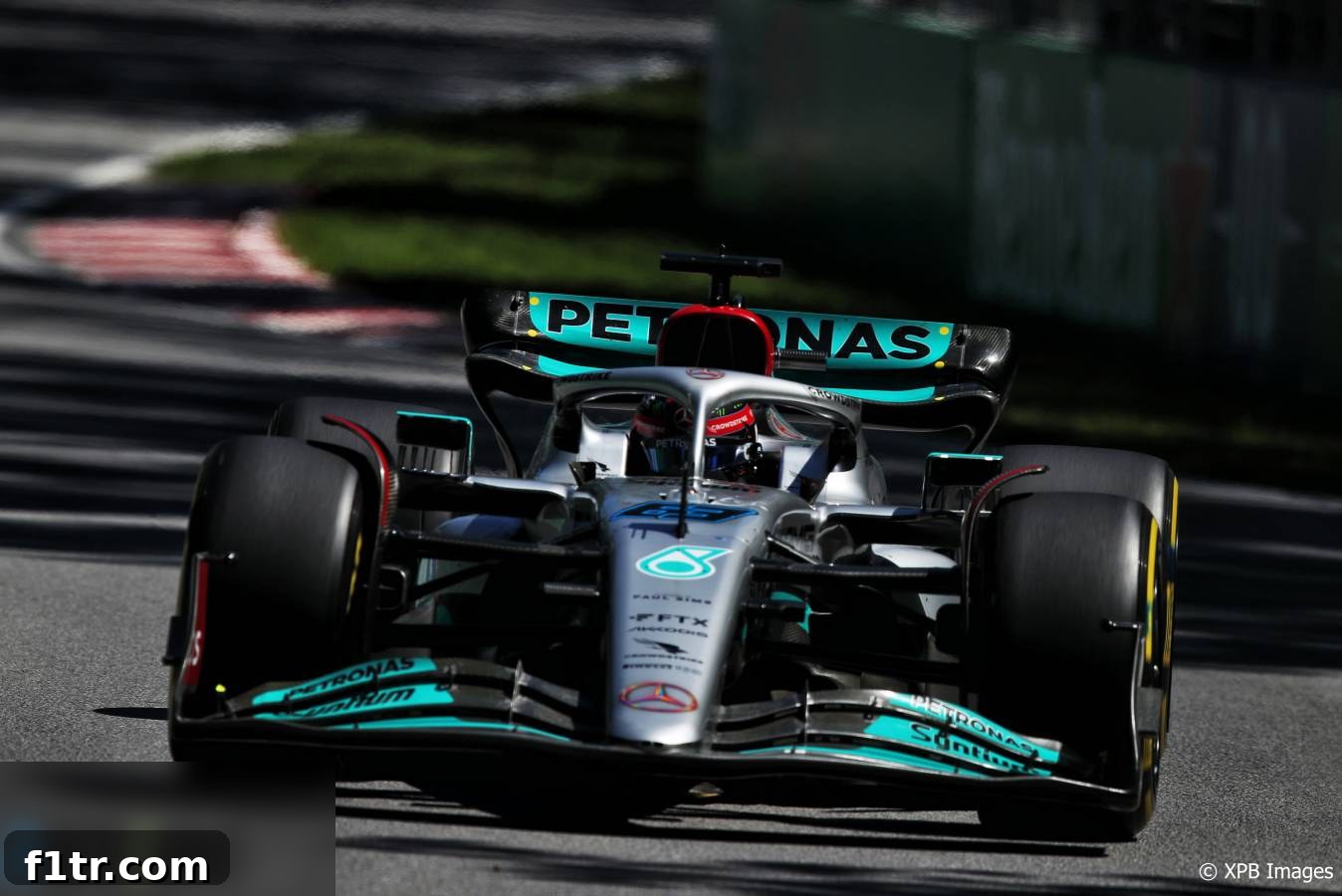
At blistering high speeds, the immense aerodynamic downforce generated by the intricately designed ground effect floors beneath this year’s F1 cars has, at times, caused them to bounce aggressively and vertically along the track. This jarring motion is not merely an aesthetic issue; it has profound implications for driver safety and comfort. Adding to this discomfort, the extremely stiff suspension settings necessary to maximize the generation of this crucial downforce have exacerbated the problem, leading many drivers to endure exceptionally painful rides over even minor bumps and uneven surfaces. Numerous drivers have vocally expressed their significant concerns regarding the long-term health impacts and the immediate challenge of maintaining control and vision during these high-frequency vibrations.
Recognizing the urgency and severity of the situation, the FIA previously declared its intent to define a quantifiable metric that would establish a clear and enforceable limit on the intensity and frequency of porpoising. Under the terms of the forthcoming technical directive, teams will be unequivocally compelled to adjust the set-ups of their cars, or even modify fundamental design elements, if their vehicles are found to be non-compliant with this newly introduced parameter. This marks a pivotal moment, as it shifts the responsibility from simply acknowledging the problem to actively mitigating it through regulated measures.
Understanding the Porpoising Phenomenon
To fully grasp the significance of the FIA’s intervention, it’s essential to delve deeper into what porpoising truly is and why it has made such a dramatic comeback in Formula 1. The term itself is derived from the way porpoises swim, gracefully breaking the water’s surface before diving back down. In Formula 1, it describes a similar cyclical motion where the car’s ride height rapidly fluctuates, causing it to pitch up and down. This occurs when the airflow underneath the car, which generates massive amounts of downforce through the ground effect, becomes unstable.
Under the 2022 regulations, cars are designed to create downforce by accelerating air through carefully sculpted channels beneath their floors. This “ground effect” effectively sucks the car towards the track, increasing grip and cornering speeds. However, when the car compresses downwards due to this downforce, it can get so close to the track surface that the airflow is choked or stalls. When this happens, the downforce momentarily vanishes, causing the car to rise. As the car rises, the airflow reattaches, downforce is restored, and the car is again sucked down, restarting the cycle. This rapid, repetitive loss and regain of downforce is the essence of porpoising. The stiffer the suspension and the lower the ride height, the more pronounced and violent this oscillation can become.
Beyond the technical explanation, the human element cannot be overstated. Drivers have reported severe headaches, blurred vision, back pain, and even momentary loss of consciousness due to the relentless buffeting. Mercedes driver Lewis Hamilton, for instance, visibly struggled to exit his car after races, clutching his back in pain. Such scenes underscore the FIA’s assertion that this is fundamentally a safety issue, transcending mere performance advantages or disadvantages.
The FIA’s Determined Metric and Its Implementation
In an official statement released to various media outlets, including RaceFans, an FIA spokesperson confirmed that the sport’s governing body has successfully finalized the specific metric that will be used for measuring porpoising. This metric, now officially known as the ‘Aerodynamic Oscillation Metric’ (AOM), is designed to provide an objective, quantifiable measure of the car’s vertical accelerations. It will utilize existing sensors on the cars, particularly accelerometers, to calculate the severity and frequency of these oscillations over a given lap.
The AOM will set a maximum permissible level of vertical acceleration, beyond which cars will be deemed non-compliant. This precise, data-driven approach aims to remove any subjectivity from the enforcement process, ensuring that all teams are held to the same clear standard. The FIA’s technical department has been working diligently to establish parameters that are both effective in addressing safety concerns and fair in their application across a diverse grid of cars and design philosophies.
Crucially, the FIA has communicated this finalized metric to all ten Formula 1 teams. This early notification allows teams to thoroughly analyze their own cars’ behavior and make necessary adjustments over the two crucial upcoming race weekends: the British Grand Prix at Silverstone and the Austrian Grand Prix at the Red Bull Ring. This grace period is vital, providing engineering departments with the opportunity to refine their car setups, suspension components, and even aerodynamic profiles to ensure full compliance before the technical directive is officially enforced. The deadline for full compliance is the 12th round of the season, the French Grand Prix, scheduled to take place at the Circuit Paul Ricard on July 22nd-24th.
Furthermore, the FIA’s technical directive is not solely focused on porpoising. The governing body has also indicated that the directive will introduce new parameters concerning car plank wear and skid stiffness. The plank, a mandatory wooden or composite board on the underside of the car, is a critical component for regulating minimum ride height and preventing excessive ground effect exploitation. Excessive plank wear, often indicative of a car running too low and bottoming out, can be a performance advantage but also a safety concern. By tightening the regulations around plank wear and the stiffness of the skids (which protect the plank), the FIA aims to further control how low teams can run their cars, which is intrinsically linked to porpoising and overall ride quality.
Team Reactions and the Pursuit of a Level Playing Field
The announcement of the technical directive, particularly its potential impact on car performance, has not been without its critics within the Formula 1 paddock. Haas team principal Guenther Steiner, for example, voiced concerns that the FIA’s response could inadvertently influence the competitive pecking order among the ten teams in a way that he perceived as potentially unfair. His argument, echoed by others, is that teams that have successfully managed porpoising through their innovative design solutions might be penalized, while those that struggled might gain an advantage from mandated changes. This raises fundamental questions about the balance between allowing engineering freedom and ensuring a minimum standard of safety.
However, the FIA has consistently maintained that its primary motivation is safety, not competitive rebalancing. The governing body insists that the parameters it has outlined, including the AOM, are designed to provide a truly level playing field for all teams regarding the implementation of the new technical directive. Their stance is that a minimum standard of safety, particularly concerning driver well-being, is non-negotiable and must supersede any competitive advantages derived from designs that compromise it. The objective is to bring all cars above a certain safety threshold, rather than to deliberately disadvantage any specific team.
This situation highlights the perpetual tension in Formula 1 between innovation, performance, and safety. While teams strive to push the boundaries of engineering to gain milliseconds, the FIA’s role is to ensure that these advancements do not come at an unacceptable cost to human health or the integrity of the sport. The new directive forces teams to find solutions that mitigate porpoising while still maximizing aerodynamic efficiency, a challenge that will undoubtedly test the ingenuity of their technical departments.
Looking Ahead: Impact on Car Design and Future Regulations
The implications of this technical directive extend far beyond the current season. While teams will initially focus on setup adjustments – modifying suspension components, adjusting ride height, and possibly altering floor designs – the underlying pressure to manage porpoising will likely influence future car development cycles. Designers will need to prioritize not just raw downforce, but also the stability and consistency of the airflow under the car. This could lead to different interpretations of ground effect aerodynamics in the coming years, perhaps favoring designs that are inherently less prone to oscillation.
The FIA’s proactive stance also sets a precedent for how future safety issues stemming from new regulations might be addressed. It demonstrates a willingness to intervene mid-season when fundamental safety concerns arise, rather than waiting for an entire regulatory cycle to pass. This provides a crucial layer of oversight, ensuring that the pursuit of speed does not overshadow the well-being of the sport’s most important assets – its drivers. As Formula 1 continues to evolve with ever-more sophisticated aerodynamics and powertrain technologies, the balance between innovation and regulation will remain a critical aspect of its governance.
Advert | Become a RaceFans supporter andgo ad-free
2022 F1 season
- Mercedes told me “you’re wrong” about 2022 car’s problems – Hamilton
- FIA confirms all 10 F1 teams complied with 2022 cost cap
- Steiner “not ashamed” of panning “slow” Schumacher in Drive to Survive
- Albon believes year out of F1 improved him as a driver
- Hamilton sees diversity gains in F1 years on from his ‘traumatising’ experience of racism
Browse all 2022 F1 season articles