Carlos Sainz Urges Simpler F1 Safety Car Rules After German Grand Prix Controversy
Carlos Sainz Jnr, a prominent figure in Formula 1, recently advocated for a significant simplification of the rules governing lapped drivers during Safety Car periods. This call came in the wake of a ten-second penalty he received at the German Grand Prix, an incident that underscored the inherent complexities and potential for confusion within the current regulations. Sainz’s proposal seeks to streamline procedures, aiming for greater clarity and fairness on the race track.
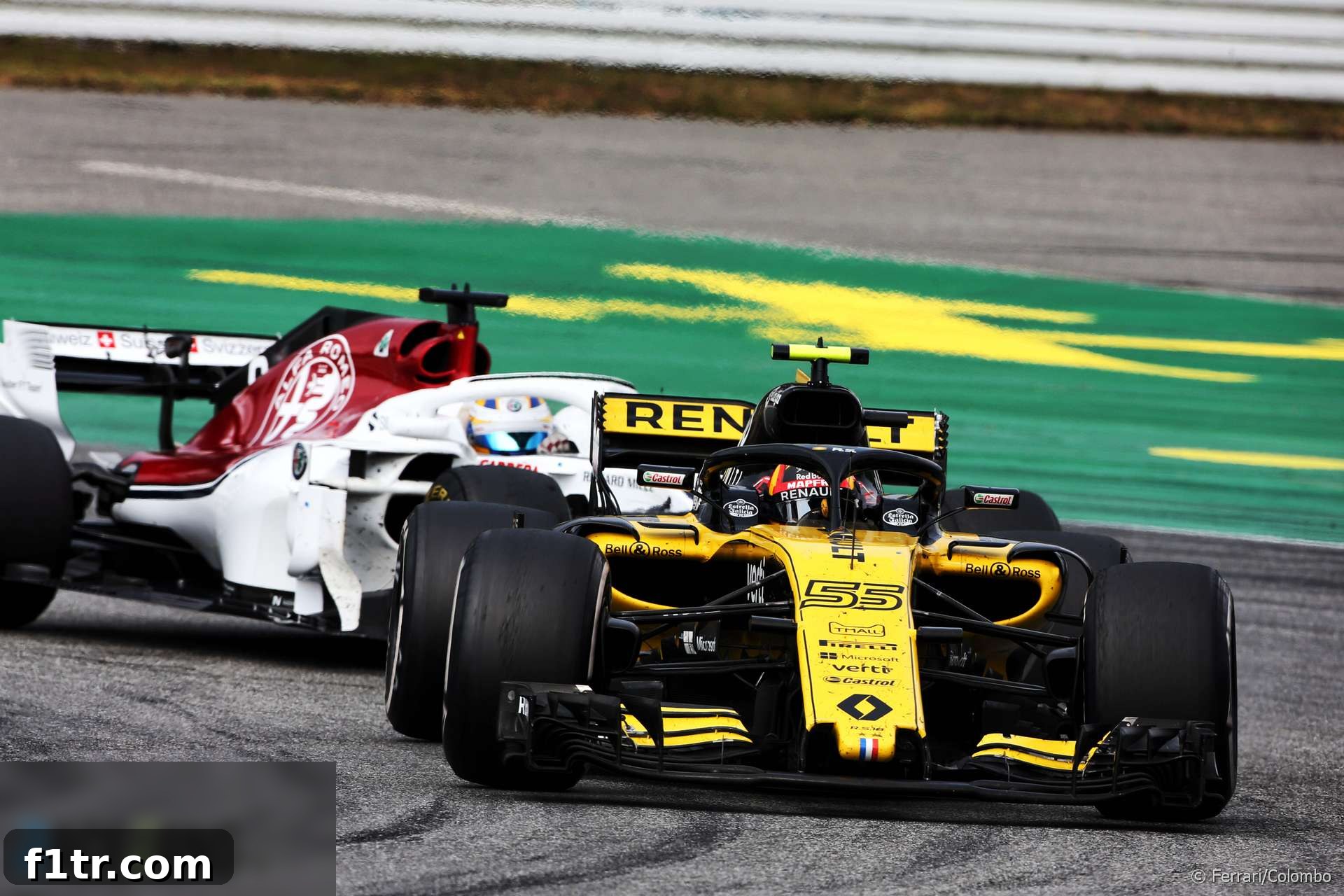
The incident in question saw the then-Renault driver penalised for overtaking Marcus Ericsson while the Safety Car was deployed. The core of Sainz’s frustration and subsequent suggestion stemmed from his profound confusion regarding the intricate protocol that allows lapped drivers to unlap themselves under Safety Car conditions. This rule, designed to ensure a clean restart with all leading cars on the same lap, often creates moments of ambiguity for drivers navigating the high-pressure environment of F1.
Recounting the chaotic moments that led to his penalty, Sainz described a situation rife with uncertainty. “This was a very particular incident and a very strange situation,” he began, detailing the immediate aftermath of his pit stop for intermediate tyres. Having been lapped just prior, he found himself in a precarious position. “As soon as the Safety Car gave us the notice to unlap ourselves I was a little bit leaped into unknown, not knowing really well who was lapped, who had to unlap themselves and who didn’t.” This sentiment highlights a critical flaw in the current system: a lack of immediate, unequivocal information for drivers to act upon decisively.
Advert | Become a Supporter & go ad-free
Sainz explained his decision-making process during this period of confusion. “At that point I saw pretty much most of the cars going really slowly, even if you were allowed to unlap yourselves, so I just decided to push, to rejoin the field at the back of the train as soon as possible.” His proactive approach, driven by a desire to minimise lost time and position, inadvertently put him at odds with the strict interpretation of the rules. He speculated that other drivers might have received the unlapping notification later or were simply conserving energy, leading to vastly different speeds on track.
The encounter with Marcus Ericsson’s Sauber became the flashpoint for the penalty. Sainz genuinely believed Ericsson was experiencing a mechanical issue or was intentionally not pushing, creating a perceived obstruction. “Particularly with the Sauber, I thought he had a problem on the car or he didn’t want to get to the back of the field because he wasn’t even pushing, so I decided to clear him, just as a personal decision.” What followed was a series of bewildering events: “I was told to give the position back to him, I gave the position back to him but I don’t know if intentionally or not he braked again and he let me by again.” This sequence of events perfectly encapsulated the “big mess” and the difficulty in comprehending the unfolding situation in real-time, even for experienced drivers. The ambiguity contributed to a situation that was challenging to narrate, let alone navigate at racing speed.
The Case for Simplification: Dropping Back Instead of Unlapping
Motivated by this experience, Sainz put forward a straightforward alternative to the existing unlapping procedure. Instead of requiring lapped drivers to overtake the entire field under Safety Car conditions to regain their lap, he suggested a simpler, potentially safer method: “I’m always wondering if it is not easier to drop back, get ourselves at the back of queue and recover the lap down instead of having to do a full lap of pushing behind the Safety Car, everyone pushing flat out to try and unlap themselves, if you know what I mean.”
This proposal holds significant merit. The current rule, while intended to restore the natural order of the race before a restart, often transforms a Safety Car period into a miniature race itself for lapped drivers. They are often instructed to push “flat out” to catch the back of the queue, then unlap themselves by driving around the entire field, only to rejoin at the very end. This process involves high speeds, multiple overtakes, and significant energy management under circumstances that are supposed to be controlled and safe. The potential for incidents, especially when drivers are unclear about who should be where, is considerably elevated.
Sainz’s suggested method, where lapped drivers simply fall to the very back of the Safety Car train and only then regain their lap, offers several advantages. Firstly, it drastically reduces the opportunity for driver confusion and misinterpretation of rules. With all lapped cars clearly instructed to drop to the rear, there would be no ambiguity about who is supposed to overtake whom. Secondly, it enhances safety by eliminating the need for high-speed manoeuvres and multiple overtakes during a Safety Car period. This would allow drivers to focus solely on maintaining safe distances and conserving resources, rather than engaging in frantic unlapping efforts.
Furthermore, such a simplification could lead to a more predictable and streamlined race flow. The current system can sometimes prolong Safety Car periods as race control ensures all lapped cars have successfully unlapped. A simpler “drop back” rule might allow for quicker restarts, benefiting both the competitors and the spectacle of the sport. It aligns with the overarching goal of F1 regulations: to ensure fair competition while prioritising driver safety above all else.
Advert | Become a RaceFans supporter andgo ad-free
The debate around Safety Car rules is not new in Formula 1. Incidents like Sainz’s at the German Grand Prix, or more high-profile controversies such as the contentious application of Safety Car procedures in recent championship-deciding races, consistently bring these regulations under scrutiny. Drivers, teams, and fans alike often express a desire for rules that are not only fair but also easy to understand and apply consistently. The pressure on stewards to make rapid decisions in dynamic situations only underscores the need for unambiguous guidelines.
Carlos Sainz’s call for a review of the unlapping rules represents a pragmatic approach to addressing a recurring challenge in F1. By advocating for a system where lapped drivers “just drop back, go to the end of the queue and recover the lap that you’ve just lost,” he is not just speaking for himself but for the collective desire within the paddock for clearer, safer, and more universally understood race protocols. As Formula 1 continues to evolve, the constant refinement of its rulebook, particularly in high-stakes scenarios like Safety Car periods, remains crucial for the integrity and excitement of the sport.
2018 F1 season
- F1 feared “death knell” for Drive to Survive after Ferrari and Mercedes snub
- McLaren staff told us we were “totally crazy” to take Honda engines in 2018 – Tost
- ‘It doesn’t matter if we start last’: How Red Bull’s junior team aided Honda’s leap forward
- Honda’s jet division helped F1 engineers solve power unit problem
- McLaren Racing losses rise after Honda split
Browse all 2018 F1 season articles