The highly anticipated pre-season testing for the 2018 Formula 1 season is underway at Spain’s Circuit de Catalunya, offering the first glimpse into team performance and car capabilities. Despite the chilly conditions characteristic of early spring testing in Barcelona, top contenders Ferrari and Mercedes have already demonstrated their raw speed, clocking impressive sub-80-second lap times. While these figures represent formidable pace, it’s notable that neither team has yet surpassed their best times achieved during last year’s pre-season tests or the Spanish Grand Prix held at the very same venue. This suggests that teams are either holding back their true potential, focusing on reliability and data gathering rather than outright speed, or still grappling with optimizing their new challengers in these specific conditions.
However, while the established front-runners appear to be in a phase of meticulous refinement, some of their rivals have wasted no time in showcasing promising year-on-year gains. The early days of testing often throw up surprises, with some teams making significant strides in performance, hinting at a potentially tighter and more competitive season ahead. This dynamic creates an intriguing narrative, as the pecking order begins to subtly shift even before the official racing action commences.
How Much Quicker Are Teams Than Last Year? An Early Performance Analysis
One of the most compelling storylines emerging from the initial test days revolves around the significant performance leaps made by certain teams. The quest for speed is relentless in Formula 1, and teams constantly strive to improve their chassis, aerodynamics, and power units over the winter break. These early test sessions provide the first tangible evidence of their success or struggle in this endeavor.
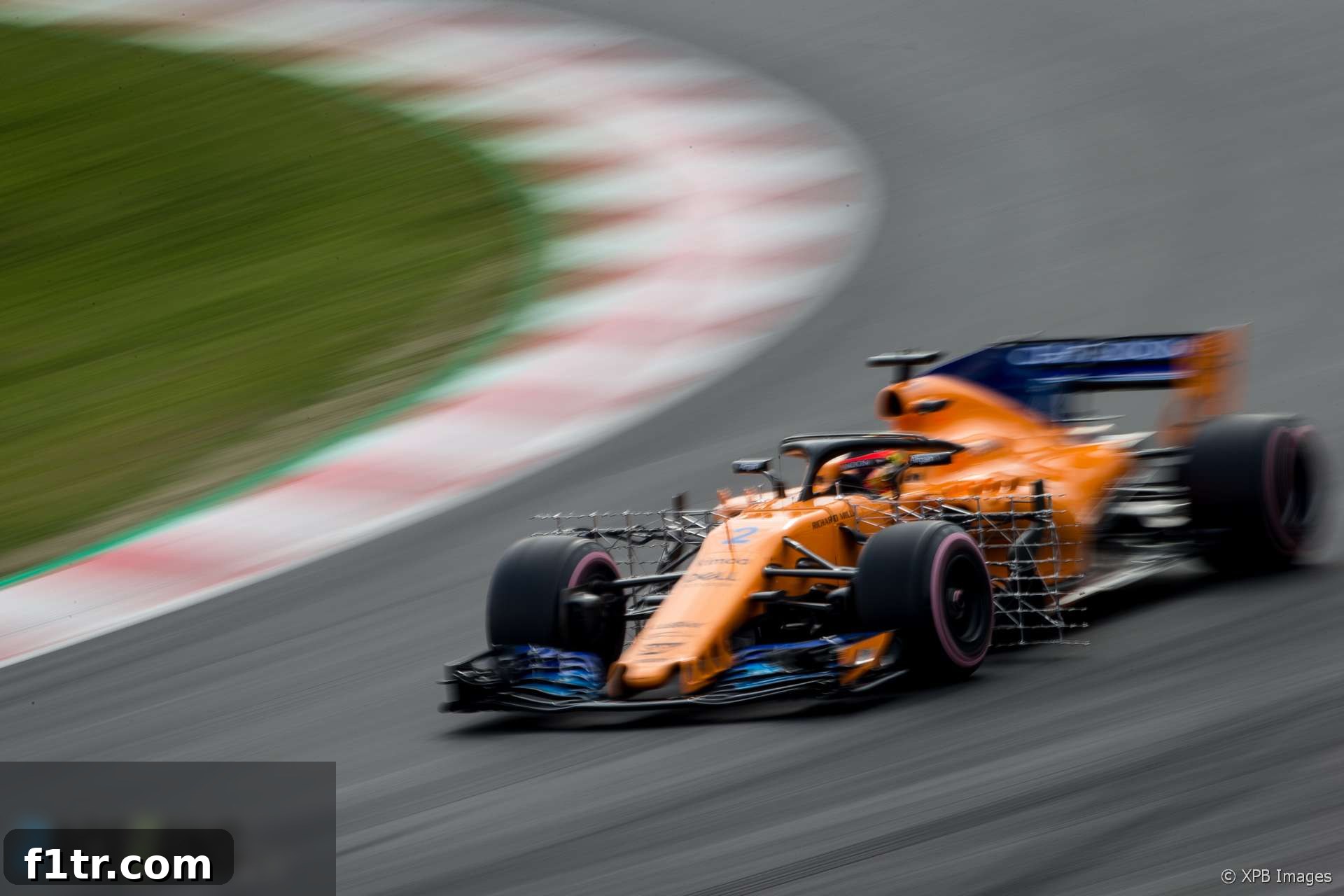
A prime example of a team making a notable step forward is McLaren. Armed with Pirelli’s brand new hyper-soft tyres, Stoffel Vandoorne, piloting the McLaren-Renault, managed to produce a lap time that was over a second faster than the best McLaren-Honda recorded in the equivalent test just twelve months prior. This substantial gain underscores the immediate impact of their highly publicized engine switch from Honda to Renault. The hyper-soft compound, being the softest and fastest in Pirelli’s 2018 range, naturally contributes to quicker lap times. However, the sheer margin of improvement for McLaren provides a much-needed morale boost and signals a potential resurgence for the Woking-based outfit, who have endured a challenging few seasons.
It’s crucial to contextualize McLaren’s impressive showing, as they appear to be outliers in terms of tyre usage. Most other teams, including many towards the top of the mileage charts, have set their best times using considerably harder compounds. Many have opted for tyres at least three stages softer than the hyper-softs (such as the yellow-walled softs) or even four stages softer (like the white-walled mediums, as observed with Mercedes). This strategic choice typically indicates a focus on understanding car behavior over longer runs and collecting reliable data on tyre degradation, rather than outright single-lap pace. The difference in tyre compounds makes direct lap time comparisons across the grid challenging and often misleading during testing. While McLaren’s pace on hyper-softs is encouraging, their true competitive standing will only become clearer once all teams push their cars on similar compounds and fuel loads.
Meanwhile, Force India has been undertaking more representative running, with Esteban Ocon at the wheel. The Silverstone-based team is known for its efficient and methodical approach to testing, often maximizing track time and data acquisition without chasing headline-grabbing lap times. Their focus typically lies in ensuring reliability and understanding the core characteristics of their new challenger before optimizing for outright performance. On the other end of the spectrum, Haas has endured a frustrating start to their testing campaign. As team principal Guenther Steiner candidly explained, a “crappy day” has hampered their progress. This struggle is evident in their current performance metrics, as they haven’t managed to get within two seconds of their best time from the same test period a year ago. Early reliability issues or setup challenges can significantly disrupt a team’s testing program, especially for smaller outfits with limited resources, making it difficult to catch up on lost track time and data collection.
Go ad-free for just £1 per month>> Find out more and sign up
Mileage Watch: Reliability and Endurance Define Early Success
While the allure of blistering lap times often captures headlines, the true barometer of a successful pre-season test often lies in the mileage accumulated. For Formula 1 teams, particularly the front-running outfits, these initial track days are less about setting records and more about rigorously testing every component of their new cars for reliability, understanding fundamental handling characteristics, and gathering vast amounts of data. High mileage signifies that a car is inherently reliable, allowing engineers to complete their extensive testing programs, validate simulations, and optimize the car’s setup for the challenging season ahead. Conversely, low mileage often points to underlying reliability issues, costing valuable track time and hindering a team’s preparation.
Against this backdrop, the early mileage charts for 2018 pre-season testing present an intriguing picture. While the customary “big teams” like Ferrari and Mercedes are diligently accumulating laps, ensuring their machines can withstand race distances and varying conditions, the presence of Toro Rosso among the top three in terms of distance covered is a significant development. This strong showing must undoubtedly bring immense cheer to power unit supplier Honda. After three difficult seasons with McLaren, marked by chronic reliability issues and underperformance, a robust start with their new partner Toro Rosso is a crucial confidence booster for the Japanese manufacturer. The fact that Toro Rosso has covered almost twice as much ground as former Honda users McLaren, who are once again rooted to the bottom of the mileage table after a second disrupted day, paints a stark contrast and highlights the differing fortunes of the two teams.
McLaren’s ongoing struggles with reliability, even after switching to Renault power, are a cause for concern. A second consecutive day of significant disruption, reportedly due to an exhaust problem, means precious track time and data are being lost. This poses a challenge for their engineers to fully understand and optimize the MCL33, especially with high hopes riding on their new engine partnership. For Toro Rosso and Honda, however, this strong early showing could be a pivotal moment, demonstrating that Honda’s power unit has made genuine strides in reliability and performance. This partnership, often seen as a proving ground for Honda before a potential future collaboration with Red Bull Racing, has started on an unexpectedly positive note, creating a compelling narrative for the season.
2018 Pre-Season Testing So Far (Early Days)
| Team | Distance |
|---|---|
| Ferrari | 828.6km |
| Mercedes | 823.9km |
| Toro Rosso | 814.6km |
| Williams | 810km |
| Red Bull | 800.7km |
| Renault | 763.4km |
| Sauber | 670.3km |
| Force India | 470.2km |
| Haas | 423.6km |
| McLaren | 409.6km |
2017 Pre-Season Testing Total (Full Test)
| Team | Distance |
|---|---|
| Mercedes | 5101.9km |
| Ferrari | 4445.5km |
| Williams | 3724km |
| Sauber | 3663.5km |
| Force India | 3654.2km |
| Red Bull | 3184km |
| Haas | 3170.1km |
| Renault | 2774.4km |
| Toro Rosso | 2718.5km |
| McLaren | 2127.3km |
Comparing the early 2018 figures with the total mileage from the entire 2017 pre-season test highlights the long road ahead for teams to validate their new cars. While Ferrari, Mercedes, and surprisingly Toro Rosso are leading the charge in 2018, having already covered significant ground, their current totals are still a fraction of what the top teams achieved over the full eight days of testing last year. This underscores the intense data collection and component durability required to be truly prepared for a grueling 21-race calendar. The lower mileage figures for teams like Haas, Force India, and particularly McLaren in 2018 suggest they are still struggling to complete their intended testing programs, which could have implications for their readiness for the opening grand prix in Australia. However, it’s also important to remember that testing is a dynamic process, and fortunes can shift rapidly as teams identify and rectify issues. The remaining days of testing will be crucial for these teams to catch up and gain valuable track time.
2018 F1 Season Insights
- F1 feared “death knell” for Drive to Survive after Ferrari and Mercedes snub
- McLaren staff told us we were “totally crazy” to take Honda engines in 2018 – Tost
- ‘It doesn’t matter if we start last’: How Red Bull’s junior team aided Honda’s leap forward
- Honda’s jet division helped F1 engineers solve power unit problem
- McLaren Racing losses rise after Honda split
Browse all 2018 F1 season articles