In the high-stakes world of Formula 1, where every fraction of a second can dictate victory or defeat, the intricate relationship between driver, car, and tyre technology remains paramount. Lewis Hamilton, the seven-time world champion and a prominent voice in the sport, has once again vocalized his strong appeal to Pirelli, Formula 1’s exclusive tyre supplier, for significant improvements in their tyre compounds. His core argument centers on the detrimental impact of excessive tyre management on the spectacle of racing, suggesting that current tyre characteristics often compel drivers to temper their aggression, thereby diminishing the thrill for both competitors and fans alike.
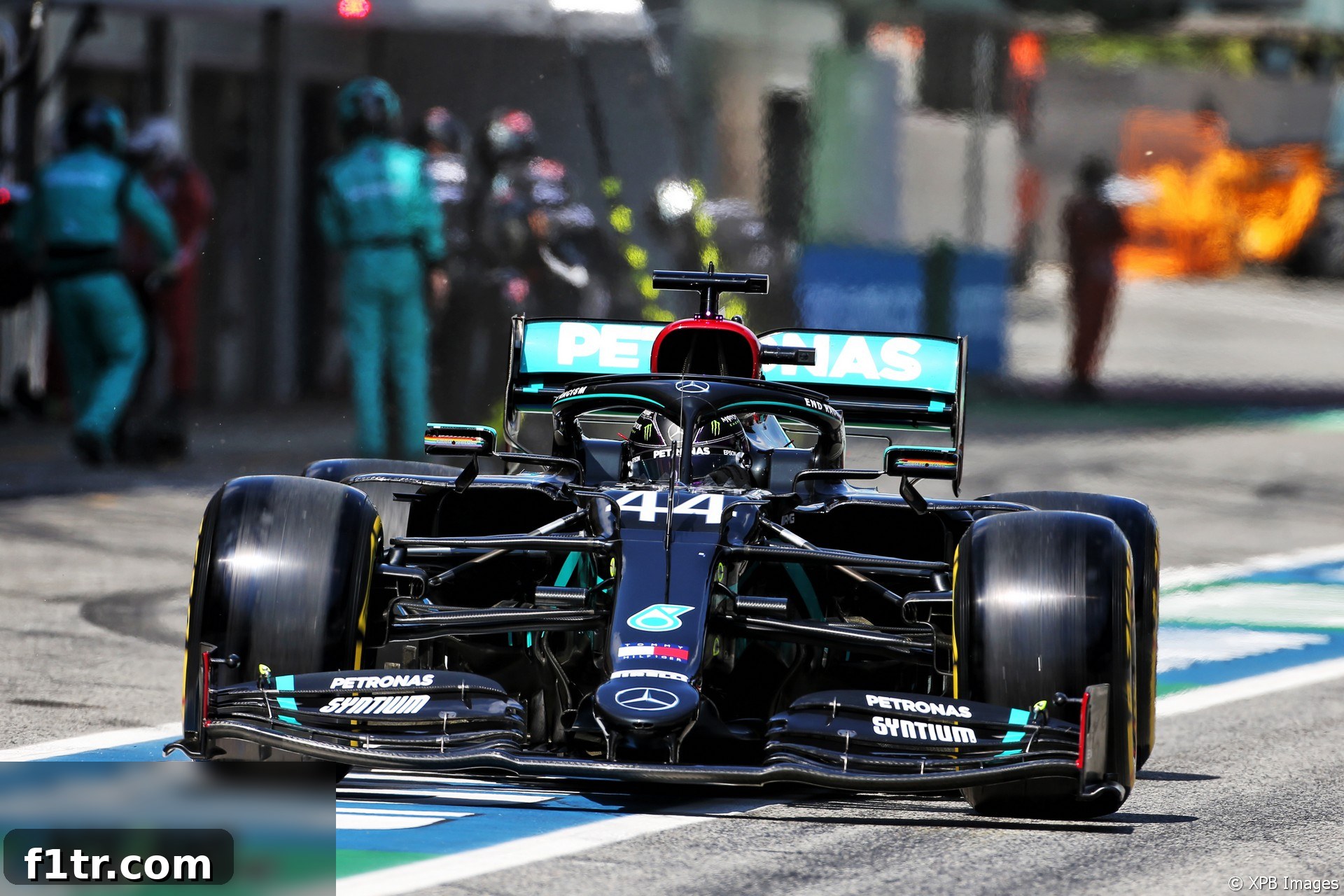
Hamilton’s recent commanding performance at the Spanish Grand Prix serves as a compelling case study for his assertions. Despite securing an emphatic 24-second victory, the Mercedes driver candidly admitted that his success was inextricably linked to meticulous tyre conservation rather than outright flat-out pace. Early in the race, while under considerable pressure from Red Bull’s formidable Max Verstappen, Hamilton deliberately moderated his pace. This strategic approach allowed him to preserve his tyres effectively, ultimately enabling him to pull away from Verstappen and even extend his initial stint beyond the team’s planned pit stop window.
“My strategy was fundamentally built around precise tyre management,” Hamilton elaborated after his Spanish GP triumph. “It was about understanding exactly when and where to push, a tactical approach that wasn’t necessarily what the team initially envisioned. The execution, I believe, was simply spot-on – how I managed the early stages with Max closely behind me, and subsequently how I was able to maintain that advantage.” He acknowledged that the tyres performed unexpectedly in terms of their wear characteristics but credited his protective driving style for allowing him to easily reach, and even surpass, his target stop lap.
However, this very demonstration of strategic brilliance underscored Hamilton’s broader concern: the current tyres demand an excessive degree of management, which he argues fundamentally undermines the essence of competitive racing. “Today, we were forced into a serious amount of management. And honestly, I don’t believe that’s what the fans desire,” Hamilton stated emphatically. “Nor is it what any racing driver truly wants – to be stuck multiple seconds behind another car, meticulously conserving tyres because the compounds simply aren’t robust enough. Our objective is to collaborate with Pirelli, to assist them in developing a superior tyre, should they be able to achieve it.”
The prevailing tyre situation in Formula 1 is a direct consequence of historical decisions and development challenges. For the 2020 season, Formula 1’s official tyre supplier, Pirelli, was compelled to utilize the identical tyre specifications from 2019. This was not by choice but by necessity, as all teams unanimously rejected the prototype compounds that Pirelli had developed for the 2020 season. This rejection highlighted a fundamental disconnect between Pirelli’s developmental goals and the practical requirements or preferences of the competing teams and drivers. Hamilton, who has consistently criticized Pirelli’s tyres previously, has proactively engaged in discussions surrounding the critical ‘target letter’ – a document provided by F1 to Pirelli that outlines the desired performance parameters and characteristics for future tyre specifications.
“It is imperative that we exert significant pressure on Pirelli for future tyre development,” Hamilton stressed. “Regrettably, they did not manage to develop a truly effective 2020 tyre by the end of last year, which consequently forced us to carry over the 2019 compounds into the current season. Historically, when the target letter was formulated, drivers were not integral to those discussions. This is precisely why I attended the Concorde meeting in Paris last year, representing the collective voice of the drivers. We aim to ensure that they establish the target letter correctly this time, as this process has not been executed properly for a considerable period.”
Looking ahead, the focus is squarely on the 2022 season, when new technical regulations will be introduced alongside new tyre specifications. While acknowledging that significant changes might not be feasible for 2021, Hamilton articulated clear objectives for the subsequent year: “For 2022, we desperately need a better tyre. We require a compound that delivers enhanced grip, significantly improved safety – a critically important aspect – and, crucially, one that enables us to race closer to other cars, thereby offering you, the fans, a more exhilarating and competitive spectacle.” This plea underscores the drivers’ desire for tyres that permit them to push the limits of their machinery without constant fear of degradation or catastrophic failure, thus fostering more wheel-to-wheel action and less strategic nursing.
The issue of tyre integrity and safety was starkly highlighted just two weeks prior to the Spanish Grand Prix, during the dramatic closing stages of the British Grand Prix. In that race, Hamilton himself, his Mercedes team mate Valtteri Bottas, and McLaren’s Carlos Sainz Jnr all experienced sudden and dangerous tyre failures. This series of incidents served as a potent reminder of the extreme stresses placed upon these vital components. In response to these concerns, the FIA, motorsport’s governing body, which had already agreed upon an initial reduction in downforce for the upcoming season to alleviate strain on the tyres, subsequently announced further downforce cuts for 2021 on safety grounds. Pirelli, for its part, has maintained that the tyres it had originally developed for 2020 – the very ones rejected by the teams – would have been better equipped to withstand the extraordinary loads and forces experienced at the high-speed Silverstone circuit.
This ongoing dialogue between drivers, teams, FIA, and Pirelli encapsulates the delicate balancing act inherent in Formula 1 tyre design. The challenge lies in creating tyres that are durable enough to endure the immense forces generated by modern F1 cars, yet also possess characteristics that promote exciting, strategic racing without becoming overly prescriptive. Drivers yearn for tyres that reward aggressive driving and allow for multiple overtaking opportunities without rapidly deteriorating into a state where management becomes the primary focus. The current generation of tyres, while technically advanced, often transforms races into complex chess matches of conservation, rather than unbridled sprints of speed and skill.
The long-term health and appeal of Formula 1 undeniably hinge on its ability to deliver captivating racing. If drivers are continuously forced to pull back, manage their pace, and avoid pushing their cars to the absolute limit due to tyre fragility or rapid degradation, the fundamental excitement of the sport is diminished. Hamilton’s impassioned plea, therefore, is not merely a critique of a product but a call for a collective effort to enhance the very fabric of Formula 1. A better tyre means more grip, higher cornering speeds, reduced risk of catastrophic failures, and ultimately, a more aggressive and visually thrilling spectacle for the millions of fans worldwide who tune in to witness the pinnacle of motorsport.
The collaboration between all stakeholders, particularly the direct input from the drivers who push these machines to their limits, is crucial in shaping the next generation of Formula 1 tyres. The ambition for 2022 is clear: to usher in a new era where tyre technology empowers drivers to unlock their full potential, allowing them to race flat-out, chase down rivals, and engage in genuine wheel-to-wheel combat, thereby ensuring that Formula 1 remains the ultimate test of man and machine.
2020 F1 season
- Grosjean to make F1 test return tomorrow for first time since Bahrain horror crash
- Pictures: Wrecked chassis from Grosjean’s Bahrain fireball crash to go on display
- Bottas vs Rosberg: Hamilton’s Mercedes team mates compared after 78 races each
- F1 revenues fell by $877 million in Covid-struck 2020 season
- Hamilton and Mercedes finally announce new deal for 2021 season
Browse all 2020 F1 season articles