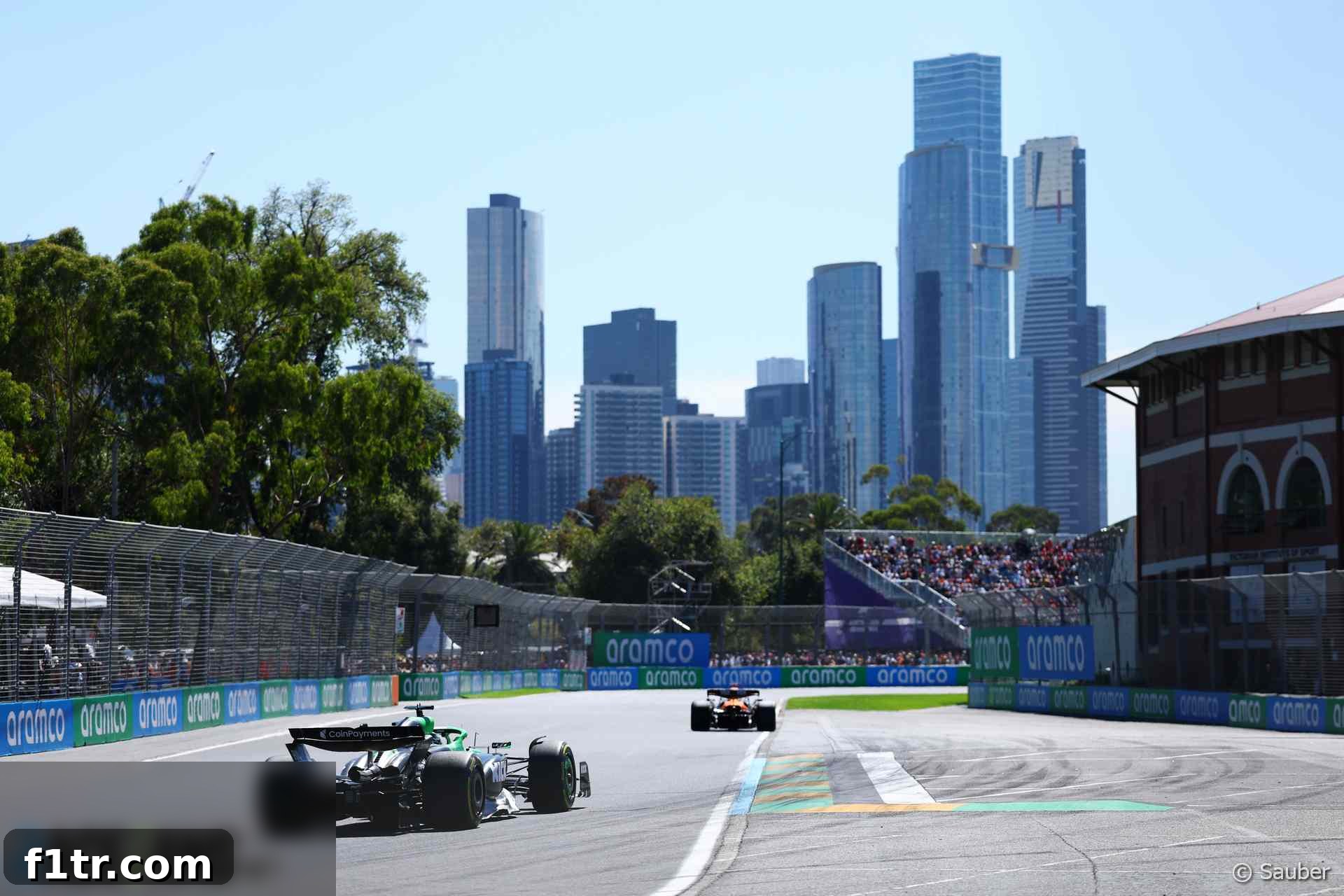
2025 Australian Grand Prix: Second Practice Report – Leclerc Leads a Tightly Contested Field in Melbourne
The highly anticipated second practice session for the 2025 Australian Grand Prix at the iconic Albert Park Circuit has concluded, with Charles Leclerc of Ferrari emerging as the fastest driver. The session provided crucial insights into team performance and tire management, setting the stage for a thrilling qualifying and race weekend. From blistering lap times to unexpected incidents and mechanical woes, Friday in Melbourne offered a compelling glimpse into the competitive landscape of the new Formula 1 season. Teams worked tirelessly to fine-tune their setups under the challenging Australian conditions, with variable grip levels and the ever-present threat of gravel traps keeping drivers on high alert. The afternoon session, held under clear skies, saw an intense battle for supremacy as teams pushed the limits of their machinery in pursuit of ultimate pace.
Leclerc Puts Ferrari on Top as Pace Intensifies
As the chequered flag waved to signal the end of the session, it was Charles Leclerc who stood atop the leaderboard, demonstrating formidable pace in his Ferrari. His best lap of 1’16.439 was a testament to both driver skill and the car’s strong performance, outpacing his closest rival by over a tenth of a second. This impressive showing positions Ferrari as a significant threat for pole position. Leclerc’s smooth driving and ability to extract maximum performance from the soft compound tires underlined the potential of the Scuderia package around the demanding Albert Park circuit. Earlier in the session, Leclerc had already showcased his intent by setting the fastest first sector time, indicating a strong baseline setup. Despite encountering some understeer in the final sector on an earlier attempt, he recovered magnificently to lay down the benchmark lap, which remained unchallenged by the session’s end. The clean run through the middle and final sectors was crucial in securing his top spot, showcasing a marked improvement in balance compared to his earlier runs.
McLaren Shows Strong Form with Norris and Piastri
McLaren continued to impress in their home race, with Lando Norris and Oscar Piastri both featuring prominently at the sharp end of the timing sheets. Norris initially set the pace with a 1’16.580 on softs, a two-tenth advantage over the then-second placed driver, hinting at McLaren’s strong underlying speed. Despite a momentary off-track excursion during his pit lane exit earlier in the day, Norris quickly found his rhythm. Towards the end of the session, he even switched back to softs for a final push, underlining the team’s relentless pursuit of performance. Piastri, keen to make an impression in front of his home crowd, also delivered a stellar performance. He went quickest in the final sector on his way to setting the second-fastest time of the session, just a tenth off Leclerc’s leading pace. This solid showing from both McLaren drivers suggests they have a well-balanced car capable of challenging for podium finishes this weekend, highlighting the fierce competition at the top of the field.
Verstappen’s Challenging Afternoon Session
In contrast to Leclerc and the McLarens, reigning world champion Max Verstappen endured a somewhat subdued second practice session. The Red Bull driver struggled to string together a representative lap time, encountering various challenges throughout the 60 minutes. Early in his soft-tire run, he reported a twitch of oversteer at Turn Three, forcing him to back out of a potentially quick lap. Later, traffic became a significant impediment, preventing him from unleashing the full potential of his RB21. Despite managing a personal best in the first sector towards the end of the session, his final time of 1’17.063 placed him seventh, several tenths adrift of the leaders. While it’s common for top teams to hide their true pace in practice, Verstappen’s visible frustrations and lack of a clean run suggest Red Bull still has work to do to optimize their package for Albert Park. The team will be analyzing data meticulously to ensure their star driver is in a stronger position for qualifying.
Incidents, Track Limits, and Mechanical Woes
The unforgiving nature of the Albert Park circuit was evident throughout FP2, with several drivers encountering difficulties. Fernando Alonso momentarily strayed onto the grass at Turn One, a testament to the fine margins at play. Pierre Gasly experienced a more dramatic incident, ending up in the gravel trap at Turn Three, reporting “I can’t brake” over the radio – a concerning issue for Alpine. Nico Hulkenberg’s session proved particularly eventful. After initially reporting a ‘safety plug’ issue requiring an early pit stop, he later clattered through the gravel trap at Turn Six, necessitating significant work on his Sauber’s floor by the mechanics. This costly excursion meant lost track time for the German driver, impacting his setup development. Furthermore, the gravel at the exit of Turn Six once again accumulated a significant amount of debris, mirroring a similar situation in FP1, though fortunately, it did not trigger a red flag this time. These incidents underscore the demanding character of the circuit and the fine line between pushing for pace and overstepping the mark.
Bearman’s Debut Hopes Dashed by Damage
For rookie sensation Oliver Bearman, the second practice session proved to be a disheartening experience. Having damaged his Haas in the first practice session, the mechanics were seen working intensely on his car, which remained on stands in the garage for the majority of FP2. Despite finally donning his helmet with only four minutes remaining, he ultimately did not make it out onto the track before the chequered flag dropped. This lost track time is a significant blow for Bearman, who is making his highly anticipated debut at the 2025 Australian Grand Prix. Understanding the circuit and gathering crucial data are paramount for a new driver, and missing a full practice session will undoubtedly put him on the back foot for the remainder of the weekend. The Haas team will be working overnight to repair the car and ensure he can participate fully in FP3.
Midfield Battles and Emerging Talents Shine
The midfield battle proved to be as tight as ever, with several drivers and teams showcasing encouraging pace. Yuki Tsunoda put in a commendable performance for Racing Bulls, briefly holding the fastest time with a 1’16.784, demonstrating the car’s potential. Young talents also made their mark, with Isack Hadjar producing a decent lap for fifth position, suggesting Racing Bulls could be a dark horse this weekend. Andrea Kimi Antonelli, another highly anticipated rookie, secured tenth place on softs, three-tenths shy of his teammate, showing promising signs in his early F1 career. However, it wasn’t all smooth sailing for the young drivers; Liam Lawson finished 14th on softs, with his lap marred by exceeding track limits at Turn Four. Williams, who caught the eye in the first session, continued their solid work, with Alexander Albon also setting a personal best first sector time towards the session’s close. Carlos Sainz Jnr initially struggled with traffic but eventually found a clear lap, going quickest on medium tires with a 1’17.302, just five-hundredths off Norris’s earlier soft-tire benchmark. Even George Russell joined the fray, briefly snatching the top spot from Norris by a tenth of a second while running on hard tires, indicating Mercedes’ versatile setup capabilities.
Tire Strategies and Setup Optimizations
The practice session also provided valuable insights into team tire strategies and setup adjustments. With drivers experimenting across soft, medium, and hard compounds, the relative performance of each tire type became clearer. The soft tires were, predictably, the fastest, utilized by most drivers for their quick laps. However, the medium compound also showed strong potential, as demonstrated by Sainz and Norris setting competitive times on them. Russell’s brief stint at the top on hard tires was particularly noteworthy, suggesting that some teams are looking for durability and consistency over raw single-lap pace, which could be critical for race strategy. Teams were diligently gathering data on tire degradation and optimal operating windows for each compound. The challenging turns of Albert Park, coupled with its relatively abrasive surface, demand careful tire management, and FP2 served as a crucial data-gathering exercise. Engineers will now pour over the telemetry to refine their strategies for Saturday’s qualifying, where tire choice for Q1 and Q2 can have a significant impact, and Sunday’s main event.
As Friday’s practice sessions conclude in Melbourne, the competitive landscape appears incredibly tight. While Charles Leclerc leads the pack, the McLaren duo of Lando Norris and Oscar Piastri are hot on his heels, and even a hard-tire run from George Russell showcased Mercedes’ potential. Max Verstappen and Red Bull will be aiming for a stronger showing in FP3 after a challenging second session. The stage is now perfectly set for a captivating weekend of racing at the 2025 Australian Grand Prix. With only six-tenths of a second separating the seven fastest different cars in the opening session, and FP2 demonstrating similar close competition, fans can anticipate thrilling action in qualifying and the race. The drivers and teams will now focus on reviewing data and making final adjustments, ensuring they are fully prepared for the crucial sessions ahead.
Key Takeaways from Friday in Melbourne:
- Charles Leclerc fastest for Ferrari, demonstrating strong single-lap pace.
- McLaren shows excellent form with Lando Norris and Oscar Piastri closely behind.
- Max Verstappen faced challenges with traffic and oversteer, finishing seventh.
- Oliver Bearman missed FP2 entirely due to car damage.
- Several incidents involving gravel traps and track limits, highlighting the circuit’s demands.
- Tight midfield battle with promising runs from Yuki Tsunoda and Isack Hadjar.
More from the 2025 Australian Grand Prix
- F1 rules change to prevent repeat of Verstappen-Bearman Australian GP confusion
- Contact with team mate may have led to Bortoleto’s Australian GP crash
- Hamilton dismisses ‘negativity’ over his radio calls. ‘Other drivers are almost abusive’
- Antonelli “got really scared” when he made “big save” on first lap of Australian GP
- Williams explain role played by car’s systems in Sainz’s race-ending crash
Browse all 2025 Australian Grand Prix articles