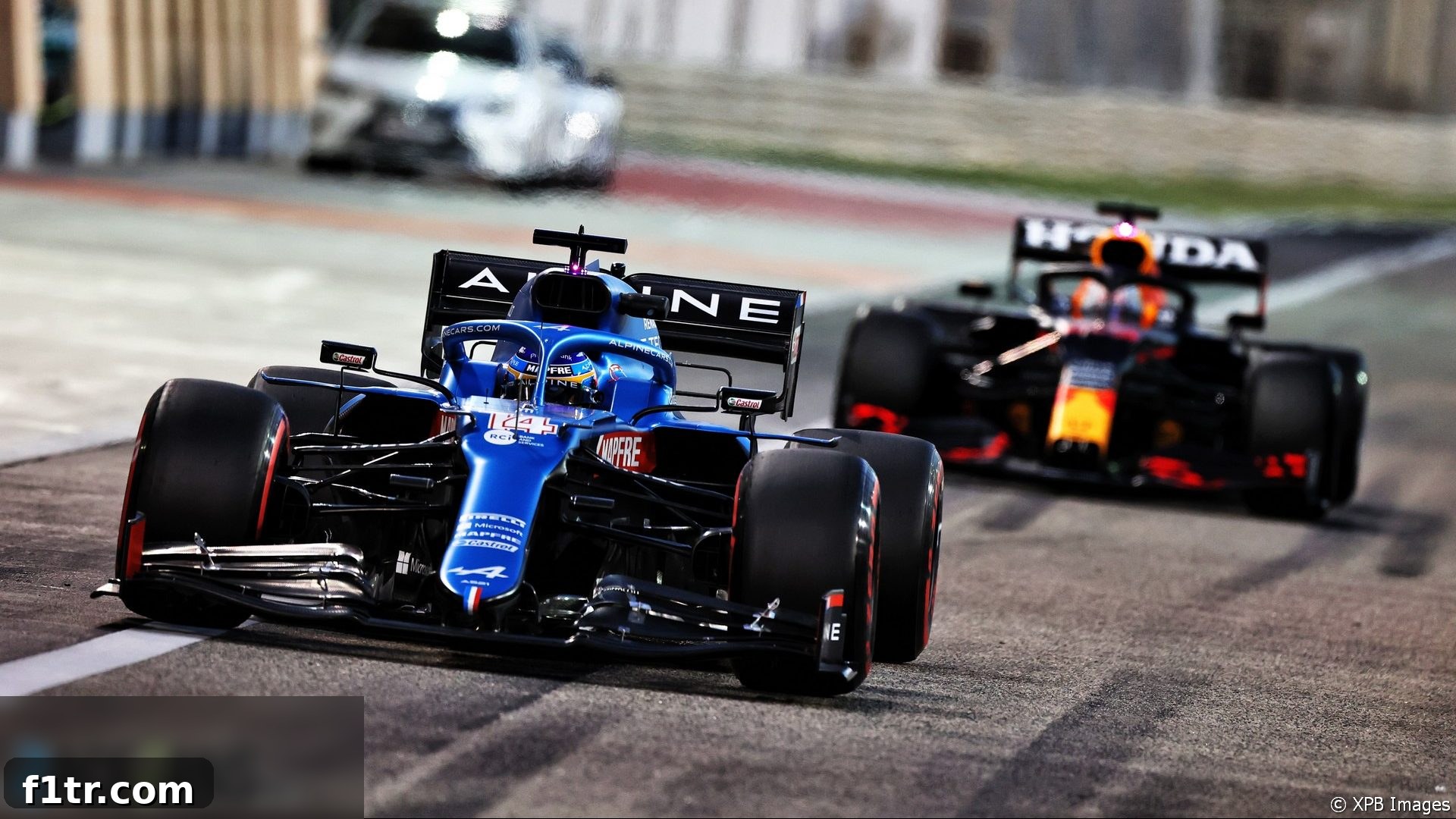
Formula 1 teams are advocating for a significant increase in pre-season testing days for the upcoming 2022 season. This unanimous call comes as the sport prepares to introduce its most radical technical regulation overhaul in decades, necessitating extensive track time for teams to adapt to and understand their entirely new machinery.
Advert | Become a Supporter & go ad-free
The Dawn of a New Era: Why 2022 Demands More Testing
The highly anticipated 2022 Formula 1 season marks a pivotal moment for the sport. Originally slated for 2021, the introduction of groundbreaking new technical regulations was delayed by a year due to the global pandemic, a measure primarily aimed at cost-saving across the grid. This delay also allowed teams to carry over their most recent car designs into the 2021 season with only minimal modifications, ensuring financial stability during an unprecedented period of uncertainty.
However, the temporary relief of a “carry-over” season meant that pre-season testing for 2021 was drastically cut from the traditional six days down to a mere three. While this reduced schedule was deemed acceptable for cars that were essentially refined versions of their predecessors, several prominent team figures have made it clear that such limited track time will be wholly insufficient for the all-new 2022 contenders.
Understanding the Radical 2022 Technical Regulations
The 2022 regulations are designed with a singular, ambitious goal: to promote closer racing and enable drivers to follow each other more effectively. This is achieved through a fundamental redesign of the cars’ aerodynamics, most notably with the reintroduction of ground effect principles. The new rules simplify the upper bodywork aerodynamics, aiming to reduce the turbulent “dirty air” that makes following difficult, and instead generate downforce from sculpted underfloors.
Beyond aerodynamics, the cars will feature new 18-inch wheels paired with low-profile tires, a significant departure from the 13-inch wheels used for decades. This change impacts everything from suspension design and tire dynamics to driver feel and car balance. Furthermore, standardized components and stricter cost cap regulations mean that every decision, from design to testing, carries greater weight and financial consequence.
These comprehensive changes mean that teams will effectively be building a completely new car from the ground up. Every aspect, from chassis stiffness and suspension geometry to brake cooling and power unit integration, will need to be re-evaluated and tested extensively. Without adequate testing, there’s an increased risk of reliability issues, unforeseen performance limitations, and even potential safety concerns as teams push the boundaries of the new rulebook.
Team Principals’ Unified Call for Extended Track Time
The sentiment across the paddock is overwhelmingly in favour of more testing. AlphaTauri team principal Franz Tost articulated the common concern in response to a query from RaceFans, stating, “Next year we have a new car and therefore I don’t think that three test days will be enough.” Tost acknowledged the financial implications, adding, “But we have to find a good balance between the number of the days and the costs because 2022 will not be quite cheap and therefore we have to take everything into consideration.” This highlights the delicate balancing act between essential development and managing expenses under the F1 cost cap.
Aston Martin CEO Otmar Szafnauer echoed Tost’s stance, emphasizing the fundamental nature of the changes. “Like Franz says we’re going to have an entirely new car next year and that should go into considering where and for how long we test next year,” he remarked. Szafnauer also clarified why the abbreviated 2021 testing schedule was appropriate, noting, “I think three days was appropriate for this year with what happened in 2020, the pandemic and reducing the amount of development in the car.” His comments underscore the distinct needs of a revolutionary car versus an evolutionary one.
Alpine executive director Marcin Budkowski provided a more concrete proposal for the ideal duration. He expressed a desire for next year’s testing schedule to be “closer to what we had in the past – somewhere between four and six [days], but closer to six, I would say.” This suggestion reflects the historical norm for introducing significant regulation changes, offering teams a more robust opportunity to iron out kinks and gather crucial data before the competitive season begins.
The consensus among these high-ranking officials underscores the criticality of pre-season track time. It’s not just about setting lap times; it’s about validating simulation data, understanding how the new aerodynamic concepts behave in real-world conditions, learning the new tire characteristics, and ensuring the car’s fundamental reliability over race distances. With a completely fresh design concept, every additional day of testing provides invaluable insights that could define a team’s early-season performance and trajectory.
The Strategic Debate: Bahrain vs. Barcelona for Pre-Season Testing
The discussion around testing isn’t solely about duration; the location also plays a significant role. The 2021 pre-season test was controversially relocated from its traditional home at Spain’s Circuit de Catalunya to the Bahrain International Circuit. This switch was a direct consequence of the Australian Grand Prix’s cancellation, which led to the Middle Eastern circuit taking over as the season-opening round of the championship.
While testing in Bahrain offered the convenience of being at the season opener, Marcin Budkowski highlighted a fascinating cost-benefit analysis between the two venues. He suggested that the financial advantages of testing at the Circuit de Catalunya, near Barcelona, could potentially outweigh the benefit of Bahrain’s typically warmer and more reliable weather conditions.
Pros and Cons of Testing Locations:
- Bahrain International Circuit:
- Advantages: Generally consistent, warm, and dry weather, providing reliable conditions for data collection without significant interruption from rain or cold. Proximity to the season-opening race (as was the case in 2021) streamlines logistics for teams who can leave equipment in place.
- Disadvantages: Geographically distant from most European team bases, leading to higher logistical costs and increased complexity for transporting personnel, equipment, and spare parts. While usually sunny, the possibility of sandstorms exists, which can disrupt running and compromise data.
- Circuit de Catalunya, Barcelona:
- Advantages: Logistically much easier and significantly cheaper for the predominantly European-based teams. Its familiar layout allows for direct comparisons with historical data, though this is less relevant for a completely new car concept. The track offers a good mix of high-speed and technical sections.
- Disadvantages: Weather in early spring (when testing typically occurs) can be unpredictable, with colder temperatures and a higher chance of rain or even snow, which can severely limit dry running and data collection. However, as Budkowski noted about 2021, “even the sandstorm [in Bahrain] wasn’t that bad, actually,” suggesting that even Bahrain isn’t immune to weather challenges, and Spain can offer solid days.
For a radical new car, consistent weather is often paramount to gather reliable baseline data and ensure components are tested under stable conditions. However, the burgeoning F1 cost cap means that every expenditure, including travel and logistics, comes under intense scrutiny. Teams will have to weigh the absolute necessity of predictable conditions against the significant financial implications of choosing a distant testing venue. The decision for 2022’s pre-season testing location will undoubtedly be a strategic one, aiming to balance critical development needs with economic prudence.
Advert | Become a RaceFans supporter andgo ad-free
Looking Ahead: The Crucial Role of 2022 Pre-Season Testing
The 2022 Formula 1 season promises a spectacular refresh for the sport, with cars designed to promote closer, more thrilling racing. However, the success of this ambitious regulatory overhaul hinges significantly on the preparation period. Teams are united in their belief that the complexities of designing and optimizing entirely new cars under a fresh rulebook demand more than just a fleeting three-day test. The call for an extended pre-season schedule – ideally six days – is a plea for adequate time to ensure reliability, understand performance characteristics, and fine-tune these revolutionary machines.
The debate between testing duration and location encapsulates the challenges facing modern Formula 1: pushing technological boundaries while maintaining financial responsibility. As the countdown to 2022 begins, the F1 community eagerly awaits a decision that will shape the competitive landscape of what could be one of the most exciting seasons in recent memory. Sufficient testing will not only give teams a fair chance to adapt but will also ensure that fans witness a thrilling and reliable spectacle from the very first race.
More on the 2022 F1 season
- Mercedes told me “you’re wrong” about 2022 car’s problems – Hamilton
- FIA confirms all 10 F1 teams complied with 2022 cost cap
- Steiner “not ashamed” of panning “slow” Schumacher in Drive to Survive
- Albon believes year out of F1 improved him as a driver
- Hamilton sees diversity gains in F1 years on from his ‘traumatising’ experience of racism
Browse all 2022 F1 season articles