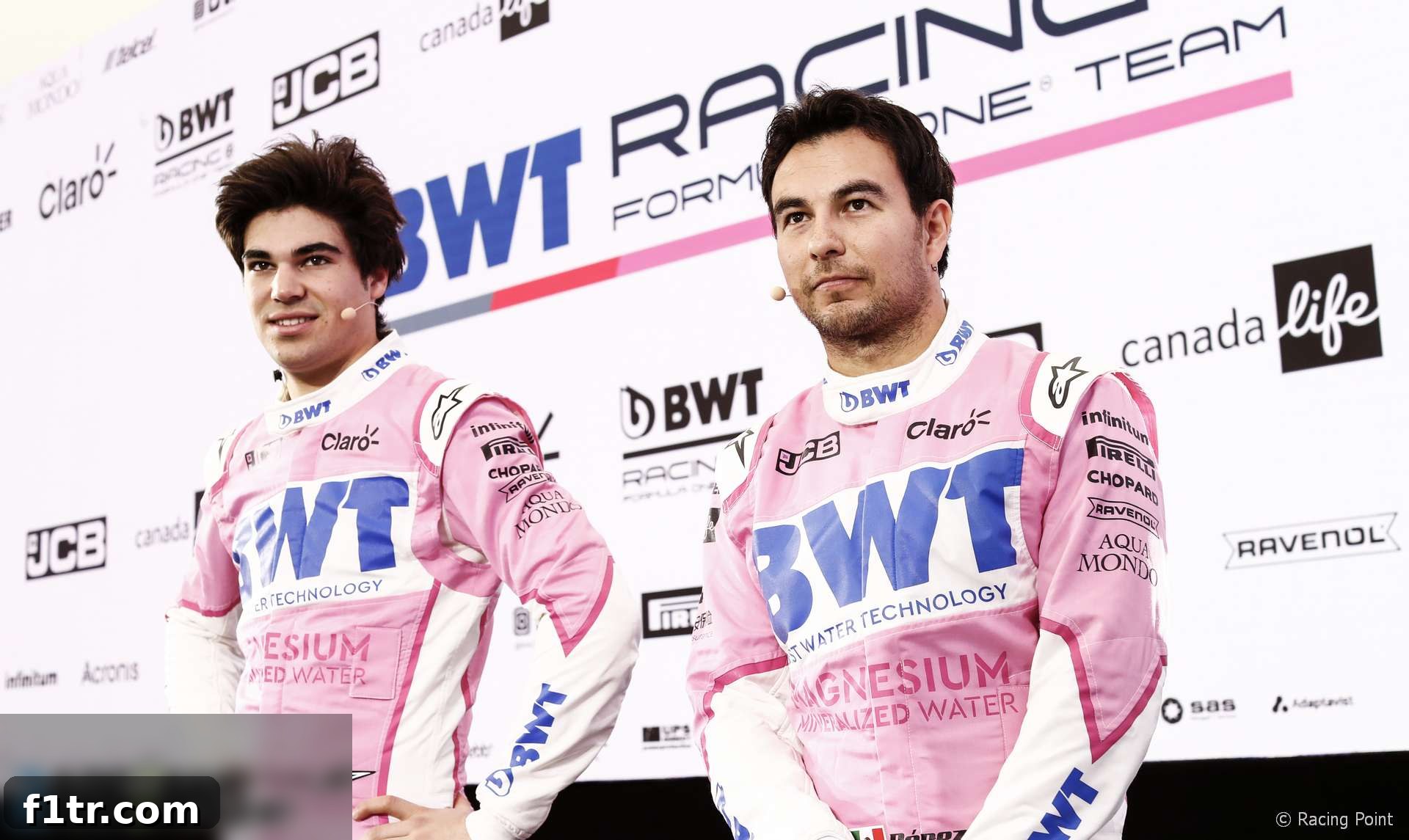
In a monumental shift poised to reshape the landscape of Formula 1, Racing Point drivers Lance Stroll and Sergio Perez have expressed profound enthusiasm regarding the team’s imminent transformation into Aston Martin’s official factory F1 operation. This strategic rebrand, slated for the upcoming 2021 F1 season, is heralded by both drivers as “a big step in the right direction for the team,” signaling a new era of ambition and potential for the Silverstone-based outfit.
The announcement confirms what many in the paddock had anticipated, particularly following the significant investment by Lawrence Stroll, Lance’s father and co-owner of the Racing Point team, into the iconic British luxury car manufacturer, Aston Martin Lagonda. This financial infusion paved the way for a deeper synergy between the road car brand and its Formula 1 counterpart. Lance Stroll, privy to these high-level discussions, affirmed his prior knowledge of the plans, which were initially reported by RaceFans last year, indicating a well-orchestrated strategic move rather than an impromptu decision.
A New Dawn: Aston Martin’s Return to Formula 1 as a Factory Team
The transition of Racing Point into a full-fledged Aston Martin factory team marks an extraordinary moment for the sport and the storied British marque. For decades, Aston Martin has been synonymous with elegance, performance, and sophistication. Its re-entry into Formula 1, not merely as a sponsor but as a complete constructor, injects a potent blend of heritage and cutting-edge ambition into the grid. This move is more than just a name change; it represents a comprehensive commitment to Formula 1 at the highest level, backed by a clear vision for success.
Lawrence Stroll’s strategic genius is at the heart of this transformation. His investment in Aston Martin Lagonda was predicated on a dual vision: revitalizing the luxury road car brand and using the unparalleled global platform of Formula 1 to amplify its presence and appeal. Becoming a factory team provides unparalleled marketing opportunities, allowing Aston Martin to showcase its engineering prowess, design philosophy, and commitment to performance on the world stage. It signals a serious intent to compete at the very pinnacle of motorsport, leveraging the glamour and technological advancements inherent in Formula 1 to strengthen the brand’s identity.
Driver Perspectives: Excitement and High Expectations
Lance Stroll: A Personal Connection to the Brand
For Lance Stroll, the prospect of racing under the Aston Martin banner is particularly poignant, given his family’s deep involvement. “We talk on a pretty regular basis, so I saw it coming,” he revealed in response to a RaceFans inquiry, highlighting the intimate knowledge he possesses regarding the team’s trajectory. His personal connection to the brand, combined with his role as a driver, places him at the epicenter of this exciting transformation.
Stroll’s admiration for Aston Martin extends beyond the racing track. “It’s a sexy car to look at,” he noted, expressing a sentiment shared by automotive enthusiasts worldwide. “I’ve never actually driven one on the road, but they’re a hell of a brand and they’ve got an incredible name.” This recognition of Aston Martin’s legacy and prestige underscores the immense value it brings to the Formula 1 team. From a team perspective, he believes, “I think for Lawrence, for the Formula 1 team, for everyone involved in Racing Point, it’s a big uplift in excitement and that should bring the team more value. It’s great in many ways.” This “uplift in excitement” is not just emotional; it translates into tangible benefits such as increased sponsorship opportunities, enhanced recruitment potential for top talent, and a stronger bargaining position within the sport.
Sergio Perez: Embracing the Factory Team Challenge
Sergio Perez, a veteran driver who committed his future to the team with a multi-year deal last year, echoed Stroll’s enthusiasm, emphasizing the profound significance of the transition. “It’s a huge step to all of a sudden become a factory [team] with such an iconic brand,” Perez stated. For a driver of his experience, joining a factory team signifies access to greater resources, more direct development pathways, and a higher level of integration with the parent company’s engineering and design capabilities. This elevates the team’s status from a strong privateer to a manufacturer-backed contender, a crucial distinction in modern Formula 1.
Perez’s perspective highlights the long-term implications for the team’s competitive outlook. “It’s just great. It’s another big step in the right direction for the team.” This sentiment reflects a deep understanding of what it takes to succeed in Formula 1 – not just talent on track, but also sustained investment and a clear strategic vision off it. Becoming Aston Martin isn’t merely a rebranding exercise; it’s a declaration of serious intent to climb to the forefront of the grid.
The 2020 Season: A Pivotal Final Chapter for Racing Point
While anticipation builds for the 2021 Aston Martin debut, Sergio Perez firmly believes that Racing Point is poised for a strong final year before its transformation. This commitment to finishing the current chapter on a high note is vital for building momentum and confidence heading into the new era. “I think this year we’re going to see big results from us,” he predicted, demonstrating unwavering belief in the team’s current capabilities.
Perez’s optimism stems from a profound appreciation of the journey the team has undertaken. “Obviously, right now, everyone is very confident but hopefully once we are in Melbourne we are able to do show to ourselves we’ve done good work throughout the last years,” he articulated, referencing the extensive effort poured into the car’s development. The team, known previously as Force India, navigated extremely challenging financial waters, even entering administration before being rescued by Lawrence Stroll’s consortium. These “very difficult periods” forged a resilient spirit and a determined workforce.
The 2020 car, the RP20, often colloquially referred to as the ‘Pink Mercedes’ due to its striking resemblance and performance characteristics akin to the previous year’s championship-winning Mercedes, represented the culmination of years of dedicated work and strategic decision-making. “The car is the work of so many years in the team,” Perez emphasized. “The team has gone through very difficult periods and I hope finally this car is the car that we’ve been waiting, all of us, for many years.” This statement captures the collective hope that the 2020 season will validate their perseverance and serve as a powerful launchpad for the Aston Martin era. A strong performance in their final Racing Point guise would not only boost morale but also attract further talent and investment, making the Aston Martin transition even more formidable.
Beyond the Rebrand: The Strategic Significance of a Factory F1 Team
The strategic decision to transform Racing Point into a factory Aston Martin F1 team carries immense weight, extending far beyond the immediate thrill of a name change. For Aston Martin, it represents a bold statement of intent in the luxury automotive market. Formula 1 provides an unparalleled global marketing platform, reaching hundreds of millions of viewers worldwide. This exposure is invaluable for enhancing brand awareness, particularly in emerging markets, and for reinforcing Aston Martin’s image as a high-performance, technologically advanced luxury brand.
From a technical standpoint, becoming a factory team opens doors to deeper integration between the F1 operation and the road car division. While the F1 team will continue to operate with a degree of autonomy, the shared brand identity encourages cross-pollination of ideas, technologies, and engineering expertise. Innovations developed on the race track—from advanced aerodynamics to lightweight materials and hybrid power solutions—can potentially filter down to Aston Martin’s road cars, enhancing their performance and desirability. Conversely, the design philosophy and luxury ethos of Aston Martin can inspire the aesthetics and brand presentation of the F1 team.
The financial backing and resources that come with being a factory team are also critical. Competing in Formula 1 demands substantial investment in research and development, state-of-the-art facilities, and attracting top-tier engineering talent. Lawrence Stroll’s vision and investment in Aston Martin Lagonda are designed to ensure that the F1 team has the necessary capital and strategic direction to compete consistently at the sharp end of the grid. This commitment provides stability and a long-term roadmap for success, contrasting sharply with the financial uncertainties that plagued the team in its earlier incarnations.
Ultimately, the transition to Aston Martin F1 is not just about competing; it’s about winning. It’s about restoring a legendary name to a prominent position in motorsport and using that platform to drive both sporting glory and commercial success for the Aston Martin brand globally. The excitement expressed by Lance Stroll and Sergio Perez is a testament to the palpable energy and renewed sense of purpose permeating the team as they embark on this ambitious new chapter.
2020 F1 season
- Grosjean to make F1 test return tomorrow for first time since Bahrain horror crash
- Pictures: Wrecked chassis from Grosjean’s Bahrain fireball crash to go on display
- Bottas vs Rosberg: Hamilton’s Mercedes team mates compared after 78 races each
- F1 revenues fell by $877 million in Covid-struck 2020 season
- Hamilton and Mercedes finally announce new deal for 2021 season
Browse all 2020 F1 season articles