The world of Formula 1, often viewed as a pinnacle of technological advancement and sporting prowess, has increasingly found itself at the intersection of sport and social justice. This weekend, ahead of the Portuguese Grand Prix, a significant controversy erupted, casting a spotlight on the sport’s commitment to its stated values of diversity and inclusion. At the heart of this storm was seven-time world champion Lewis Hamilton, who voiced strong criticism regarding the appointment of former Formula 1 driver Vitaly Petrov as one of the race stewards for the event. Hamilton’s discontent stemmed directly from comments the former F1 racer had made just last month, which were widely perceived as insensitive and regressive concerning anti-racism movements and LGBTQ+ rights.
The role of a race steward in Formula 1 is critical, demanding impartiality, deep knowledge of the regulations, and a commitment to upholding the integrity of the sport. Stewards are responsible for making crucial decisions during race weekends, including penalties for infringements, which can significantly impact championship outcomes. Therefore, the individuals selected for these positions are expected to embody the highest standards of professionalism and fairness, free from any biases that could compromise their judgment or the sport’s reputation. It was against this backdrop that Hamilton’s remarks gained particular weight, challenging the very foundation upon which such appointments are made by the FIA, Formula 1’s governing body.
Advert | Become a Supporter & go ad-free
The Controversial Remarks: A Clash of Ideologies
The controversy ignited following an interview Vitaly Petrov gave to the Russian publication Championat. In his statements, Petrov openly criticized Lewis Hamilton and other drivers for their solidarity gestures, specifically ‘taking a knee’ in support of anti-racism protests and the Black Lives Matter movement. This gesture, a powerful symbol of protest against racial injustice and police brutality, had been adopted by many athletes globally, including a majority of Formula 1 drivers, as a visible sign of their commitment to social change. Petrov’s comments dismissed these actions, questioning their necessity and impact within the sport.
Beyond his critique of the anti-racism stance, Petrov went further, making highly problematic and divisive statements regarding LGBTQ+ rights. He was quoted questioning whether drivers would “urge everyone to become gay” and race under a rainbow flag if one of their number came out. These remarks not only trivialized the struggles for equality faced by the LGBTQ+ community but also demonstrated a significant lack of understanding and empathy. Such statements stand in stark contrast to the global push for inclusivity and acceptance, particularly within high-profile sports like Formula 1, which are increasingly striving to represent a diverse global audience and foster an environment of belonging for all.
The timing of these comments was particularly poignant, coming as Formula 1 had launched its comprehensive “#WeraceAsOne” initiative earlier in the season. This campaign was specifically designed to promote diversity, inclusion, and anti-racism across the sport, from the paddock to the grandstands. Petrov’s remarks, therefore, appeared to directly undermine the very principles and messages that Formula 1 was attempting to champion, creating a significant ideological clash that Lewis Hamilton was quick to highlight.
Hamilton’s “Surprise” and Call for Consciousness
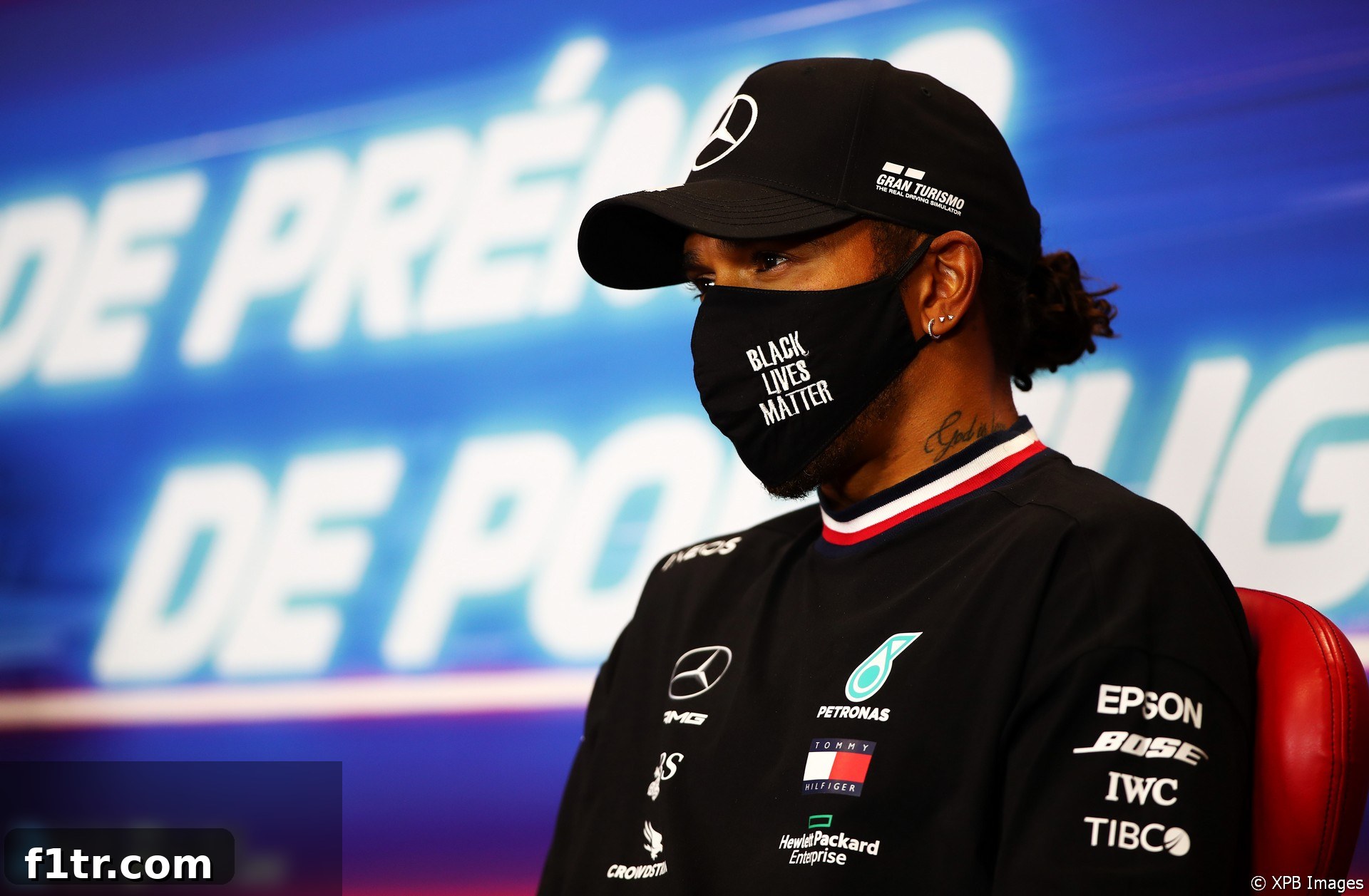
When confronted with Petrov’s quotes during the FIA press conference ahead of the Portuguese Grand Prix, Lewis Hamilton did not mince words. He expressed profound “surprise” that Petrov had been chosen to make his first appearance as a steward given the inflammatory nature of his publicly expressed views. Hamilton, who has emerged as a leading voice for social justice not only in motorsport but globally, conveyed his dismay directly.
“I’ve not seen all the quotes – obviously you’ve just recited some of them,” Hamilton began, acknowledging the journalist’s summary. “So yes, of course, that is I would say a surprise that they’re hiring someone that has those beliefs and is so vocal about things that we’re trying to fight against.” His statement underscored a fundamental disagreement with the decision-making process that led to Petrov’s appointment, suggesting a disconnect between the FIA’s actions and Formula 1’s stated goals. Hamilton implied that the responsibility for this choice lay with the appointing body, urging: “So you should take it up with them, really. There’s nothing I can particularly do about it.” This subtly placed the onus on the FIA to explain and justify their selection.
Hamilton has consistently advocated for a more inclusive and diverse motorsport environment, often speaking about the systemic issues that create barriers for underrepresented groups. His activism, particularly his support for the Black Lives Matter movement and his personal experiences with racism, has made him a powerful figure in challenging the status quo. From Hamilton’s perspective, appointing a steward who openly criticizes the fight against racism and makes disparaging remarks about other marginalized communities directly contradicts the progressive direction he and many others are striving for in Formula 1. He questioned the underlying rationale for such a choice, especially when there were undoubtedly numerous other qualified individuals whose public stances aligned more closely with contemporary values.
For Hamilton, the issue was not merely about a personal disagreement; it was about the message Formula 1 sends to its global audience, its aspiring young talent, and its current participants. Having individuals in positions of authority who hold and openly express views that are antithetical to diversity and inclusion can undermine the credibility of the sport’s initiatives and alienate communities it seeks to embrace. This incident served as a stark reminder that declarative statements and public campaigns like #WeraceAsOne must be supported by consistent actions and principled appointments throughout the sport’s infrastructure.
“We Race As One”: A Contradiction in Action?
Formula 1 launched its “#WeraceAsOne” initiative before the start of the season, a comprehensive program designed to address significant global issues, primarily focusing on combating racism and promoting diversity and inclusion within motorsport. This initiative was a direct response to the global social awakening, particularly after the resurgence of the Black Lives Matter movement, and a recognition that Formula 1, like many other global sports, had a role to play in fostering a more equitable society. The campaign involved various gestures, including the “End Racism” message prominently displayed on cars and circuits, and the drivers taking a knee before races.
Hamilton articulated that Petrov’s views were fundamentally at odds with this crucial initiative. “We should definitely be including people here who are with the times, who are understanding of the time we are living in and sensitive to the matters that are surrounding us,” said Lewis Hamilton. This statement powerfully underscored the expectation that officials within the sport should not only be competent in their technical roles but also align with the ethical and social values that Formula 1 publicly espouses. He expressed genuine confusion regarding the FIA’s objective: “So I don’t really understand what their goal is or why particularly he’s here because it’s not that they don’t have any other good options.” This line of questioning highlighted a perceived failure in the vetting process or, at minimum, a significant misjudgment on the part of the appointing authority.
The contradiction posed by Petrov’s appointment was significant. How could Formula 1 credibly promote “We Race As One” – a message of unity, respect, and acceptance – while simultaneously appointing a steward who had publicly derided the very movements and communities that the initiative sought to support? This created a dissonance that threatened to undermine the sincerity and effectiveness of the diversity campaign. For many, including Hamilton, it raised questions about the depth of commitment to these values beyond mere public relations. True commitment, in Hamilton’s view, required consistent action, from the visible gestures on the grid to the composition of the sport’s leadership and officiating bodies.
Valtteri Bottas Echoes Support
Valtteri Bottas, Hamilton’s teammate at Mercedes, echoed similar sentiments, lending further weight to the critique. While acknowledging he hadn’t heard the specific quotes in detail, his general stance mirrored Hamilton’s call for unity on core values. “But I think as Lewis said we all should have the same mindset for the things that we are pushing on,” Bottas stated. This collective stance from the Mercedes-AMG Petronas F1 Team, arguably the most dominant force in modern Formula 1, added significant gravity to the issue. It demonstrated that the call for diversity and inclusion was not merely an individual crusade by Lewis Hamilton but a shared principle among many within the sport’s elite ranks.
The unified front presented by the Mercedes drivers underlined the growing consensus within the paddock regarding the importance of social responsibility. It suggested that while competitive rivalries are paramount on track, there is a broader agreement on fundamental ethical principles that should guide the sport. Such solidarity amplifies the message, making it harder for governing bodies to ignore calls for greater accountability and alignment with stated values.
Vitaly Petrov: A Brief Career Retrospective
Vitaly Petrov’s career in Formula 1 spanned from 2010 to 2012. He made his debut with Renault, becoming Russia’s first Formula 1 driver. His most notable achievement came in the 2011 Australian Grand Prix, where he secured a podium finish, taking third place for the Renault team. After his stint in Formula 1, Petrov continued his racing career in other prestigious categories, including racing for Mercedes in the DTM (Deutsche Tourenwagen Masters) and competing with various teams in the World Endurance Championship, demonstrating his continued involvement and experience within the top tiers of international motorsport. His background as a former F1 driver certainly qualified him from a technical perspective for a stewarding role, but his controversial public statements ultimately overshadowed his racing credentials in the eyes of many, including Lewis Hamilton.
Advert | Become a RaceFans supporter andgo ad-free
The Path Forward: Consistency and Credibility
The incident surrounding Vitaly Petrov’s appointment as a race steward at the Portuguese Grand Prix serves as a crucial moment for Formula 1 and its governing body, the FIA. It highlights the ongoing tension between traditional sporting appointments and the increasing demand for social responsibility and alignment with progressive values. Lewis Hamilton’s outspoken criticism was not merely a personal opinion but a powerful call for consistency between Formula 1’s public declarations and its operational decisions. The sport has made significant strides with initiatives like #WeraceAsOne, fostering a more inclusive environment. However, such incidents reveal that there is still work to be done in ensuring that every aspect of the sport, especially its leadership and officiating, genuinely reflects these evolving values.
For Formula 1 to maintain its credibility as a truly global and progressive sport, it must ensure that individuals placed in positions of authority embody the principles of diversity, inclusion, and respect for all. This may necessitate more rigorous vetting processes for officials, not just on technical competence but also on their public conduct and alignment with the sport’s ethical framework. The conversation initiated by Lewis Hamilton reminds us that in the modern era, sport is inextricably linked to broader societal issues, and its leaders have a responsibility to foster an environment that champions fairness, equality, and understanding, both on and off the track. Moving forward, the FIA and Formula 1 will need to demonstrate unequivocally that their commitment to these values is unwavering and reflected in every decision they make.
2020 Portuguese Grand Prix: Further Insights
- Portuguese Grand Prix Practice Sessions Analysis
- Qualifying Report: Pole Position Battle at Portimão
- Race Review: Hamilton Dominates Portimão
- Driver Ratings: 2020 Portuguese Grand Prix
- Tyre Strategy and Pit Stops at Portimão
Browse all 2020 Portuguese Grand Prix articles