Ferrari’s Monaco Meltdown: Lapped Cars and Inconsistent Stewarding Spark Controversy
Ferrari found itself embroiled in a heated controversy following the highly anticipated Monaco Grand Prix, openly attributing their defeat to the detrimental impact of lapped cars on track. This, they argued, directly contributed to Sergio Perez’s unexpected triumph over their drivers, Carlos Sainz Jnr and Charles Leclerc. The iconic Maranello squad voiced profound disapproval, not only over critical race-day impediments but also regarding what they perceived as flagrant inconsistencies in stewarding decisions that had already led to a substantial fine earlier in the weekend.
Advert | Become a Supporter & go ad-free
The Race Day Debacle: How Lapped Cars Derailed Ferrari’s Strategy
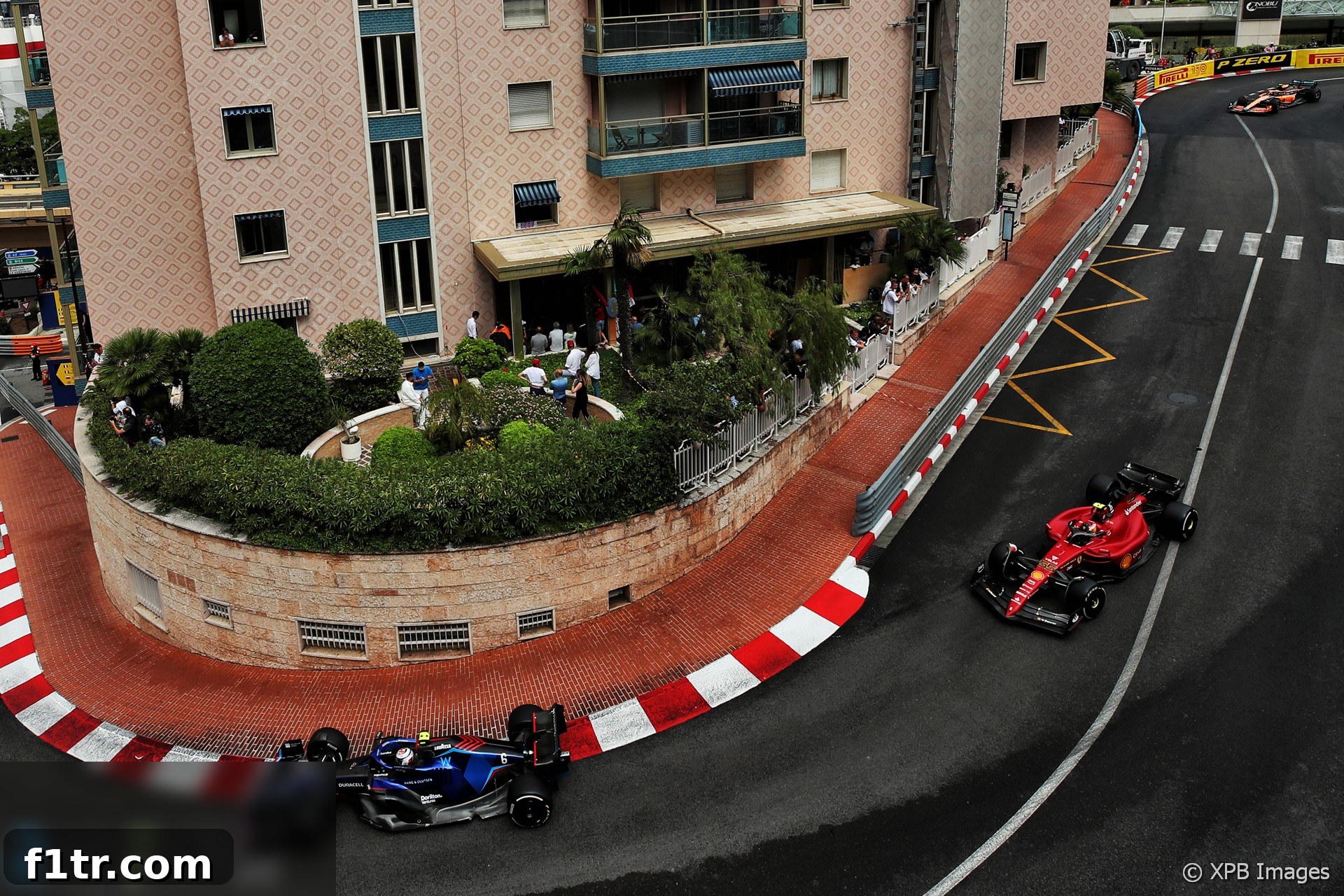
The strategic intricacies of the Monaco Grand Prix, a circuit infamous for its narrow confines and the near-impossibility of clean overtakes, inherently place immense pressure on every aspect of a team’s operation. For Ferrari, their meticulously planned race strategy dramatically unravelled after a pivotal pit stop. Carlos Sainz Jnr, having switched to slick tyres, emerged from the pits only to confront an agonizing delay behind Nicholas Latifi’s Williams. This critical impediment, which Sainz later estimated cost him a vital half-lap in the ultra-competitive environment of Monaco, directly snatched away a crucial strategic advantage. It was this delay, Ferrari contends, that allowed Sergio Perez to execute a successful undercut, subsequently securing the lead and ultimately the race victory.
Sainz’s frustration during this period was palpable and immediate, broadcast over team radio. The Spanish driver was on a fresh set of slick tyres, a strategic gamble designed to provide optimal grip and pace as the track dried. Crucially, these tyres needed to be brought up to their optimal operating temperature as quickly as possible. Every precious second lost behind Latifi translated into a tangible loss of tyre temperature and, consequently, optimal performance. “I knew my race was all about that out-lap,” Sainz later recounted, emphasizing the make-or-break nature of those initial moments post-pit-stop. He vividly described battling wheel-spin on persistent wet patches, while Latifi, in his assessment, “managed to sneak in ahead of me.” Sainz firmly believed that, with the knowledge he was effectively the race leader at that precise juncture, Latifi “could have perfectly just stayed behind me instead of overtaking me, while I have to stay to the right of the yellow line.” This sequence of events, where Sainz felt unfairly compromised by the lapped driver’s positioning, severely hampered his ability to exploit the performance of his new tyres and push for the lead. He spent crucial sections of the circuit – navigating through Turns 3, 4, 5, 6, 7, and 8 – trailing the slower Williams. Only at the exit of Turn 8, in the tunnel, did Latifi finally move aside. By then, however, the critical window for warming up the tyres and making a decisive performance difference on slicks had irretrievably passed, effectively cementing Perez’s lead and Ferrari’s second-place finish.
Compounding Ferrari’s race day woes, the impediment wasn’t an isolated incident for the Scuderia. Charles Leclerc, in the sister Ferrari, also encountered similar difficulties. He, too, reported being held up by Latifi’s teammate, Alexander Albon, further illustrating what Ferrari perceived as a systemic problem with blue flag adherence from the Williams drivers. These delays, though seemingly minor in isolation, held catastrophic consequences for Ferrari’s meticulously crafted race strategy and their ardent aspirations for a coveted Monaco victory, underscoring the immense sensitivity of the circuit to even the slightest disruption.
The Saturday Setback: Practice Impeding and a €25,000 Fine
The race-day frustrations were amplified by a prior incident that had already left a bitter taste in Ferrari’s mouth. On Saturday, the team was handed a hefty €25,000 fine following an impeding incident involving Carlos Sainz Jnr during the crucial final practice session. Sainz was found to have significantly held up Lance Stroll, a situation that the stewards unequivocally described as “unacceptable.” The stewards’ official ruling was particularly scathing in its criticism of Ferrari’s communication protocols, explicitly stating they gave Sainz “a series of grossly incorrect messages, by radio, about the gaps to the cars behind.” This fundamental miscommunication, they concluded, was a primary causal factor in the near-miss incident that unfolded on track.
The circumstances surrounding this practice incident were, admittedly, complex and dynamic. Ferrari had initially warned Sainz about the rapidly approaching Yuki Tsunoda. However, the situation became unexpectedly convoluted when Tsunoda radioed his AlphaTauri team, indicating an unforeseen and urgent need to pit, seemingly due to a car problem. As Sainz cautiously slowed down approaching the final corner to allow what he anticipated would be an overtaking Tsunoda to pass safely, Tsunoda unexpectedly veered into the pit lane instead. This sudden change of plans left Sainz in a profoundly compromised position. He was forced to rapidly adjust back to the racing line just as Lance Stroll suddenly appeared behind him, creating a potentially dangerous and avoidable situation that drew the attention of race control.
Mattia Binotto’s Stance: “We Did Our Best” But Disagreed with the Fine
Despite the stewards’ stern verdict and the substantial financial penalty, Ferrari team principal Mattia Binotto publicly and adamantly expressed his profound disagreement with the decision. He steadfastly maintained that the team “did our best” to proactively prevent any impeding and did not believe the incident, particularly given its mitigating factors, warranted such a heavy penalty. “We believe that the impeding he made was certainly not dangerous,” Binotto asserted forcefully in response to questions from RaceFans, effectively downplaying the severity of the situation from Ferrari’s perspective. “We [were] not too happy for the fine. We believe it was not the right choice because we believe that as a team and driver we did our best in order to avoid it at the time and not making anything wrong. So overall, we need to accept those decisions [but it] doesn’t mean we agree with them.”
Binotto then pointedly contrasted this Saturday incident with the race-day impediments, highlighting what he saw as a significant disparity in stewarding application. He noted that during the Grand Prix, “solid blue flags” were unequivocally displayed to both Albon and Latifi, yet no further actions were taken by race control despite the clear and undeniable delays imposed on his leading drivers. This stark difference in stewarding outcomes formed the very core of Ferrari’s grievance, crystallizing what they perceived as a profound lack of consistency and fairness in the application of Formula 1 rules across different sessions and scenarios.
Advert | Become a RaceFans supporter andgo ad-free
Carlos Sainz Jnr’s Vehement Plea for Clarity and Consistency
Carlos Sainz Jnr vehemently echoed his team principal’s sentiments, expressing profound frustration over what he perceived as glaring double standards in the application of F1 regulations. He drew a sharp contrast between the significant fine his team received for a practice incident and the complete lack of any penalty for the race-influencing impediments that directly impacted his potential victory. “The Williams pair cost us both the same the race and no further action,” Sainz stated emphatically, his voice dripping with exasperation, “And that was proper impeding. So this is where we want more clarity and we want more consistency, as simple as that.” His straightforward demand underscored a growing sentiment within the paddock for more transparent and uniformly applied rules.
Sainz further elaborated on his weekend-long struggle with multiple impeding incidents, expressing his sheer exasperation: “I cannot count the times that I got impeded in Monaco this weekend, both being dangerous and not dangerous.” While he demonstrated a commendable level of self-awareness and professionalism by accepting full blame and personally apologizing to Lance Stroll for his own incident, he fundamentally questioned the selective enforcement. “What I don’t understand is why we got fined €25,000 as a team for impeding, which I did, and I accepted the blame, and I apologise to Lance. I don’t understand why other cases are not investigated and other people are not fined for exactly the same thing.” This sentiment, shared by many drivers, underscores a broader call from within the sport for greater transparency, predictability, and equitable application of the rules across all sessions, ensuring fairness for every competitor on the grid.
The Critical Out-Lap: Sainz’s Detailed Account of the Latifi Impeding
Delving deeper into the race-day impediment, Carlos Sainz painted a vivid and emotionally charged picture of the critical moment with Nicholas Latifi. He argued persuasively that Latifi, being fully aware of the race leader’s position and the strategic significance of the out-lap, should have reacted with far greater urgency and decisiveness. “You can understand the frustration and the feeling that I went through there because I knew my race was all about that out-lap,” Sainz explained, emphasizing the razor-thin margins at play. The treacherous conditions, with lingering wet patches on the notoriously demanding circuit, significantly compounded the challenge. Sainz, on fresh slick tires, desperately needed a clear, unobstructed run to bring them up to optimal operating temperature and establish a competitive pace. However, as he meticulously exited the pits, he encountered Latifi, who, instead of yielding immediately, “managed to sneak in ahead of me.”
Sainz provided a meticulous and agonizingly detailed account of the sequence of events: “He overtook me basically going up because I had to stay right on the wet patch, the yellow line.” This forced Sainz to remain on the sub-optimal, damp part of the track, preventing him from utilizing the drier, faster racing line and thereby maximizing his tyre performance and generating crucial heat. The delay, far from momentary, stretched out over critical sections of the circuit; “I had to follow him turn three, turn four, turn five, turn six, turn seven, turn eight, and at the exit of turn eight he got out of the way in the tunnel.” By this point, however, the damage was irreversible. “But at that time I had already lost the warm-up of the tyre and the time to make a difference on the slick.” Sainz was absolutely convinced that his slick tyres at that stage were at least as quick, if not demonstrably quicker, than the intermediate tyres others were running. Being stuck behind “the slowest car of the grid on the track at that time it cost me them the opportunity to stay ahead of Checo after the pit stop.” This profound impact on his race position, transforming a potential lead into a desperate chase, naturally fueled his frantic shouts on the team radio for Latifi to move aside. The duration of the impediment, taking “longer than it should,” left an indelible and bitter mark on Ferrari’s Monaco Grand Prix campaign, costing them a genuine shot at victory.
Broader Implications: Blue Flags, Consistency, and F1 Stewarding Challenges
Ferrari’s grievances at Monaco highlight a perennial and often contentious challenge within Formula 1, particularly on unforgiving circuits like the Principality: the delicate and often debated balance between a lapped car’s right to maintain some pace and its undeniable obligation to yield promptly and safely to faster cars. Blue flags serve as a fundamental component of race safety, fairness, and the integrity of competition, unequivocally signaling to slower drivers that they must allow faster cars, especially those actively battling for championship-defining positions, to pass without undue delay. The rule governing blue flags is conceptually clear, but its practical application can often be subjective, leading to recurrent controversies and frustration within the paddock. In Monaco, where track position is paramount and overtakes are notoriously difficult, the impact of even a brief delay behind a lapped car can be absolutely race-defining. A mere few seconds lost can translate into multiple lost positions, or even, as Ferrari emphatically argued, a forfeited victory.
The clear and unambiguous calls from Ferrari and Carlos Sainz Jnr for “more clarity and more consistency” from the stewards resonate deeply within the sport and its fan base. Teams and drivers demand, and indeed require, predictable and equitable enforcement of the rules to ensure a truly level playing field. The perceived discrepancy between the stern and financially punitive penalty issued for a relatively minor practice infraction and the complete lack of action for race-influencing impediments raises legitimate and pressing questions about the priorities, judgment, and overall efficacy of race control. Such inconsistencies can severely erode trust in the officiating process, fostering widespread frustration and fostering an environment of uncertainty regarding fair play. This incident, therefore, serves as a crucial and timely reminder of the continuous imperative for F1’s governing bodies to rigorously review and meticulously refine their guidelines and interpretations. This ongoing refinement is essential to ensure that stewarding decisions are not only fair and impartial but also consistently and transparently applied across all sessions and scenarios, especially when championship points, career-defining moments, and race victories hang precariously in the balance.
Advert | Become a RaceFans supporter andgo ad-free
Carlos Sainz Jnr’s Critical Radio Messages During the Incident
The following radio exchanges capture the raw intensity and mounting frustration experienced by Carlos Sainz Jnr when he encountered Nicholas Latifi after his pit stop on lap 21, vividly illustrating the critical impact of the blue flag situation:
| Adami | All have blue flags in front. Blue flags. |
| Sainz | Get this guy out of the way. |
| Adami | Copy. |
| Adami | Okay. All clear in front. Next car in front is six seconds, Mick. |
| Adami | And leave K2 on. Leave K2 on. Perez is pitting. |
| Adami | Perez getting out from the pits. Push. And Verstappen as well. |
| Sainz | Who are they? |
| Adami | Perez in front. Verstappen behind. |
| Sainz | Okay check I touched the wall a bit. |
| Sainz | Copy, checking. |
| Sainz | Pressures are okay. |
| Adami | Can use K1. |
| Sainz | That blue flag cost me. |
| Adami | We saw Yeah, that. |
Advert | Become a RaceFans supporter andgo ad-free
Become a RaceFans Supporter and Go Ad-Free
RaceFans thrives thanks to the invaluable contributions and unwavering support of its dedicated readers. By opting to support RaceFans with a modest £1 per month or £12 annually (or your local currency equivalent), you play an absolutely crucial role in sustaining the creation, hosting, and ongoing development of high-quality Formula 1 content, both now and well into the future.
Join the growing community of RaceFans Supporters today to enjoy an uninterrupted, completely ad-free browsing experience across the entire site. Learn more about the exclusive benefits and easily sign up via the links provided below:
- Become a RaceFans Supporter
- RaceFans Supporter FAQ
More Insights from the 2022 F1 Season
- Mercedes told me “you’re wrong” about 2022 car’s problems – Hamilton
- FIA confirms all 10 F1 teams complied with 2022 cost cap
- Steiner “not ashamed” of panning “slow” Schumacher in Drive to Survive
- Albon believes year out of F1 improved him as a driver
- Hamilton sees diversity gains in F1 years on from his ‘traumatising’ experience of racism
Browse all 2022 F1 season articles