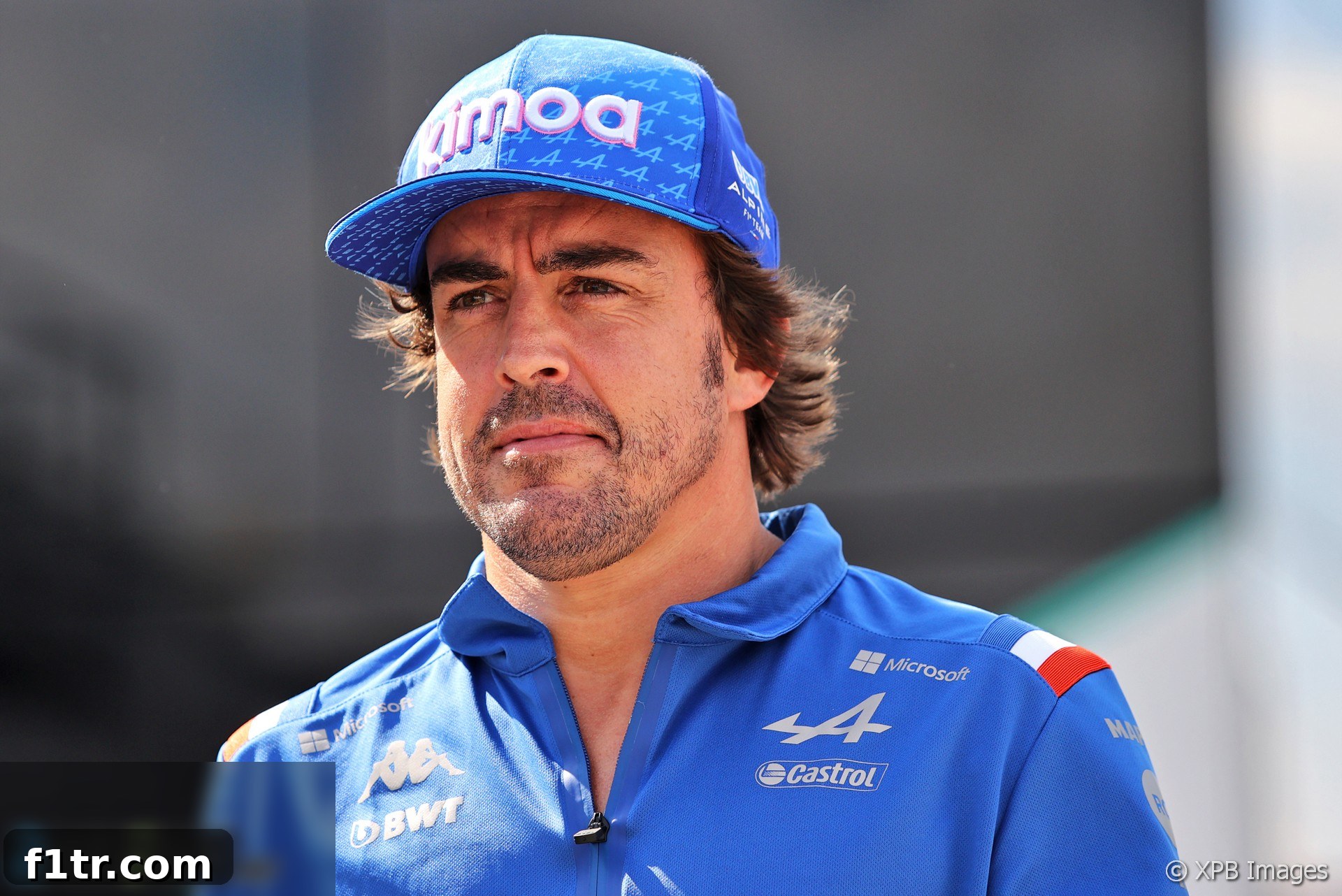
In a move that reverberated throughout the Formula 1 paddock, mere days after celebrating his 41st birthday, two-time World Champion Fernando Alonso announced a multi-year deal to switch from Alpine to Aston Martin for the 2023 season. This unexpected revelation immediately sparked intense debate among fans and pundits alike, raising questions about the motivations behind such a high-stakes decision and the potential ramifications for both Alonso’s illustrious career and Aston Martin’s ambitious future in the pinnacle of motorsport.
For a driver who made his Grand Prix debut at the tender age of 19, Alonso’s impending 20th full campaign in Formula 1 marks an astonishing testament to his enduring passion, relentless competitive spirit, and unparalleled longevity. Joining Aston Martin will be his fifth different team across two decades in the sport. Throughout his storied career, Alonso has graced the cockpits of Minardi (now AlphaTauri), Renault (now Alpine), McLaren, and Ferrari. With an impressive record of Grand Prix victories with Renault, McLaren, and Ferrari, his only non-winning stint was during his rookie year with Minardi in 2001 – a performance for which Alonso himself could certainly not be blamed, given the machinery at his disposal.
This transition from Alpine, a team currently battling for the coveted “best of the rest” position in the constructors’ championship, to Aston Martin, which sat significantly further down the standings (79 points and five places behind Alpine at the time of the announcement), is undeniably a calculated risk. However, Alonso’s rationale is crystal clear: an unwavering, innate desire to reclaim race victories and, ultimately, to once again hoist the World Champion’s trophy. As he articulated when the news broke, “I intend to win again in this sport and therefore I have to take the opportunities that feel right to me.” This statement encapsulates the fierce ambition that continues to drive one of F1’s most iconic figures, even as he approaches the twilight of his career.
Yet, the central question remains: can Aston Martin, a team that grappled considerably with the seismic shift to the new ground effect regulations introduced in 2022, truly provide Fernando Alonso with a championship-contending car, or even a consistent race-winning package? The answer to this complex query lies in a delicate balance of substantial investment, strategic recruitment, on-track performance, and perhaps, a touch of optimistic foresight.
The Case For: Why Alonso’s Move Could Pay Off
While a direct comparison of current championship standings makes Alonso’s move appear counter-intuitive – a step backward from a midfield contender to a back-marker – this decision is fundamentally rooted in a long-term strategic vision. Aston Martin’s transformation since its acquisition by a consortium of benefactors led by Canadian billionaire Lawrence Stroll has been nothing short of monumental. Millions of pounds have been poured into the team’s infrastructure, personnel, and technological development, signaling an unwavering commitment to challenge for top honors in Formula 1.
Aston Martin has systematically embarked on an aggressive recruitment drive, attracting some of the most respected and successful figures from rival teams across the paddock. Engineers, aerodynamicists, and strategic minds with proven winning pedigrees have joined the Silverstone-based outfit, bringing invaluable expertise and a culture of success. Simultaneously, the team is undergoing a significant expansion of its facilities. A state-of-the-art factory extension, featuring cutting-edge design, simulation, and manufacturing capabilities, is rapidly taking shape adjacent to their existing headquarters. This impressive new facility, custom-built for Formula 1’s modern era and explicitly designed with the budget cap regulations in mind, is set to be a game-changer.
Alonso himself openly acknowledged the significance of these developments. “I have watched as the team has systematically attracted great people with winning pedigrees, and I have become aware of the huge commitment to new facilities and resources at Silverstone,” he stated. This endorsement from a driver of Alonso’s caliber speaks volumes, suggesting he sees tangible proof of Aston Martin’s intent rather than empty promises. In an era where Red Bull, Ferrari, and Mercedes have established a near-monopoly on podium positions and championship contention, it is precisely this level of sustained, substantial investment that any aspiring team needs to even hope of breaking into that exclusive upper echelon.
Furthermore, there is little to suggest that Fernando Alonso has lost any of his renowned race-winning edge since his return to Formula 1. His performances, particularly during his time at Alpine, consistently demonstrated his exceptional speed, race craft, and tactical acumen. Age, remarkably, does not seem to have diminished his abilities, making him a unique outlier in a sport often dominated by younger talents. If Aston Martin can indeed deliver on its promise of a competitive car – one capable of challenging for victories – there is every reason to believe that Alonso possesses the skill, experience, and sheer determination to capitalize on those opportunities. His belief in the project, coupled with the team’s immense potential for growth, forms a compelling argument for the success of this audacious partnership.
The Case Against: The Uphill Battle Ahead
Conversely, success in Formula 1 is a notoriously fickle beast, and momentum often plays a more significant role than many realize. Just as teams can find themselves trapped in debilitating negative spirals, where poor performance leads to reduced prize money, which in turn makes climbing back up the grid an arduous and often insurmountable task – the plight of teams like Williams serving as a stark reminder – it is equally true that consistent success often begets more success. Building and maintaining a winning culture requires a delicate ecosystem of talent, funding, and unwavering belief.
By opting for Aston Martin, Alonso is joining a team that, despite its grand ambitions, has experienced a concerning decline in form since its rebranding from Racing Point. The 2022 season, with its sweeping new technical regulations, was theoretically an unparalleled opportunity for teams to reset, leapfrog rivals, and genuinely challenge for race victories. Yet, Aston Martin found themselves further behind the front-runners than they were in the preceding season, struggling with the conceptualization and execution of their new ground effect car. This inability to capitalize on a major regulatory overhaul raises legitimate concerns about the team’s immediate capacity to deliver a top-tier package.
While the prospect of Aston Martin’s brand-new facility, purpose-built for the modern F1 era, is indeed exciting and a beacon of future potential, Formula 1 history is replete with cautionary tales. The sport is littered with examples of “big teams” backed by “big budgets” that, despite considerable investment and high expectations, under-delivered on their promises and failed to transform into consistent race-winning outfits. Building a championship-contending team requires more than just financial firepower; it demands cohesion, innovation, strategic brilliance, and an ability to translate resources into on-track performance effectively. This process invariably takes time.
Even in an optimistic scenario where Aston Martin systematically improves and eventually establishes itself at the front of the grid, the question of timing becomes paramount. Such a journey, from midfield to championship contender, is typically measured in years, not months. This then brings Alonso’s age into sharp focus: can he maintain his extraordinarily high level of performance into his mid-40s? While his current form is exceptional, sustaining that intensity and physical demand in a hyper-competitive environment for potentially another three to five years is an unprecedented challenge. Modern Formula 1 has not seen drivers race effectively at such an advanced age for many decades, adding another layer of uncertainty to what is already a monumental undertaking.
The Unwavering Drive of a Champion: A Deep Dive into Alonso’s Aston Martin Gamble
It would take a remarkably brave individual to definitively count out Fernando Alonso. Throughout his career, he has consistently defied expectations, demonstrated an almost superhuman level of resilience, and perhaps most notably, shown that he has lost little, if any, of the raw speed and competitive fire that characterized his earlier years. His return to the sport at the end of 2020 after a brief hiatus proved this unequivocally; he was immediately back to pushing the limits and extracting every ounce of performance from his machinery.
Indeed, many observers believe that if Alonso had been fortunate enough to occupy one of the seats at Ferrari or Red Bull in recent seasons, he would almost certainly have added more race victories to his impressive tally by now. His ability to perform at an elite level well into his early 40s is a remarkable anomaly in a sport where most drivers are considered past their prime long before this age. This unique longevity and undiminished capability are central to the allure and potential success of his Aston Martin venture.
However, while Alonso’s individual brilliance is not in question, the critical variable remains the trajectory of Aston Martin itself. The challenge is not merely whether he can continue to perform at this blistering pace, perhaps even until his new multi-year contract expires or beyond. The more profound question centers on whether Aston Martin, as a cohesive unit, possesses the acumen, efficiency, and sheer innovative capacity to bridge the substantial gap to the front of the grid within a timeframe that aligns with Alonso’s remaining years in the sport. Formula 1 is a team sport, and even a driver of Alonso’s immense talent cannot carry an underperforming car to victory single-handedly.
The journey to the top of Formula 1 is paved with technological hurdles, intense development battles, and the constant pressure of marginal gains. For Aston Martin, this means not only making significant strides in aerodynamics and chassis design but also ensuring seamless integration with their power unit supplier, all while operating within the confines of F1’s budget cap. It’s a colossal undertaking that requires sustained excellence across every department.
Ultimately, whatever vision Lawrence Stroll, Team Principal Mike Krack, and the rest of the Aston Martin leadership team presented to Fernando Alonso, it was evidently compelling enough to convince the discerning Spaniard. He clearly believes that they possess the strategic roadmap, the financial backing, and the personnel to help him achieve his ultimate goal: to once again stand on the top step of a Grand Prix podium and, perhaps, even challenge for a third World Championship title. This move is a testament to Alonso’s relentless pursuit of greatness and Aston Martin’s bold ambition to transform from a midfield contender into a championship challenger. Whether this audacious gamble pays off will undoubtedly be one of the most fascinating narratives to watch unfold in the coming Formula 1 seasons.
Will Fernando Alonso Win a Grand Prix with Aston Martin? Public Opinion Revealed
- No opinion (1%)
- Strongly disagree (53%)
- Slightly disagree (25%)
- Neither agree nor disagree (5%)
- Slightly agree (13%)
- Strongly agree (3%)
Total Voters: 197
In a poll conducted following the announcement, public sentiment leaned heavily towards skepticism regarding Fernando Alonso’s chances of securing a Grand Prix victory with Aston Martin. A significant 53% of respondents “Strongly disagreed” with the proposition, reflecting widespread doubt about the team’s immediate competitiveness and ability to elevate Alonso to race-winning contention. Another 25% “Slightly disagreed,” bringing the total dissenting opinions to a substantial 78%. Only a minority expressed optimism, with 13% “Slightly agreeing” and a mere 3% “Strongly agreeing” that Alonso would achieve a win with his new team. This public perception underscores the magnitude of the challenge facing Aston Martin and Alonso in the coming years.
Further Debates and Polls
Stay engaged with the biggest discussions in Formula 1:
- What must Formula 1 fix with its new rules – and what should it leave unchanged?
- ADUO: Do F1 teams who fall behind deserve to get help to catch up?
- F1 is considering doubling its sprint races. Do you want more or fewer?
- Will this be a fight or a rout? 20 questions for the 2026 Formula 1 season
- Which Formula 1 team has the best-looking car – and the worst – for the 2026 season?
Browse all debates and polls