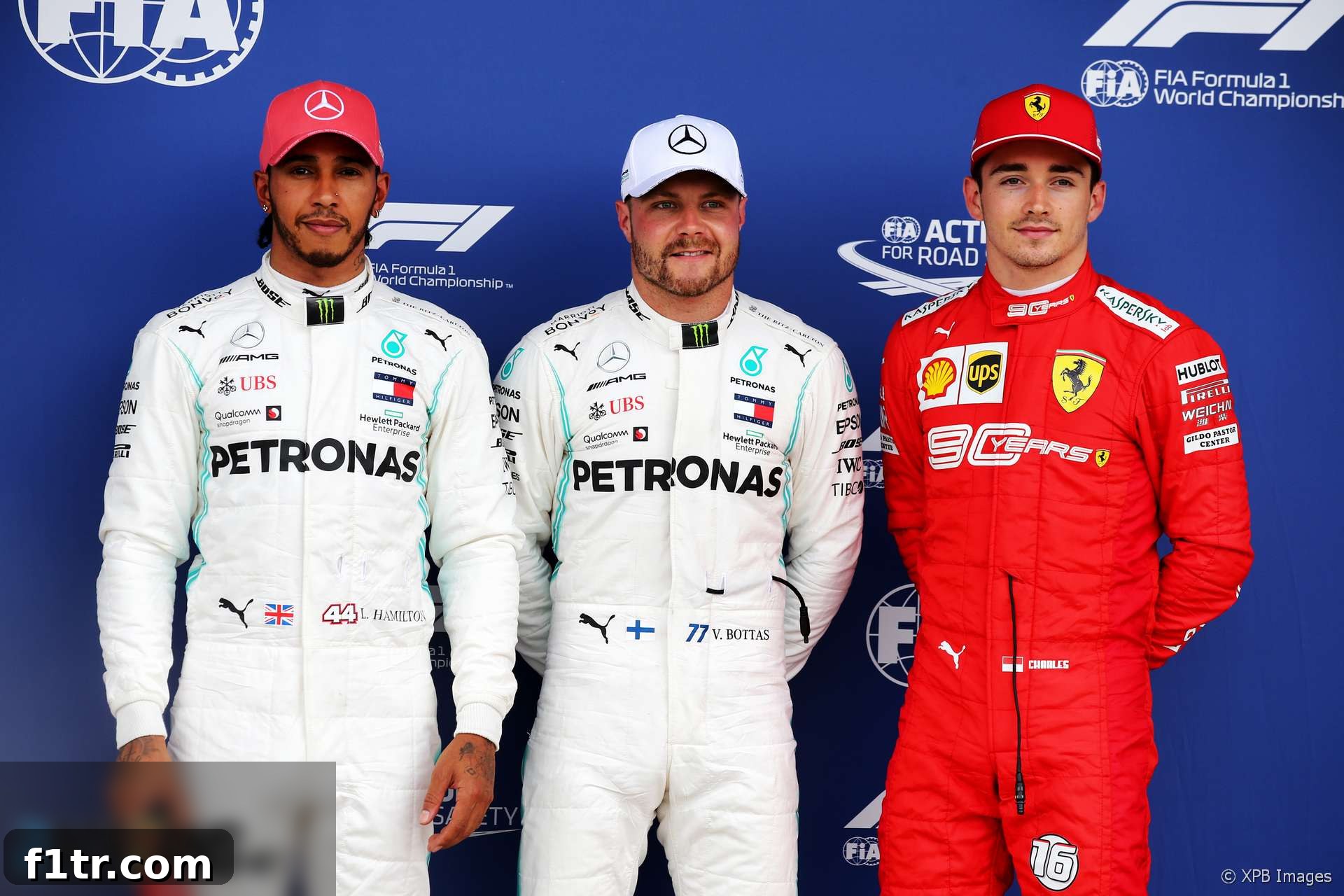
In the thrilling world of Formula 1, every millisecond counts, especially during the critical qualifying sessions that shape a driver’s Sunday race. This season, the spotlight has been particularly intense on Lewis Hamilton, a multiple world champion renowned for his electrifying qualifying pace. However, recent events at Silverstone have sparked debate and discussion, as his teammate Valtteri Bottas out-qualified him for the fourth time this year. This developing trend prompts a closer look at Hamilton’s current approach, his strategic mindset, and what it means for his pursuit of another championship title.
The competitive nature of modern F1 means that even the slightest edge in qualifying can translate into a significant advantage come race day. Starting ahead of the pack often allows for cleaner air, better tyre management, and reduced risk of entanglement in midfield battles. For a driver of Hamilton’s caliber, who has consistently dominated qualifying throughout his career, being outpaced by his teammate on multiple occasions signals a potential shift in dynamic or strategy within the Mercedes-AMG Petronas F1 Team. This article delves into Hamilton’s reflections on his performance, insights from the F1 community, and broader discussions shaping the sport.
Lewis Hamilton on Qualifying Performance and Car Management
In a revealing interview, Lewis Hamilton was questioned about his approach this season, specifically if he had adopted a more relaxed stance or was less concerned with preserving his car during races. His candid response offered valuable insight into his evolving methodology and the relentless pursuit of perfection in Formula 1.
“I think I was relaxed last year, too. Every year, you naturally grow more comfortable with yourself, with the methods you employ, and the processes you adhere to. However, it’s undeniable that our qualifying performances this year haven’t been spectacular. It’s still not perfect, and there’s definitely significant work to be done in that area to unlock our full potential on a Saturday.
Conversely, our race performances have generally been quite strong, apart from that one less-than-ideal result in the last race where I made a mistake. In terms of looking after the car, that remains a priority for me. I’m always conscious of extending the life of the components. For example, during practice sessions, especially with these complex power units, I monitor my lap count. In Practice One, I completed three fewer laps than Valtteri, and in Practice Two, perhaps just one more. This careful management is crucial over a long season, balancing outright speed with longevity.
My trust in the car and the team’s engineering is incredibly high. I understand its capabilities intimately. I believe the experience gained last year has instilled a bit more confidence in me to push the limits further. Given how incredibly close the competition is at the front, I need to try and extract every fraction of a second more from the car. If the current package isn’t strong enough, then it’s a collective effort with the team to make it stronger. The engineers operate within very fine margins, and I’ve been working within those margins. Ultimately, the goal is to find that sweet spot where performance is maximized, yet safety and reliability are absolutely guaranteed. I believe that’s precisely the operational philosophy I’m employing right now.”
Hamilton’s comments highlight the intricate balance F1 drivers must strike between outright speed, especially in qualifying, and strategic preservation of their sophisticated machinery. His emphasis on continuous self-improvement and maximizing the car’s potential underscores the constant evolution required at the pinnacle of motorsport. The fierce competition necessitates drivers to extract every last bit of performance, pushing the boundaries of what’s possible within the defined parameters of safety and reliability, a challenge Hamilton evidently relishes.
Quotes: Dieter Rencken
Advert | Become a RaceFans supporter andgo ad-free
Social Media Insights: The Art of F1 Tyre Management
The world of Formula 1 is often filled with highly technical jargon, and sometimes, even the most seasoned commentators can fall into common linguistic traps. A notable post from social media recently sparked a discussion about the precise language used when discussing F1 tyres:
I have a tedious, pedantic whinge to get off my chest:
Drivers never need to ‘generate temperature’ in their tyres.
They may need to generate heat in their tyres, they may need to reduce the temperature of their tyres, but their tyres always have temperature.
Sorry.
— Keith Collantine (@keithcollantine) July 20, 2019
This “pedantic whinge” by Keith Collantine, while seemingly minor, highlights a crucial distinction in the highly nuanced world of F1 tyre management. Tyres always possess a temperature, even when cold. What drivers and engineers are constantly striving for is to generate *heat* within the tyre compound and carcass to bring them into their optimal operating *temperature window*. This specific temperature range is where the Pirelli tyres deliver maximum grip and performance.
The process of warming up F1 tyres is complex. On an out-lap, drivers weave and brake aggressively to build friction and internal heat. Too cold, and the tyres lack grip, leading to understeer or oversteer. Too hot, and they can “blister” or “grain,” losing performance and degrading rapidly. Understanding this precise terminology is vital for accurate analysis and commentary, helping fans grasp the subtle yet profound impact of tyre strategy on race outcomes. It’s not just about having “temperature,” but about having the *right* temperature for peak performance and longevity throughout a demanding Grand Prix.
- Find more official F1 accounts to follow in the F1 Twitter Directory
Further Insights: F1 News and Motorsport Links
Beyond the immediate Grand Prix action, the world of motorsport continually generates fascinating stories, analyses, and debates. Here’s a round-up of other motor racing links of interest that offer deeper dives into various aspects of the sport:
Advert | Become a Supporter & go ad-free
Fehler aus dem Unterbewusstsein (AutoBild – German)
This German article, “Mistakes from the Subconscious,” delves into Sebastian Vettel’s recent string of errors at Ferrari. Motorsport advisor Helmut Marko’s comments suggest that Vettel’s performance dips, particularly since joining the Scuderia, might indicate a need for a change of environment for 2020. Marko, however, expresses doubt that such a move is currently feasible. This analysis opens a wider discussion on the immense psychological pressure faced by top F1 drivers, especially when expectations are stratospheric and a championship challenge is on the line. Vettel’s tenure at Ferrari, marked by moments of brilliance interspersed with high-profile mistakes, has been a source of constant debate among fans and pundits alike regarding his mental fortitude and adaptability.
Aston Martin ‘stands ready’ for F1 but hopes Honda stays (Autosport)
Aston Martin’s aspirations in Formula 1 are well-documented, yet their approach remains cautious. The report indicates that while Aston Martin “stands ready” for a deeper involvement in F1, potentially as an engine supplier, they are also mindful of the existing landscape. The quote, “Clearly they have a lot more money and muscle power than we do. I don’t think we’re going to muscle in on that while the relationship with Honda exists,” highlights the significant financial and technical investment required to compete with established manufacturers like Honda, Mercedes, and Ferrari. This reveals the strategic considerations for any new entrant or an expanded role from an existing brand in F1’s complex and costly engine development landscape. The balance between brand exposure and sustainable investment is a tightrope Aston Martin carefully navigates.
Emma Kimilainen credits motherhood for dominant W Series win (Formula Scout)
Emma Kimilainen’s dominant victory in the W Series is a compelling narrative, especially her reflection that motherhood has positively influenced her racing career. Her statement, “If I see me back as a 20-year-old and how I am now, I’m so much more calm, very patient. Everything has come along, with being a mum, as what I needed when I was a 20-year-old to be a super racing driver,” offers a unique perspective. It suggests that the responsibilities and perspective gained from motherhood can translate into enhanced focus, emotional maturity, and a more measured approach on the racetrack. This insight challenges traditional notions and underscores the diverse paths to peak performance in motorsport, providing an inspiring example for aspiring female drivers and athletes balancing family life with professional ambitions.
Highlights Race 1 – DTM Assen 2019 (DTM via YouTube)
For fans of tin-top racing and aggressive wheel-to-wheel action, the DTM (Deutsche Tourenwagen Masters) often delivers. These highlights from Race 1 at Assen in 2019 showcase the fierce competition and technical prowess of the touring car series. DTM cars, known for their powerful engines and advanced aerodynamics, provide a different but equally thrilling spectacle compared to open-wheel racing, offering motorsport enthusiasts a broader appreciation for racing disciplines.
Jeremy Clarkson explains what’s wrong with F1 (DriveTribe via YouTube)
Jeremy Clarkson, known for his outspoken and often controversial opinions on all things automotive, offers his characteristic take on the perceived flaws of modern Formula 1. His critiques often resonate with a segment of traditional F1 fans who yearn for the “glory days” of louder engines, less regulated racing, and more unpredictable outcomes. Clarkson typically lambastes aspects like the quiet hybrid engines, the perceived lack of driver personality due to media training, and overly complex regulations that can sometimes overshadow the raw racing spectacle. His perspective, while often polarizing, consistently sparks debate about the direction and appeal of contemporary F1.
Farewell to the V12: celebrating the endangered engine (Autocar)
This poignant article from Autocar celebrates the V12 engine, a legendary powerplant that is slowly becoming an endangered species in the automotive world due to evolving emissions regulations and the shift towards electrification. The description beautifully captures its essence: “The way a V12 can sound so multifaceted at low to medium revs yet combine them all into a scalp-itching single-note howl at the redline is unique.” From the iconic Colombo V12 in a Ferrari 250 GTO to the thunderous 7.0-litre Jaguar V12 in an XJR-9 Le Mans car and the distinct Matra V12s in 1970s F1, the V12 has left an indelible mark on motorsport history. Its complexity, inherent balance, and unparalleled acoustic signature make it a cherished symbol of automotive engineering and a powerful reminder of an era where raw mechanical passion often trumped efficiency.
Racing Kimi Raikkonen (Aarava via YouTube)
The rise of high-fidelity racing simulators and F1 video games has allowed fans to experience the thrill of competition in a virtual environment. This video from Aarava, featuring “Racing Kimi Raikkonen” (presumably in an F1 game), taps into the universal fantasy of challenging a real-life Formula 1 World Champion. It highlights the immersive nature of modern racing simulations, where players can test their skills against virtual versions of their heroes, dissecting race lines, optimizing setups, and experiencing a taste of the strategic depth that defines real-world F1 racing. It’s a testament to the enduring appeal of figures like Kimi Raikkonen and the way technology allows fans to connect with the sport.
We always endeavour to credit original sources. If you have a tip for a link to feature in the next RaceFans round-up please send it in via the contact form.
Advert | Become a RaceFans supporter andgo ad-free
Comment of the Day: Mercedes’ 2020 Driver Line-up Debate
The future driver line-up for top Formula 1 teams is a perennial topic of speculation and debate. One particular discussion gaining traction revolves around Mercedes-AMG’s choice for the 2020 F1 season, specifically whether to retain Valtteri Bottas or replace him with the highly-rated Esteban Ocon. A compelling argument from a reader, Keith Campbell (@Keithedin), encapsulates the complexity of this decision:
“I genuinely don’t see the point of replacing Bottas with Ocon at the end of the year. Valtteri isn’t exactly underperforming; he’s doing a perfectly decent job for the team. However, it’s clear that he consistently isn’t a match for Lewis Hamilton over the course of an entire season, particularly in terms of raw pace and championship-winning consistency. But what would Mercedes truly gain by inserting Ocon into the second car?
Ocon ‘might’ be marginally better than Bottas, though even that isn’t a certainty at this level of competition. More significantly, he is far less likely to gracefully accept being consistently beaten by Hamilton, and far more prone to creating internal team issues. His past record includes multiple clashes with his former teammate Sergio Perez, and of course, the infamous incident with Max Verstappen. While a part of me, as a fan, hopes they do put Ocon in the car—because the Hamilton/Rosberg dynamic was undeniably far more entertaining for viewers than the current Hamilton/Bottas ‘love-in’—if I were the team principal, there’s simply no way I would take on that kind of risk to team harmony and championship stability.”
Keith Campbell (@Keithedin)
Keith’s analysis offers a shrewd perspective on the strategic considerations facing Mercedes. Bottas, despite not being a championship contender alongside Hamilton, has consistently performed his role as a reliable second driver, contributing significantly to Mercedes’ constructor championships and generally maintaining team cohesion. His ability to score strong points, challenge Hamilton on occasion, and accept the team’s hierarchy has been a valuable asset.
Esteban Ocon, on the other hand, represents youth, ambition, and undeniable talent. However, his past incidents suggest a fierce competitive streak that could, as Keith argues, lead to disruptive internal rivalries reminiscent of the explosive Hamilton-Rosberg era. While such a dynamic could be a boon for spectator entertainment, it poses a significant risk for a team prioritizing championship success and internal stability. Mercedes’ decision will ultimately hinge on whether they prioritize a potentially more aggressive, championship-challenging pairing or the proven reliability and harmony that Bottas currently provides.
There’s still time to join in this weekend’s caption competition here:
- Caption Competition 154: Verstappen and Vettel
From the Forum: Who Are Your Favourite Motorsport Commentators?
The voices that narrate the drama of motorsport are almost as important as the action on track. Fans often have strong opinions about who they believe provides the best insight, excitement, and entertainment. Join the lively discussion on our forum:
- Who are your favourite motor sport commentators?
Happy Birthday!
We extend our warmest wishes to Dirceu on his special day!
If you’d like to receive a birthday shout-out in our round-up, please let us know your birth date via the contact form or by adding your details to our dedicated list here.
On This Day in F1 History
Looking back at pivotal moments in Formula 1’s rich past:
- Exactly 35 years ago today, the legendary Nelson Piquet showcased his incredible speed by securing pole position for the British Grand Prix at the iconic Brands Hatch circuit.