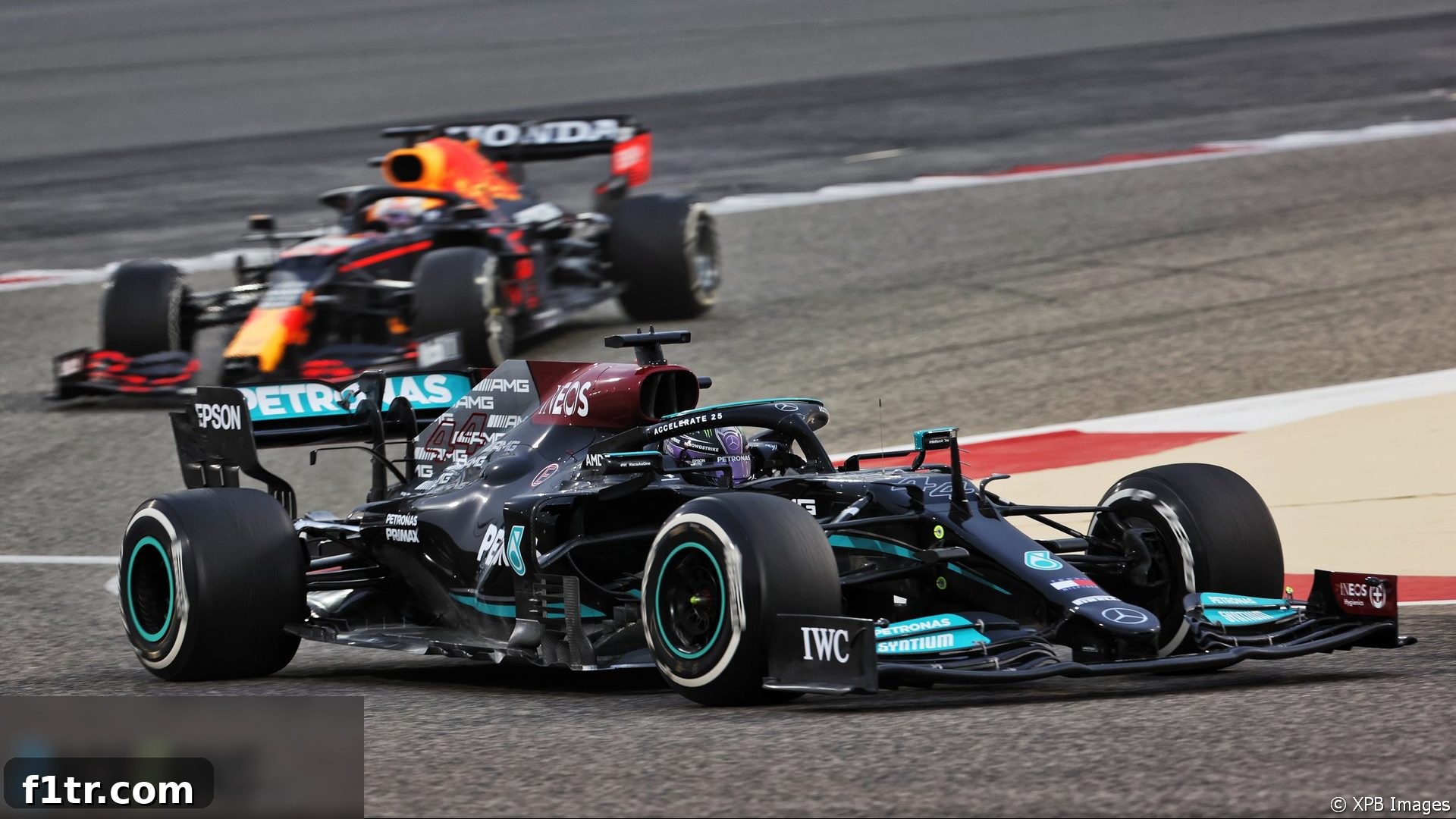
Lewis Hamilton, the venerable seven-time Formula 1 world champion, expressed genuine satisfaction and keen anticipation regarding the formidable pace demonstrated by several rival teams during the crucial pre-season testing sessions. As the teams meticulously honed their machinery and strategies ahead of the hotly anticipated 2021 season, Hamilton observed with a professional eye that the competitive landscape appeared to be tightening, promising an exhilarating year of racing.
Advert | Become a Supporter & go ad-free
In his characteristic frankness, Hamilton singled out three specific teams that had particularly caught his attention with their impressive lap times and consistent performance. This acknowledgement from a driver of his stature underscores the intensity of the competition even at this early stage, transforming pre-season into a high-stakes psychological battleground as much as a technical exercise.
“Without doubt, it’s quite impressive to see the speed of some of the other teams,” Hamilton stated, reflecting on the initial impressions from the test sessions. His assessment wasn’t merely a casual observation but a strategic note on the evolving power dynamics within the paddock. “I think Red Bull are looking particularly strong. And it’s great to see McLaren also looking strong, also Renault [Alpine]. So I’m excited because that means more fun.” This sentiment, coming from a driver whose career has been defined by his relentless pursuit of victory, speaks volumes about the potential for a multi-team championship battle, a scenario that often ignites fan engagement and critical acclaim for the sport. The prospect of multiple front-running teams vying for top honours is a thrilling prospect for both drivers and fans alike, promising an unpredictable and captivating season.
While Hamilton cast an appreciative glance at his competitors, his own team, Mercedes-AMG Petronas F1, did not experience the smoothest of starts to their pre-season preparations. The early days of testing are often fraught with challenges as teams push their new designs to the limit, and Mercedes was no exception. On the opening day, the reigning champions lost valuable track time due to a gearbox problem, a setback that invariably compromises their ambitious testing programme. Furthermore, both Hamilton and his teammate, Valtteri Bottas, reported similar concerns regarding the handling characteristics of their new challenger, the W12. Such feedback is critical as it highlights areas where the car might not be responding as anticipated, requiring immediate attention from the engineering team to rectify before the competitive season commences. Despite these initial hurdles, Hamilton exuded a calm confidence, a trait forged through years of championship battles, asserting his belief in the team’s capacity to effectively address and resolve any issues that emerged.
Hamilton’s philosophy during testing is pragmatic and resolutely solution-oriented. He understands that setbacks are an inherent part of the development process and choosing to dwell on them is counterproductive. “I don’t waste time worrying, that deters you from finding the solutions,” he explained, outlining his approach. “We’re just working hard and focussing on getting through the short amount of testing we have and trying to be as efficient as possible, as we can.” This laser-like focus on efficiency is paramount during pre-season, where every minute on track and every piece of data collected is invaluable. The condensed testing schedule of recent years further intensifies this pressure, demanding precision and rapid problem-solving from every member of the team.
Indeed, Hamilton views these early difficulties not as hindrances but as crucial opportunities for growth and refinement. He articulated a perspective that frames problems encountered during testing as advantageous, stating, “But I think it’s better when it doesn’t go smoothly. It’s better that it doesn’t go smooth now and goes smooth once we get into the racing scene. So this is the perfect time for us to find the issues and have the problems. And so I welcome that.” This mature outlook underscores the strategic importance of pre-season testing: it is the designated period for teams to push boundaries, identify weaknesses, and rectify flaws in a controlled environment, long before championship points are at stake. By uncovering issues early, Mercedes can ensure that their W12 is in optimal condition when the lights go out for the first race.
The spirit within the Mercedes garage remained undeterred, a testament to the team’s championship-winning pedigree and deeply ingrained culture of resilience. “I think everyone’s just keeping their heads down. No-one’s particularly fazed by it. We’re a multi-championship-winning team and we know how to pull together and keep our head down and focus on our job,” Hamilton affirmed. This unwavering resolve and collective belief in their abilities have been hallmarks of Mercedes’ unprecedented success in the turbo-hybrid era. Their ability to diagnose, adapt, and overcome technical challenges has consistently set them apart, transforming potential setbacks into stepping stones towards further dominance.
Following his press conference at lunchtime, Hamilton was scheduled to take over the cockpit of the W12 from Valtteri Bottas for the final four hours of the pre-season testing session that afternoon. This rotation allows both drivers to gain critical mileage and provide comprehensive feedback on the car’s behaviour under various conditions. “After this I’m going to sit with my engineers and we’re going to discuss where we’re going to start,” Hamilton detailed, highlighting the immediate post-session debriefing process that is fundamental to testing. These discussions are pivotal for dissecting data, comparing driver impressions, and formulating a precise plan for subsequent runs and for the race weekend itself. Understanding the car’s characteristics across different fuel loads, tire compounds, and engine mappings is a complex task that requires seamless collaboration between driver and engineers.
Hamilton also keenly observed the evolving track conditions, acknowledging their significant impact on car performance. “Naturally I’ve seen Valtteri’s running today and last night, slightly different conditions when the wind died down. I think track conditions have improved since the storm.” Changes in wind direction, temperature, and track grip can dramatically alter a car’s balance and tire behaviour. Experienced drivers like Hamilton and Bottas are adept at sensing these subtle differences and adjusting their driving style accordingly, while also providing engineers with invaluable qualitative data to complement the quantitative telemetry. The insights gained from comparing performance across varying conditions are crucial for optimizing the car setup for different grand prix circuits throughout the season.
Fastest times by each team over whole test so far
While testing times should always be interpreted with a degree of caution, given the varying fuel loads, engine modes, and tire strategies employed by teams, they nonetheless offer an intriguing snapshot of competitive potential. The following list details the best single lap times achieved by each team up to that point in the test, providing a preliminary pecking order that hinted at the challenges and triumphs awaiting in the 2021 F1 season:
1. Red Bull – 1’30.187
2. Mercedes – 1’30.289 (+0.102s)
3. AlphaTauri – 1’30.413 (+0.226s)
4. Aston Martin – 1’30.460 (+0.273s)
5. Ferrari – 1’30.486 (+0.299s)
6. McLaren – 1’30.586 (+0.399s)
7. Alfa Romeo – 1’30.760 (+0.573s)
8. Alpine – 1’31.146 (+0.959s)
9. Williams – 1’31.672 (+1.485s)
10. Haas – 1’32.053 (+1.866s)
A closer look at these times reveals Red Bull at the top, a mere tenth of a second ahead of Mercedes. This slim margin suggested that the Milton Keynes squad had indeed produced a potent package, corroborating Hamilton’s initial assessment. AlphaTauri and Aston Martin also showed promising pace, slotting in just behind the perennial frontrunners, indicating a competitive midfield. Ferrari’s position offered a glimmer of hope for a stronger season after a challenging 2020, while McLaren, despite Hamilton’s positive remarks, appeared slightly further down the leaderboard on outright pace, though testing often prioritizes long runs and data collection over pure speed. Alpine, the rebranded Renault team, was notably a bit further back in these specific timings, despite Hamilton having highlighted their potential. It’s crucial to remember that a single fast lap doesn’t tell the full story; consistency over long runs and the ability to manage tire degradation are often more indicative of true race pace. These times serve as a fascinating preamble to what promised to be an enthralling season of Formula 1 racing, with the battle for supremacy appearing tighter than ever before.
Advert | Become a RaceFans supporter andgo ad-free
2021 F1 season
- Masi ‘basically gifted the championship’ to Verstappen says 2021 FIA steward Sullivan
- Las Vegas race backers looking to extend F1 deal beyond 2025
- Why Mercedes put ‘a reminder of joy and pain’ on display in their factory lobby
- Verdict on error in GT race suggests Mercedes would have lost 2021 Abu Dhabi GP appeal
- Title ‘stolen’ from Mercedes made us ‘underdogs people cheer for’ – Wolff
Browse all 2021 F1 season articles