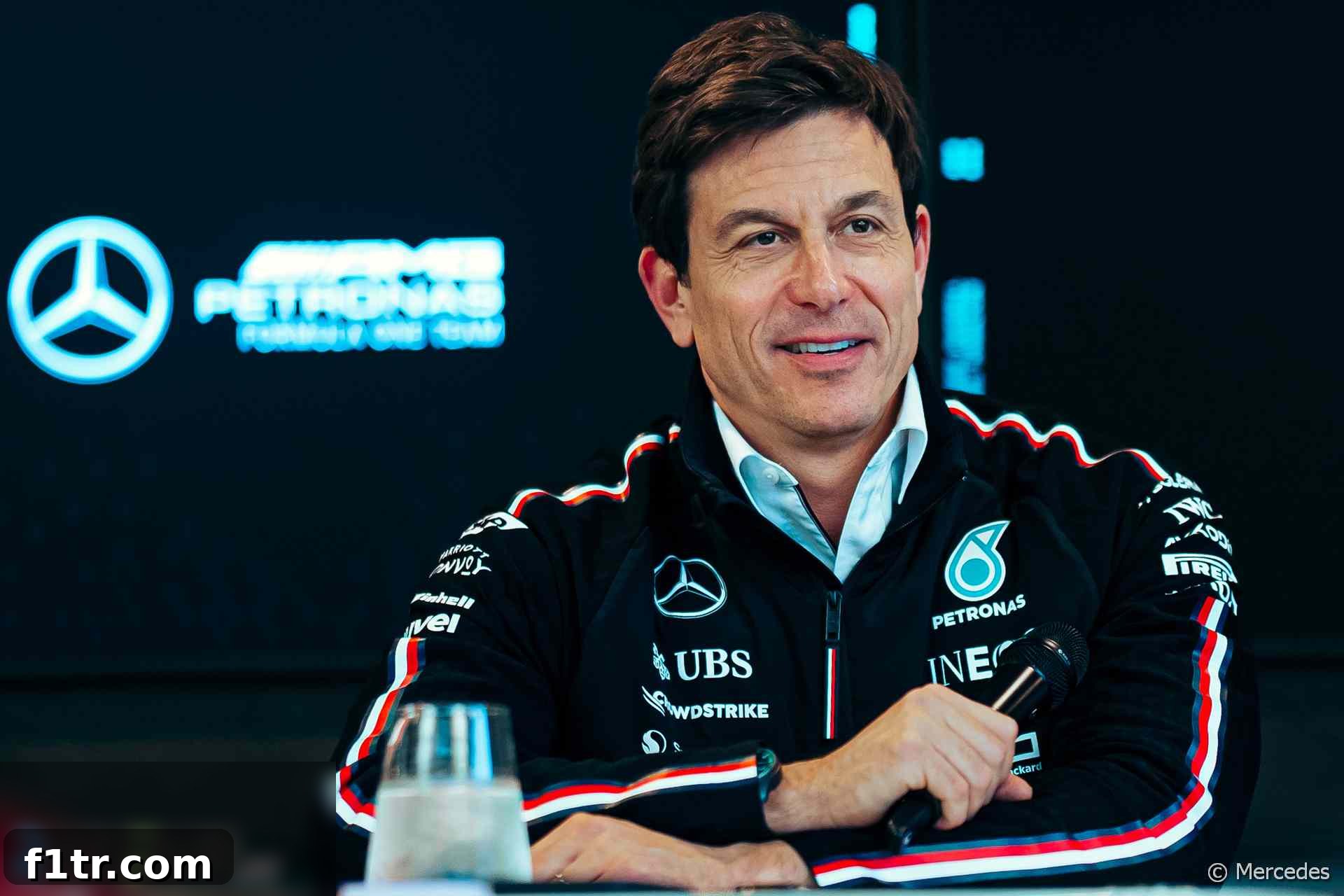
Toto Wolff Questions Cadillac’s F1 Entry Fee: A Deep Dive into Formula 1’s Financial Future
The prospect of a major new automotive brand, Cadillac, joining the elite ranks of Formula 1 has naturally generated considerable excitement, but it has also sparked a critical debate within the sport’s inner circles. At the heart of this discussion is the adequacy of the financial compensation package, known as the anti-dilution fee, that potential new entrants are required to pay. Mercedes team principal Toto Wolff has been particularly vocal, expressing strong reservations that the proposed fee falls short of what’s needed to truly offset the losses incumbent teams would face. His insights offer a crucial glimpse into the complex financial landscape of modern Formula 1 and the careful balancing act required for its continued growth.
Historically, Formula One Management (FOM) instituted a $200 million (£164m) anti-dilution fee for any new team seeking to enter the championship. This clause was part of the sport’s commercial agreements with its ten existing teams, which are slated to expire at the close of the current year. However, with the surge in F1’s global popularity and commercial value, reports indicate that Cadillac, as part of the ambitious Andretti Global bid, might face an even steeper charge—around $450 million—to secure a spot on the grid for upcoming seasons. The intention behind this substantial fee is clear: to distribute funds among the current ten teams, thereby mitigating the reduction in their share of the sport’s lucrative prize money pool that an eleventh competitor would cause. Yet, according to Toto Wolff, even this significantly increased sum is simply not enough to cover the immediate financial impact.
The Anti-Dilution Fee: A Source of Contention in F1 Expansion
Toto Wolff articulated his primary concern directly: “In the first instance, we lose out.” His statement, shared with Auto Motor und Sport, highlights the immediate financial implications for established teams. The core purpose of the anti-dilution fee is to serve as an indemnity, protecting existing entities from the economic detriment of having to divide the sport’s overall revenue among more parties. This prize money, a substantial component of team budgets, is primarily generated through global broadcasting rights, major sponsorship agreements, and fees paid by race host venues. Any increase in the number of recipients directly reduces the individual share for each existing participant.
The reported increase of the anti-dilution fee from $200 million to $450 million for a potential Cadillac entry reflects the transformed economic environment of Formula 1. The previous figure was set when the sport’s financial health and global commercial appeal were arguably less robust. The current, higher valuation underscores F1’s booming popularity and unprecedented prosperity. Nevertheless, Wolff firmly believes that even this elevated amount fails to adequately address the tangible, direct income losses that teams like Mercedes would incur. “The compensation fee, which is currently set at $450 million, is too low. It does not make up for the direct loss in income,” he stated, emphasizing the immediate and uncompensated financial hit that would be absorbed by the existing constructors.
Unpacking the Financial Impact on Current Formula 1 Teams
The introduction of an eleventh team into Formula 1 represents more than just a simple recalculation of prize money percentages. The financial ecosystem of the sport is intricately balanced. Each of the ten current teams has meticulously crafted its commercial strategies, negotiated sponsorship deals, and structured its operational budgets based on the existing competitive framework. A new entrant, especially one with the potential reach and resources of Cadillac, fundamentally alters this delicate balance. Prize money distribution in F1 is stratified, rewarding both performance on track and historical significance. An additional team not only dilutes the overall percentage each existing team receives but also introduces another formidable competitor vying for championship points and, consequently, higher-tier payouts, potentially pushing current teams further down the financial ladder.
Beyond the direct impact on prize money, there are other crucial financial considerations. The costs associated with competing at the pinnacle of motorsport are staggering, encompassing everything from advanced research and development for cutting-edge automotive technology to the immense logistical challenges of transporting personnel, equipment, and highly specialized vehicles across continents for a demanding race calendar. While the budget cap, implemented in recent years, has been instrumental in curtailing unchecked spending, the inherent operational expenses remain colossal. A new team would inevitably add to the collective infrastructure demands of the sport, including shared resources, paddock facilities, and event management. Although these might appear as minor overheads, they contribute to the collective burden. For teams meticulously managing their financial margins, any uncompensated dilution of income poses a significant threat to their financial viability, long-term investment strategies, and competitive integrity.
The Broader Value Proposition: What a New Entrant Must Bring to F1
While the immediate financial compensation through the anti-dilution fee is a pressing concern, Toto Wolff also articulated a more expansive perspective on the long-term benefits an eleventh participant could bring to Formula 1. He openly acknowledged that the ultimate value of expanding the grid depends critically on the qualitative contributions of the new team, extending far beyond the initial entry fee. “Only time will tell what value the sport gains from having an 11th participant. If the sport’s value increases, then everyone benefits,” Wolff remarked, outlining a strategic vision where a new entrant genuinely elevates Formula 1’s global stature and commercial appeal, rather than merely drawing from its already established resources.
This “value” encompasses several vital dimensions. A new works team, especially one backed by a globally recognized brand like Cadillac, possesses the potential to significantly amplify Formula 1’s marketing reach and commercial footprint. A substantial and sustained investment in marketing and promotional activities by Cadillac could attract entirely new audiences, particularly in crucial growth markets such as the United States, where F1’s popularity has soared dramatically in recent years. This surge in viewership and fan engagement could, in turn, translate into more lucrative broadcasting deals, higher valuation for team sponsorships across the board, and an overall expansion of the sport’s commercial ecosystem. In such a scenario, the benefits would indeed be widespread, creating a rising tide that lifts all boats.
However, Wolff’s cautious optimism is notably tempered by a perceived lack of concrete information regarding Cadillac’s detailed plans. “But we just don’t know yet. No one has spoken to me about Cadillac’s exact plans,” he revealed, underscoring a critical transparency gap. For existing teams to fully embrace a new entrant, they require strong assurances that the new entity is not simply looking to capitalize on F1’s current boom, but is genuinely committed to adding substantive, long-term value. A true “works” effort, involving a dedicated engine program or significant technological investment, combined with a robust and expansive marketing budget, would undoubtedly be viewed far more favorably than a mere customer team joining the grid. “If Cadillac enters now with a works team and invests an appropriate marketing budget into Formula 1, it will be a valuable addition to the sport,” he added, explicitly outlining the prerequisites for gaining the endorsement of the sport’s established stakeholders.
Cadillac’s F1 Ambitions and the Role of the Gatekeepers
Cadillac’s persistent desire to enter Formula 1, frequently in collaboration with Andretti Global, underscores a clear and significant interest from a major automotive powerhouse in the pinnacle of motorsport. This ambition aligns well with F1’s broader strategic objective of further expanding its global presence, particularly within the lucrative North American market. However, the pathway to joining the exclusive Formula 1 club is far from straightforward. The Fédération Internationale de l’Automobile (FIA) and Formula One Management (FOM), working in close consultation with existing teams, serve as the sport’s ultimate gatekeepers. They evaluate potential entrants based on a comprehensive set of criteria, which includes financial stability, demonstrated technical capability, a long-term commitment to participation, and, perhaps most critically, the perceived value that the new entity is expected to bring to the sport as a whole.
The ongoing debate surrounding the anti-dilution fee and the broader “value proposition” reflects a fundamental tension within Formula 1. It’s a delicate balance between fostering competition and embracing growth on one hand, and rigorously protecting the substantial investments and deeply rooted interests of the established teams that have collectively built F1 into the global phenomenon it is today. While the allure of a new, prestigious manufacturer on the grid is undeniably strong, the current teams, informed by decades of experience and significant financial outlay, remain understandably cautious. Their priority lies in safeguarding their hard-won financial stability and ensuring the equitable distribution of the sport’s ever-growing and increasingly valuable revenues.
Formula 1’s Unprecedented Financial Health: A Modern Success Story
Amidst the robust debate over new entrants and their financial obligations, Toto Wolff also painted a remarkably positive picture of Formula 1’s current economic health. According to the Mercedes team principal, the long-standing cliché of F1 being a “money pit”—a venture that perpetually drains resources with questionable returns—is definitively a thing of the past. “We make a solid profit,” he confirmed regarding Mercedes’ extensive involvement in the sport. “Our profitability margin stands at 30 to 35 percent before tax. This even offsets our expenditures on the engine.” This revealing statement underscores the extraordinary transformation the sport has undergone, transitioning from an environment of often unsustainable, high-spending competition to a genuinely profitable and financially robust enterprise for many participants.
Several pivotal factors have contributed to this unprecedented era of financial prosperity. The strategic introduction of the budget cap in 2021 has been a revolutionary change, compelling teams to operate within stringent financial limits. This fiscal discipline has dramatically fostered efficiency, curbed the previously colossal and often wasteful expenditures, and made F1 teams far more attractive assets and genuinely sustainable businesses. Furthermore, the sport’s exponential growth in popularity, significantly propelled by initiatives like Netflix’s highly successful “Drive to Survive” docuseries, has unlocked new markets, attracted a younger and more diverse demographic, and substantially boosted global viewership figures. This heightened engagement has, in turn, directly translated into more lucrative sponsorship deals, higher broadcasting revenues, and expanding commercial partnerships across the board, solidifying F1’s position as a premier global entertainment product.
For Mercedes, the robust financial health of their Formula 1 operation is not merely about achieving sporting success; it stands as a powerful testament to a meticulously managed enterprise that generates substantial returns for its parent company. The ability to effectively offset the considerable costs of cutting-edge engine development with the profits derived from the F1 team itself highlights the brand’s strategic brilliance and long-term vision within motorsport. “The old cliche that Formula 1 is just a money pit is a thing of the past. In summary, Formula 1 has never been as financially healthy as it is today,” Wolff conclusively stated, offering a powerful endorsement of the sport’s current economic model and its exceptionally bright future prospects.
Conclusion: Balancing Ambition with Stability in F1’s Growth Trajectory
The ongoing discussion surrounding Cadillac’s potential entry into Formula 1, particularly concerning the contentious anti-dilution fee, vividly encapsulates the complex and evolving dynamics at play within contemporary motorsport. While Formula 1 continues its remarkable global expansion and enjoys unparalleled commercial success, the influential voices of established stakeholders like Toto Wolff serve as crucial reminders of the imperative for balanced and sustainable growth. Ensuring that any new entrant genuinely contributes to the sport’s overall value and appeal, beyond merely paying an initial entry fee, is paramount to maintaining the delicate financial equilibrium and safeguarding the long-term prosperity of all involved parties.
The current, unprecedented financial strength of Formula 1, which stands in stark contrast to previous decades characterized by financial precarity, fundamentally means that the bar for entry into this elite championship is now higher than ever before. Prospective new teams are expected to bring not just substantial capital, but also a clear, compelling, and well-articulated vision for demonstrably enhancing the sport’s overall spectacle, technological prowess, and commercial appeal, ensuring that F1’s continued evolution benefits everyone who is part of its thrilling journey.