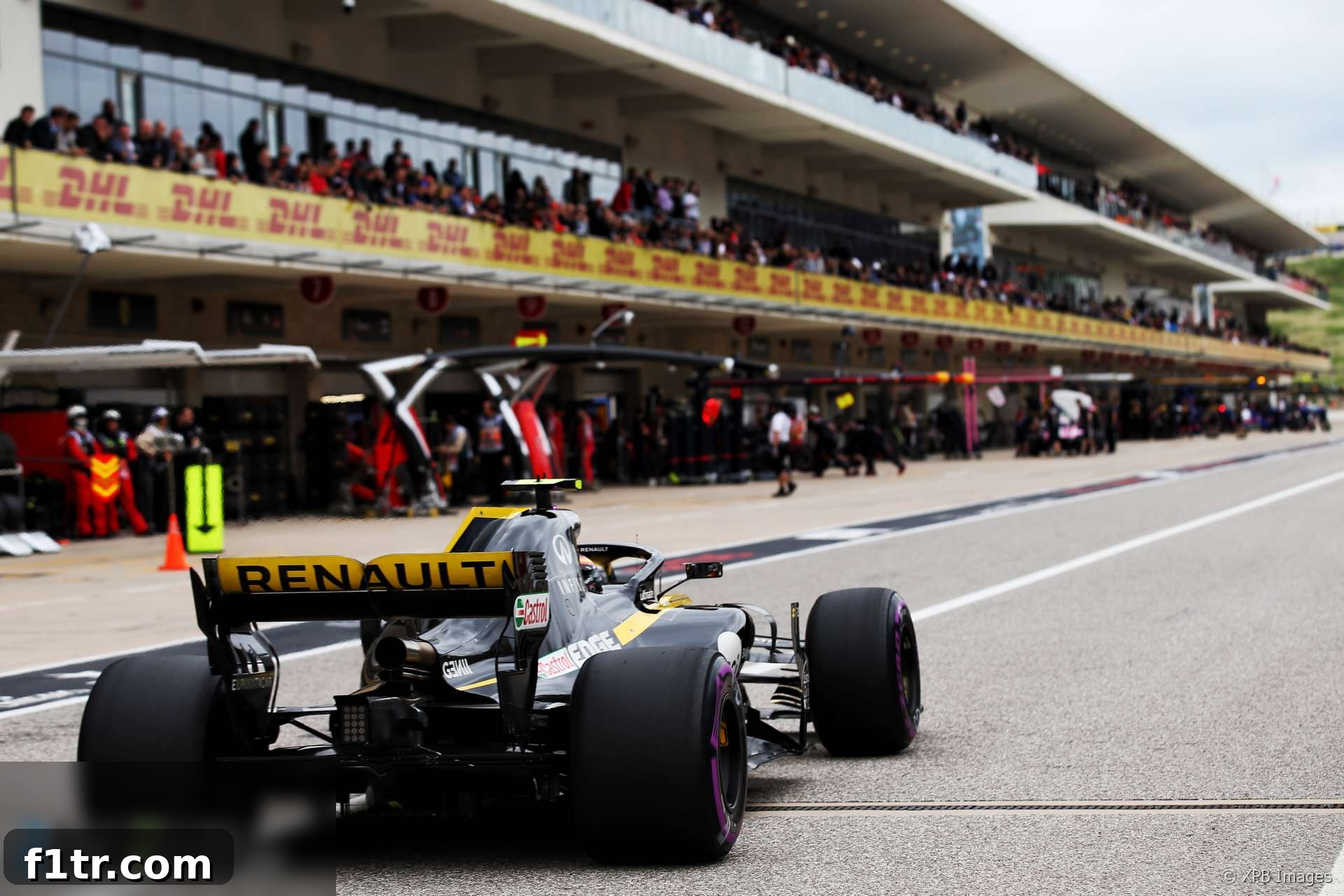
Critical Tyre Pressure Revisions Issued for the United States Grand Prix: Unpacking the Impact on F1 Teams and Race Strategy
In a significant directive just hours before the highly anticipated United States Grand Prix, Formula 1 teams have received revised minimum rear tyre pressure mandates from official supplier Pirelli. This last-minute change introduces an additional layer of complexity and strategic challenge for all competitors, especially given the limited running in ideal conditions earlier in the race weekend. These adjustments underscore the paramount importance of tyre management in modern Formula 1, where the smallest deviation can have profound effects on performance, safety, and ultimately, the outcome of the race.
Understanding the Revised Pirelli Tyre Pressure Limits
The updated specifications issued by Pirelli require a mandatory increase in rear tyre pressures across all tyre compounds. For slick tyres, which are used in dry conditions, the minimum pressure has been elevated from the previous 20 psi (pounds per square inch) to a new minimum of 21.5 psi. This 1.5 psi increase, while seemingly minor, can significantly alter how the tyre interacts with the track surface, impacting grip levels, wear rates, and overall car balance. A higher pressure generally stiffens the tyre’s carcass, affecting its deformation and heat generation characteristics.
Furthermore, the wet weather tyre range has also seen corresponding adjustments. Rear pressures for intermediate tyres, designed for damp or lightly wet tracks, have risen by the same increment, now set at a minimum of 10.5 psi. Similarly, full wet weather tyres, intended for heavy rain conditions, will now need to maintain a minimum of 20.0 psi at the rear. These adjustments are not arbitrary; they are typically a response to data gathered during practice sessions, concerns about track conditions, or specific characteristics of the Circuit of the Americas (COTA) layout that demand enhanced tyre integrity for safety and performance. Pirelli continuously monitors tyre performance and track dynamics to ensure the highest safety standards and competitive racing.
The Ripple Effect of Limited Dry Running: A Strategic Conundrum
The race weekend at COTA was significantly affected by adverse weather conditions on Friday, particularly during the crucial free practice sessions. Wet conditions throughout much of the day severely curtailed teams’ opportunities to conduct meaningful long-run simulations on dry slick tyres. This limitation is a substantial hurdle for engineers and strategists, as long runs are absolutely essential for understanding tyre degradation, assessing optimal tyre management strategies, and validating car setups under race loads over a full stint.
Without comprehensive data from extended dry running, teams enter the Grand Prix with a reduced understanding of how their cars will perform over a full stint with the new tyre pressures. This lack of empirical data forces teams to rely more heavily on simulations, historical data, and educated guesses, increasing the element of uncertainty. It also places greater emphasis on driver feedback during the initial laps of the race and the ability of the pit wall to react quickly to evolving conditions and tyre behaviour. The revised pressures, combined with the data deficit, mean that tyre management will be an even more critical differentiator in today’s race, potentially opening up opportunities for agile strategists and adaptable drivers.
The Science and Safety Behind F1 Tyre Pressures
Tyre pressures in Formula 1 are not merely a number; they are a finely tuned parameter that dictates much of a car’s performance and safety envelope. The correct pressure ensures that the tyre maintains its optimal contact patch with the track, maximizing mechanical grip, distributing heat evenly, and preventing structural damage. If pressures are too low, the tyre can overheat excessively, leading to blistering, delamination, and an increased risk of punctures or structural failure. This can be catastrophic at F1 speeds. Conversely, if pressures are too high, the contact patch can shrink, reducing grip and potentially leading to uneven wear, a phenomenon known as graining, or even a sudden loss of tyre integrity at high speeds due to insufficient flex.
Pirelli, as the sole tyre supplier, bears the immense responsibility of providing tyres that are both high-performing and safe under the extreme demands of Formula 1. Their minimum pressure recommendations are derived from extensive testing, analysis of circuit characteristics, and real-time data from practice sessions. These limits are a critical safety measure, safeguarding against potential tyre failures that could endanger drivers and spectators alike. The FIA (Fédération Internationale de l’Automobile) closely monitors adherence to these technical directives, ensuring that all teams operate within the prescribed safety parameters. Deviations can result in severe penalties, underscoring the strictness of these regulations and the commitment to driver safety.
Circuit of the Americas: A Unique Test for Tyres
The Circuit of the Americas (COTA) in Austin, Texas, is renowned for its challenging layout, featuring a diverse mix of high-speed sections, technical corners, and significant elevation changes. The iconic uphill run into Turn 1, the subsequent fast, flowing esses (Turns 3-6), and the demanding long back straight with heavy braking zones all put immense lateral, vertical, and longitudinal loads on the tyres. The track surface itself can be quite abrasive in certain areas, contributing significantly to tyre wear and degradation over a race distance. These inherent characteristics of COTA mean that tyres are subjected to extreme forces throughout each lap, making precise pressure management absolutely essential for both performance and longevity.
The revised rear tyre pressures might be a direct response to the specific demands of COTA, perhaps identified during Friday’s limited running or from Pirelli’s extensive pre-event analysis. Higher rear pressures can sometimes provide a stiffer tyre carcass, offering better stability under braking and acceleration, and potentially reducing the likelihood of overheating or structural stress on this demanding circuit. This could be particularly important in areas like the high-speed esses where consistent tyre shape is crucial. However, it also means a slightly harder compound feel, which could reduce initial grip and accelerate wear if not managed properly by the drivers and engineers, leading to a delicate balancing act for car setup.
Navigating Race Day: Strategy, Setup, and Driver Adaptation
The updated tyre pressures will undoubtedly influence race strategy and car setup. Teams would have spent considerable time during Saturday’s final practice and qualifying sessions fine-tuning their cars to the new parameters, but the true test comes during the race. Higher rear pressures generally lead to a more responsive rear end but can also make the car more prone to oversteer, especially in high-speed corners where the car’s aerodynamic balance is critical. Engineers will have worked diligently to compensate for this through suspension adjustments, aerodynamic tweaks, and differential settings, attempting to find the optimal compromise between grip, stability, and tyre preservation.
For drivers, adapting to the altered tyre characteristics will be key. They will need to adjust their driving style to manage degradation, optimize grip, and maintain consistent lap times over long stints, often on the fly. The combination of limited dry running data, a demanding track, and mandatory pressure changes creates an environment where adaptability and shrewd decision-making on the pit wall will be paramount. Expect a race where tyre management and strategic calls regarding pit stop timing and compound choice could be more influential than ever, potentially leading to exciting and unpredictable outcomes at the United States Grand Prix. The team that best masters these variables will likely gain a significant advantage.
As teams navigate these crucial technical directives, reflecting on past F1 seasons and the continuous evolution of the sport provides valuable context. Explore more insights into the intricate world of Formula 1 with these related articles:
2018 F1 season
- F1 feared “death knell” for Drive to Survive after Ferrari and Mercedes snub
- McLaren staff told us we were “totally crazy” to take Honda engines in 2018 – Tost
- ‘It doesn’t matter if we start last’: How Red Bull’s junior team aided Honda’s leap forward
- Honda’s jet division helped F1 engineers solve power unit problem
- McLaren Racing losses rise after Honda split
Browse all 2018 F1 season articles