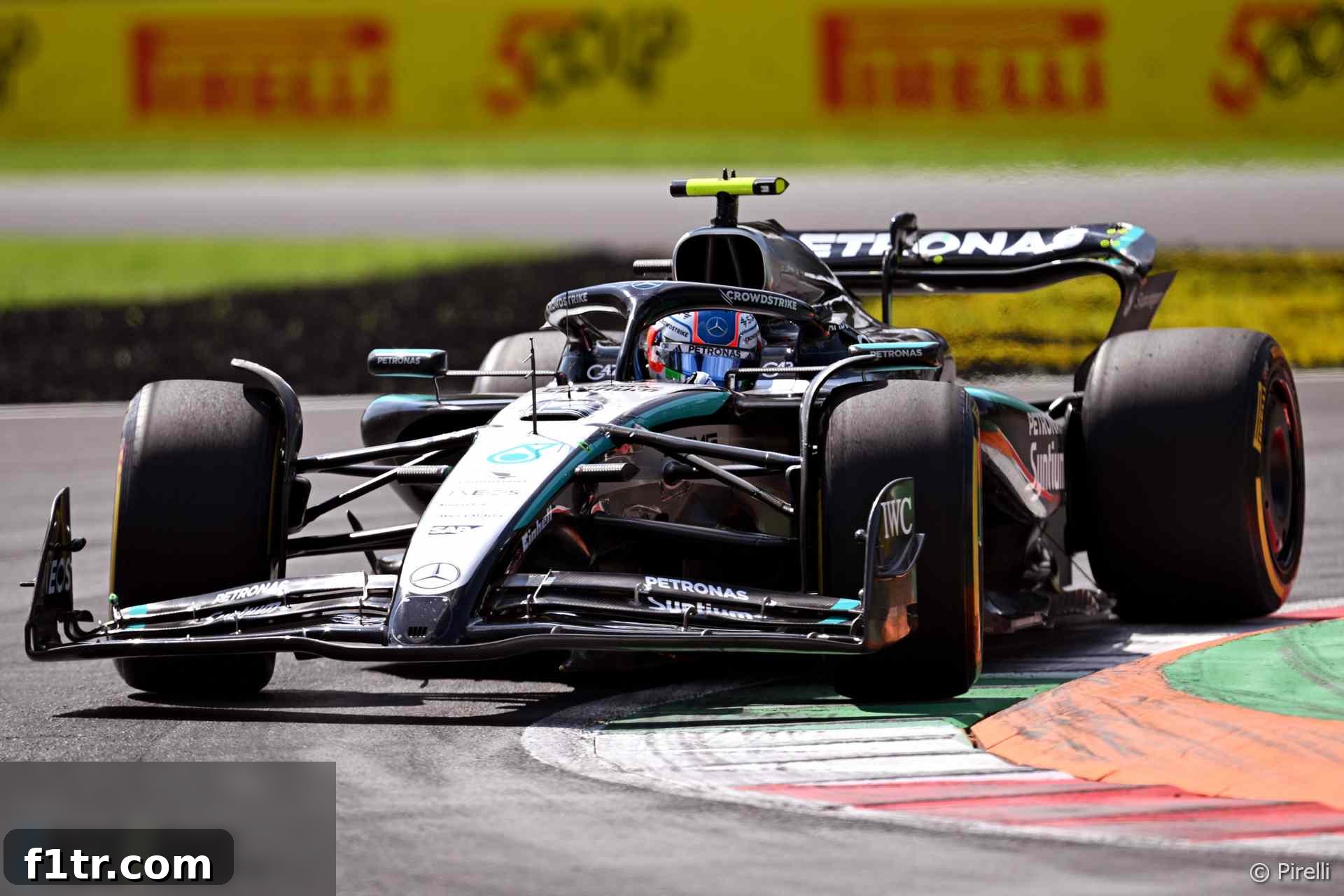
Andrea Kimi Antonelli’s F1 Debut: Navigating the Steep Learning Curve with Mercedes
Mercedes Team Principal Toto Wolff has openly admitted that Andrea Kimi Antonelli’s highly anticipated debut season in Formula 1 has presented more formidable challenges than the team initially anticipated. Despite the hurdles and the demanding transition from junior categories, Wolff emphatically reaffirmed the team’s unwavering confidence in the prodigious 19-year-old talent. Antonelli stepped into the pivotal role vacated by the legendary Lewis Hamilton at the close of the previous season, a move that immediately placed him under an intense spotlight.
A Season of Unpredictable Starts and Unforeseen Obstacles for the F1 Rookie
The journey for any rookie in Formula 1 is notoriously demanding, but Antonelli’s path has been particularly scrutinised given the immense shoes he has to fill and the legacy he is expected to uphold at Mercedes. Wolff, reflecting on the season’s unfolding narrative, shared his insights, stating, “We went into putting Kimi in a Formula 1 car with great enthusiasm, and I think the team also needed that, with Lewis going. For us, it was the best alternative.” This sentiment underscores the initial optimism and the strategic decision to back Antonelli as Mercedes’ next-generation star, an investment in the future of the team.
However, the transition from junior categories to the pinnacle of motorsport is rarely smooth, often punctuated by unexpected twists and steep learning curves. Wolff candidly described the team’s realistic mindset going into the season: “We walked into this with open eyes saying there’s races we’re going to tear our hair out and others are going to be brilliant. And that’s what happened. Maybe there were more that were hair tear-out situations, but we are committed.” This honest assessment highlights the realistic, albeit sometimes painful, process of nurturing a young driver in an unforgiving environment like Formula 1, where every mistake is magnified and every success celebrated intensely. It’s a testament to Mercedes’ long-term commitment to Antonelli’s development, understanding that growth comes through experience, both positive and challenging.
Performance Trajectory: A Mixed Bag of Promise and Setbacks
Andrea Kimi Antonelli’s season began with undeniable flashes of brilliance, hinting at the raw speed and potential that earned him such a formidable reputation in the junior ranks. He remarkably scored points in five out of his first six race weekends, a testament to his adaptability and innate talent. This strong start fueled the hopes of many who saw him as a natural successor to F1’s elite, suggesting he could quickly adapt to the immense pressures of Grand Prix racing. Such an impressive initial performance curve is often indicative of a driver quickly coming to grips with the complexities of Formula 1 machinery and the competitive dynamics inherent in the sport.
Yet, the unforgiving nature of F1 soon presented its full array of challenges. Following his initial burst of success, Antonelli experienced a more challenging period, failing to score points in all but two of the subsequent nine events. This fluctuation is not uncommon for rookies, who often encounter peaks and troughs as they adapt to different circuits, car setups, and racing conditions. One notable highlight during this tougher phase was his inaugural podium appearance at the Circuit Gilles Villeneuve in Montreal. This significant milestone for any rookie and a clear demonstration of his capability to perform under pressure when circumstances align. Despite the fluctuating results, these moments of brilliance serve as crucial reminders of his underlying talent and potential for future consistent high-level performance, showcasing why Mercedes invested so heavily in him.
Mercedes’ Approach to Rookie Development: Embracing the Learning Curve
A year after Andrea Kimi Antonelli’s initial Formula 1 practice debut for Mercedes at Monza, an outing unfortunately marred by a crash at the iconic Parabolica corner, Toto Wolff reflected on the team’s strategy and approach. He acknowledged that the team could have perhaps managed Antonelli’s introduction to the sport more effectively, suggesting a need for recalibration in their support structure. “There’s no doubting Kimi, because he came into the sport with great fanfare, the quickest ever in karting, great early junior series track record,” Wolff asserted, underscoring the immense talent Antonelli brings to the table and the expectations that naturally accompanied his arrival.
The Italian prodigy’s early career was nothing short of sensational. Often dubbed “mini-Jesus” by those who witnessed his unparalleled dominance in karting and rapid ascent through junior categories, Antonelli arrived in F1 with a weighty reputation. Wolff recounted an instance where Antonelli “blasts a lap out in the first two sectors that everybody says well, that is really ‘mini-Jesus’, and then he puts it in the wall, which can happen. We probably didn’t calibrate him the right way.” This insight reveals the fine line between pushing a young driver to unlock their full potential and providing the necessary support structure to prevent costly errors as they learn the limits of both themselves and the car. It speaks to the intricate balance required in nurturing elite sporting talent.
The Impact of Car Characteristics on Rookie Confidence and Performance
A significant factor in Antonelli’s oscillating form, as highlighted by Wolff, has been the characteristics of the Mercedes car itself. “Throughout the season, he started very strong, but then we had a car that was unpredictable and didn’t give him any confidence. And then it was better,” Wolff explained. For a rookie driver, a stable and predictable car is paramount for building confidence, understanding feedback, and safely pushing the limits. An unpredictable machine, on the other hand, can be a major hindrance, making it difficult to find a consistent rhythm and trust the car’s reactions, thereby exacerbating the challenges of a steep learning curve. The synergy between driver and machine is crucial in F1, and for a newcomer, this connection needs to be robust.
Furthermore, minor incidents, especially early in a race weekend, can have disproportionate impacts on a rookie’s overall performance. Wolff cited a “mistake in FP1 in Zandvoort didn’t set him on the right trajectory for qualifying.” Such early weekend setbacks can derail momentum, affect confidence, and make it harder to extract optimal performance during crucial qualifying sessions and the race itself. The cumulative effect of these small errors and an uncooperative car can significantly impact a driver’s overall output and mental state. Wolff concluded on this point by emphasizing the developmental aspect: “This time he started a bit calmer here and at the end it was solid. So I think most important is to just let him grow and let him do the mistakes.” This patient approach is critical for long-term success, allowing Antonelli to push boundaries and learn from experience without undue pressure for immediate perfection, fostering genuine growth rather than short-term results.
Antonelli’s Resilience and Forward Momentum: A Driver’s Perspective
Andrea Kimi Antonelli himself remains remarkably resilient and focused despite the inevitable frustrations and steep learning curve of a challenging debut season. He recently faced a disappointing outcome in his last race, where he was on course for a valuable points finish before an unfortunate collision with Charles Leclerc. This incident, while frustrating for both drivers, also highlighted Antonelli’s competitive spirit and determination to seize opportunities, even at critical moments in a race.
Reflecting on the race, Antonelli commented, “In the race I had good momentum, the pace was strong and especially on that hard tyre I felt pretty [good]. I was able to catch, lap by lap, the group in front.” His ability to manage tyres and close gaps speaks volumes about his inherent race craft and strategic understanding, crucial attributes for an F1 driver. Regarding the collision, he candidly explained his decision-making: “Then of course, the contact happened, which obviously was not ideal. In the moment I felt like going for it, also because it was probably my only chance.” This honest admission reveals the high-stakes environment of F1, where young drivers often feel compelled to take calculated risks to prove themselves and secure valuable positions, particularly when a points finish is within reach.
Looking ahead, Antonelli views back-to-back races as an invaluable opportunity for continuity and immediate improvement, allowing him to quickly apply lessons learned. “It’s always nice to have back-to-back races because, despite what happened, I can still carry this momentum into this race weekend, especially after seeing that the pace overall was better,” he added. “So hopefully we can keep working, keep improving, and then deliver a great result this weekend.” His optimistic outlook and unwavering focus on continuous development are essential qualities for a driver aiming to establish a long and successful career at the pinnacle of motorsport, demonstrating the mental fortitude required to bounce back from adversity.
The Road Ahead for a Future Star: Sustaining Belief in Antonelli
Andrea Kimi Antonelli’s debut season with Mercedes has been a testament to the immense pressures and steep learning curve inherent in Formula 1. While the results have been mixed, with moments of undeniable brilliance interspersed with the inevitable errors and challenges typical of a rookie, both the driver and the team remain steadfast in their commitment. Toto Wolff’s honest assessment underscores a long-term vision for Antonelli, understanding that true potential is forged not just in victories but in overcoming adversity and learning from every experience. This patient and supportive approach is critical for cultivating future champions in a sport known for its demanding nature.
The journey from a highly decorated junior driver to a consistent F1 front-runner is a marathon, not a sprint. Antonelli’s initial points-scoring consistency, his maiden podium, and his unwavering determination, even in the face of setbacks like the incidents at Monza, Zandvoort, or with Leclerc, all point towards a driver with the mental fortitude and raw talent to succeed at the highest level. The Mercedes team’s continued support, coupled with a focus on refining the car’s characteristics for better predictability, will be crucial in unlocking his full capabilities. As Antonelli continues to evolve and adapt, his story remains one of the most compelling narratives in contemporary Formula 1, holding the distinct promise of a future star in the making and a key figure in Mercedes’ long-term vision for success.
Don’t Miss a Moment from Formula 1 – Subscribe Today!
Get exclusive updates, race analyses, and all the latest news directly in your inbox. No spam, just pure F1 content. Sign up here:
Related Articles: Exploring the 2025 Italian Grand Prix
- No Change to McLaren’s Team Orders After Monza Review – Stella
- Bearman Did Not Deserve Penalty for Sainz Collision at Monza, Says Vowles
- Transcript: Hamilton Seeking Final Tenths as He Closes Gap to Leclerc
- McLaren Can Clinch F1’s Earliest Title Win Since 1988 With as Little as Fifth Place
- How Did Verstappen Know About Norris’ Slow Stop in Italy? Red Bull Told Him
Browse All 2025 Italian Grand Prix Articles