In the high-octane world of Formula 1, where national pride often fuels the passion of fans and manufacturers alike, Honda is making its aspirations clear: the esteemed Japanese automotive giant is committed to nurturing a homegrown talent to grace the F1 grid once more. This significant ambition was recently articulated by Honda motorsport general management, Mashashi Yamamoto, who underlined the manufacturer’s fervent hope of seeing a Japanese driver compete in the pinnacle of motorsport in the near future. This commitment is a powerful testament to Honda’s long-standing dedication to the sport and its vision for fostering national talent on the global stage, aiming to reignite a deep connection with its Japanese roots within the elite racing series.
Yamamoto’s statement highlights a crucial strategic objective for Honda. Having a Japanese driver in Formula 1 is not merely about representation; it’s a powerful symbol that resonates deeply within Japan, inspiring a new generation of motorsport enthusiasts and strengthening the connection between the brand and its national identity. For a company with such a rich legacy in Formula 1, stretching back decades, this quest is a natural extension of its enduring commitment to the sport, both technically and culturally. The presence of a national hero on the world stage would undoubtedly amplify Honda’s marketing efforts, enhance its brand image globally, and reinforce its position as a leading contender in the fiercely competitive world of motorsport, creating a valuable link between its consumer products and its racing pedigree.
Currently, Honda is heavily invested in two promising Japanese talents in Formula Two: Nirei Fukuzumi and Tadasuke Makino. Both drivers are fiercely competitive and are backed by Honda’s comprehensive development program, designed to equip them with the skills and experience necessary for a career in top-tier motorsport. However, despite their dedication and evident skill, the intricate system of the FIA Superlicence presents a formidable hurdle. This rigorous qualification process, implemented to ensure only the most prepared drivers reach Formula 1, means that neither Fukuzumi nor Makino will accumulate the requisite number of Superlicence points to qualify for a seat in the 2019 F1 season. This reality underscores the demanding criteria set for entering Formula 1 and the often lengthy developmental path required for aspiring drivers.
The FIA Superlicence is a crucial credential, acting as a stringent gatekeeper to Formula 1. It’s awarded based on a complex points system, where drivers earn points for achieving specific results in various approved junior categories, such as Formula 2, Formula 3, IndyCar, and even Japan’s own Super Formula. A minimum of 40 points is required over a three-year period, alongside completing 300km in a contemporary F1 car during an official test. This system is meticulously designed to ensure that only the most qualified, experienced, and consistently high-performing drivers reach Formula 1, thereby maintaining the sport’s elite status and prioritizing safety. While vital for upholding standards, it also means that even exceptionally talented drivers with significant backing might need multiple seasons in junior formulae to accumulate enough points, potentially prolonging their journey to the pinnacle of motorsport and adding layers of strategic planning for their careers.
“Obviously, to have a Japanese driver on the Formula 1 grid is very important for Japan and for ourselves for the future of this motorsport in Japan,” Yamamoto reiterated during a recent FIA press conference. His words encapsulate a broader vision: to ignite and sustain passion for motorsport across Japan, from grassroots karting initiatives aimed at discovering future champions, all the way to international championships. This overarching goal aims to secure a robust and thriving future for the sport within the nation. This strategic objective goes hand-in-hand with Honda’s continued, long-term involvement in Formula 1 as an engine supplier, demonstrating a holistic approach to motorsport development that combines technological advancement with human talent cultivation.
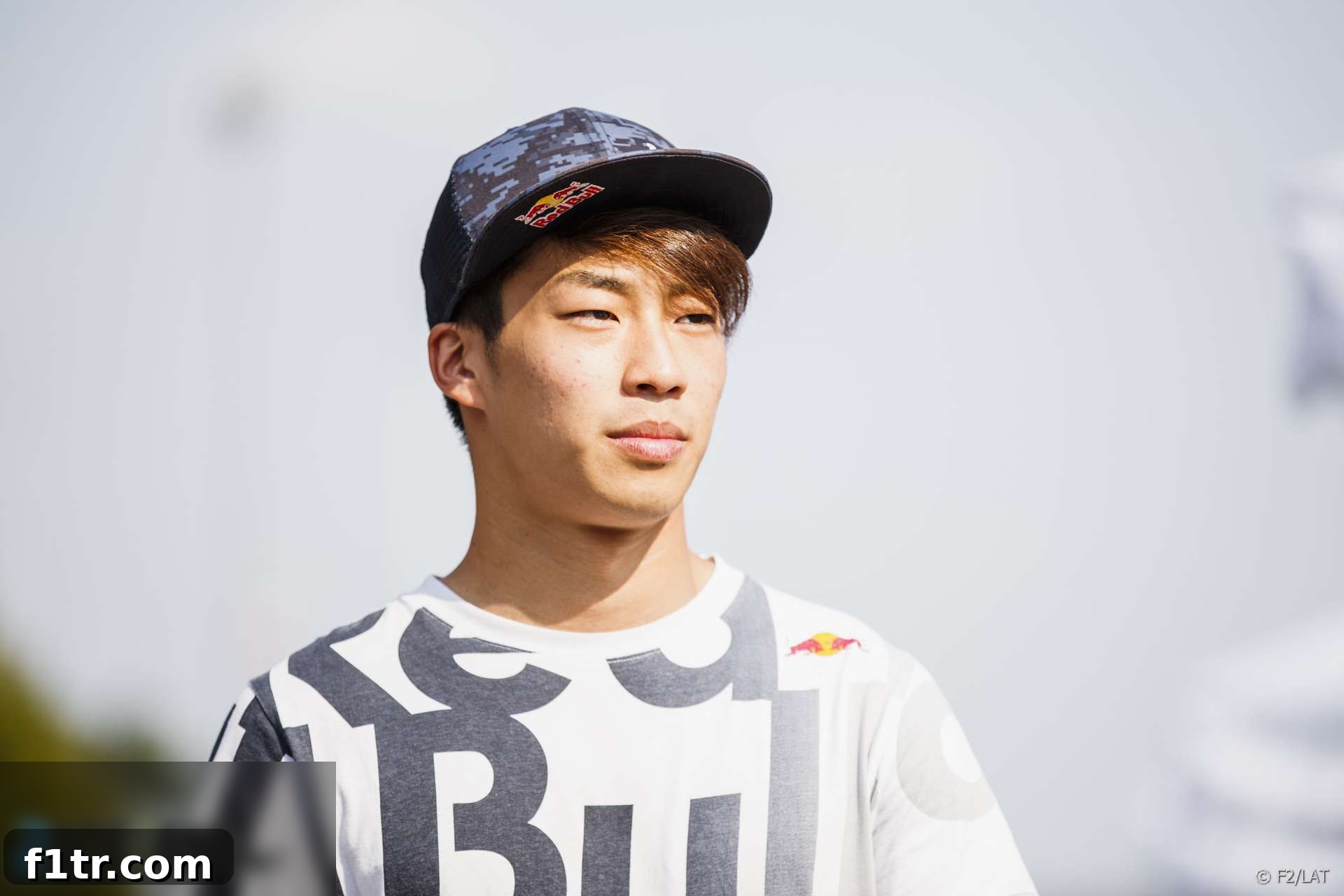
Examining the current standing of Honda’s proteges, Tadasuke Makino currently holds 13th position in the fiercely contested Formula 2 championship, a series known for its brutal competition and unpredictable outcomes. Just four places behind him, in 17th, is Nirei Fukuzumi, who recently celebrated a significant milestone by securing his maiden victory at Monza last month, showcasing his raw pace, adaptability, and immense potential under pressure. Fukuzumi, a recognizable face within the motorsport community, also enjoys the prestigious title of a Red Bull Athlete. It’s important to clarify, however, that while he is supported by the energy drink giant, he is not a direct member of their highly successful Junior Team. The Red Bull Junior Team has famously served as a direct feeder for its Formula 1 outfits, AlphaTauri (formerly Toro Rosso) and Red Bull Racing, producing multiple F1 graduates in recent years. Fukuzumi’s status as an athlete still indicates a high level of recognition for his talent and future prospects, even if his immediate F1 pathway isn’t through the traditional Red Bull pipeline.
Beyond Formula 2, Fukuzumi further hones his skills by competing concurrently in Japan’s highly competitive Super Formula championship. This series is often regarded as one of the fastest and most physically demanding single-seater categories outside of Formula 1, attracting top international talent and providing invaluable experience with high-downforce, high-performance cars. The dual commitment to both F2 and Super Formula demonstrates the intensive training regimen undertaken by these drivers, requiring them to adapt to different car characteristics, track conditions, and competitive environments. Despite their strenuous efforts and clear potential, the prevailing expectation is that both Fukuzumi and Makino will likely continue their development in Formula 2 for another season next year, allowing them more time to accumulate the necessary Superlicence points and further refine their racing craft against a strong international field.
Yamamoto also shed light on the challenges faced by young drivers in Formula 2, particularly concerning the stability of the series itself during recent seasons. “Regarding the series that they run in, as you know, the teams have been working with the new regulations, a lot of changes, trying rolling starts etc… so it hasn’t been a very stable series itself,” he explained. This candid assessment points to the significant operational and technical adjustments that F2 teams and drivers have had to navigate, including the introduction of new car specifications, initial engine problems that plagued the series, and procedural changes like the experimental use of rolling starts. Such instability can naturally impact a driver’s ability to consistently perform, gather meaningful data, and develop at a steady pace, making the learning curve even steeper in an already challenging environment. Despite these external factors, Yamamoto conveyed unwavering confidence in his drivers, asserting, “But they are both very good drivers and we are educating them for a bright future.” This highlights Honda’s long-term perspective and deep-seated belief in the talent they are cultivating, viewing these challenges as part of a crucial learning process.
The last time a Japanese driver graced the Formula 1 grid was Kamui Kobayashi, who competed with Caterham in 2014. Kobayashi’s career was marked by flashes of brilliance, daring overtakes, and a fearless driving style, earning him a strong and loyal following among fans worldwide. His departure left a noticeable void for Japanese representation in F1, a void that Honda is determined to fill with renewed vigor. Before Kobayashi, an array of talented Japanese drivers, including Takuma Sato, Ukyo Katayama, and Satoru Nakajima, carved their names into F1 history, each contributing significantly to Japan’s presence and reputation in the sport. Honda itself has been inextricably intertwined with Formula 1 since the 1960s, initially as a pioneering constructor and later as a highly successful engine supplier, powering iconic teams to multiple world championships. This rich and interwoven history underscores the profound connection between Japan, Honda, and Formula 1, making the current aspiration for a Japanese driver a natural and deeply meaningful continuation of a proud and competitive heritage.
Honda’s commitment to motorsport extends far beyond its direct involvement in Formula 1; it encompasses various high-profile disciplines globally, from the intensely competitive Super GT series in Japan to the challenging IndyCar championship in North America, and numerous prestigious motorcycle racing championships. This broad and deep engagement provides a fertile ground for driver development, offering diverse pathways and learning opportunities for young talents. The technical insights and performance data gained from these myriad racing programs, particularly in terms of engine technology, chassis development, and operational strategies, often feed back into their Formula 1 efforts, creating a synergistic ecosystem of innovation and continuous improvement. The rigorous training and hyper-competitive environment in series like Super Formula, for example, prepare drivers not just for the technical demands but also the immense psychological and physical pressure of international motorsport, closely mimicking the high stakes and scrutiny of Formula 1 itself.
Looking ahead, the journey for Fukuzumi, Makino, or any aspiring Japanese F1 driver remains arduous and fraught with challenges. It requires not only consistent, top-tier performance on track but also the precise alignment of numerous opportunities – securing a competitive seat in Formula 1 is a complex puzzle involving intricate negotiations, substantial sponsorships, team dynamics, and the often-unpredictable fluctuations of the global driver market. However, with Honda’s unwavering financial backing, extensive engineering expertise, and strategic long-term vision, the path, though challenging, is clearly defined and well-resourced. The manufacturer’s deep pockets and commitment to technological excellence provide a solid foundation for their driver development program, ensuring that their talents have access to the best training resources, cutting-edge equipment, and expert guidance available in the motorsport world, thereby maximizing their potential to reach the highest echelon of racing.
The significance of a Japanese driver for Honda in Formula 1 cannot be overstated. It represents the powerful culmination of national pride, ambitious corporate strategy, and the relentless pursuit of excellence that defines both Honda as a global brand and Formula 1 as the pinnacle of automotive competition. Such a driver would serve as a powerful cultural ambassador, bridging nations and inspiring millions of fans and aspiring racers across the globe. While the immediate 2019 season might be out of reach for their current crop of promising F2 drivers, the long-term outlook for a Japanese F1 star remains exceptionally bright. Honda’s determination to see a homegrown talent emerge from its esteemed ranks and compete at the highest level is stronger than ever, promising an exciting and historically significant new chapter in the intertwined histories of Japan, Honda, and Formula 1. The entire motorsport world eagerly awaits the moment a rising sun once again shines brightly on the Formula 1 grid, carried by a driver proudly representing both Honda and the spirit of Japan.
Don’t miss anything new from RaceFans
Follow RaceFans on social media:
- Join RaceFans on Facebook
- Follow RaceFans on Twitter
- Get daily email updates from RaceFans
Honda’s Journey and the 2018 F1 Season
The 2018 Formula 1 season marked a pivotal moment for Honda, as it embarked on a significant new partnership with Scuderia Toro Rosso (now AlphaTauri), effectively ending its challenging and often controversial association with McLaren. This season was absolutely crucial for Honda to demonstrate its capabilities, particularly its reliability and performance improvements, thereby setting the stage for a potential future collaboration with the senior Red Bull Racing team. The move to Toro Rosso allowed Honda to operate with greater autonomy and focus intensely on refining its power unit technology, free from the intense public scrutiny and complex internal pressures that had characterized its preceding tenure with McLaren. It was a year dedicated to learning, continuous development, and achieving incremental gains, all vital steps for building technical confidence and crucial operational momentum within the highly competitive F1 landscape.
The insights and extensive data meticulously gathered during the 2018 season proved to be exceptionally invaluable, enabling Honda’s engineers to make significant strides in terms of both engine power output and fuel efficiency. This period was instrumental in laying a robust technical and operational groundwork for the much more competitive and championship-challenging engines seen in subsequent seasons. The partnership with Toro Rosso was not just about performance on track; it was also a strategically vital alliance aimed at developing young drivers who could potentially utilize Honda power in the future, thereby integrating talent development with engine innovation. This dual focus on advanced engine development and nurturing promising driver talent underscores Honda’s comprehensive and forward-thinking approach to its Formula 1 involvement, directly aligning with its stated long-term goal of bringing a Japanese driver into the sport. The significant engineering and competitive challenges heroically overcome in 2018 were a profound testament to Honda’s formidable resilience, unwavering determination, and engineering prowess, unequivocally reinforcing its long-term commitment to Formula 1 and its grand aspirations for sustained future success, including the cherished integration of national talent.