McLaren’s Unstoppable Charge: A Historic F1 Season in the Making
After a thrilling battle that extended to the very final round of the previous season for the Constructors’ Championship, McLaren Racing has emerged with unprecedented strength in the current Formula 1 campaign. The iconic British team is now on a remarkable trajectory, poised to clinch the coveted title significantly earlier this year, signaling a powerful resurgence to the top echelons of motorsport.
The recent triumph of Lando Norris at the prestigious Monaco Grand Prix marked a pivotal moment, securing McLaren’s sixth Grand Prix victory in just eight rounds of the season so far. This impressive win rate underscores a level of consistent performance that few teams can boast. Both Norris and his promising teammate, Oscar Piastri, have demonstrated exceptional consistency, each securing podium finishes in all but one of the opening races. Their combined efforts have been instrumental in propelling McLaren into a dominant position in the Constructors’ Standings.
The Resurgence of a Giant: Unpacking McLaren’s 2024 Performance
This stellar performance has culminated in McLaren accumulating an impressive total of 319 points. This figure is more than double the points tally of their closest rivals, Mercedes, who currently stand at 147 points. With approximately one-third of the 2024 season now complete, current projections based on the teams’ scoring rates suggest a groundbreaking scenario: McLaren could potentially secure the Constructors’ Championship with as many as seven of the 24 rounds still remaining. This would translate to an astounding championship clinching with 29.1% of the season yet to unfold.
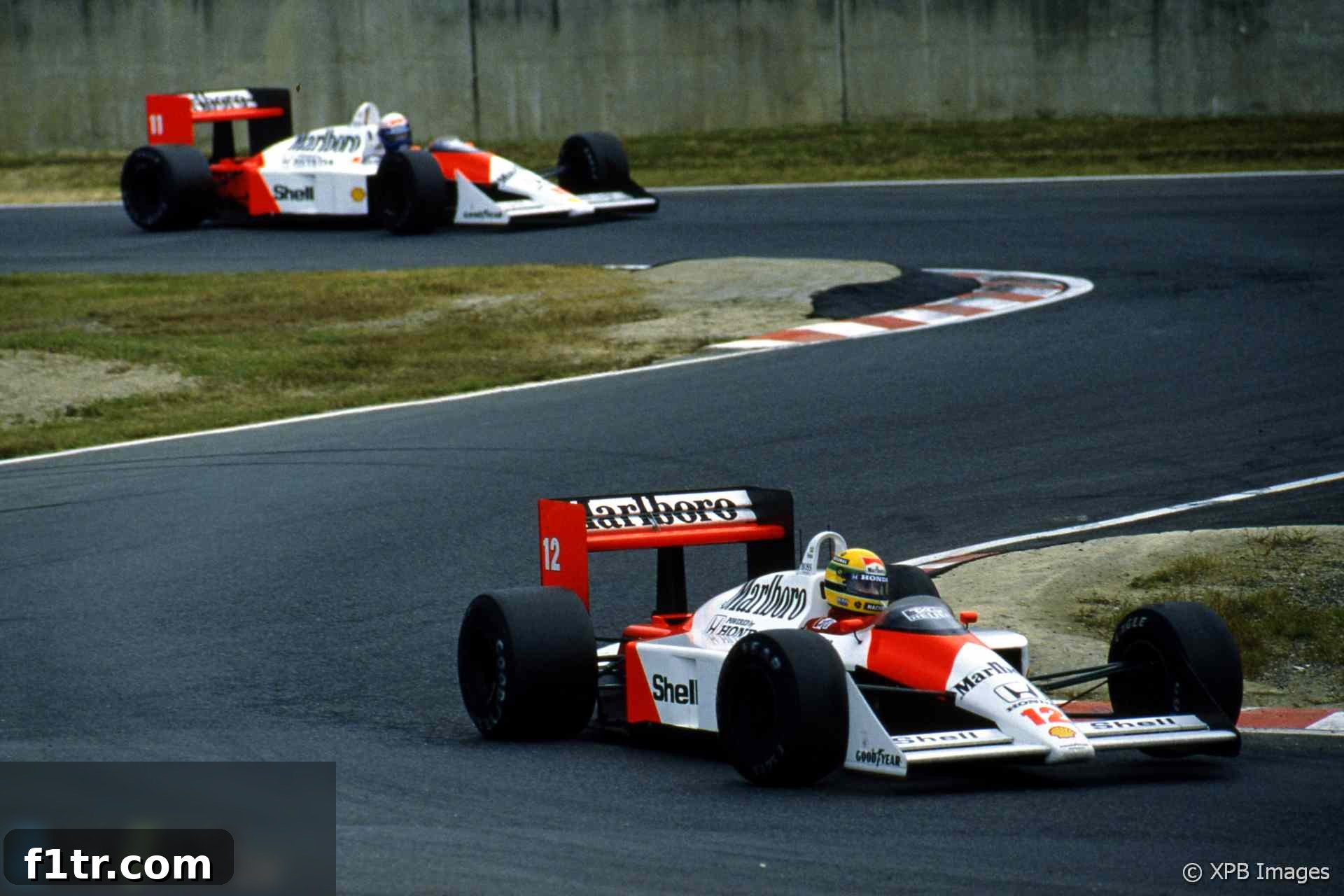
Such an early coronation would place McLaren’s 2024 season in an exclusive club, drawing compelling parallels to some of Formula 1’s most historically dominant eras. The last team to achieve a Constructors’ title victory at such an early stage in a season was, remarkably, McLaren itself. This occurred during their legendary 1988 campaign, a season widely regarded as one of the most dominant performances ever witnessed in the sport’s history. That year, McLaren clinched the title with five of the then 16 rounds still remaining, showcasing an unparalleled level of superiority.
Echoes of Excellence: Drawing Parallels to McLaren’s Legendary 1988 Season
The 1988 season stands as a towering monument to McLaren’s prowess, featuring the celebrated partnership of Ayrton Senna and Alain Prost. This iconic duo came tantalizingly close to winning every single round of the championship, an almost unbelievable feat. Their only defeat came at Monza, where Prost’s engine dramatically failed, and Senna, while leading comfortably, tangled with the lapped Williams of Jean-Louis Schlesser just two laps from victory. This singular misstep was the only blemish on an otherwise perfect season, highlighting the sheer dominance of the McLaren-Honda package.
The MP4/4 chassis, powered by its turbocharged 1.5-litre Honda engine, is universally revered as one of the most dominant Formula 1 cars ever conceived. Senna and Prost routinely outpaced their rivals, often by multiple seconds, during qualifying sessions. For instance, when Senna secured pole position for the team in the second round at Imola, their closest competitors, Lotus, were a staggering 3.352 seconds slower. Such a colossal performance gap is almost unimaginable in modern Formula 1, underscoring the revolutionary engineering and driver talent of that era.
In the 37 years since that incredible season, no other team has managed to win a championship with such overwhelming authority. Ferrari achieved significant dominance in the early 2000s, clinching the 2001 and 2002 titles with four races to spare in 17-round seasons, and again in 2004 with five races remaining in an 18-round calendar. Mercedes also enjoyed a period of immense superiority, with their most dominant championship win coming in 2015, where they secured the title with four out of 19 races still left to run. While impressive, none quite matched the sheer statistical dominance of McLaren’s 1988 campaign.
A Nuanced Dominance: 2024 vs. 1988 – Different Eras, Different Strengths
While McLaren’s current trajectory evokes memories of 1988, their performance advantage in terms of pure lap time this year is considerably smaller than it was in that golden era. For example, Lando Norris’s pole position in Monaco last weekend, one of their most emphatic, saw him beat Charles Leclerc by a margin of 0.109 seconds. Typically, the gap to their rivals has often been measured in mere hundredths of a second, reflecting the hyper-competitive nature of modern F1. Red Bull’s Max Verstappen has also demonstrated his formidable pace, taking pole position in three out of the eight rounds contested so far, often challenging McLaren’s front-row aspirations.
So, what accounts for McLaren’s rapid accumulation of points despite closer on-track performance? A significant factor is the closely matched nature of their rival constructors. Just five points currently separate Mercedes, Red Bull, and Ferrari in a tight battle for second place. This intense competition among their main adversaries means that points are being fragmented, allowing McLaren to build a substantial lead at the top. While McLaren consistently performs at a high level with both cars, their rivals often struggle with either car performance, driver consistency, or strategic execution.
Furthermore, not all drivers within these rival teams are contributing points as successfully or consistently as McLaren’s pairing. While Ferrari’s drivers have maintained a roughly equal share of their team’s points, a disparity is evident at Mercedes. George Russell, for instance, has amassed more than twice as many points as his rookie teammate, Andrea Kimi Antonelli, highlighting a reliance on one driver for significant scores. The situation is even more pronounced at Red Bull Racing. Max Verstappen has accounted for a staggering 136 of their 143 points. His original teammate, Liam Lawson, was replaced after two point-less rounds, and his replacement, Yuki Tsunoda, has contributed the remainder, underscoring Verstappen’s singular carrying of the team’s championship hopes.
The Thrilling Duals: Constructors’ Glory vs. Drivers’ Championship Battle
As a result of this unique competitive landscape, McLaren appears to be heading towards one of the most dominant Constructors’ Championship wins in recent decades. Yet, paradoxically, the battle for the individual Drivers’ Championship within the team promises to be a nail-biting affair, potentially going down to the very final round. At present, Oscar Piastri holds a slender lead over Lando Norris, with just three points separating the two McLaren stars. This internal rivalry adds an exhilarating layer to McLaren’s dominant season, as both drivers push each other to new heights.
Max Verstappen, despite Red Bull’s overall struggles with their second car, remains a formidable threat. He is currently just 25 points off the lead in the Drivers’ Championship, demonstrating his unparalleled ability to extract maximum performance from his package. His pursuit of a fifth consecutive title win is far from over, and he will undoubtedly be looking to capitalize on any potential points dropped by the duelling McLaren drivers.
Navigating the Future: Regulations and the Road Ahead
However, with such fine margins separating the top teams in terms of raw lap times, the competitive picture in Formula 1 remains fluid and could still undergo drastic alterations over the remaining races. The recent changes to the front wing regulations, for instance, are expected to introduce new dynamics, and their full effect on car performance and team hierarchy remains to be seen. Teams will need to adapt quickly and effectively to these regulatory shifts to maintain their competitive edge.
Much like in 1988, McLaren is enjoying its period of success in the final year before a major overhaul in engine regulations is set to arrive in 2026. This looming change presents a significant strategic dilemma for all teams. How soon McLaren, Red Bull, and the rest of the grid decide to halt development work on their current chassis to prioritize resources for the next-generation cars will have a profound bearing on how early the Constructors’ title is ultimately decided. This strategic pivot could also influence whether Verstappen can stay close enough to the intense internal battle between the McLaren drivers to sustain his hopes of clinching a historic fifth consecutive title. The delicate balance between maximizing current performance and investing in future success will define the latter half of this captivating F1 season.
Will McLaren Maintain Their Momentum?
The journey ahead for McLaren is filled with both immense promise and significant strategic challenges. Their performance in 2024 thus far has been nothing short of exceptional, laying the groundwork for what could be a truly historic Constructors’ Championship victory. Yet, the relentless nature of Formula 1, coupled with evolving regulations and the fierce competition from rivals, means that consistency and adaptability will be paramount. As the season progresses, all eyes will be on the papaya-colored cars, watching to see if they can indeed etch their names into the annals of Formula 1 history with one of the sport’s most dominant championship campaigns.
Formula 1 Insights
- F1’s return to India post-2027 seems optimistic given current developments.
- Max Verstappen’s disdain for F1’s new-generation cars sparks debate among rivals.
- The ‘throwback weekend’ trend in F1 proves to be a flawed concept despite its growing popularity.
- The cancellation of two Formula 1 races raises questions: is it a blessing in disguise for the sport?
- Jean Todt admits Michael Schumacher intentionally crashed, igniting debate on whether it cost him two titles.