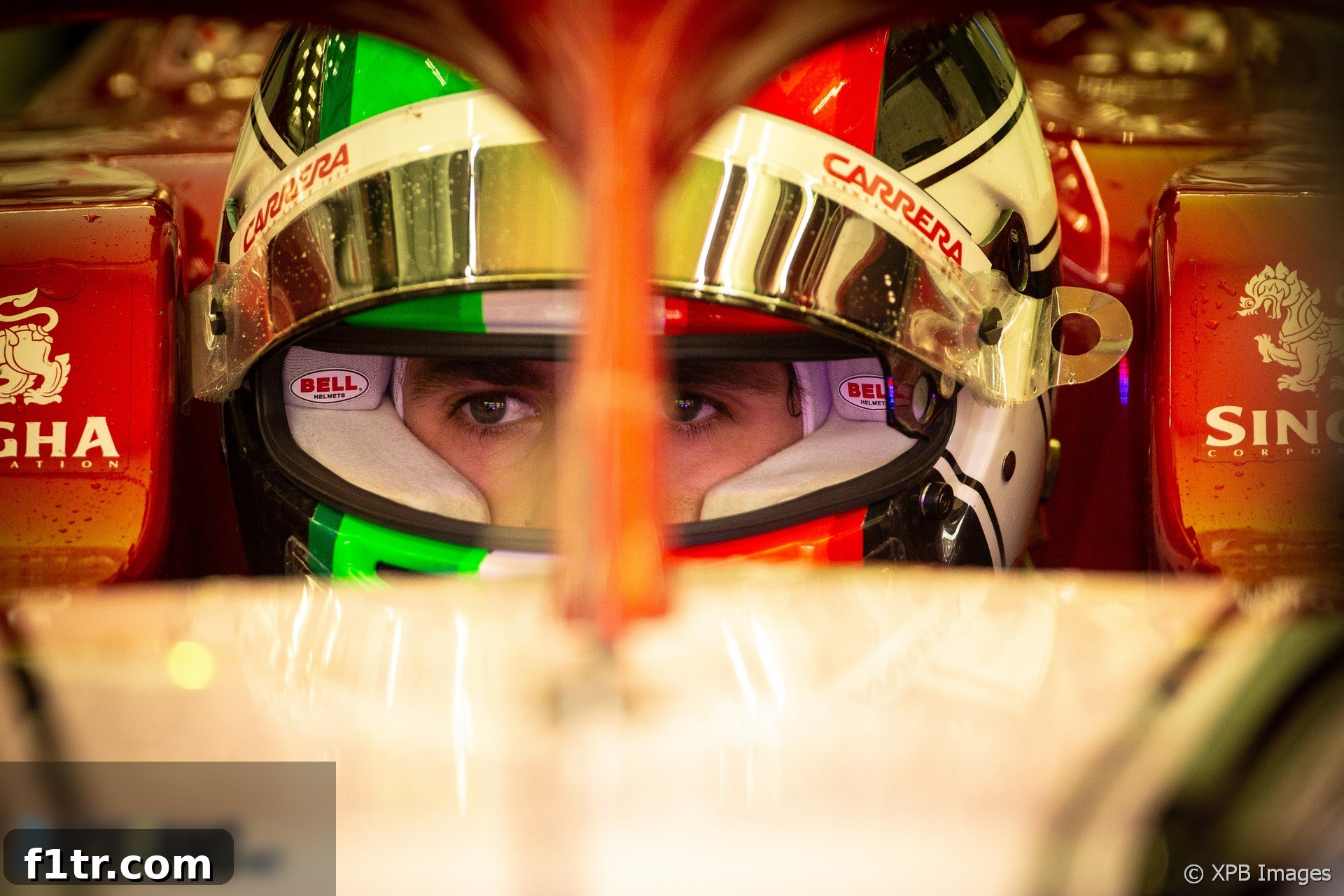
Antonio Giovinazzi, the promising Italian driver for Alfa Romeo Racing, is facing a significant setback even before the wheels turn in anger at the 2019 Azerbaijan Grand Prix. He will incur a grid penalty of at least 10 places, a substantial blow to his prospects on the challenging Baku City Circuit and a clear reflection of the intense technical demands and stringent regulations of modern Formula 1.
Advert | Become a RaceFans Supporter & Enjoy an Ad-Free Experience
Giovinazzi’s Grid Penalty: Exceeding F1’s Control Electronics Allocation
The penalty imposed on Giovinazzi stems from a crucial regulation concerning engine components, specifically the Control Electronics (CE) unit. Formula 1 regulations are designed to manage costs, promote reliability, and ensure competitive balance by limiting drivers to just two CE units per season. By using his third different Control Electronics unit for this weekend’s race in Baku, Giovinazzi has automatically triggered the mandatory 10-place grid drop, a rule strictly enforced by the FIA.
A Control Electronics unit is a vital component of a Formula 1 power unit, acting as the brain that manages and monitors all critical engine functions, including fuel injection, ignition timing, and various sensor readings. Its proper functioning is paramount for both performance and reliability, making any issues with this part particularly problematic for teams and drivers.
The Root Cause: Ferrari Power Unit Reliability Challenges in Early 2019
This challenging situation for Giovinazzi and Alfa Romeo Racing is intrinsically linked to broader reliability issues that have affected Ferrari’s power units early in the 2019 season. The team has confirmed that it has replaced the control electronics on the Ferrari power units of both Giovinazzi and his vastly experienced team mate, Kimi Raikkonen. This replacement involves a newer version of the hardware, which was initially introduced by Ferrari themselves and their other customer team, Haas, during the Chinese Grand Prix.
The urgent introduction of this upgraded CE hardware was a direct response to a high-profile failure suffered by Charles Leclerc during the preceding Bahrain Grand Prix. Leclerc, who had been dominating the race from pole position, experienced a sudden and significant power loss late in the event due to an engine management issue. This malfunction cost him a certain victory, relegating him to a third-place finish and highlighting critical vulnerabilities in the initial specification of Ferrari’s 2019 power unit components.
Alfa Romeo’s Delayed Upgrade and Giovinazzi’s Unfortunate Technical Woes
While the factory Ferrari team and Haas immediately benefited from the updated CE hardware in China, Alfa Romeo Racing, as a customer team, did not receive this upgrade in time for that race. This delay proved to be particularly costly for Giovinazzi. During qualifying for the Chinese Grand Prix, his C38’s power unit suffered a failure, specifically attributed to the older specification CE unit still in use. Consequently, a replacement old-specification part had to be fitted for the race in China, consuming one of his two allotted units for the entire season.
The ongoing need to address these reliability concerns has now forced Alfa Romeo to equip Giovinazzi with a third Control Electronics unit for the Azerbaijan Grand Prix. This unfortunate sequence of events – an initial component failure in China, a delayed upgrade compared to the factory teams, and the subsequent necessity for a further replacement – paints a challenging picture for the young driver. It starkly underscores the intricate logistical and technical hurdles customer teams can face when dependent on manufacturer updates for critical engine components, often receiving them later than the works teams.
A Challenging Start for Antonio Giovinazzi’s Full-Time F1 Career
The upcoming grid penalty represents the latest in a series of setbacks for Antonio Giovinazzi in what has been a trying start to his first full-time season in Formula 1. Despite demonstrating glimpses of raw speed and potential, Giovinazzi has yet to score a championship point in any of the three races held so far this year. In stark contrast, his vastly experienced veteran teammate Kimi Raikkonen has consistently brought home points in each Grand Prix, showcasing the inherent capability of the Alfa Romeo C38 chassis when reliability permits.
Alfa Romeo team principal Frederic Vasseur has publicly acknowledged the difficulties Giovinazzi has faced, attributing his struggles not to a lack of talent or outright speed, but specifically to recurring “technical issues” on his car. Vasseur stated earlier this week that Giovinazzi has not been able to show his true potential due to these car-related problems. This latest engine-related penalty only exacerbates the pressure on Giovinazzi, who is undoubtedly keen to prove his worth and establish himself in the highly competitive and unforgiving world of Formula 1.
Broader Power Unit Developments: Honda’s Strategic Upgrade for Baku
Beyond the challenges faced by Ferrari-powered teams, there are other significant power unit developments unfolding ahead of the Azerbaijan Grand Prix. Honda has also confirmed that all four of its drivers – those at Red Bull Racing and Scuderia Toro Rosso – will be equipped with new-specification power units for this weekend’s race. This move is generally interpreted as a calculated performance upgrade, aiming to close the gap to rivals Ferrari and Mercedes and potentially gain a crucial competitive edge on the demanding Baku circuit.
Unlike Ferrari’s reactive fix to a reliability issue stemming from an earlier race, Honda’s decision appears to be a proactive step in their aggressive engine development program. Introducing a new specification, often referred to as “Spec 2” or an equivalent, indicates a strategic push for increased power output and improved efficiency. For Red Bull, particularly, this could be a crucial factor in their battle for podiums and potential race victories, while for Toro Rosso, it offers an opportunity to solidify their midfield position and fight for championship points more consistently. Such upgrades often come with a calculated risk, but the potential performance gains in F1 are often too tempting to resist.
The Azerbaijan Grand Prix: A Unique Challenge for Penalized Drivers
The Baku City Circuit is renowned for its unique blend of characteristics: incredibly long straights, particularly the main straight which is one of the longest on the F1 calendar, combined with incredibly tight and twisty sections through the historic old city walls. This extreme combination places immense stress on power units, demanding both outright top-end speed for the straightaways and excellent torque delivery in the slow corners. Furthermore, the circuit’s propensity for unexpected incidents, yellow flags, and safety cars often leads to unpredictable races, offering both pitfalls and unexpected opportunities for recovery.
For Giovinazzi, a 10-place grid penalty significantly complicates his race weekend. Starting further down the order means he will have to fight through denser traffic during the early stages of the race, which inherently increases the risk of damage, collisions, and further engine wear. However, Baku’s reputation for chaos and abundant high-speed overtaking opportunities, particularly with the long DRS zones, means that a strong recovery drive is not entirely out of the question, provided he has reliable machinery beneath him and delivers a flawless performance. Strategic pit stops and capitalising on safety car periods will be key.
Looking Ahead: The Enduring Impact on the 2019 Season
The power unit saga continues to be a dominant and fascinating theme in the early stages of the 2019 Formula 1 season. While Mercedes has demonstrated formidable reliability and consistent performance, Ferrari has been grappling with optimizing their package, particularly on the reliability front, which has cost them valuable championship points. Customer teams like Alfa Romeo and Haas are inevitably caught in the crossfire, experiencing the downstream effects of these developments, often with less flexibility or immediate access to the latest fixes.
For Antonio Giovinazzi, this weekend in Baku will be another stern test of resilience, character, and driving ability. Overcoming a significant grid penalty requires exceptional driving, a well-executed strategy from the pit wall, and a degree of luck. Meanwhile, Honda’s latest engine upgrade will be closely watched by all rivals, signaling their clear intent to become a major force in the turbo-hybrid era. The delicate and ever-present balance between outright performance, essential durability, and the strict technical regulations ensures that every component change, every engine upgrade, and every penalty has significant implications for individual drivers, their respective teams, and the overarching championship narrative.
Don’t miss anything new from RaceFans
Stay connected with RaceFans for the latest news, in-depth analysis, and exclusive insights from the thrilling world of Formula 1:
- Join RaceFans on Facebook
- Follow RaceFans on Twitter
- Get Daily Email Updates from RaceFans
Advert | Become a RaceFans supporter andgo ad-free
Further Reading: Exploring the 2019 F1 Season Archives
Dive deeper into key moments, compelling stories, and important technical developments from the 2019 Formula 1 season with our extensive archives. From driver interviews to technical analyses, revisit the year that shaped the sport:
- Crying in the Melbourne car park at 2019 grand prix was my career low – Ocon
- McLaren Racing reports reduced £71 million loss in 2019
- Kvyat: Hockenheim podium last year was “my biggest achievement” so far
- How the FIA’s new encrypted fuel flow meter targets Ferrari’s suspected ‘aliasing’ trick
- “He smashed my office door”: 23 must-see moments from ‘Drive to Survive’ season two
Browse all 2019 F1 season articles