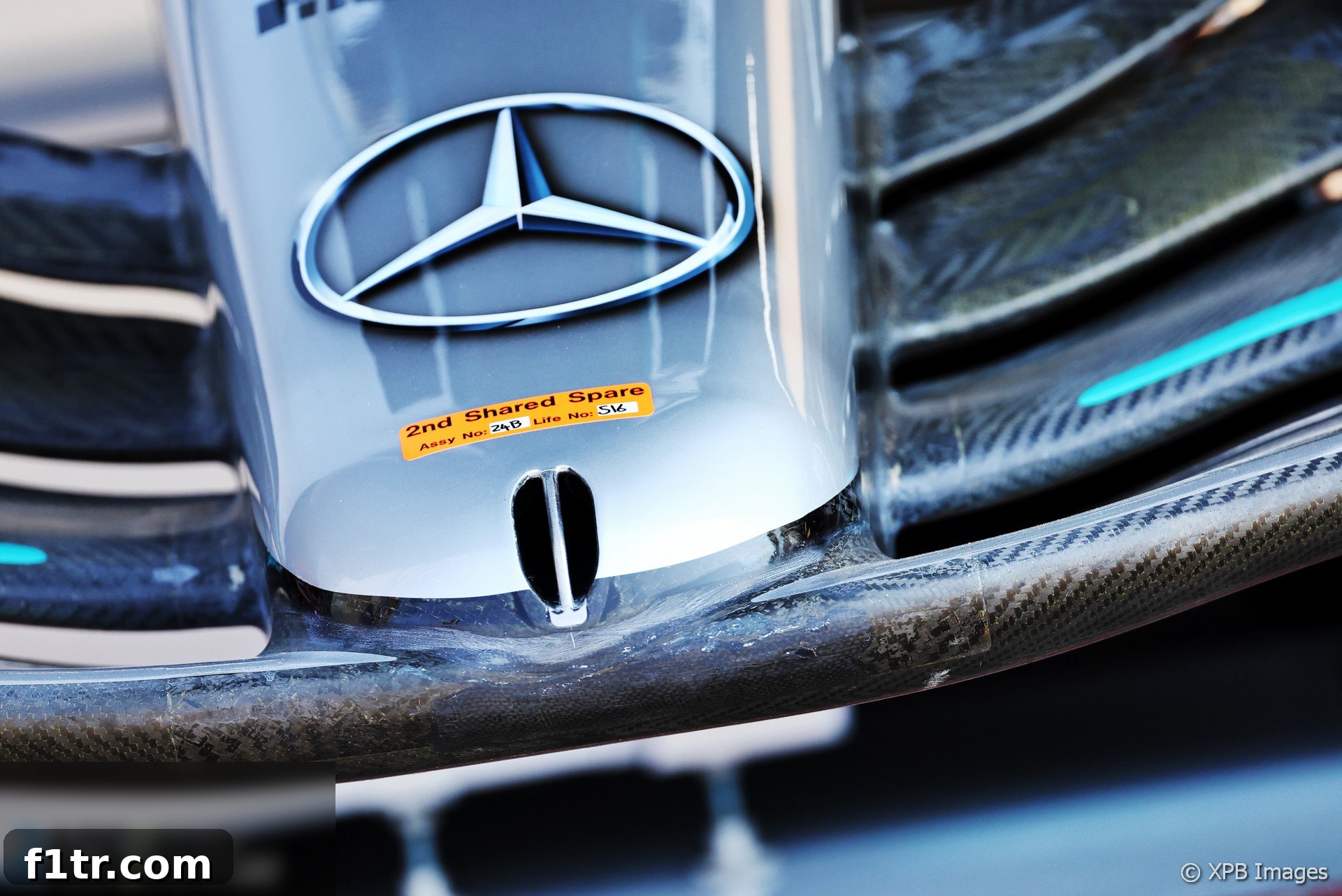
The highly anticipated French Grand Prix marked a significant turning point for Mercedes-AMG Petronas Formula One Team, as they unveiled their latest aerodynamic innovation: a substantially reshaped nose cone for their W13 challenger. This upgrade, observed by experts and fans alike, signals Mercedes’ relentless pursuit of performance and their unwavering commitment to overcoming the challenges that have plagued their 2022 Formula 1 season. The introduction of such a critical aerodynamic component at Paul Ricard underscores the team’s strategic approach to car development, aiming to unlock greater potential from their package as the championship battle intensifies.
Mercedes, the reigning constructors’ champions, faced an unexpectedly difficult start to the 2022 campaign, struggling to adapt to the new technical regulations. Team Principal Toto Wolff candidly acknowledged the “mammoth effort” required to navigate these early season hurdles. Despite not yet securing a victory this year, the Silver Arrows have demonstrated remarkable resilience, consistently achieving podium finishes in the four races leading up to the French Grand Prix. This upturn in form is a direct result of a series of meticulously planned car improvements, each designed to address specific performance limitations and progressively narrow the gap to their rivals, Red Bull Racing and Scuderia Ferrari.
A pivotal moment in Mercedes’ recovery journey came with a major aerodynamic upgrade introduced at the Spanish Grand Prix. This comprehensive package was instrumental in helping the team mitigate the severe “porpoising” phenomenon, an aerodynamic oscillation that significantly hindered the W13’s performance and driver comfort during the opening races. By effectively tackling this fundamental issue, Mercedes created a more stable platform, enabling them to focus on extracting the car’s inherent speed. Subsequent rounds saw further refinements, with engineers dedicating efforts to harness more downforce from the W13, a crucial element for optimizing grip and cornering speeds, thereby closing the performance deficit to the pace-setting cars.
The team continued its aggressive development strategy by bringing another extensive package of modifications to the British Grand Prix at the start of the month. These updates yielded encouraging results, particularly highlighted by Lewis Hamilton’s highly competitive performance in the closing stages of the race at Silverstone. The improvements showcased the W13’s growing potential. However, the Austrian Grand Prix proved to be a challenging weekend for Mercedes, as both drivers, Hamilton and George Russell, unfortunately, experienced crashes during qualifying. Despite these setbacks, the underlying data from race stints continued to reveal positive trends in the car’s improved handling and race pace.
Reflecting on the team’s progress, Toto Wolff expressed optimism, stating, “Our understanding of the W13 is growing with every lap, and it’s encouraging to see that reflected in our development and results.” This statement encapsulates the methodical approach Mercedes has adopted, transforming challenges into learning opportunities and steadily refining their understanding of the complex ground-effect aerodynamics governing the 2022 regulations. The continuous data gathering and analytical efforts are vital for unlocking the W13’s full potential and translating development work into tangible on-track performance gains.
The newly introduced nose cone, while the most visible upgrade, was just one component of a broader development push for the French Grand Prix. The full extent of Mercedes’ latest changes was scheduled to be evaluated throughout the weekend’s practice sessions. Notably, these new parts were put through their paces during the first practice session by George Russell and Nyck de Vries, the latter stepping into Lewis Hamilton’s car for that specific session. The participation of a reserve driver like de Vries in FP1 is a standard practice that allows the team to gather additional data and conduct specific tests without burdening the primary race drivers, while also providing valuable experience for future talents.
Despite the recent positive trajectory, Wolff maintained a realistic perspective regarding the team’s standing. “While we were quicker in Austria, we still weren’t quick enough to challenge at the front,” he acknowledged. This highlights Mercedes’ unwavering goal: not just to score points, but to consistently contend for race victories. He emphasized the ongoing effort required, adding, “We need to keep chasing those final few tenths and bringing new developments to the cars, including this weekend in France.” This commitment to continuous innovation is a hallmark of top-tier Formula 1 teams, where even marginal gains can make a significant difference in the fiercely competitive environment.
The Paul Ricard circuit, with its unique layout featuring long straights and a mix of high-speed and technical corners, presented an ideal testing ground for the W13’s new aerodynamic package. The reshaped nose aims to optimize airflow management around the front of the car, influencing how air travels over and under the chassis, ultimately impacting downforce generation and drag reduction. Improvements in this area can lead to enhanced stability in high-speed sections and better turn-in response, critical for performance on a track known for its wide run-off areas and demanding corner sequences.
Mercedes’ journey in 2022 has been a testament to their engineering prowess and determination. From the initial struggle with porpoising to a gradual but consistent ascent towards the front, each upgrade package represents a chapter in their recovery story. The French Grand Prix upgrades were a crucial step, intended to provide further insights and performance benefits that could propel them closer to the dominant Red Bull and Ferrari teams. The collective effort of hundreds of engineers and designers behind the scenes underscores the immense challenge and reward of Formula 1 car development, where every fraction of a second is meticulously pursued.
Mercedes’ New Aerodynamic Components: A Visual Comparison


The visual comparison between the two nose designs clearly illustrates Mercedes’ continuous aerodynamic evolution. While changes may appear subtle to the untrained eye, even minor alterations in shape and contour can have a profound impact on how air interacts with the car’s various surfaces, from the front wing elements to the floor and diffuser. These precise adjustments are crucial for managing turbulent air, reducing drag, and enhancing the efficiency of downforce generation across different speed ranges. The commitment to such detailed modifications underscores the highly competitive nature of Formula 1 development, where every component is scrutinized for performance gains.
The new nose design is more than just a cosmetic change; it’s a statement of intent. It reflects Mercedes’ deep understanding that even marginal improvements are essential in a championship battle where milliseconds separate the front-runners. The team’s engineers have meticulously analyzed vast amounts of simulation data and real-world track performance to arrive at this optimized design. The goal is to provide Lewis Hamilton and George Russell with a car that is not only faster but also more predictable and easier to drive at the limit, allowing them to extract maximum performance from every lap, particularly in crucial qualifying sessions and during intense race stints.
Stay Connected with the Latest Formula 1 Updates
Don’t miss out on breaking news and in-depth analysis from the world of Formula 1. Follow us on social media and subscribe to our updates:
- Join RaceFans on Facebook for exclusive content and discussions
- Follow RaceFans on Twitter for real-time updates and breaking news
- Get daily email updates directly from RaceFans, delivered straight to your inbox
Your engagement helps us continue to deliver high-quality Formula 1 journalism and analysis, keeping you at the heart of the action.
Further Reading: 2022 French Grand Prix Insights
- Ferrari’s season of missed chances led to “difficult” criticism for Binotto
- McLaren looking into why their starts are “more inconsistent” this year
- Mercedes expect Hungarian GP will ‘expose our qualifying weakness’
- Hamilton and Russell ‘out-performing a car that’s not good enough’ – Wolff
- “We need to decide now”: Inside Sainz and Ferrari’s French GP strategy dilemma
Browse all 2022 French Grand Prix articles for comprehensive coverage