Carlos Sainz Defies Ferrari Orders to Claim Maiden F1 Victory at British Grand Prix
The 2022 Formula 1 British Grand Prix delivered an unforgettable spectacle of high-octane racing and strategic drama, culminating in Carlos Sainz Jnr securing his maiden Grand Prix victory. This historic win at Silverstone, however, was not without its controversial moments, particularly during a late-race Safety Car period where Sainz openly defied direct instructions from his Ferrari team. His refusal to drop back by ten car lengths behind his then-leading teammate, Charles Leclerc, became a pivotal point that defined the race’s outcome and ignited widespread discussion within the F1 community.
Sainz’s bold decision, rooted in his live assessment of the unfolding race dynamics, was ultimately vindicated by the result: a triumphant win for Ferrari and a career-defining moment for the Spaniard. This incident brought into sharp focus the intricate balance between team strategy, driver instinct, and the overarching goal of securing victory in the fiercely competitive world of Formula 1. Despite the immediate tension, Ferrari’s leadership, specifically Team Principal Mattia Binotto, later expressed understanding and support for Sainz’s judgment, acknowledging that the audacious move ultimately paid off for the Scuderia.
Advert | Become a Supporter & go ad-free
The Pivotal Safety Car Moment: A Strategic Conundrum
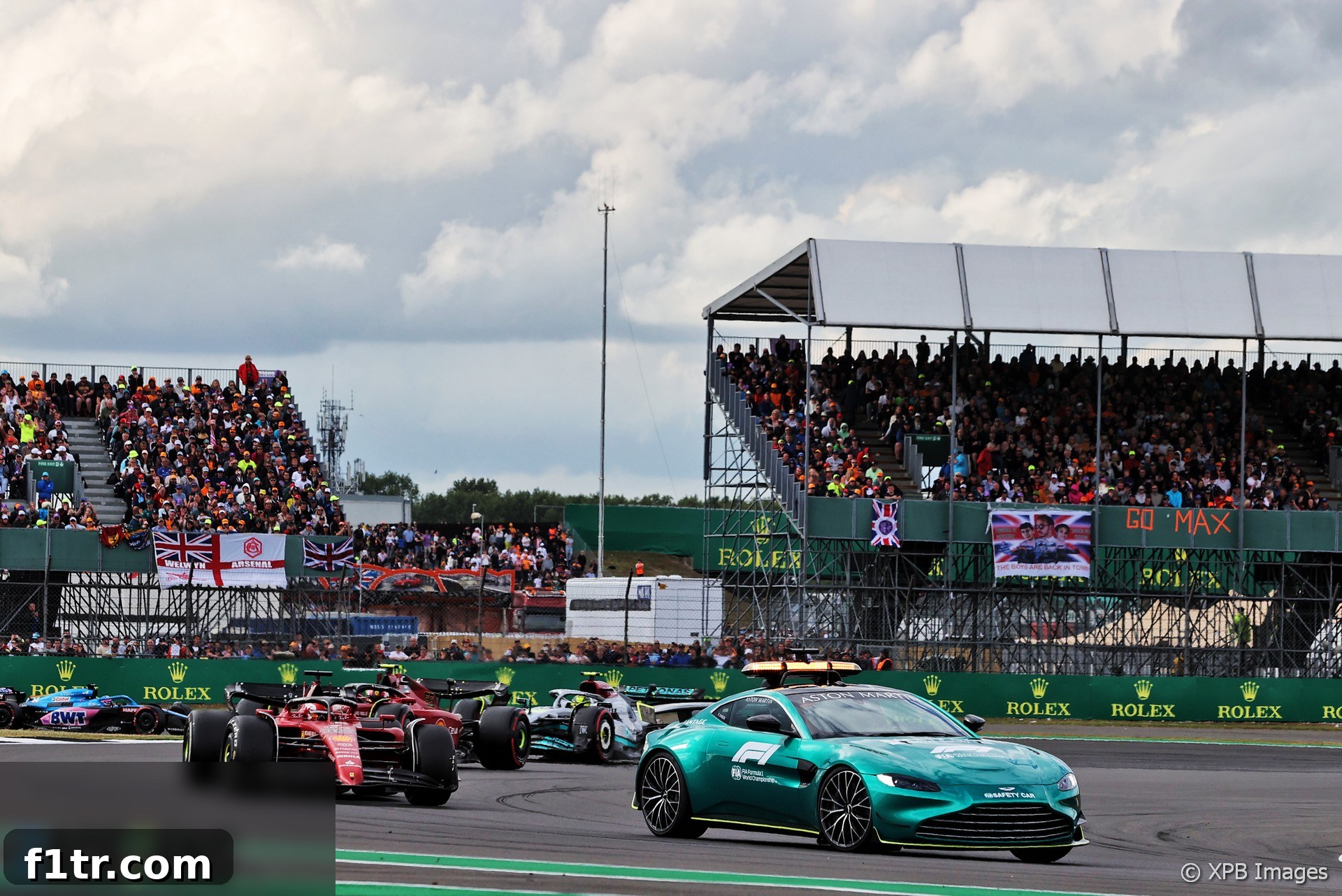
The British Grand Prix was a rollercoaster from the outset, marked by a dramatic multi-car crash on the opening lap that necessitated a red flag. As the race resumed and progressed, Charles Leclerc had masterfully positioned himself at the front, holding a strong lead. However, the complexion of the race dramatically shifted with the deployment of a Safety Car late in the race, triggered by Esteban Ocon’s car stopping on track. This development threw a strategic curveball at all the teams, particularly Ferrari, who had both their cars running at the sharp end.
At this critical juncture, Leclerc was leading on older hard compound tyres, while Sainz was running second, also on hard tyres, but with a slight advantage in freshness. Many competitors, including formidable rivals like Lewis Hamilton and Sergio Perez, seized the opportunity to pit for fresh, soft tyres, which would provide significantly more grip and speed for the final sprint to the chequered flag. Ferrari faced an immediate dilemma: leave both drivers out, risking losing positions to those on new softs, or bring one or both in.
The team opted to pit Carlos Sainz for new soft tyres, a decision that instantly granted him a substantial performance advantage over Leclerc, who remained on his worn hard tyres. However, the subsequent radio instruction to Sainz was to create a ten-car-length gap between himself and Leclerc. This order was evidently intended to provide Leclerc with some buffer, hoping to protect his position against the soft-tyred cars behind for as long as possible. But Sainz, acutely aware of the aggressive pack behind him also on fresh softs, immediately challenged the directive. His now-famous retort, “Please stop inventing,” clearly conveyed his conviction that adhering to such an order would not only compromise his own race but also expose both Ferraris to the rapidly approaching rivals.
Sainz’s Vindication: Instinct Leads to Maiden F1 Glory
Sainz’s rejection of the team order proved to be a stroke of genius. As the Safety Car pulled into the pits and the race restarted, Sainz, on his grippy new soft tyres, swiftly dispatched Leclerc, whose older hard tyres offered little resistance. As predicted by Sainz, Leclerc’s pace plummeted, causing him to fall behind both Lewis Hamilton and Sergio Perez by the race’s conclusion. Meanwhile, Sainz surged ahead, expertly managing the restart and the remaining laps to clinch his inaugural Grand Prix victory – a truly momentous achievement for the Spanish driver and a significant boost for Ferrari.
Days after his historic win, speaking confidently in the FIA press conference, Sainz articulated his reasoning with unwavering conviction. “Ferrari won, I won, so for sure it was not the wrong decision,” he stated, highlighting that the ultimate objective – securing a victory for the Scuderia – had been met. He provided deeper insight into his thought process during those intense moments: “At that time, in the car, I did perfectly know what I had to do in order to not put Charles in a compromised position but also to give Ferrari a race win, that is what the team cares the most about.” This statement underscores Sainz’s ability to process complex information and make calculated decisions under immense pressure, demonstrating a keen understanding of both individual and team objectives.
Sainz further reinforced his belief in his judgment, stating, “I think everything I did was sensible at the end. I didn’t put Charles under unnecessary risk or pressure while overtaking him, knowing that I was going to overtake him fairly easily on the soft. I pulled away, won the race for Ferrari and I think it was a good outcome in the end.” His confident and articulate defense of his actions paints the picture of a driver who trusts his instincts and possesses the mental fortitude to execute critical maneuvers in real-time, validating his self-belief and showcasing the maturity expected at the pinnacle of motorsport.
Advert | Become a RaceFans supporter andgo ad-free
Ferrari’s Acceptance: A Testament to Trust and Leadership
Perhaps one of the most compelling aspects of this high-stakes episode was Ferrari’s measured and understanding response. In an environment where defying team orders often leads to severe internal repercussions, Ferrari Team Principal Mattia Binotto publicly affirmed his acceptance of Sainz’s decision. This reaction was crucial for maintaining team cohesion and driver morale, setting a precedent that leadership at Ferrari values and respects a driver’s on-track assessment, especially when it culminates in success.
Binotto’s explanation shed light on the nuances of the radio exchange: “When we told him to give a rest to Charles after the Safety Car restart, what he said is not that he didn’t want to do it, he said ‘the guys behind me would be very aggressive, so I need to protect and somehow try to react, so leave it to me’,” Binotto clarified shortly after the race. This detailed account from the team principal is instrumental in understanding Ferrari’s internal dynamics. It illustrates that Sainz’s refusal was not a rebellious act of self-interest, but rather a well-reasoned, albeit challenging, assessment of the rapidly changing race conditions, aimed at protecting Ferrari’s overall position on track, even if it meant diverging from a direct instruction.
Binotto continued, offering a strong endorsement of his driver: “So I think he understood properly what was the intention. I think not only he understood, but he’s very good in the way that he’s acting and I’m very happy with this.” This public backing from the team principal not only solidified Sainz’s standing within the team but also validated his critical decision-making under extreme pressure. It sent a powerful message about Ferrari’s progressive approach to empowering its drivers to make crucial calls when circumstances demand a departure from pre-planned strategies, provided those calls are sound and ultimately beneficial for the team’s overarching objectives.
Team Spirit and Leclerc’s Unwavering Professionalism
While Carlos Sainz rightfully celebrated his momentous victory, the outcome was undoubtedly a source of profound disappointment for Charles Leclerc. Having brilliantly led a significant portion of the race and being in a strong position for a win, to see it slip away in the final stages due to strategic disadvantage and then be overtaken by his teammate, is an incredibly challenging experience for any fiercely competitive driver. However, Sainz was quick to commend Leclerc’s composure and professional conduct in the immediate aftermath, underscoring the strong team spirit that Ferrari diligently cultivates.
Sainz recounted the post-race debriefing: “It was a relatively short briefing because we had to leave to the airport and take the group picture. I think Charles had the anti-doping control, so we couldn’t share the briefing together.” Despite the limited opportunity for direct interaction immediately following the intense race, Sainz observed, “But like always he behaved like the gentleman like he is and the briefing went normally like the way it should go.” This tribute speaks volumes about Leclerc’s professionalism, resilience, and unwavering commitment to the team, even when grappling with significant personal disappointment. It highlights the maturity of both drivers in navigating such high-stakes and emotionally charged situations.
Sainz further emphasized the consistent nature of their team interactions, showcasing a healthy internal dynamic: “The way it goes when I have a bad race is also a normal briefing and the way it goes when he has a bad race is a normal briefing. It’s one of the strong points that we have as team mates and as drivers and as a team spirit that we have in Ferrari, and these things are always under control.” This revelation points to a robust culture within Ferrari where individual successes and setbacks are processed professionally, thereby preventing internal rifts and fostering a cohesive environment that is absolutely crucial for any team with championship aspirations. Such an approach is indispensable in the high-pressure world of Formula 1, where team dynamics can profoundly impact performance and ultimately, results.
Advert | Become a RaceFans supporter andgo ad-free
Implications for Ferrari and the Championship Pursuit
Carlos Sainz’s inaugural Formula 1 victory at the British Grand Prix, while a monumental personal achievement, also carried significant implications for Ferrari’s broader championship campaign. The dramatic events at Silverstone illuminated both the inherent strengths and the potential vulnerabilities within the Scuderia’s race management and strategic decision-making. While the ultimate outcome was a coveted victory, the initial strategic indecision surrounding Leclerc’s tyre choice during the Safety Car and the team’s initial order to Sainz highlighted critical areas for potential refinement in real-time strategic execution during high-pressure scenarios.
However, the resounding positive takeaway from this incident is the undeniable trust and empowerment demonstrated by Ferrari in its drivers. By publicly backing Sainz’s astute judgment, Team Principal Mattia Binotto reinforced the vital notion that Formula 1 drivers are not merely automatons strictly following instructions, but rather critical and intelligent decision-makers on track. This approach can be a profound confidence booster for drivers, fostering greater autonomy and potentially leading to more agile and effective responses in future races. For Sainz, this triumph was an immense validation, solidifying his status as a Grand Prix winner and an indispensable asset for the Ferrari team.
For Charles Leclerc, despite the profound disappointment of missing out on a victory, the professionalism he exhibited reinforced his standing as a committed team player, even as he steadfastly continues his relentless quest for the world championship. The Silverstone saga also provided invaluable learning experiences for Ferrari on how to meticulously manage multi-car strategies under Safety Car conditions, especially when championship points, constructors’ standings, and driver aspirations are all intensely at stake. Moving forward, maintaining a strong, unified, and trusting team front will be absolutely paramount as Ferrari continues its formidable challenge against formidable rivals in the relentlessly competitive world of Formula 1.
2022 British Grand Prix – Related Articles
- How many victory chances did Hamilton have in his first winless F1 season?
- New rule added on drivers abandoning cars after Russell’s Silverstone retirement
- Hamilton told Leclerc ‘I didn’t want to clip you and send you off’ after Copse scrap
- Sainz: Ferrari accepted I was right not to follow “10 car lengths” instruction
- Zhou says Silverstone crash force exceeded roll hoop impact test
Browse all 2022 British Grand Prix articles