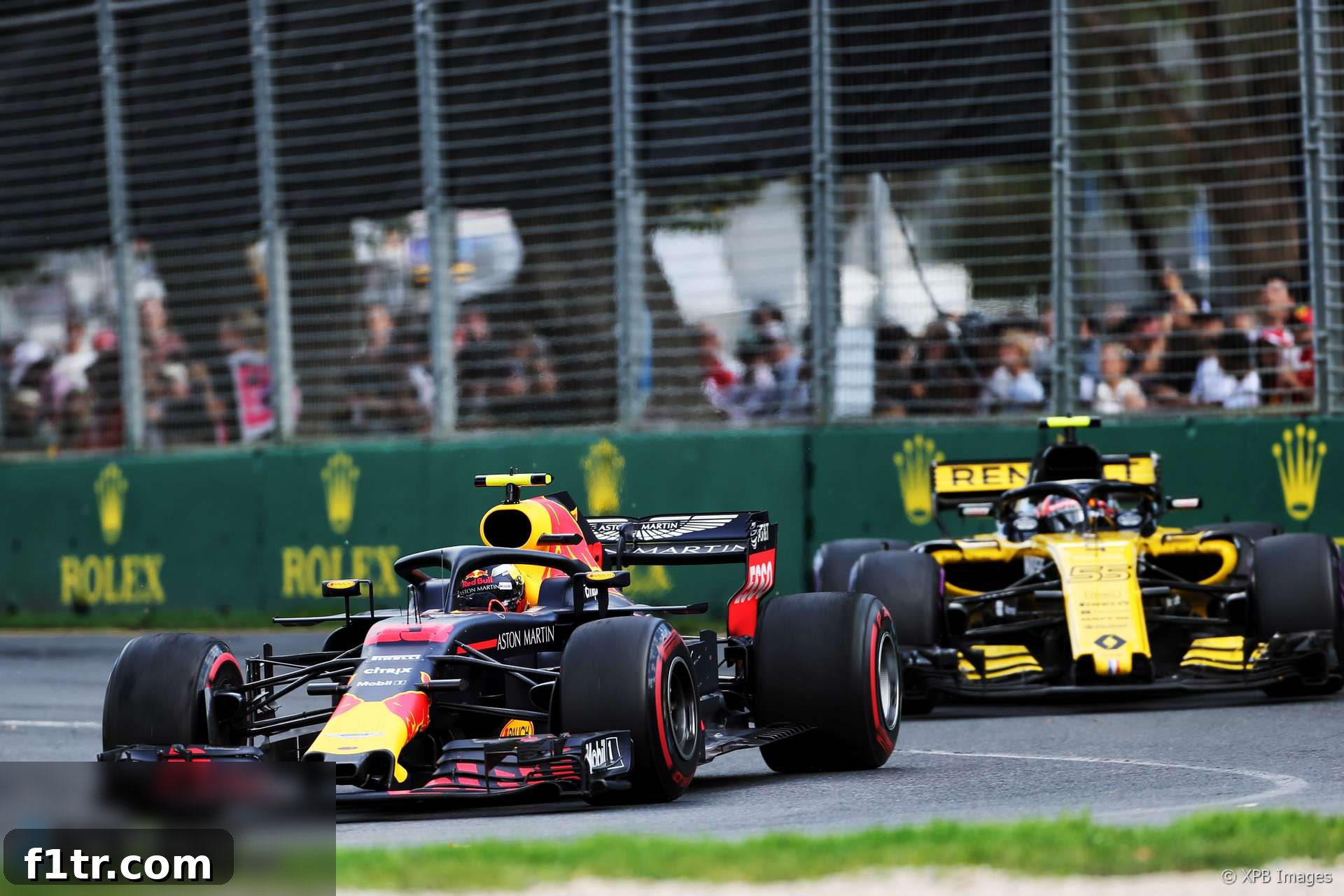
The high-stakes world of Formula 1 constantly pushes the boundaries of technological innovation, particularly in the realm of power unit development. For teams striving for championship glory, every fraction of a second counts, especially during the crucial qualifying sessions that determine grid positions. It is precisely this quest for ultimate performance that has led Red Bull Racing to exert significant pressure on its engine supplier, Renault, to develop a potent, high-performance qualifying engine mode – a feature its formidable rivals, Mercedes and Ferrari, have demonstrably leveraged.
According to Christian Horner, the Team Principal of Red Bull Racing, the absence of such a dedicated “party mode” or “quali mode” places them at a distinct disadvantage. Horner has openly stated that while Renault indicates “bits in the pipeline” for its engine, Red Bull remains largely in the dark about the specifics of these developments. This lack of transparency, he noted, is typical in the secretive world of F1 engine development, as suppliers rarely “divulge everything that they’re up to.” However, the message from Red Bull is clear: a qualifying engine mode is “certainly something that we’re pushing for.” This urgency highlights Red Bull’s ambition and its belief that a more aggressive engine setting for qualifying is essential to unlock their chassis’s full potential and compete on equal terms with the front-running teams.
The significance of Mercedes’ qualifying mode became a major talking point following Lewis Hamilton’s commanding performance in qualifying for the 2018 Australian Grand Prix. Hamilton managed to secure pole position with an astonishing six-tenths of a second margin over the rest of the field, a gap that immediately raised eyebrows and fueled speculation about the capabilities of the Mercedes power unit’s special settings. The term “party mode” quickly entered the F1 lexicon, symbolizing a temporary, enhanced power setting that could be unleashed for a brief period during qualifying to extract maximum performance.
Mercedes motorsport boss Toto Wolff confirmed that Hamilton indeed used its ‘party mode’ during both his runs in Q3. This revelation, while confirming its existence, also suggested that it might not entirely account for the significant improvement between Hamilton’s two Q3 runs, implying other factors like driver skill, track evolution, or car setup played a role. Yet, Horner remained steadfast in his conviction that Mercedes’ engine mode was the primary driver behind the bulk of their qualifying advantage. He pointed out, “Lewis’s time came predominantly, as he did last year, between Q2 and Q3.” This observation suggests a strategic deployment of the high-power mode, held back until the crucial final phase of qualifying. Teams typically reserve these aggressive settings for Q3 to minimize wear and tear on the engine, which needs to endure multiple race weekends.
Horner elaborated on his theory, explaining the strategic thinking behind engine mode deployment: “They have a quali mode that they don’t need to use in the earlier part of qualifying because why stress the engine that needs to do [seven] races.” He speculated that Hamilton’s first lap in Q3 might have been conservative due to a minor issue from his teammate at Turn One, but his Q2 performance demonstrated the raw power available. “I think Q2 he was on the back foot, had to go for it, that was everything they have, which was mighty impressive,” Horner concluded, underscoring the formidable capability of the Mercedes engine in its ultimate setting.
However, not everyone in the paddock shared Horner’s assessment of the Mercedes qualifying mode’s impact. Ferrari’s Sebastian Vettel, a fierce competitor of Hamilton, offered a more nuanced perspective, believing that Mercedes’ qualifying mode didn’t provide as great an advantage as it had in previous seasons. Vettel, who meticulously analyzes data, stated, “We do get a bit of data, GPS data and stuff like that. I think they did turn it up for Q3 but not by seven-tenths.” He suggested that the gap was a combination of factors, perhaps overestimating the engine’s contribution. “I think probably if you look at qualifying carefully, I try to do so last night, it’s fair to say they were quick in Q1, quicker than us, Lewis was quick in Q2 and then his second run, I don’t know, something happened. So, his last run in Q3 was the only proper run at the end and he had a clean run and I don’t think the gain that he had in time was down to engine. Probably a tenth, a little bit more, but not seven tenths.” Vettel’s analysis highlights the complexity of attributing performance gains solely to one factor in F1, where driver talent, car balance, tire management, and track conditions all intertwine.
Qualifying Engine Mode Ban Proposed
The debate surrounding these special qualifying engine modes extended beyond mere performance analysis, prompting discussions about the fairness and sporting integrity of Formula 1. Christian Horner, advocating for a level playing field, openly suggested that the sport’s governing body, the FIA, could intervene to prevent teams from switching engine modes between qualifying and the race. This proposal echoed sentiments of promoting parity and preventing an “engine arms race” focused solely on short bursts of power.
Horner’s vision for a regulatory change was clear: “One could say perhaps you should have the same engine mode.” He drew a parallel with the parc fermé regulations, which dictate that cars cannot be significantly altered between qualifying and the race. “Like you have to have parc ferme, when the cars leave for qualifying, maybe the engine mode should be the same from the moment you leave the garage to the end of the grand prix.” The rationale behind this suggestion is to simplify the competition, reduce the immense pressure on engine manufacturers to develop highly specialized modes, and potentially lower costs by removing the need for extreme, short-burst performance capabilities that might compromise durability.
Such a rule change, if implemented, would fundamentally alter the strategy for qualifying and race preparation. Teams would be forced to optimize their engines for a balanced performance across both sessions, prioritizing reliability and consistent power delivery over peak, temporary output. This could lead to closer qualifying sessions and potentially more unpredictable races, as the inherent advantage of a “party mode” would be negated.
However, the prospect of implementing such a ban presents significant practical and technical challenges for the FIA. Charlie Whiting, the FIA race director at the time, addressed the suggestion, indicating that the governing body had “not come under any pressure” to look into introducing such a rule “and until such time as that happens then we won’t.” Whiting acknowledged the inherent complexity of modern F1 power units, stating, “There’s all sorts of modes in these engines.” He also confirmed a well-known fact within the sport: “We know full well that they change at various times during the race.” These changes can be for managing fuel, optimizing tire life, protecting components, or responding to specific race situations like safety car periods or overtakes. Policing a complete ban on mode changes would require sophisticated and intrusive monitoring systems, potentially hindering engine development and adding another layer of bureaucracy to an already highly regulated sport.
The discussion around qualifying engine modes perfectly encapsulates the ongoing technological arms race in Formula 1. It highlights how marginal gains in power and efficiency can translate into significant on-track advantages, fueling both innovation and controversy. While Red Bull’s push for a competitive qualifying mode from Renault underscores their relentless pursuit of performance, the broader debate on banning such modes reflects the sport’s constant struggle to balance technological advancement with sporting fairness and competitive parity. The challenge for the FIA remains to find a regulatory framework that encourages innovation while preventing any single team from dominating through highly specialized, short-duration performance boosts, ultimately aiming to deliver thrilling and unpredictable racing for fans worldwide.
Go ad-free for just £1 per month>> Find out more and sign up
2018 F1 season
- F1 feared “death knell” for Drive to Survive after Ferrari and Mercedes snub
- McLaren staff told us we were “totally crazy” to take Honda engines in 2018 – Tost
- ‘It doesn’t matter if we start last’: How Red Bull’s junior team aided Honda’s leap forward
- Honda’s jet division helped F1 engineers solve power unit problem
- McLaren Racing losses rise after Honda split
Browse all 2018 F1 season articles