In the high-stakes world of Formula 1, a fierce debate rages between powerhouse teams like Ferrari and Mercedes, and the sport’s commercial rights holder, Liberty Media. At its core is the controversial proposal of a cost cap – a financial ceiling on how much teams can spend. The question isn’t just about financial prudence; it’s existential: can Formula 1, the pinnacle of motorsport, truly thrive and maintain its competitive integrity without a significant curb on spending? This article delves into the complex history of F1’s lavish budgets, the repeated attempts to rein them in, and the monumental challenges Liberty Media faces in forging a sustainable and equitable future for the sport.
For decades, any inquiry into Formula 1 team budgets was met with dismissive shrugs. The prevailing attitude was clear: if you had to ask the cost, you couldn’t afford to play. This bravado was largely fueled by the colossal marketing budgets of nicotine brands. With impending global anti-tobacco legislation on the horizon, these companies ironically intensified their spending, eager to maximize their exposure while they still could. The sport became a playground for extravagant spending, a global billboard for brands with billions to burn.
Teams that weren’t already immersed in this lavish ecosystem, such as West, rushed to join. Lucky Strike even established an entire team, British American Racing (BAR), solely to propel its iconic brand onto the global stage. As a result, team budgets skyrocketed. Organizations embarked on massive expansion sprees, funding extensive test teams – sometimes even two parallel operations – while paddock hospitality units were upgraded annually as a matter of course. It was an era of unchecked growth and luxury, but F1, often insulated from broader societal shifts, proved notoriously poor at recognizing the signs that such excess was unsustainable.
No sooner had tobacco funding been outlawed than Formula 1 found a new financial lifeline: a substantial influx of major motor manufacturers. Each brand was keen to showcase its performance credentials on the world’s most demanding automotive stage. This new wave of investment led to an even more frenzied era of spending. Ford acquired Stewart Grand Prix, rebranding it as Jaguar Racing. Renault purchased Benetton, Honda took over BAR, and BMW partnered with Sauber. Other manufacturers, like Toyota, founded their own teams from scratch, while Mercedes increased its equity in McLaren, and Fiat intensified its branding with Ferrari. This period saw no fewer than seven car brands represented on the F1 grids during the mid-noughties, igniting an unprecedented financial arms race.
The scale of spending during this manufacturer-backed era was truly astonishing. Toyota, for instance, commissioned two identical, state-of-the-art wind tunnels, both operating continuously, 24 hours a day, seven days a week. Rumours even circulated that some technical directors’ contracts included clauses for the team to fund private aircraft, enabling them to return to their families on non-Grand Prix weekends. Such anecdotes painted a vivid picture of the sheer opulence and lack of financial restraint that permeated the sport. However, this unchecked extravagance, much like the tobacco era before it, was simply too good to last. The financial realities soon began to bite.
Sober-suited accountants within these automotive giants grew increasingly uneasy signing off budgets measured in hundreds of millions for Formula 1 outfits that consistently languished outside the top six, often finding themselves beaten by independent teams operating on a fraction of the budget. This led to stern warnings for team principals: drastically reduce spending or face the closure of their multi-million-pound operations. The financial sustainability of such ventures was called into question, leading to a pivotal shift in the dialogue surrounding Formula 1’s economic model.
Jaguar Racing, under the ownership of Ford, was among the first to feel the intense pressure. In response, the team proposed a novel concept: a form of budget cap, cleverly disguised as an “engineering efficiency exercise.” While the idea didn’t gain immediate traction for several years – primarily because six other manufacturers were still willing to spend freely – it did plant an important seed in the minds of F1’s governing bodies and stakeholders. Despite the initial resistance, the notion of controlling costs to ensure competitive balance and financial stability had entered the Formula 1 lexicon. Ford eventually sold Jaguar Racing to Red Bull on exceptionally generous terms, but the conversation had begun.
Concurrently, the manufacturers themselves grew increasingly dissatisfied with their meager share of F1’s retained revenues, receiving just 23 percent. The lion’s share was pocketed by the commercial rights holder – a consortium of banks effectively controlled by minority shareholder Bernie Ecclestone, who ran the business dictatorially. The manufacturers, wielding their significant financial power, pushed hard for increased slices of F1’s revenue pie. In doing so, they also demanded greater input into the sport’s regulatory processes, seeking to exert more influence over its future direction and financial structures.
This growing assertiveness from the manufacturers did not sit well with the FIA, Formula 1’s governing body. They feared a scenario where “the tail was wagging the metaphorical dog,” with the teams dictating terms to the detriment of the sport’s overall health and independence. A well-designed Formula 1 cost cap emerged as a potential solution to various thorny issues. It could significantly reduce the financial barriers to entry for prospective new teams, fostering a more diverse and competitive grid. Furthermore, it could alleviate the manufacturers’ constant demands for increased revenues by making the existing revenue more impactful. Crucially, a budget limit would make it far more difficult for manufacturer teams to simply out-develop and out-spend their independent rivals, thereby promoting a more level playing field and genuine competition based on innovation and efficiency, rather than pure financial muscle.
Building on these concerns, the FIA controversially proposed a strict $40 million budget cap to be implemented from 2010 onwards. To incentivize compliance, teams adhering to this financial restriction would be granted greater regulatory freedom and technical advantages than those who refused. Former Jaguar team boss Tony Purnell even devised allegedly effective control methodologies on behalf of the FIA to police this cap. However, these plans came to a dramatic head in June 2009 when the powerful manufacturer faction, united under the Formula One Teams Association (FOTA), threatened a breakaway series in protest against the proposed regulations. This standoff ultimately undermined the FIA’s initial cost cap efforts.
In the wake of this tumultuous period, a raft of ‘wannabe’ teams applied for entries, drawn by the promise of a more financially viable F1. Four were eventually selected, but their fate served as a stark reminder of the sport’s harsh realities. USF1 was stillborn, never making it to the grid. Campos (later HRT) endured three fraught years before collapsing. Lotus (which became Caterham) imploded in 2014, and Manor (which raced as Virgin and Marussia) staggered through two administrations before being liquidated in 2016. Of these four ambitious new entrants, only one, Manor, managed to score a single point, taking over four years to achieve even that modest success. Simultaneously, the manufacturer teams Honda, Toyota, Renault, and BMW all exited the sport by the end of 2009, highlighting the unsustainable nature of their previous spending models.
However, before their departure, these major manufacturers signed up to the 2009-12 Concorde Agreement, a foundational document for F1’s governance. A cornerstone of this agreement was the McLaren-devised Resource Restriction Agreement (RRA). This ambitious framework aimed to control spending not through a direct financial cap, but by limiting operational resources. It included strict controls on testing, wind tunnel and Computational Fluid Dynamics (CFD) usage, as well as restrictions and curfews on race crew activities. The RRA sought to manage expenditure through a complex matrix correlating payroll to purchase ledgers, attempting to make cost-cutting an internal, operational necessity rather than an external mandate.
Yet, while the FIA preached the importance of cost saving and efficiency through initiatives like the RRA, the commercial rights holder (CRH), controlled by venture house CVC Capital Partners from 2007-2017, annually extracted an estimated half a billion dollars from Formula 1. This stark disparity between the rhetoric of cost control and the commercial realities of the sport created an inherent tension that further complicated any genuine efforts to rein in team spending. The RRA, despite its intentions, ultimately proved to be a flawed mechanism for achieving true financial equilibrium within F1.
The Resource Restriction Agreement officially collapsed in 2013, after both Red Bull and Ferrari openly questioned its effectiveness and enforceability. The final nail in the cost-saving coffin was driven by CVC’s decision to offer preferential bonuses and coveted Strategy Group privileges to the ‘Big Four’ teams – Red Bull, Ferrari, Mercedes, and McLaren. After all, why would any major team support cost caps or resource restrictions when they stood to benefit from annual bonuses potentially exceeding $100 million and enjoyed first-tier input into Formula 1’s regulatory process, while independent teams struggled along without such financial and political advantages? This move effectively created a two-tier system, institutionalizing disparity and making any collaborative effort towards cost control virtually impossible. This dramatically influenced F1’s governance process, creating a deeply entrenched power imbalance.
Despite persistent lobbying from independent teams for comprehensive cost savings through various means, the major outfits steadfastly resisted all attempts at introducing regulatory controls. Their primary argument was that such measures were inherently unenforceable and would stifle innovation, which they argued was central to Formula 1’s appeal as the ultimate technological showcase. Red Bull Racing, for its part, consistently pushed for savings through technical and sporting regulations designed to curb excessive spending, rather than through direct financial caps. Given the vastly different business models and operational scales of the ten current teams, it became increasingly clear that there was simply no ‘one-size-fits-all’ formula that could satisfy everyone and address the underlying issues of Formula 1 team spending.
The debate surrounding a Formula 1 cost cap remained relatively subdued until Liberty Media acquired F1’s commercial rights from CVC in January 2017. As a publicly listed company on NASDAQ, Liberty Media’s primary focus is inherently on its share price, which necessitates generating ever-increasing profits and, consequently, dividends for its shareholders. Profits are a direct function of income minus costs. With team revenues representing Liberty’s single largest cost driver – devouring approximately 50 percent of F1’s current $1.8 billion annual turnover – it stands to reason that reducing team payouts and bonuses would significantly and positively impact Liberty’s bottom line. This commercial imperative spurred a sudden and renewed surge of interest in introducing a robust F1 budget limit, especially as income was projected to fall in the short to medium term as Liberty embarked on a major restructuring of the sport to enhance its long-term financial sustainability.
However, the path to implementing a Formula 1 cost cap is fraught with obstacles. A series of complex bilateral agreements dictate F1’s regulatory and fiscal structures through to the end of 2020. This means that unless all teams voluntarily agree to reduce costs, the chances of a binding cost cap being introduced within the next three years are effectively zero. As the saying goes, “turkeys don’t vote for Christmas.” The major teams, benefiting immensely from the current financial landscape, have little incentive to unilaterally agree to restrictions that could undermine their competitive advantage. Whenever discussions turn to post-2020 regulations, Ferrari and Mercedes, in particular, have repeatedly threatened to exit the sport – a phenomenon some have dubbed ‘F1xit’. These threats are often underpinned by arguments about preserving F1’s ‘DNA’ as a technological proving ground and warnings about ‘dumbed-down’ technologies if spending is too severely curtailed. Ferrari president Sergio Marchionne has been particularly vocal on this front, with Mercedes CEO Dieter Zetsche publicly stating that the two companies are “100% aligned on our thoughts and our strategic actions in Formula 1.”
Last week, McLaren group executive director Zak Brown forcefully urged Liberty Media to assert control over the escalating costs of competing in F1. “Costs are totally out of control,” he declared, describing Formula 1 as “probably the only industry in the world, let alone sport, that has not addressed costs in today’s day and age.” Brown underscored the urgency of the situation, stating, “That needs to happen, I think that needs to happen as the highest priority.” His comments reflect a broader sentiment among independent teams and a growing chorus of voices within the sport who believe that runaway spending is jeopardizing F1’s long-term health and competitive balance.
A significant hurdle in implementing any form of regulatory cost control is the anticipated fierce resistance from the major teams. Their apprehension stems from a fundamental fear: that their leaner, more agile rivals, accustomed to operating on modest budgets, are likely to swiftly outperform once-bloated organizations suddenly forced onto strict financial crash diets. To put it bluntly, the biggest teams arguably employ more staff in their canteens than Haas F1 Team does in its entire engineering department. This massive disparity in human resources and operational scale means a sudden, drastic cut could significantly disrupt their established processes and erase their painstakingly built competitive advantages. Consequently, any reduction in budgets will inevitably lead to commensurate headcount cuts, a prospect that large teams and their extensive workforces view with understandable concern.
Force India’s Robert Fernley estimated that it costs approximately £80 million to design, build, and race two cars per season, including engines, tyres, and test sessions, but excluding marketing costs and driver/executive salaries. In 2017, Force India achieved an impressive fourth place in the Constructors’ Championship, behind only Mercedes, Ferrari, and Red Bull, all on a total budget of around £100 million. Given that engine and tyre costs are largely fixed, race team headcounts are relatively stable, and wind tunnel/CFD activities are already subject to some control, it stands to reason that the costs for equivalent core activities should run to roughly the same level, regardless of the team. Yet, according to various estimates, Mercedes spent an astonishing £290 million on its 2017 F1 program, excluding its engine operation.
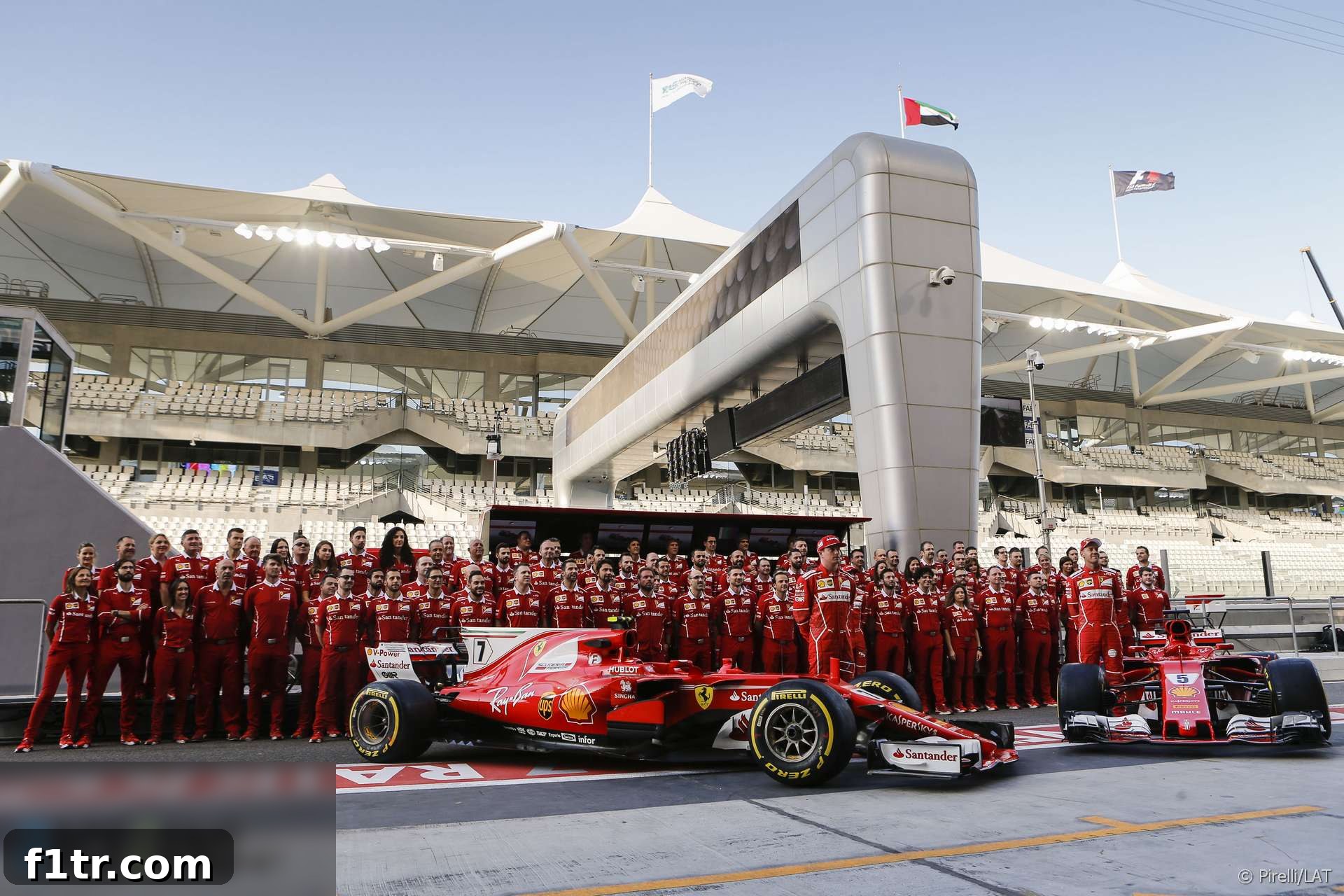
This dramatic disparity begs a crucial question: how does Mercedes incur a differential of around £190 million compared to a team like Force India? While it’s true that top teams like Mercedes have substantially higher marketing costs and employ star drivers such as Lewis Hamilton, whose salary considerably dwarfs that of Sergio Perez, such factors alone do not adequately explain a threefold difference in overall budgets. The true extent of the spending gap becomes even more apparent when analyzing team headcounts. In 2017, Haas operated on a budget of £100 million with a headcount of 225. Force India’s figures were similar, with £100 million and 400 staff. In stark contrast, Ferrari’s estimated headcount (excluding its engine division) was a staggering 960, with a budget estimate of £350 million. Mercedes’ staffing ran to 860 heads. This means Mercedes employs almost four times the number of staff as Haas and more than double Force India’s complement.
Clearly, then, Ferrari, Mercedes, and Red Bull (estimated £215 million budget with 700 staff) possess an overwhelming financial advantage, allowing them to out-develop the independent teams comprehensively. These smaller outfits are left with little change after merely designing and building their cars for a given season, leading to an increasing performance deficit as the season wears on. Where a team like Force India might afford to spend only £20 million on in-season development, Mercedes can effectively “blow” £210 million on development and still operate within its vastly larger budget. This imbalance profoundly impacts the competitive nature of the sport and is a key driver for calls for an F1 budget limit.
Thus, apart from any purely commercial considerations, from a crucial performance perspective, Liberty Media would be well-advised to limit spending. Such a measure would undoubtedly tighten the competitive field, fostering closer, more thrilling racing. The fundamental question, however, remains: “What constitutes a reasonable and appropriate spending level for the pinnacle of motorsport?” Setting the cap too high risks making it meaningless, failing to address the core issue of overspending. Conversely, setting it too low could potentially strip Formula 1 of its cutting-edge glamour, technological innovation, and its allure as a truly elite competition. Finding this delicate balance is critical for the success of any F1 cost cap implementation.
Regardless of the exact figure, it is evident that Liberty Media perceives the introduction of Formula 1 cost caps as essential, not just for sporting equity, but simply to balance its own books and ensure the long-term profitability of the enterprise. A figure of $150 million (approximately £125 million) has been widely discussed, exclusive of marketing, engines, tyres, and driver/executive salaries. This proposed cap would theoretically enable each team to design, build, and race two cars, while still leaving approximately £45 million for crucial in-season development and testing. While a Force India or Haas might not be able to immediately raise such budgets, a well-implemented budget cap would at least level the playing field over time and undoubtedly deliver closer racing, making the sport more engaging for fans. From a pure sporting perspective, there’s much to like. However, if you are a major team, or more significantly, an employee within one of these privileged outfits, the prospect of budget caps brings considerable apprehension, as they will inevitably lead to substantial staff lay-offs.
| Team | Headcount | Variance |
|---|---|---|
| Mercedes | 860* | 460 |
| Ferrari | 960* | 560 |
| Red Bull | 700* | 300 |
| Force India | 400** | 0 |
| Williams | 575* | 175 |
| Renault | 620* | 220 |
| Toro Rosso | 400** | 0 |
| Haas | 225*** | -175 |
| McLaren | 690* | 290 |
| Sauber | 360*** | -40 |
Potential total staff reduction based on a 400-head limit: 1,790.
* Predominantly in-house
** Mixed out-sourcing and in-house manufacture
*** Predominantly out-sources
Consider the profound impact: an overall budget limit of £180 million would effectively restrict teams to a maximum of around 400 employees for their chassis operations. This would mean Mercedes would need to retrench approximately half its staff, while Ferrari would face the daunting task of cutting almost 60 percent of its payroll. Red Bull and McLaren, operating with similar headcounts, would also confront reductions of at least 30 percent. Such figures highlight the immense human cost associated with a drastic F1 cost cap, making the resistance from these large organizations understandable, as they are not merely protecting competitive advantages, but also the livelihoods of hundreds, if not thousands, of highly skilled individuals.
Mercedes Motorsport boss Toto Wolff articulated this complex position in Abu Dhabi, stating, “We are not against a cost cap as long as it can be policed in the right way and [is introduced sensibly].” However, he immediately qualified this by adding, “[But] we are not going to cut our workforce by 30 percent from one year to another and we are not going to give up a performance advantage that we have lightly, so there needs to be something on the other side.” What that “something” entails remains strategically vague, but it clearly indicates that the major teams will demand significant concessions or compensatory measures in return for agreeing to any substantial F1 budget limit. This negotiation process will undoubtedly be a long and arduous slog before Formula 1 can fully embrace a concept that has been debated for over a decade but now carries an undeniable commercial imperative for Liberty Media.
A “glide-path” – a gradual implementation strategy designed to ease the sport into new regulations by the end of 2020 – has been proposed to manage this transition. However, such a logical and phased approach often proves too straightforward for the intricate politics of Formula 1. It is highly probable that arguments will continue to rage back and forth until the very last moment in December 2020, at which point those teams potentially hardest hit by the proposed caps may simply refuse to subscribe to them. Liberty Media, however, is unlikely to back down, simply because it cannot afford to financially. The commercial realities for a NASDAQ-listed company demand action to ensure the sport’s profitability and long-term viability.
The profound irony of this situation is that if one or more major teams were to exit Formula 1 entirely due to disagreements over a cost cap, a significantly larger number of heads would be retrenched than through a managed budget reduction. Moreover, such an exodus would force the sport to confront a fundamental question: Could Formula 1 truly term itself ‘the pinnacle of motorsport’ if iconic brands like Ferrari and Mercedes were to cease racing within its ranks and potentially pursue other motorsport ventures? This poses a significant identity crisis for F1, balancing its commercial future with its historical prestige and competitive landscape.
Clearly, Liberty Media needs budget caps as much as Formula 1 needs to control its unsustainable spending. Yet, too many critical questions remain open and unresolved. These include the precise level of the cap, the robust methodologies required to effectively police and control spending limits, and the appropriate penalties that should be applied in the event of breaches. After all, mere fines levied on excess spending become largely meaningless when teams possess spare budgets of £200 million. Furthermore, budget caps alone do not even begin to address the deeply ingrained issue of F1’s inequitable revenue structure. This structure arguably disadvantages the disenfranchised independent teams even more than unlimited spending does, simply because the various non-performance-based bonuses paid by the commercial rights holder to major teams actively encourage and reward excessive spending.
The bottom line is that a Formula 1 cost cap is not the magical “silver bullet” many believe it to be. On its own, it will not correct all of Formula 1’s many ills. In addition, the implementation of a strict cap will likely result in the laying off of over 1,000 highly qualified individuals (as indicated in the table above) who have dedicated their working lives to the sport. All of this, ultimately, is done in the name of shareholder value and the pursuit of commercial profitability. The critical ethical question then becomes: Is this a fair trade-off for the future of Formula 1?
Related Articles: Exploring the Dynamics of F1’s Future
- The year of sprints, ‘the show’ – and rising stock: A political review of the 2021 F1 season
- The problems of perception the FIA must address after the Abu Dhabi row
- Why the budget cap could be F1’s next battleground between Mercedes and Red Bull
- Todt defied expectations as president – now he plans to “disappear” from FIA
- Sir Frank Williams: A personal appreciation of a true racer
Browse all RacingLines columns