Verstappen’s Defiance: Unraveling the Red Bull Rift and its F1 Implications
The final laps of the Brazilian Grand Prix unveiled an unforeseen fracture within the seemingly harmonious Red Bull Racing camp. Until Max Verstappen explicitly defied a team instruction to yield position to his teammate, Sergio Perez, few observers would have suspected the depth of tension brewing between the two drivers. This public display of insubordination sent ripples throughout the Formula 1 paddock, sparking intense debate about team loyalty, individual ambition, and the delicate balance of championship aspirations.
Following the race, a visibly frustrated Perez did not mince words, emphasizing his critical support role in securing both of Verstappen’s world championship titles. While perhaps a slightly dramatized assessment in the heat of the moment, it undeniably highlights Perez’s significant contributions. His pace has consistently been closer to Verstappen’s than any previous Red Bull teammate, proving invaluable on numerous occasions for the reigning world champion.
The Unsung Hero: Sergio Perez’s Crucial Role in Verstappen’s Dominance
Perez’s strategic acumen and defensive prowess were particularly evident during the intense 2021 season, where he frequently acted as a critical barrier against Verstappen’s then-title rival, Lewis Hamilton. In the Turkish Grand Prix, Perez showcased tremendous skill by masterfully fending off Hamilton, effectively delaying the Mercedes driver’s charge through the field. This defensive masterclass was more than just a momentary skirmish; it was a tactical intervention that had tangible consequences for the championship battle, buying Verstappen crucial time and space.
The pinnacle of Perez’s “wingman” role came in the dramatic Abu Dhabi season finale. His stunning defensive driving against Hamilton, dubbed by some as “the Minister of Defence,” was instrumental. Perez’s tenacious resistance arguably cost Hamilton so much time that it ultimately denied the Mercedes driver the opportunity to make a vital pit stop for fresher tyres. This single act of self-sacrifice left Hamilton vulnerable to Verstappen’s eventual last-lap attack, directly influencing the outcome of a fiercely contested championship. Such moments forged a narrative of unwavering team loyalty and strategic partnership.
Even in 2022, despite Verstappen’s dominant individual performance, Perez continued to embrace the obedient number two role when directed. Red Bull team principal Christian Horner had consistently lauded the working relationship between his drivers, praising their collaborative spirit. Most recently, in an interview aired during the very Brazilian Grand Prix weekend, Horner painted a picture of mutual respect and camaraderie.
“There’s a lot of respect between the two,” Horner told Channel 4. “They’re both at different stages in their careers. Checo is under no illusions of the challenge that he has in having Max as a team mate. But he also has enough confidence in himself and in his own ability.
“He’s made some incredible drives this year, he’s second in the world championship for a reason because he’s delivered at such a high level. The two grand prix victories that he’s had so far this year, both in Monaco and in Singapore, have been outstanding performances. Certainly earlier in the year he got on top of the car quickly, it suited him. That pole position in Saudi Arabia, again, another street circuit, another circuit that favours the brave, he was outstanding there.
“So I think it’s been a great year for Sergio and I think that respect between the two drivers, the camaraderie between the two drivers has been phenomenal.”
Interlagos: Where Camaraderie Crumbled
However, the “phenomenal camaraderie” Christian Horner highlighted was conspicuously absent on Sunday evening at Interlagos. Following a late Safety Car period, Red Bull issued an instruction to Perez, asking him to allow Verstappen past. The explicit reasoning was for Verstappen to challenge Fernando Alonso ahead, with a promise that Perez would regain his position if Verstappen failed to make progress. Remarkably, this critical part of the message was not initially conveyed to Verstappen. It was only on the final lap that the instruction for Verstappen to drop back and let Perez past was relayed.
Verstappen’s dismissal of the instruction was immediate and emphatic, casting doubt on whether he would have complied under any circumstances. “I told you already last time guys, don’t ask that again to me, okay,” Verstappen stated unequivocally over team radio, adding for emphasis: “Are we clear about that? I gave my reasons and I stand by it.” The message was clear: this was a boundary Verstappen was unwilling to cross, suggesting a deeper underlying issue.
“It shows who he really is,” a disappointed Perez muttered as he drove back to the pits, underscoring the severity of the perceived betrayal. A striking detail from the exchange was Christian Horner’s swift and immediate apology to Perez over the radio, a gesture notably not extended to Verstappen at the same time. This differential treatment further highlighted the team’s internal shock and the immediate need to manage the fallout with Perez.
In the aftermath, Verstappen remained tight-lipped about the exact reasons for his refusal. However, when pressed by Sky Sports if his decision was related to events at the Monaco Grand Prix earlier in the season, he gave a cryptic, yet telling, reply: “You can decide that. I’m not going to say.” This terse response immediately pointed the finger towards a previous incident that had clearly festered in the Dutchman’s mind.
The Shadow of Monaco: Unpacking Verstappen’s Grievance
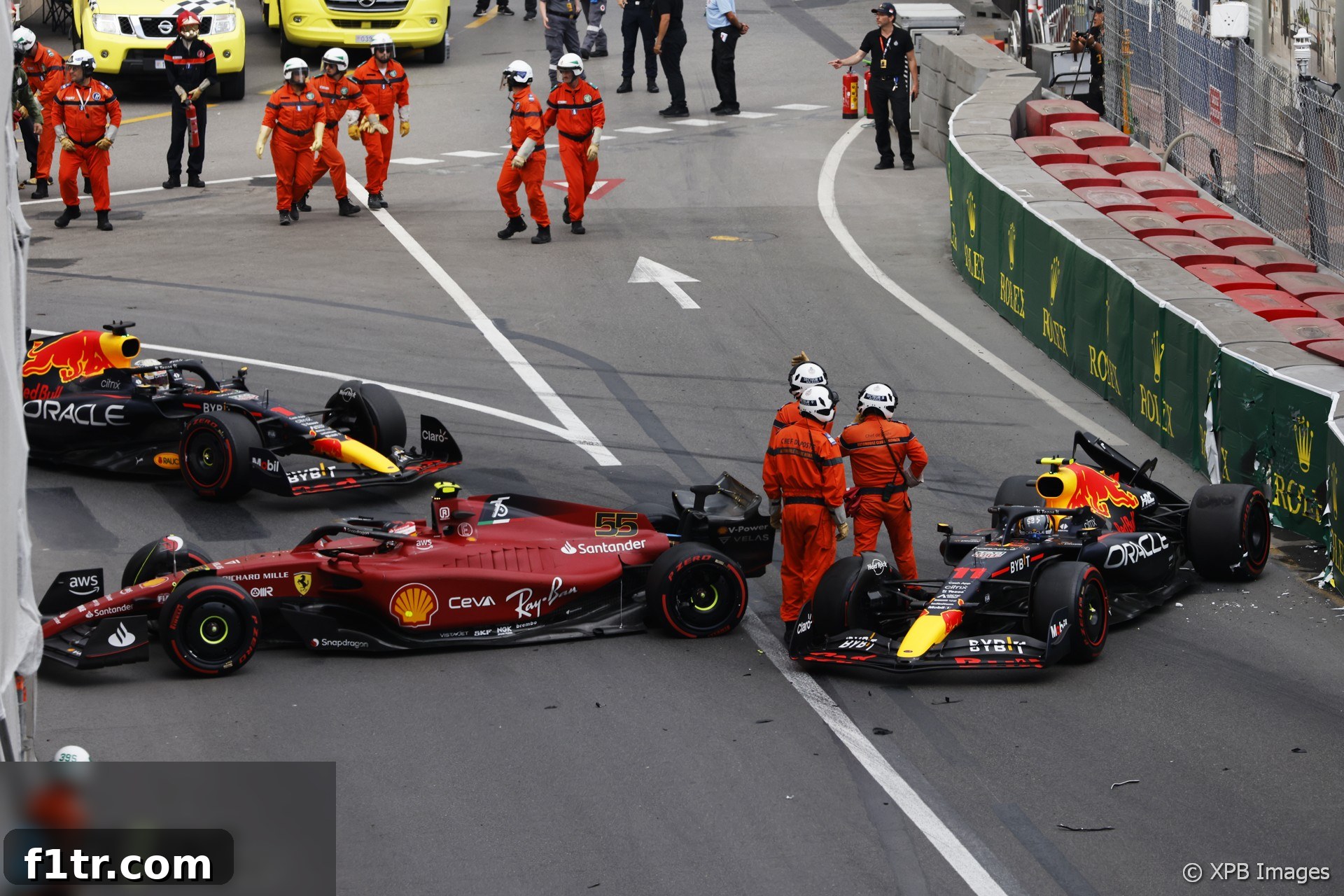
Perez’s Monaco Grand Prix victory, one of the “outstanding performances” Horner had earlier cited, came under a cloud of controversy. The incident in question occurred during the final runs of qualifying, where Perez crashed his car into the barriers. The crash triggered a red flag, prematurely ending the session and freezing the grid positions. Crucially, this ensured Perez would start third, ahead of Verstappen, who was on a potentially faster lap.
The unique nature of Monaco, with its narrow streets and unforgiving barriers, makes qualifying crashes particularly impactful. Drivers have, on occasion, been accused of deliberately causing accidents to trigger red flags and prevent rivals from improving their times. The most infamous example is Michael Schumacher, who was penalised for doing so in 2006. Eight years later, Lewis Hamilton clearly suspected Nico Rosberg went up the escape road at Mirabeau for the same reason, though Rosberg went unpunished by the stewards. These historical precedents add weight to the suspicions that often surround such incidents in the Principality.
Whether Perez’s crash was intentional or not remains a matter of speculation, but the incident appears to be the root cause of Verstappen’s simmering resentment. At the precise moment of impact, Verstappen had set personal best times in all seven mini-sectors he had completed on his lap. Conversely, Perez was slower in six of the nine sectors he had covered, faster in only one, and fastest overall in two. Critically, his overall time through the entire first sector was slower than Verstappen’s. This statistical comparison provided Verstappen with compelling reason to believe he would have comfortably out-qualified his teammate had the session run to an uninterrupted conclusion. “This shouldn’t be allowed,” he famously told his race engineer Gianpiero Lambiase over the radio, as he waited for the recovery of Perez’s car and the Ferrari of Carlos Sainz Jnr, which had also been involved in the melee. The incident clearly fueled a deep sense of injustice in Verstappen, eroding the trust essential for team harmony.
Max Verstappen: A History of Unwavering Resolve
Verstappen’s readiness to openly defy a team instruction, while shocking to some, should genuinely surprise no one who has followed his career. He displayed a similar independent streak when he and Carlos Sainz Jnr were teammates at Toro Rosso during the 2015 Singapore Grand Prix. During that race, a frustrated Verstappen refused to let Sainz past, despite repeated team orders, showcasing a fiercely competitive and self-determined nature even in his formative F1 years. This pattern of behavior underscores a deep-seated belief in his own judgment and a reluctance to compromise his on-track ambitions, regardless of team directives. He is a driver who gives nothing away, on or off the track, as Sunday’s race with Hamilton also demonstrated.
The Long-Term Repercussions: A Costly Victory for Verstappen?
While Verstappen’s refusal secured him two additional points for a sixth-place finish – a negligible gain for a driver who had already clinched 14 wins and a world championship that season – the public nature of his clash with the team may prove to be a far greater cost. In the cutthroat world of Formula 1, team harmony and a loyal teammate are often priceless assets, particularly for a dominant driver.
If Verstappen needs a stark reminder of the immense value of having Perez firmly on his side, he need only recall the events that immediately preceded and followed the Monaco incident. A week prior, at the Spanish Grand Prix, Verstappen was waved past his teammate on two separate occasions en route to victory, despite only holding a 19-point lead over Perez going into the race. On the first instance, Perez was told “give him a shot now, we’ll pay back later,” a payback that never materialized. Nonetheless, just two weeks after Monaco, at the Azerbaijan Grand Prix, Perez again dutifully pulled aside for Verstappen when ordered to. This consistent willingness to sacrifice for the team’s and Verstappen’s benefit highlights the depth of loyalty that was seemingly disregarded in Brazil.
The long-term implications for Red Bull Racing are significant. Can the team effectively enforce team orders in the future, especially if Verstappen continues to be uncooperative? How will this public defiance affect Perez’s morale and his willingness to act as a supportive teammate when the stakes are high, particularly for Verstappen’s championship bids? A team’s strength often lies in its unity, and this incident has certainly exposed a crack in Red Bull’s formidable armor. While Verstappen’s talent is undeniable, fostering resentment within the team risks destabilizing the very foundation of their success.
Ultimately, Verstappen chose to prioritize a relatively worthless two points in the championship standings over the preservation of intra-team harmony. In a sport where psychological warfare and team cohesion play as vital a role as raw pace, only time will tell whether this was a price worth paying for the Dutch champion and his Red Bull team.
Become a RaceFans Supporter
RaceFans is run thanks in part to the generous support of its readers. By contributing £1 per month or £12 per year (or the same in whichever currency you use) you can help cover the costs of creating, hosting and developing RaceFans today and in the future.
Become a RaceFans Supporter today and browse the site ad-free. Sign up or find out more via the links below:
- Become a RaceFans Supporter
- RaceFans Supporter FAQ
2022 F1 Season Articles
- Mercedes told me “you’re wrong” about 2022 car’s problems – Hamilton
- FIA confirms all 10 F1 teams complied with 2022 cost cap
- Steiner “not ashamed” of panning “slow” Schumacher in Drive to Survive
- Albon believes year out of F1 improved him as a driver
- Hamilton sees diversity gains in F1 years on from his ‘traumatising’ experience of racism
Browse all 2022 F1 season articles