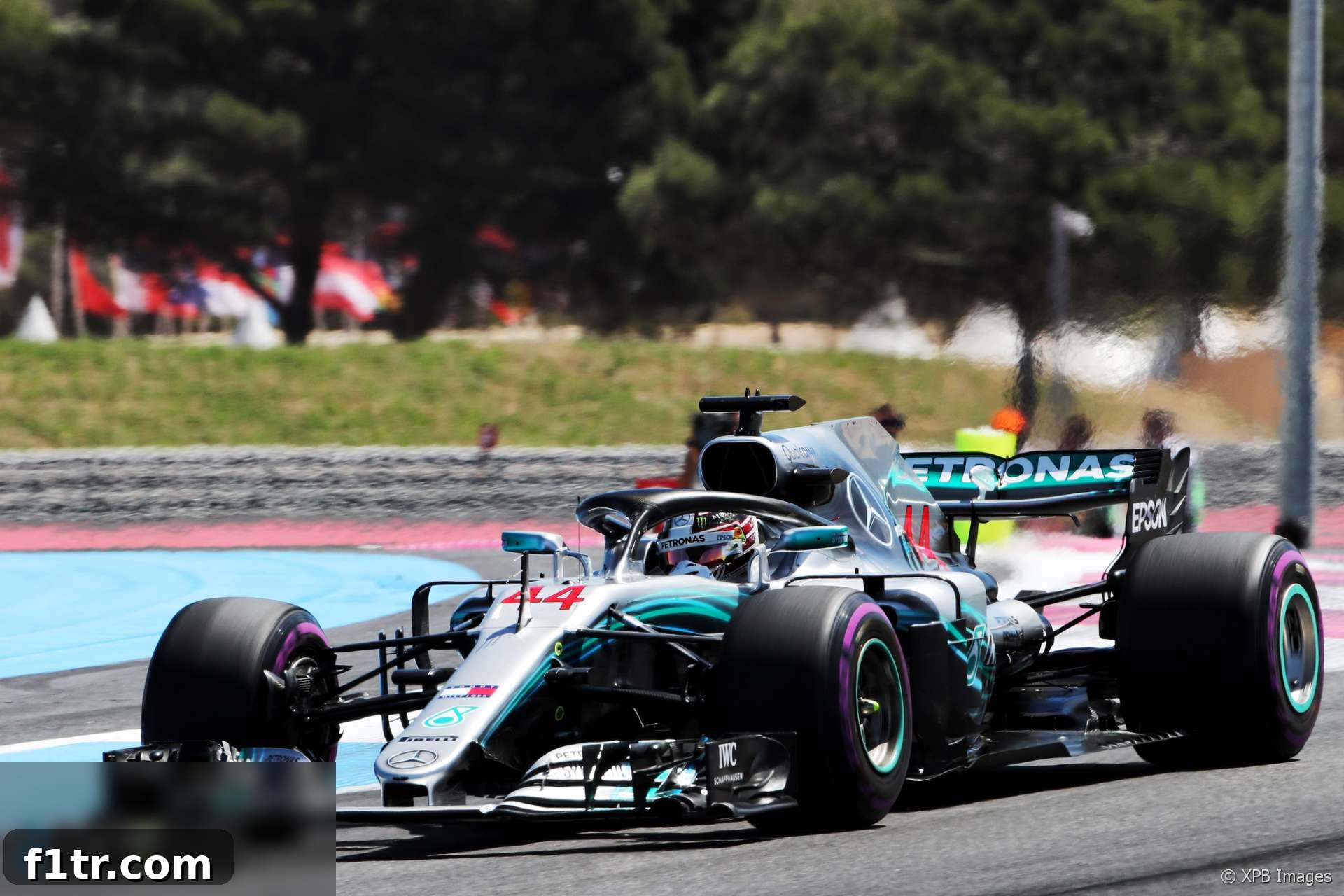
Mercedes Unleashes Crucial ‘Phase 2.1’ Power Unit Upgrade at French Grand Prix
In a move that signals a determined push in the ongoing Formula 1 championship battle, Mercedes-AMG Petronas has officially confirmed the introduction of a significant power unit upgrade for its customer and works teams at this weekend’s French Grand Prix. Dubbed ‘Phase 2.1’, this development represents a crucial evolution beyond the ‘Phase 2’ improvements initially earmarked for the preceding Canadian Grand Prix, underscoring the relentless pace of innovation in modern F1.
The upgraded power unit is being deployed across all six Mercedes-powered cars on the grid, encompassing the factory Mercedes-AMG Petronas team, Sahara Force India, and Williams Martini Racing. This widespread implementation highlights the confidence Mercedes has in its latest advancements, aiming to provide a comprehensive performance boost across its entire engine customer base. The new specification components saw their inaugural track action during the Friday practice sessions at Paul Ricard, with the intention for them to remain in use throughout the remainder of the French Grand Prix weekend.
Understanding the ‘Phase 2.1’ Power Unit Enhancement
The strategic timing and nature of this ‘Phase 2.1’ upgrade speak volumes about Mercedes’ commitment to maintaining its competitive edge. While ‘Phase 2’ was a planned step in their development roadmap, the subsequent ‘Phase 2.1’ suggests either a more rapid iteration of improvements or a direct response to data gathered from earlier races. This continuous development cycle is paramount in Formula 1, where marginal gains can often translate into significant advantages on track.
Specifically, the upgrade package introduced at Circuit Paul Ricard includes enhancements to key components of the hybrid power unit. All Mercedes, Force India, and Williams cars are now equipped with new Internal Combustion Engines (ICE), Turbochargers (TC), and Motor Generator Unit-Heat (MGU-H). These three elements are fundamental to a modern F1 power unit’s performance, efficiency, and reliability, particularly under the demanding conditions of Grand Prix racing.
The ICE is the heart of the power unit, directly contributing to outright horsepower. Improvements here often involve thermal efficiency gains, allowing for more power generation from the same amount of fuel, or an increase in the maximum power output. The Turbocharger works in tandem with the ICE, recovering energy from exhaust gases to boost engine performance. A more efficient turbo can reduce lag, improve power delivery, and contribute to overall responsiveness. The MGU-H is perhaps the most complex of the three, recovering energy from the exhaust gases that would otherwise be wasted and converting it into electrical energy. Enhancements to the MGU-H can improve energy recovery, deployment strategies, and crucial to performance, reduce turbo lag by directly spinning up the compressor. Significant upgrades in these areas collectively promise a meaningful uplift in power, efficiency, and driveability.
Initial On-Track Impact and Strategic Implications
The immediate impact of the new power unit specification was evident during the Friday practice sessions at the French Grand Prix. Lewis Hamilton, driving for the Mercedes-AMG Petronas team, demonstrated the potent capabilities of the updated package by topping the timesheets in both of the day’s practice sessions. This dominant display, particularly in a new configuration, provides early validation of the upgrade’s effectiveness and offers an ominous sign for Mercedes’ rivals.
While practice sessions are not always fully indicative of race pace, Hamilton’s performance, combined with generally strong showings from other Mercedes-powered cars, suggests a significant step forward. For Mercedes, this upgrade is a crucial weapon in their ongoing fight for both the Drivers’ and Constructors’ championships. Against formidable competitors like Ferrari and Red Bull, who are also relentless in their development, such mid-season gains are indispensable. The consistency across all six customer cars also indicates that the upgrade is robust and adaptable, not just optimized for the factory team.
F1 Power Unit Regulations and Component Management
The introduction of new power unit components is always viewed through the lens of Formula 1’s stringent regulations regarding component usage. Under the current rules, drivers are typically limited to three Internal Combustion Engines (ICE), Turbochargers (TC), and MGU-H units per season. Exceeding these limits results in grid penalties, making strategic management of component lifespan and upgrade timing a critical aspect of team strategy.
The table below provides a snapshot of the power unit components utilized by each driver up to, and including, the introduction of this new Mercedes upgrade. For most Mercedes-powered drivers, including Lewis Hamilton and Valtteri Bottas, the ‘Phase 2.1’ upgrade represents their second usage of the ICE, TC, and MGU-H components. This positioning is strategically sound, leaving them with one more allowed change for these critical components before incurring penalties later in the season. In contrast, some drivers from other manufacturers, such as Pierre Gasly (Toro Rosso-Honda), are already on their fourth ICE, TC, and MGU-H, highlighting the differing reliability and development challenges faced across the grid.
This careful management ensures that Mercedes can extract maximum performance throughout the long season while minimizing the risk of costly grid penalties. The ability to introduce such a significant upgrade within these constraints is a testament to the engineering prowess and meticulous planning at Mercedes HPP (High Performance Powertrains).
Power Unit Components Used So Far (Post French GP Upgrade)
| No. | Car | Engine | Driver | ICE | TC | MGU-H | MGU-K | ES | CE |
|---|---|---|---|---|---|---|---|---|---|
| 10 | Toro Rosso | Honda | Pierre Gasly | 4 | 4 | 4 | 3 | 2 | 2 |
| 28 | Toro Rosso | Honda | Brendon Hartley | 3 | 3 | 3 | 2 | 2 | 2 |
| 3 | Red Bull | TAG Heuer | Daniel Ricciardo | 3 | 3 | 3 | 2 | 2 | 2 |
| 33 | Red Bull | TAG Heuer | Max Verstappen | 2 | 3 | 2 | 3 | 1 | 2 |
| 8 | Haas | Ferrari | Romain Grosjean | 2 | 3 | 3 | 1 | 1 | 2 |
| 7 | Ferrari | Ferrari | Kimi Raikkonen | 2 | 3 | 2 | 1 | 1 | 2 |
| 55 | Renault | Renault | Carlos Sainz Jnr | 2 | 2 | 3 | 1 | 1 | 2 |
| 27 | Renault | Renault | Nico Hulkenberg | 2 | 2 | 3 | 1 | 1 | 2 |
| 20 | Haas | Ferrari | Kevin Magnussen | 2 | 2 | 2 | 1 | 2 | 2 |
| 77 | Mercedes | Mercedes | Valtteri Bottas | 2 | 2 | 2 | 1 | 2 | 2 |
| 5 | Ferrari | Ferrari | Sebastian Vettel | 2 | 2 | 2 | 1 | 1 | 2 |
| 2 | McLaren | Renault | Stoffel Vandoorne | 2 | 2 | 2 | 1 | 1 | 2 |
| 14 | McLaren | Renault | Fernando Alonso | 2 | 2 | 2 | 2 | 1 | 1 |
| 11 | Force India | Mercedes | Sergio Perez | 2 | 2 | 2 | 1 | 2 | 1 |
| 31 | Sauber | Ferrari | Charles Leclerc | 2 | 2 | 2 | 1 | 1 | 1 |
| 9 | Sauber | Ferrari | Marcus Ericsson | 2 | 2 | 2 | 1 | 1 | 1 |
| 44 | Mercedes | Mercedes | Lewis Hamilton | 2 | 2 | 2 | 1 | 1 | 1 |
| 31 | Force India | Mercedes | Esteban Ocon | 2 | 2 | 2 | 1 | 1 | 1 |
| 18 | Williams | Mercedes | Lance Stroll | 2 | 2 | 2 | 1 | 1 | 1 |
| 35 | Williams | Mercedes | Sergey Sitorkin | 2 | 2 | 2 | 1 | 1 | 1 |
Looking Ahead: The Championship Ramifications
The introduction of the ‘Phase 2.1’ power unit upgrade could be a pivotal moment in the 2018 Formula 1 season. While Ferrari has shown exceptional pace at various circuits, particularly with their own engine developments, Mercedes’ consistent and significant updates demonstrate their unwavering resolve to fight for glory. A power advantage, even a marginal one, can translate into better qualifying positions, easier overtakes, and crucially, superior race pace, especially on power-sensitive tracks. The French Grand Prix, with its long straights and fast sections, is an ideal venue to showcase such gains.
This upgrade not only bolsters Mercedes’ own championship aspirations but also provides a much-needed boost to its customer teams. Force India and Williams, despite facing their own challenges, will benefit from the enhanced performance and reliability, which could enable them to compete more effectively in the fiercely contested midfield battles. In Formula 1, the transfer of technology and performance from a leading engine supplier to its customers is often a critical factor in the overall competitiveness of the grid.
As the season progresses, the impact of this upgrade will be closely monitored. Will it give Mercedes the definitive edge they need to pull away from Ferrari? How will Ferrari and Red Bull respond to this latest challenge? These questions will undoubtedly shape the narrative of the remaining races and intensify the already thrilling championship fight. Mercedes’ ‘Phase 2.1’ power unit upgrade at the French Grand Prix is more than just an engineering improvement; it’s a statement of intent, signaling their full commitment to securing the 2018 Formula 1 titles.
Related Articles: Exploring the 2018 F1 Season and Power Unit Narratives
- F1 feared “death knell” for Drive to Survive after Ferrari and Mercedes snub
- McLaren staff told us we were “totally crazy” to take Honda engines in 2018 – Tost
- ‘It doesn’t matter if we start last’: How Red Bull’s junior team aided Honda’s leap forward
- Honda’s jet division helped F1 engineers solve power unit problem
- McLaren Racing losses rise after Honda split
Browse all 2018 F1 season articles