In a significant development set to reshape the competitive landscape of Formula 1, the FIA has formally notified all participating teams of its intention to prohibit the use of specialized high-performance ‘qualifying modes’ – often dubbed ‘party modes’ – from the upcoming round of the championship. This pivotal decision is anticipated to come into effect at the Belgian Grand Prix, held at the iconic Spa-Francorchamps circuit, promising a dramatic shift in how teams approach both qualifying and race day strategies.
Advert | Become a Supporter & go ad-free
The strategic move, initially brought to light by RaceFans, was detailed in an official letter dispatched by Peter Bayer, the FIA’s secretary-general for sport, to all ten teams earlier this week. Inside the confidential communication, portions of which were shared with RaceFans, teams received explicit instructions that a new technical directive would mandate them to operate their power units in an identical power mode throughout both qualifying sessions and the subsequent race. This radical alteration signals an end to the long-standing practice of engine manufacturers unleashing maximum performance for a short burst in qualifying before reverting to more conservative settings for the Grand Prix itself.
The FIA’s Growing Concerns: Integrity and Fair Play
While the deployment of unique high-power modes has been a common and accepted facet of Formula 1 for many years, the FIA articulated two primary and escalating concerns that ultimately prompted this regulatory intervention. These issues delve deep into the technical integrity of the sport and the principle of fair competition, indicating a proactive stance from the governing body to maintain a level playing field.
Unraveling Engine Complexity and Compliance
A central tenet of the FIA’s apprehension stems from the escalating complexity inherent in modern Formula 1 power units. The sophisticated nature of manufacturers’ engine modes has, according to the sport’s regulator, rendered it progressively challenging to consistently verify that these intricate power units are being operated in strict adherence to the sport’s stringent engine regulations. The sheer number of parameters and settings that can be altered within these modes makes comprehensive oversight an arduous task for technical delegates. This complexity can inadvertently create grey areas, making it difficult to definitively confirm compliance without extensive, time-consuming, and potentially intrusive investigations.
This concern is not without precedent. Earlier in the year, the FIA concluded a confidential settlement with Ferrari following an exhaustive investigation into its power unit. This probe, the specifics of which remain undisclosed, culminated in the introduction of new technical regulations for the 2020 season, notably the mandatory addition of an extra fuel flow sensor. Subsequent to these changes, Ferrari’s engine performance noticeably diminished, a decline the team itself candidly linked to the amended rules. This episode undoubtedly amplified the FIA’s resolve to scrutinize engine modes across the grid, ensuring transparency and equal application of the rules for all competitors.
In his letter to the teams, Peter Bayer specifically invoked Article 2.7 of the technical regulations. This article unequivocally states: “It is the duty of each competitor to satisfy the FIA technical delegate and the stewards that his automobile complies with these regulations in their entirety at all times during an event.” Furthermore, it emphasizes that “due to their nature, the compliance of electronic systems may be assessed by means of inspection of hardware, software and data.” This clause underscores the FIA’s right, and indeed its obligation, to delve into the intricate electronic heart of the power units to verify their legality, providing the regulatory bedrock for this ban.
Prohibiting Driver Aids: A Core Principle of F1
Beyond the complexities of technical compliance, the FIA also voiced profound concerns that the intrinsic nature of certain teams’ engine modes could potentially contravene regulations designed to prohibit driver aids. Article 27.1 of the sporting regulations is explicit on this matter: “the driver must drive the car alone and unaided.” The fundamental philosophy behind this rule is to ensure that the outcome of a race is primarily determined by the skill, judgment, and physical prowess of the driver, rather than by automated systems or technological enhancements that reduce the human element. The FIA is evidently evaluating whether engine modes that provide pre-programmed, short-term performance boosts fall into a category that could be interpreted as assisting the driver in a way that undermines this core principle.
Advert | Become a RaceFans supporter andgo ad-free
The Competitive Ramifications: A Blow to Mercedes?
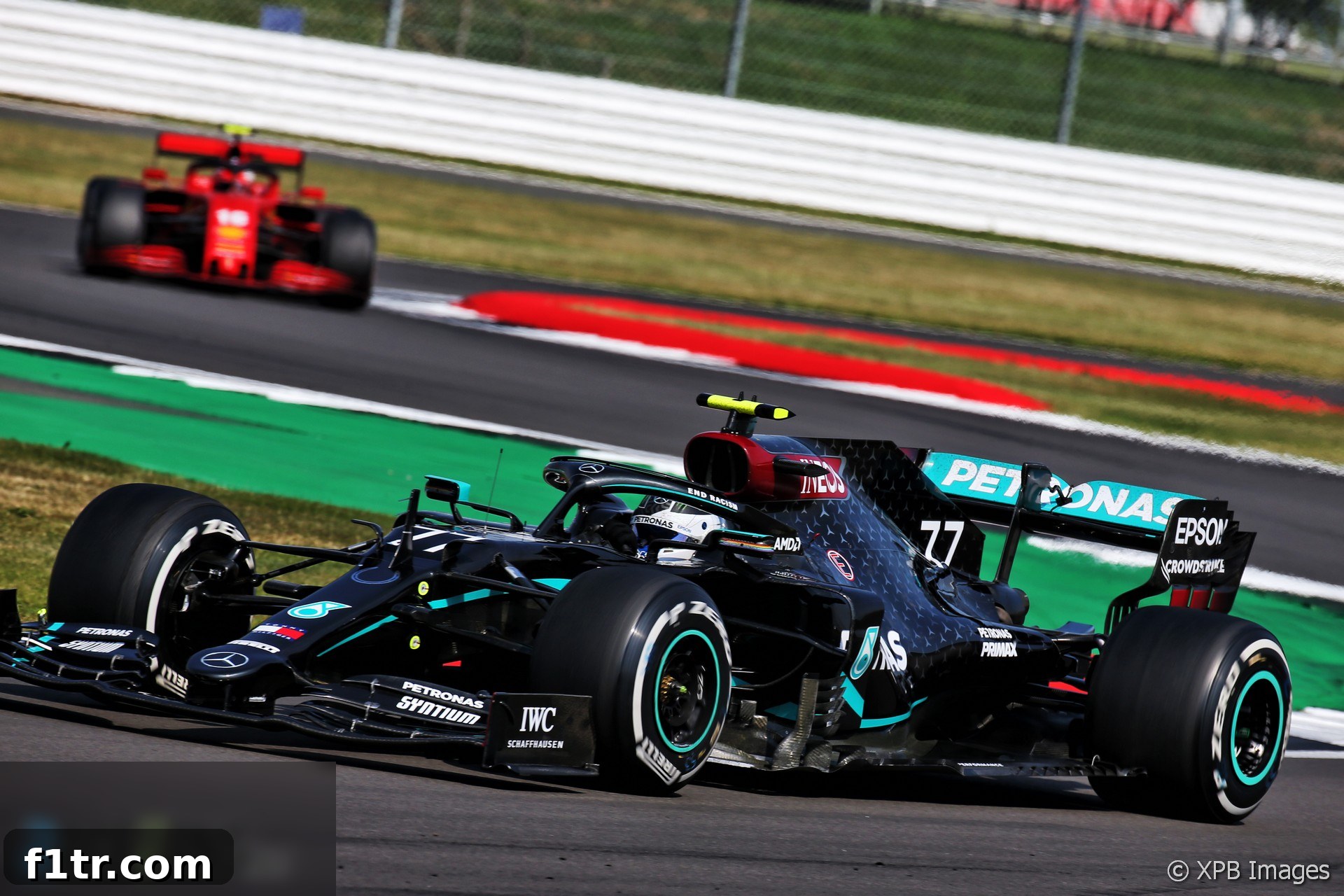
The impending restriction is widely expected to deliver a substantial blow, particularly to the Mercedes-AMG Petronas Formula One Team. For several seasons, their formidable ‘quali mode’ has been widely regarded by rival teams and analysts alike as a critical component of their unparalleled Saturday performances. Mercedes has consistently demonstrated an uncanny ability to extract an extra surge of pace in qualifying, often translating into dominant front-row lockouts. This season, their qualifying prowess has been undeniable, with the team securing pole position in all five races and sweeping the front row in the last three rounds. The ban on these specialized modes could therefore significantly impact their qualifying advantage, potentially opening up the grid and fostering closer competition on Saturdays.
Driver Reactions: The Loss of the “Extra Boost”
The news has naturally elicited reactions from drivers across the paddock, particularly those utilizing Mercedes power units. George Russell, who drives for Williams, a Mercedes customer team, expressed his disappointment at the prospect of F1 banning qualifying modes.
“I think for every engine manufacturer you’ve got a boost for qualifying,” Russell commented, highlighting the universal nature of these modes across suppliers. He elaborated on the unique physiological and mechanical symphony that culminates in a qualifying lap: “When you’re within the car you’ve got the lowest amount of fuel you have for the whole weekend, you’ve got the fastest engine mode, you’re the most pumped-up and ready. You are ready for that lap you’re about to approach. So everything just feels like a little bit extra. It allows you to just extract that bit more from the car and it’s such an exciting part of the weekend. So, like I said, I’d be disappointed to see it gone.”
Russell eloquently drew an analogy between motorsport and athletics to underscore his point: “I think it’s normal in life. You have, like a runner, if it’s only a 100-metre race, you can sprint throughout that or if you’re in a marathon you’ve got to take it easy for the duration. It’s the same with an engine. You’ve got that one lap, give it full beans and then just tune it down for the race.” This perspective highlights the inherent thrill and strategic nuance of having a dedicated qualifying power setting, allowing drivers and engineers to push the boundaries for that single, decisive lap.
His teammate, Nicholas Latifi, echoed Russell’s sentiments, confirming the tangible impact of these high-power modes. Latifi noted that the difference was “noticeable,” elaborating on the visceral experience from the cockpit. “You feel the engine is just a bit more punchy,” he explained. “Obviously you’re using the full deployment of the battery as well, you’re kind of ending with nothing left.” The sensation of fully deploying the energy recovery system (ERS) and draining the battery for a single qualifying effort is a unique aspect of the current generation of F1 cars. “Like George said it’s kind of pump yourself up going into the lap and you feel kind of an extra boost that you get. So that would be a shame, to lose that part of it.” These driver accounts paint a vivid picture of the sensory and performance benefits that qualifying modes offer, reinforcing their perceived significance.
Advert | Become a RaceFans supporter andgo ad-free
Engineering Challenges and The Future of Power Unit Strategy
The FIA’s directive presents a fresh set of engineering challenges for all power unit manufacturers. Running the same engine mode for both qualifying and the race demands a meticulous balancing act between outright performance, reliability, and fuel efficiency. Engineers will now have to design and optimize an engine mapping that is robust enough to withstand the rigors of an entire Grand Prix distance at a high-performance setting, yet potent enough to deliver competitive lap times in qualifying. This could lead to a scenario where teams are forced to compromise on ultimate qualifying pace to ensure engine longevity and manage fuel consumption during the race.
Cooling systems will also come under intense scrutiny. Higher, sustained power output naturally generates more heat, requiring efficient dissipation to prevent components from overheating and failing. Furthermore, the strategic deployment of the Energy Recovery System (ERS) will become even more critical. Teams will no longer be able to “empty” their batteries in qualifying, but rather must manage energy deployment across multiple laps and an entire race, adding another layer of complexity to energy management strategies.
Historical Context and The Constant Pursuit of Advantage
The ban on qualifying modes is another chapter in Formula 1’s rich history of regulatory bodies attempting to curb technological advantages and level the playing field. Throughout the decades, the sport has witnessed similar interventions targeting innovations like traction control, active suspension, blown diffusers, and advanced aerodynamic solutions. Each such ban or restriction is a testament to the perpetual cat-and-mouse game between ingenious engineers striving to find new performance frontiers and regulators determined to uphold the spirit of competition and safety. This latest directive reaffirms the FIA’s role as the ultimate arbiter, ensuring that the essence of racing remains paramount.
Looking Ahead: A More Level Playing Field?
The long-term consequences of this ban remain to be fully seen. While some speculate it could genuinely level the playing field and inject more unpredictability into qualifying, others suggest that top teams will inevitably find new avenues for performance optimization within the new regulatory framework. It could encourage greater innovation in chassis design, aerodynamics, and driver performance, as teams search for the marginal gains previously provided by engine modes. The removal of ‘party mode’ might also lead to more strategic qualifying sessions, where managing tires, track position, and a consistent engine mode takes precedence over a single, all-out blast. Whatever the outcome, the 2020 Belgian Grand Prix is poised to mark a pivotal moment in the ongoing evolution of Formula 1, challenging teams to adapt and redefining the very nature of competition at the pinnacle of motorsport.
2020 F1 season
- Grosjean to make F1 test return tomorrow for first time since Bahrain horror crash
- Pictures: Wrecked chassis from Grosjean’s Bahrain fireball crash to go on display
- Bottas vs Rosberg: Hamilton’s Mercedes team mates compared after 78 races each
- F1 revenues fell by $877 million in Covid-struck 2020 season
- Hamilton and Mercedes finally announce new deal for 2021 season
Browse all 2020 F1 season articles