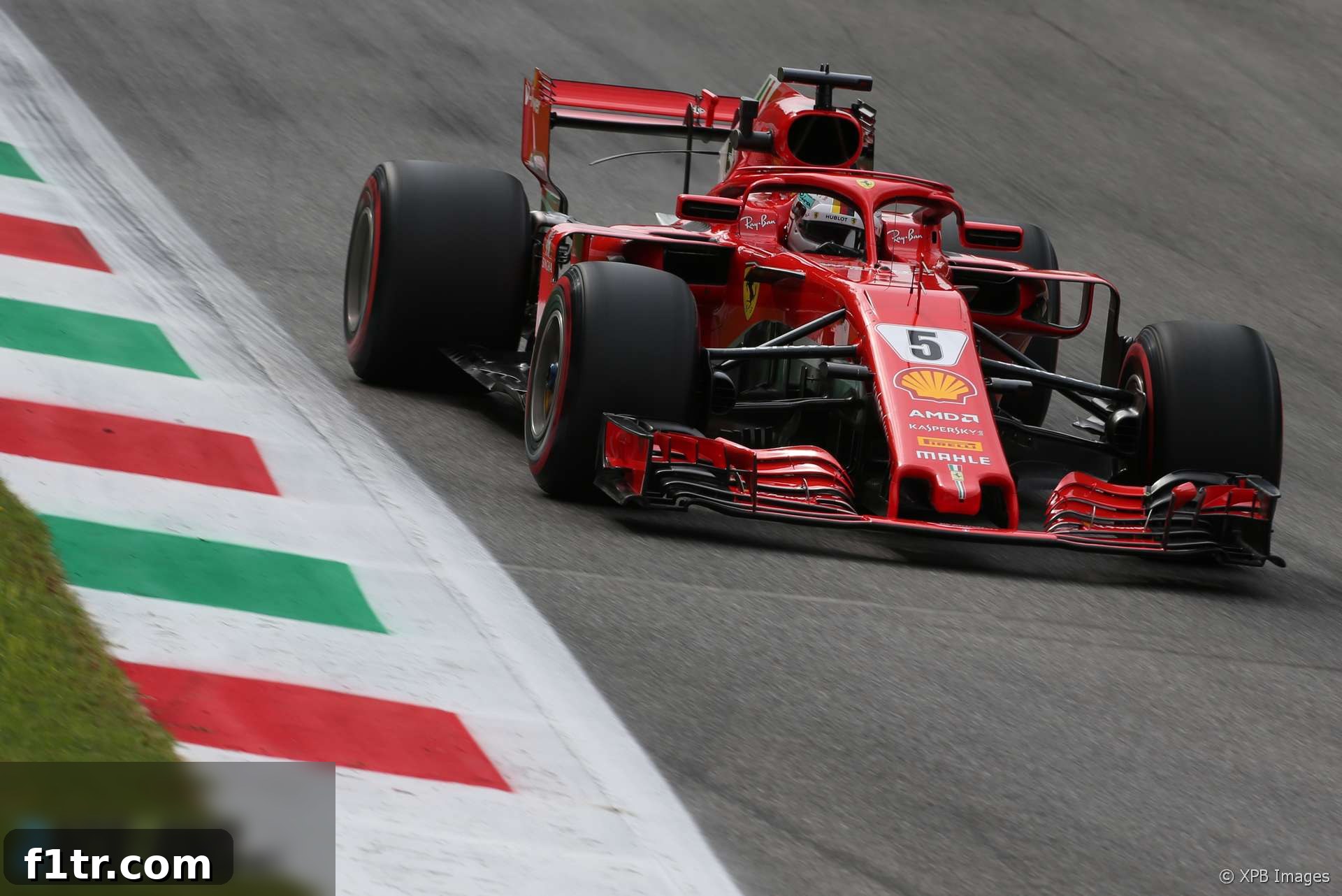
In the high-octane world of Formula 1, every millisecond counts, and the battle for supremacy often boils down to the relentless pursuit of technological advantage. As the 2018 Formula 1 season reached its critical European crescendo, the Italian Grand Prix at Monza served as a stark reminder of the intense rivalry unfolding between Mercedes and Ferrari. Amidst the tifosi’s fervent cheers and the roar of the engines, Lewis Hamilton, the reigning world champion and Mercedes-AMG Petronas F1 Team driver, voiced significant concerns regarding the impressive strides made by Ferrari, particularly in their engine development.
Hamilton’s observations during the practice sessions at Monza, a circuit renowned for its demand for raw power and straight-line speed, highlighted a clear shift in the competitive landscape. Ferrari had dominated Friday’s practice times for the second consecutive race weekend, signaling a potent threat to Mercedes’ long-held dominance. According to Hamilton, this advantage was multifaceted, but the Scuderia’s engine upgrades were undeniably keeping them ahead in the crucial development fight that defines the pinnacle of motorsport.
Ferrari’s Engine Prowess: A Game-Changer in the 2018 Season
The core of Hamilton’s concern revolved around Ferrari’s advancements in engine technology. While both Mercedes and Ferrari had introduced the third iteration of their 2018 power units at the preceding Belgian Grand Prix, it was Ferrari’s gains from an earlier phase of their engine development that truly captured Hamilton’s attention. He specifically pointed to a significant performance boost Ferrari experienced around the Austrian Grand Prix weekend. This wasn’t merely incremental improvement; it was a substantial leap that appeared to reshape the season’s trajectory.
“It’s not with this engine,” Hamilton explained, referring to the latest power unit. “It came in after they’d already introduced the second phase engine. They’d already done three races with the engine and then all of a sudden they got a big boost from somewhere around Austria. Ever since then they’ve maintained that. Even if we bring more, they bring more than that.” This candid assessment underscores the cutthroat nature of Formula 1’s technical arms race. Teams are constantly pushing the boundaries of engineering, and a breakthrough in one area, particularly the power unit, can have profound implications for overall performance.
Monza, with its long straights and fast chicanes, is often considered a “power circuit,” making any engine advantage exceptionally prominent. Ferrari’s ability to consistently top the speed traps and set competitive sector times in practice painted a clear picture of their enhanced engine capabilities. This formidable straight-line speed, combined with improved driveability and power deployment, allowed the SF71H to exploit the circuit’s characteristics more effectively than its rivals. The Italian team’s progress wasn’t just about raw power; it was about efficiency, reliability, and the ability to extract maximum performance under various conditions.
Mercedes’ Challenges and the Quest for Balance
For Mercedes, Ferrari’s ascendancy presented a complex challenge. Hamilton meticulously detailed the areas where Mercedes was finding itself at a disadvantage. “It’s a combination of everything,” he noted, indicating that the gap wasn’t attributable to a single factor but rather a synergy of elements. While straight-line speed was a glaring issue at Monza, Hamilton also identified specific corner types as problematic. “There’s areas, for example in the last races it was slow, slow corners where we were losing out. Here for example maybe the middle sector, the two Lesmos, seemed to lose out a little bit there.”
The “two Lesmos” at Monza are fast, sweeping corners that require a delicate balance of aerodynamic grip and chassis stability. Losing time in such critical sections suggested that Mercedes wasn’t just struggling with engine power but also potentially with the car’s aerodynamic efficiency or mechanical grip in specific cornering scenarios. While Hamilton expressed confidence that setup adjustments could address some of these issues, the underlying message was clear: Mercedes was working harder to extract performance, while Ferrari seemed to have found a more harmonious package. The W09, while a formidable machine, appeared to be struggling to find its optimum operating window as consistently as its Italian counterpart, especially on tracks that demanded different compromises.
This dynamic put immense pressure on Mercedes’ engineers and strategists. The development battle in Formula 1 is a never-ending cycle, where teams constantly strive to out-innovate and out-perform each other. For Mercedes, accustomed to leading the pack for several years, this period demanded a robust response. The quest was not merely to match Ferrari but to understand the fundamental sources of their rival’s gains and develop solutions that could restore their competitive edge across a diverse range of circuits. The nuanced interplay between engine power, aerodynamic downforce, tire management, and chassis setup became even more crucial as the championship reached its climax.
The “Trick” Engine Controversy and FIA Scrutiny
Adding another layer of intrigue to the engine battle were Hamilton’s earlier comments following the Belgian Grand Prix. He had referred to some of Ferrari’s improvements as “trick,” a term that, in the highly regulated world of Formula 1, often raises eyebrows and can hint at suspicions of bending the rules. However, Hamilton was quick to clarify his remarks, stating that he was not suggesting any foul play but rather acknowledging Ferrari’s ingenious engineering. Nevertheless, such comments inevitably draw attention and prompt scrutiny, highlighting the constant tension between innovation and regulation.
Ferrari’s technical director, Mattia Binotto, wasted no time in addressing these veiled suggestions. He firmly asserted the legality of Ferrari’s power unit and its components, emphasizing the team’s transparent relationship with the governing body. “The FIA is fully aware of our components and it is our duty as well each time FIA is not fully, let me say, convinced that there is something right or wrong for them to inspect, to understand better,” Binotto stated. This underscores a fundamental principle in Formula 1: all teams operate under the watchful eye of the FIA (Fédération Internationale de l’Automobile), which is responsible for enforcing the technical regulations.
Binotto further elaborated on the process: “I think it’s simply what happens at the time there is some questions: we answer, we explain and I think that’s what happens. That’s it. FIA certainly is happy, declaring our car legal at every single race, and on our side, honestly, fully happy at seeing the point is completely closed by them.” This exchange reflects the meticulous nature of technical compliance in F1. The FIA routinely inspects cars, conducts detailed analyses, and engages in discussions with teams to ensure that all components adhere strictly to the rulebook. Any innovation, no matter how clever, must ultimately pass the stringent tests of legality. Ferrari’s confidence in their explanations and the FIA’s subsequent satisfaction effectively closed the chapter on the “trick” engine speculation, allowing the focus to return to the pure sporting contest.
The Broader Context of the 2018 F1 Season
The 2018 Formula 1 season was a gripping spectacle, largely defined by the intense championship fight between Lewis Hamilton and Sebastian Vettel, representing Mercedes and Ferrari respectively. Monza, often considered Ferrari’s spiritual home, carried immense significance, not just for the points on offer but for the psychological advantage it could provide. The seesaw nature of the championship, with both teams enjoying periods of dominance, made every race weekend a crucial battleground for supremacy.
The engine war was a central theme throughout the season. While aerodynamics and chassis design remained critical, the performance disparities introduced by engine upgrades and reliability often proved decisive. The advancements made by Honda, for instance, with their close partnership with Toro Rosso (now AlphaTauri/RB), were also a testament to the relentless pursuit of power unit perfection, setting the stage for future partnerships and championship bids. The stories emerging from that year, such as McLaren’s struggles post-Honda split or the eventual success of the Honda power unit, highlight the profound impact of engine development on a team’s fortunes.
Ultimately, the 2018 season showcased Formula 1 at its most competitive, with two legendary teams and two generational talents pushing each other to their absolute limits. Lewis Hamilton’s observations at Monza were not just casual remarks; they were a seasoned champion’s critical assessment of a formidable opponent’s progress, emphasizing the constant evolution and fierce technical competition that defines the pinnacle of motorsport.
Related Stories from the 2018 F1 Season
Delve deeper into the narratives and technical battles that shaped one of Formula 1’s most memorable seasons:
- F1 feared “death knell” for Drive to Survive after Ferrari and Mercedes snub
- McLaren staff told us we were “totally crazy” to take Honda engines in 2018 – Tost
- ‘It doesn’t matter if we start last’: How Red Bull’s junior team aided Honda’s leap forward
- Honda’s jet division helped F1 engineers solve power unit problem
- McLaren Racing losses rise after Honda split
Browse all 2018 F1 season articles