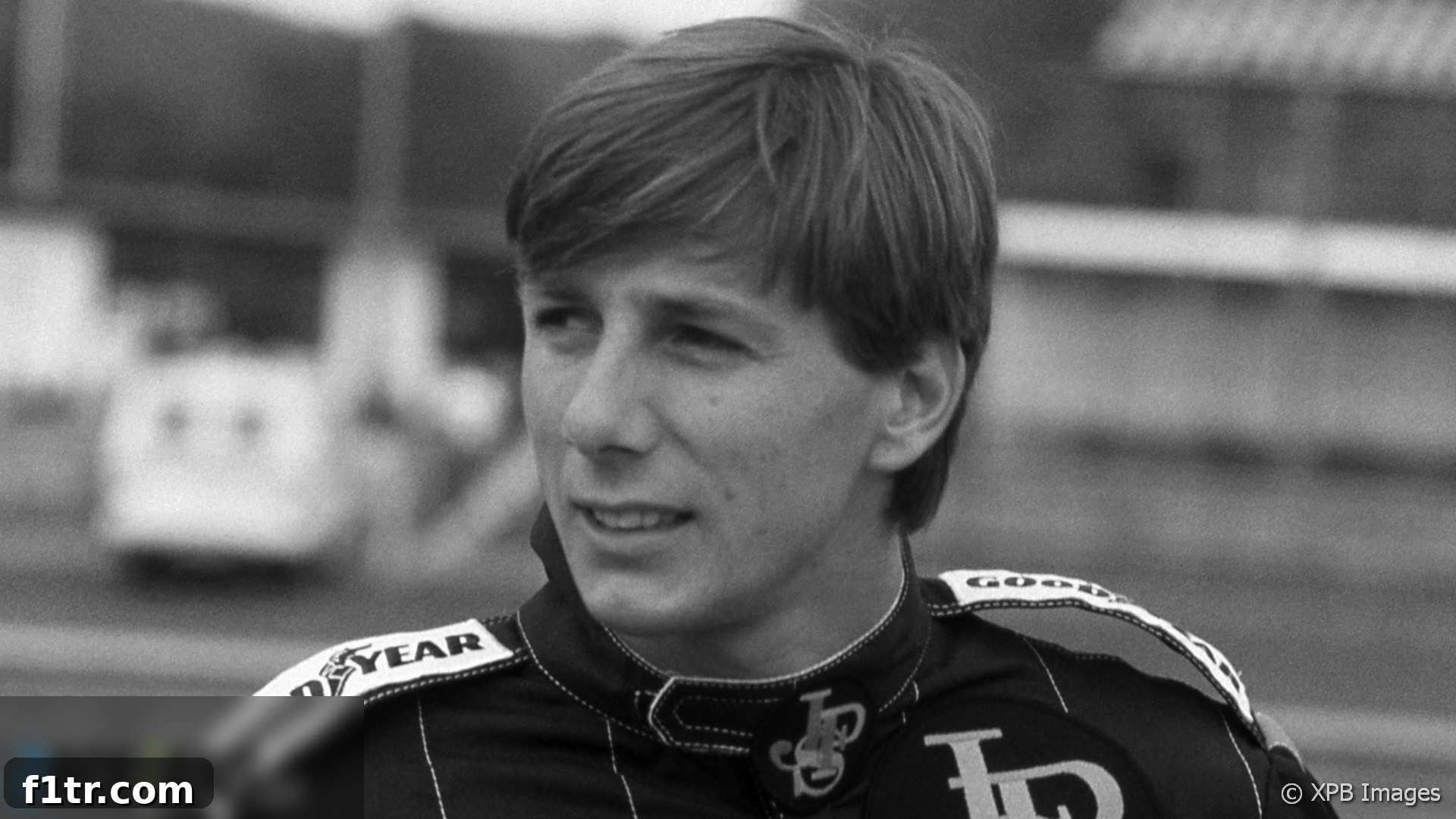
Remembering Johnny Dumfries: The Le Mans Champion Who Dared to Race with Senna
The motorsport world mourned the passing of John Crichton-Stuart, the seventh Marquess of Bute, who left us at the age of 62. To millions of racing enthusiasts, he was universally known as Johnny Dumfries, a name synonymous with speed, remarkable talent, and an unforgettable career that saw him conquer the legendary Le Mans 24 Hours and stand as a Formula 1 teammate to the iconic Ayrton Senna. His journey, marked by both triumph and challenge, etched his name into the annals of racing history as a truly unique figure.
Advert | Become a Supporter & go ad-free
Early Promise: Dominance in Junior Categories
Before his Formula 1 debut, Dumfries had already made a significant impact on the junior racing scene. His ascent was rapid and marked by undeniable skill. In 1984, he clinched the prestigious British Formula 3 championship with Dave Price Racing, a dominant performance that saw him secure multiple victories and showcase his raw talent. This achievement was not a solitary one; he also enjoyed considerable success in the fiercely competitive European Formula 3 series, accumulating a remarkable total of 15 wins across both championships. These early years established Dumfries as a driver with exceptional potential, capable of mastering open-wheel machinery and consistently outperforming his rivals. His ability to adapt and deliver results in demanding racing environments set high expectations for his future career.
The following year, Dumfries moved up to the newly established Formula 3000 series with Onyx, a crucial stepping stone towards Formula 1. The transition, however, proved to be a mixed bag. He demonstrated flashes of his inherent speed, notably qualifying a strong fourth for the season-opener at Silverstone, signaling his ability to compete at the sharp end of the grid. Unfortunately, his race ended prematurely after an incident on the second lap. While he later picked up a point with a sixth-placed finish at Vallelunga, his full season with Onyx was curtailed, preventing him from fully demonstrating his capabilities in the nascent championship.
The Formula 1 Dream: A Season with Lotus and Senna
It was therefore met with widespread surprise and considerable intrigue when, in January 1986, Lotus announced Johnny Dumfries as their chosen replacement for the departing Elio de Angelis. The announcement was particularly notable because it followed a very public saga involving Ayrton Senna, Lotus’s undisputed star driver. Senna, known for his strong influence within the team, had notably vetoed the hiring of Derek Warwick as his new teammate, seeking a driver who he believed would not challenge his supremacy within the garage. Dumfries, despite his talent, was a relative unknown in F1 circles, and his appointment raised eyebrows across the paddock.
Stepping into the high-pressure world of Formula 1, particularly as a teammate to a driver of Senna’s caliber, presented Johnny Dumfries with an incredibly steep learning curve. He faced the immense challenge of adapting to the powerful, turbocharged Lotus-Renault 98T, navigating complex F1 circuits, and managing the intense media scrutiny, all while being measured against one of the sport’s greatest talents. His single season in Formula 1 was a testament to his perseverance under these extraordinary conditions.
The season began with significant challenges, highlighted by his failure to qualify for the Monaco Grand Prix, a notoriously demanding street circuit where even the most experienced drivers could falter. This served as a stark reminder of the unforgiving nature of F1. However, Dumfries demonstrated his resilience and skill later in the season. In the inaugural Hungarian Grand Prix, a physically demanding race on a new and twisty circuit, he wrestled his turbocharged Lotus-Renault home to a commendable fifth place, securing two valuable championship points. This performance showcased his ability to handle pressure and extract results when opportunities arose. He further increased his points tally to three with another solid sixth-placed finish at the season finale in Adelaide, bringing his F1 chapter to a respectable close.
Despite his determined efforts, Dumfries’ stint in Formula 1 proved to be short-lived. For the 1987 season, Lotus secured a lucrative deal to use Honda’s formidable engines, a move that came with a significant caveat: part of the agreement included signing their sponsored driver, Satoru Nakajima. This strategic decision, driven by commercial and technical considerations, unfortunately spelled the end of Johnny Dumfries’ F1 career, closing a unique chapter in his racing journey.
Conquering Le Mans: The Pinnacle of Sportscar Racing
While his Formula 1 career may have been brief, Johnny Dumfries found his true calling and achieved his greatest racing triumph in the world of sportscar racing. After his F1 departure, he made a brief return to F3 at Macau the following year and even tested Benetton’s F1 cars, hinting at a desire to return to the pinnacle of single-seater racing. However, destiny had other plans, and his future lay firmly in the endurance arena.
Dumfries made his debut at the legendary Le Mans 24 Hours with Kouros, a significant step into the world of long-distance racing. His talent quickly caught the eye of the leading teams, and for 1988, he joined the highly competitive Jaguar team, a marque with a rich history at Le Mans and a determined ambition to reclaim victory. This move marked a pivotal moment in his career.
The year began on a strong note, with Dumfries sharing third place in the iconic Jaguar XJR-9 with esteemed teammates Eddie Cheever and John Watson at the gruelling Daytona 24 Hours. This early success underscored his capabilities in top-tier endurance machinery. While subsequent races at circuits like Jarama, Monza, and the Nürburgring brought their share of challenges and crashes, Dumfries saved his most spectacular performance for the series’ ultimate blue riband event: the Le Mans 24 Hours.
Partnered with the experienced Jan Lammers and the quick Andy Wallace, the trio formed a formidable lineup for the 1988 Le Mans 24 Hours. Piloting the powerful Jaguar XJR-9, they faced immense, race-long pressure from Porsche’s defending winners, Hans-Joachim Stuck and Derek Bell, along with the formidable Klaus Ludwig. The race was a relentless battle of speed, strategy, and endurance. Through meticulous driving, impeccable teamwork, and the unwavering reliability of their Jaguar, Dumfries, Lammers, and Wallace emerged victorious, ending Porsche’s dominant streak and securing a momentous win for Jaguar. This triumph at Le Mans stands as the undisputed highlight of Johnny Dumfries’ racing career, cementing his status as an endurance racing legend and fulfilling the aspirations of a team with a storied heritage.
Following his glorious win, Dumfries returned to Le Mans three more times, continuing his endurance racing career. He competed twice with Toyota and once with Courage, demonstrating his enduring commitment to the sport’s greatest endurance challenge. After these further appearances, he eventually decided to call time on his illustrious motorsport career, transitioning away from the high-speed world of racing.
Beyond the Track: The Marquess of Bute
In 1993, Johnny Dumfries stepped into a very different role when he succeeded his father as the seventh Marquess of Bute. This marked a significant shift in his life, as he embraced his aristocratic responsibilities and managed the family estates, including the historic Mount Stuart House on the Isle of Bute. His dual identity – the speed-demon Johnny Dumfries and the dignified Marquess of Bute – made him a truly unique figure, bridging the worlds of high-octane racing and ancient Scottish aristocracy. He continued to be a respected figure, known for his quiet dignity and passion for his heritage, while always retaining the memories of his thrilling career on track.
In March 2021, his family announced with great sadness that John Crichton-Stuart, Johnny Dumfries, had passed away following a short illness. The news resonated deeply within the motorsport community and beyond, as fans remembered a driver who, despite a single F1 season, had achieved one of motorsport’s most coveted victories and embodied a spirit of quiet determination and formidable talent. His legacy as a Le Mans winner and a unique character in racing history will undoubtedly endure for generations to come.
Advert | Become a RaceFans supporter andgo ad-free
F1 history
- When did F1 last have a mid-season break longer than five weeks? 1990
- Did Norris actually win Formula 1’s closest championship fight of all time?
- Hamilton is Ferrari’s first new driver in 44 years to complete season without a podium
- Ferrari are on course to lose an F1 record they’ve held since 2004
- Red Bull in 2010 or Ferrari in 1979? Past title fights illustrate McLaren’s current dilemma
Browse all history articles