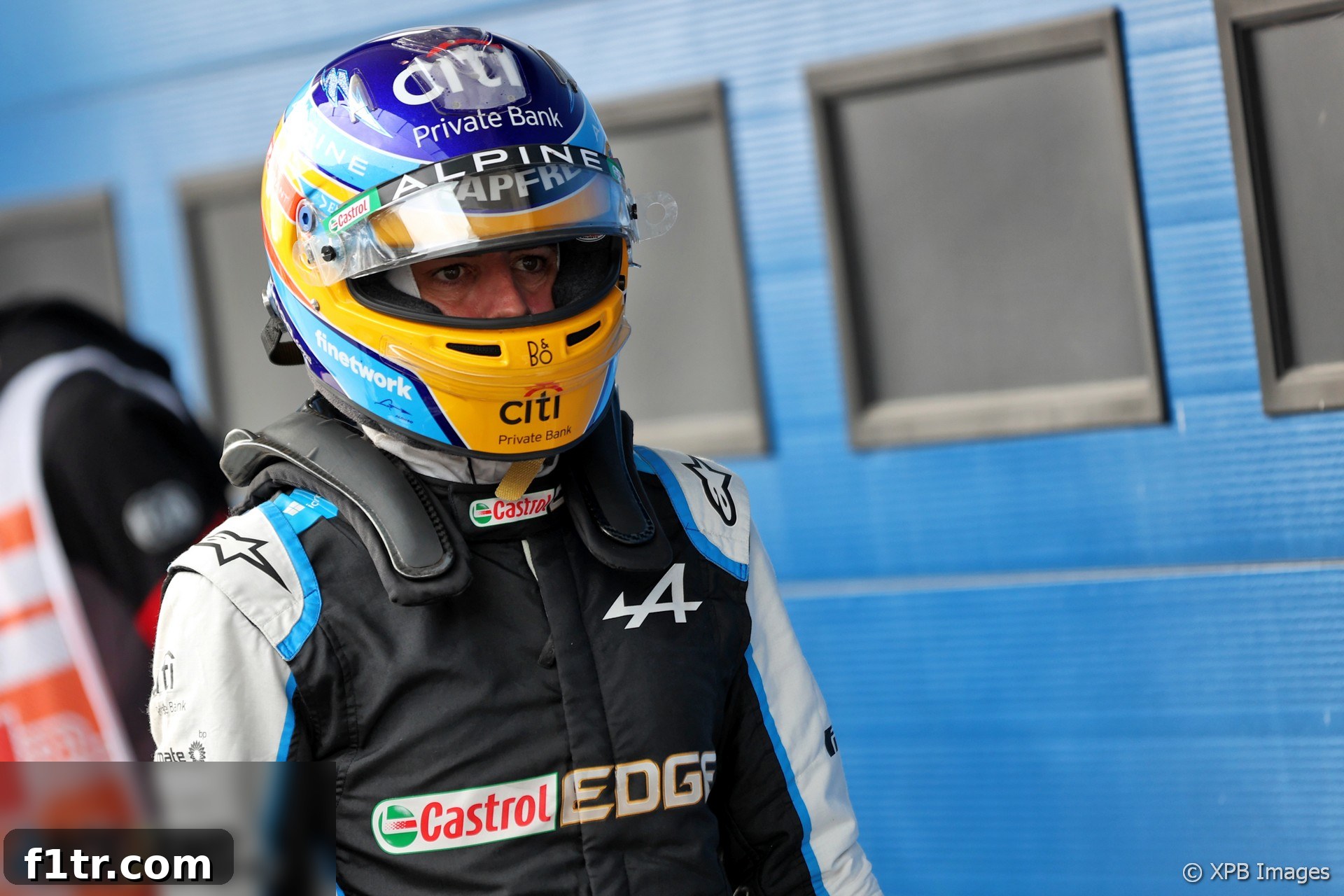
In the high-stakes world of Formula 1, where split-second decisions and precise adherence to regulations dictate outcomes, incidents involving safety flags often ignite fierce debate. Such was the case at the 2021 Turkish Grand Prix when Alpine driver Fernando Alonso found himself under scrutiny for an alleged breach of rules concerning double waved yellow flags during the qualifying session. While the incident initially raised eyebrows, the stewards ultimately opted against penalizing the two-time world champion, a decision that underscored the complex nuances of F1’s safety protocols and their interpretation.
The controversy unfolded at the beginning of Alonso’s first flying lap in Q1. Following a spin by Red Bull Racing’s Max Verstappen ahead of him, double waved yellow flags were deployed in the affected sector of the Istanbul Park circuit. These flags are a critical safety measure, signaling a significant hazard on or near the track and requiring drivers to slow down considerably and be prepared to stop. Despite the clear warning, Alonso proceeded to complete his lap time, an action that appeared to be in direct contradiction to the race director’s explicit instructions for such situations.
Understanding the Double Waved Yellow Flag Protocol
To fully grasp the gravity of the situation and the subsequent stewarding decision, it’s essential to understand the regulations governing double waved yellow flags. These flags represent the highest level of caution for a specific sector, indicating that there is a danger on the track itself or partially obstructing it. The FIA International Sporting Code (ISC), specifically Article 2.5.5.b), mandates that drivers must “reduce speed significantly” when encountering double waved yellow flags. This isn’t merely a suggestion; it’s a non-negotiable directive designed to protect both the drivers and the marshals working on track.
Adding another layer of instruction are the Race Director’s Event Notes, which provide more specific guidelines for each Grand Prix weekend. Note 7.1, referenced by the stewards in this instance, explicitly states that drivers “not set a meaningful lap time” in a double yellow flag situation. This particular clause is crucial, as it goes beyond simply reducing speed and places an onus on drivers to ensure their timed efforts are not compromised by an unsafe situation, thus discouraging any attempt to gain an advantage under caution. The intersection of these two rules – significantly reducing speed and not setting a meaningful lap time – forms the bedrock of how such incidents are judged by the stewards.
The Stewards’ Deliberation: A Matter of Nuance
Following the qualifying session, the F1 stewards launched an investigation into Alonso’s conduct. Their task was to meticulously review telemetry data, onboard camera footage, and driver statements to determine if a breach of regulations had occurred. The core of their argument for absolving Alonso lay in the fact that his subsequent lap was approximately three-and-a-half seconds faster than the lap during which the yellow flags were displayed. This significant difference, they argued, demonstrated that Alonso had indeed “backed off sufficiently” in response to the warning.
The official ruling stated: “It was evident that the driver fulfilled the requirement of reducing speed significantly after the double yellow flags were displayed and therefore complied with the provisions set out in Art. 2.5.5.b) of the FIA International Sporting Code.” While acknowledging that Note 7.1 of the race director’s event notes requires drivers not to set a meaningful lap time, the stewards offered a nuanced justification for their decision. They considered the unique circumstance that the yellow flag situation occurred at the very moment Alonso commenced his first timed lap of the session. Furthermore, they noted that the driver himself was “fully convinced” he did not set a meaningful lap time, especially given the substantial improvement on his next flying lap.
This interpretation suggests that for a “first timed lap,” where a driver is still bringing tyres up to temperature and exploring track limits, a lap completed under yellows might not inherently be considered “meaningful” if a significantly faster time is achieved immediately afterward. The stewards concluded that, based on these factors, Alonso had complied with the relevant regulations and therefore decided to “take no further action.” This decision highlights the subjective element sometimes involved in stewarding, where context and driver intent, alongside objective telemetry, play a role in final judgments.
Comparing Incidents: Alonso vs. Vettel in Bahrain
The decision not to penalize Alonso inevitably drew comparisons to a similar incident earlier in the 2021 season involving Sebastian Vettel at the Bahrain Grand Prix. In that instance, Vettel was given a five-second time penalty and three penalty points on his licence for failing to respect double waved yellow flags. The key difference, as highlighted by the stewards, was that Vettel was deemed to have “continued trying to set a meaningful lap time.”
This distinction is critical. While both drivers encountered double yellow flags and completed a timed lap, the stewards’ analysis of Vettel’s telemetry and subsequent lap times suggested he did not reduce his speed sufficiently to truly abandon a meaningful lap effort. In contrast, Alonso’s 3.5-second delta to his next lap was persuasive evidence that he had significantly eased off. This comparison underscores the precise, almost forensic, level of detail that stewards apply to such incidents, scrutinizing not just the presence of flags but also the driver’s reaction, the context of the lap, and the objective data to ascertain intent and compliance.
Implications and the Quest for Consistency
The stewards’ decision regarding Fernando Alonso in Turkey, while justified by their detailed reasoning, nonetheless sparked considerable discussion within the Formula 1 paddock and among fans. The perceived inconsistency between this ruling and previous penalties, such as Vettel’s, led some drivers and teams to seek further clarification from Race Director Michael Masi. This ongoing dialogue highlights the inherent challenge of applying stringent safety regulations to the dynamic and high-pressure environment of F1 racing.
Ensuring consistency in stewarding is paramount for maintaining fairness and driver confidence in the rules. Each incident, however, presents unique variables, making absolute consistency a difficult, though crucial, goal. The Alonso case serves as a testament to the fact that while rules are clear, their application often requires careful consideration of context, intent, and objective data. It reinforces the notion that reducing speed “significantly” and not setting a “meaningful” lap time are not always black and white, but rather require a nuanced interpretation by those tasked with upholding the sport’s integrity and safety standards.
Conclusion
Fernando Alonso’s brush with a penalty at the Turkish Grand Prix ultimately ended without sanction, thanks to a meticulous review by the FIA stewards. Their decision, rooted in the specific circumstances of his first Q1 lap and the demonstrable speed reduction evidenced by his subsequent performance, showcased the intricate balance between strict adherence to regulations and a pragmatic interpretation of driver conduct under caution. This incident serves as a pertinent reminder of the ever-present scrutiny in Formula 1 and the critical role that safety protocols play in safeguarding the sport’s participants, even as their application can sometimes lead to complex and debated outcomes.
2021 Turkish Grand Prix Related Articles
- Fifth place was possible from back row without slow pit stop – Sainz
- Giovinazzi ignoring position swap order was “not ideal”, admit team
- Bottas becomes 35th Formula 1 driver to reach 10 race wins
- Medical Car driver van der Merwe likely to miss further races due to Covid-19 rules
- Drivers to ask Masi why Alonso and Norris went unpunished for “very clear” incidents
Browse all 2021 Turkish Grand Prix articles