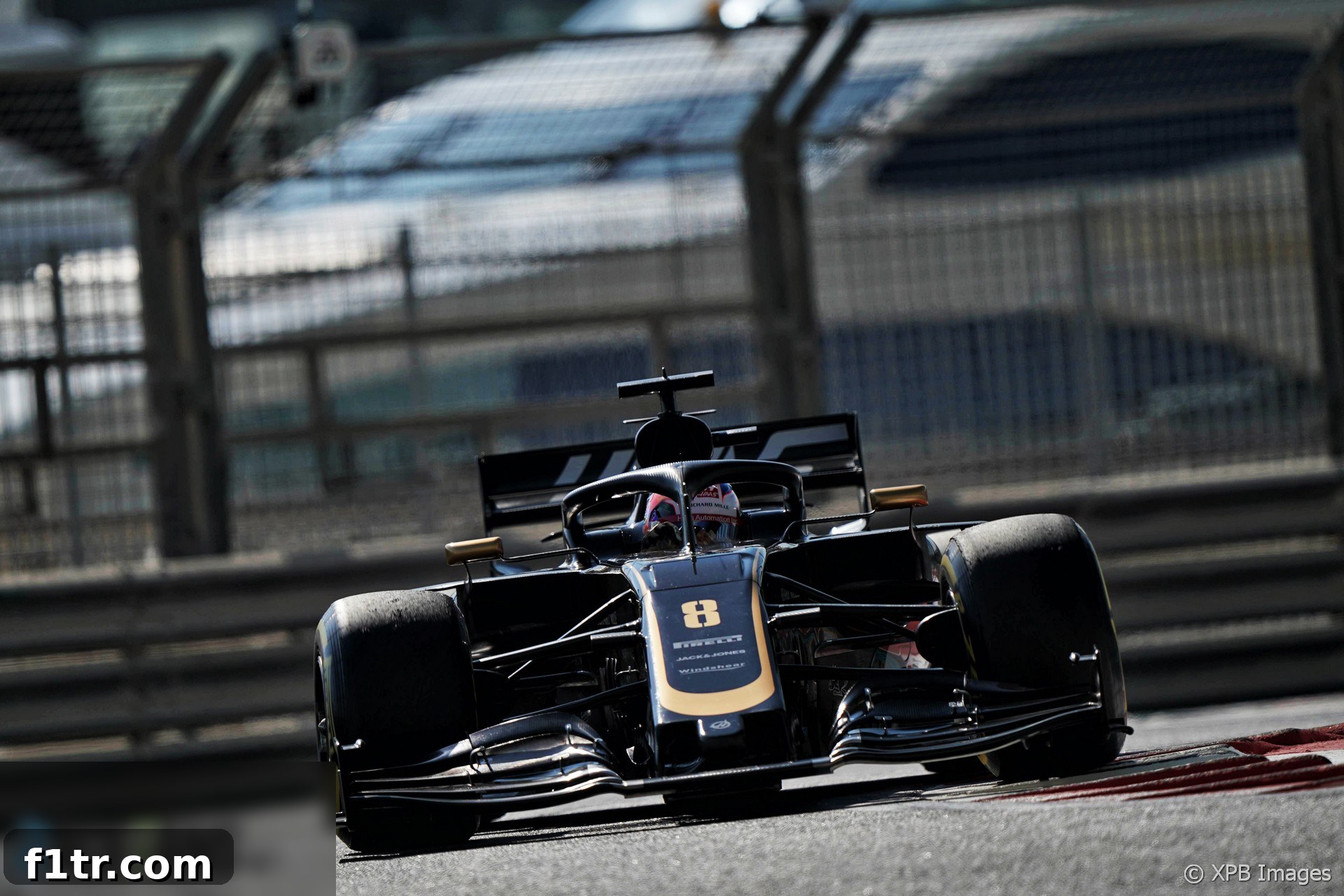
Romain Grosjean’s Abu Dhabi GP Setback: New Floor Destroyed in Bottas Collision
Romain Grosjean’s ambitions for a strong performance at the Abu Dhabi Grand Prix suffered a significant blow when a collision with Mercedes driver Valtteri Bottas during Friday’s practice sessions resulted in the irreparable damage of the only new specification floor available for his Haas F1 car. This unfortunate incident forced the French driver to abandon a promising development package and revert to an older, less optimized car setup for the remainder of the race weekend, highlighting the precarious nature of F1 car development and the high stakes of every track session.
The Haas team had brought a crucial aerodynamic update to the Yas Marina circuit: a new specification floor, an evolution from a design initially tested by his teammate Kevin Magnussen. Grosjean elaborated on the significance of this component: “It’s basically the latest update from Japan that I never ran. Kevin ran [it] in the US, was not happy with it, we’ve made some tweaks to it and brought it for free practice one to get my feedback because we want to learn from the future.” The floor, a vital element in generating downforce and managing airflow beneath the car, represents a significant investment in research and development, and its performance can dictate a car’s overall competitiveness and stability.
Grosjean had spent the initial practice sessions meticulously setting up his car around this new package. His initial impressions were highly positive, indicating a potential step forward for the team in a challenging 2019 season. “Then in free practice one I thought ‘you know what, I’m quite happy with that floor, that new update, so let’s carry on with it’. So we did all second practice, we set up the car with the new package,” he explained. This meticulous preparation in Free Practice One (FP1) and Free Practice Two (FP2) is critical for fine-tuning the car’s balance, aerodynamic configuration, and tire management, all of which are intrinsically linked to the floor’s intricate design and efficiency. The goal was to gather comprehensive data, refine the setup, and build confidence for the pivotal qualifying session and the main race.
The Collision and Its Immediate Aftermath
The promising momentum, however, was abruptly halted late in the second free practice session. As the session neared its conclusion, Bottas, exiting the pits, unexpectedly swerved into Grosjean’s path while on a cool-down lap, leading to an unavoidable contact. The impact, though perhaps not visually dramatic, was catastrophic for Grosjean’s car, specifically targeting the crucial new floor. “We only had one package,” Grosjean stated, emphasizing the devastating scarcity of the updated component. “So tomorrow we change the car. We go back to Melbourne-spec.” The “Melbourne-spec” refers to the aerodynamic configuration used at the very first race of the season, a stark regression in a sport where continuous development and incremental gains are paramount.
The implications of this forced change were immediate and profound. All the valuable data gathered, all the setup work performed throughout Friday, became largely irrelevant for the subsequent sessions. The Haas engineering team had meticulously optimized the car’s suspension, wing angles, and differential settings to work in harmony with the new, advanced floor. Reverting to an older specification means essentially restarting much of that work, but under severe time constraints and with compromised practice conditions. This scenario is a nightmare for any F1 engineer and driver, effectively wiping out a full day’s progress and forcing a frantic scramble to adapt and recalibrate.
Wasted Efforts and Lost Opportunities for Haas
Grosjean’s frustration was palpable, especially given the positive performance shown with the new components. “It’s not great because we’ve been working all Friday and we’ve done a really good job. Sixth in first practice, seventh in second practice, best of the rest in both sessions,” he recounted, highlighting the competitive edge the new floor seemed to offer. These strong midfield positions suggested that Haas might have found a crucial performance window. “Yes, the race pace can be improved but we tried different things and I think we know where we could have gone better.” The incident didn’t just cost them a physical floor; it cost them invaluable track time to optimize a package that was genuinely showing potential to lead the midfield charge and gather critical data for future development.
The return to an older specification also carries inherent performance penalties that could severely impact the team’s weekend. Modern Formula 1 cars are incredibly sensitive to aerodynamic changes, and a floor from the beginning of the season is almost certainly less efficient and generates less downforce compared to a late-season update, especially one tailored with recent feedback. This could translate directly into slower lap times, increased tire degradation due to less efficient downforce, and a less stable car, particularly through high-speed corners where aero performance is paramount. The team will now have to contend with known limitations of the older spec, attempting to mitigate them with adjustments that may not fully compensate for the lost performance, putting them at a distinct disadvantage against their direct rivals.
“So we worked all afternoon, all day with one car and now we need to change to go to another package,” Grosjean lamented. While his teammate Kevin Magnussen had previously run a version of the new floor, and the team could draw some insights from that data, Grosjean emphasized the personal connection and feel a driver develops with their specific setup. “Yes, Kevin has run it and we’re going to learn from him. But obviously in terms of feeling and so on that one was actually alright. For once it was going smooth.” This highlights the subtle differences in driver preferences, driving styles, and setup nuances that are critical at the elite level of motorsport, making a direct transfer of Magnussen’s data less than ideal for Grosjean’s optimal performance.
Yas Marina’s Unique Challenges Amplify the Setback
The situation for Grosjean was further complicated by the unique characteristics of the Yas Marina Circuit and its schedule. Final practice (FP3) traditionally takes place in the heat of the afternoon, under significantly different ambient and track temperatures compared to the cooler evening conditions of qualifying and the race. This makes it exceedingly difficult to gather truly representative data during FP3 for a new, or in this case, a ‘reverted’ setup. The car’s balance, tire behavior, and aerodynamic efficiency change drastically with temperature fluctuations, making direct comparisons and accurate setup choices incredibly challenging.
“We won’t get anything in in the afternoon because it won’t be the same,” Grosjean acknowledged, expressing the grim reality of the situation. An optimal setup for a hot FP3 might be completely unsuited for a cooler qualifying session or the main race, leaving the team with severely limited relevant information to make crucial adjustments to the older-spec package. This compounds the challenge for Grosjean and Haas, as they effectively lose their only real opportunity to fine-tune the “Melbourne-spec” package under conditions closer to those of the decisive sessions, potentially forcing them into a guessing game for the critical moments of the weekend.
Bottas Takes Responsibility and The Road Ahead
In the aftermath of the collision, Valtteri Bottas swiftly accepted full responsibility for the incident, a gesture Grosjean clearly appreciated. The stewards, after reviewing the footage and hearing from both drivers, issued Bottas a reprimand, which is a formal warning but carries no grid penalty for the subsequent race, as the incident occurred during a practice session. “They apologised and that’s the most important,” Grosjean stated, indicating a degree of understanding and sportsmanship despite the significant disruption to his weekend, acknowledging that mistakes can happen even among the world’s best drivers.
Bottas even offered a light-hearted gesture in the form of offering one of his own Mercedes floors, to which Grosjean quipped, “He even said I could have one of his floors, but I’m not sure that’s going to fit on my car! So we’re going to stick with what we know.” While the exchange reflects the underlying camaraderie among competitors, it humorously underscores the profound technical differences between teams and their highly specific car designs, making such a swap utterly impossible. Haas now faces the unenviable task of making the most of a compromised situation, relying heavily on their existing experience with the older package and hoping to extract every ounce of performance possible from a suboptimal starting point.
This incident serves as a stark reminder of the razor-thin margins and unpredictable nature of Formula 1. A single misjudgment on track, even in a practice session, can have a cascading effect, undermining weeks or even months of meticulous development work. For Haas, a team often battling fiercely in the competitive midfield, losing the opportunity to validate a promising new component is a significant blow, potentially impacting their final constructors’ standings and their momentum heading into the crucial off-season. The team will now focus intensely on damage limitation, aiming to optimize the older spec car as best they can, and Grosjean will need to draw on all his extensive experience and mental resilience to adapt quickly and deliver a respectable performance under these unexpectedly challenging circumstances.
The journey from promising pace to a forced retreat to an earlier specification illustrates the intense pressure and unpredictable nature of Formula 1. While Bottas’s apology offered some closure on the personal front, the technical ramifications for Romain Grosjean and the Haas F1 team will undoubtedly shape the remainder of their Abu Dhabi Grand Prix weekend, transforming what started as an exciting exploration of new performance into a testament to resilience and adaptation in the face of adversity.
2019 F1 Season Insights
Exploring more stories and key moments from the 2019 Formula 1 season:
- Crying in the Melbourne car park at 2019 grand prix was my career low – Ocon
- McLaren Racing reports reduced £71 million loss in 2019
- Kvyat: Hockenheim podium last year was “my biggest achievement” so far
- How the FIA’s new encrypted fuel flow meter targets Ferrari’s suspected ‘aliasing’ trick
- “He smashed my office door”: 23 must-see moments from ‘Drive to Survive’ season two
Browse all 2019 F1 season articles