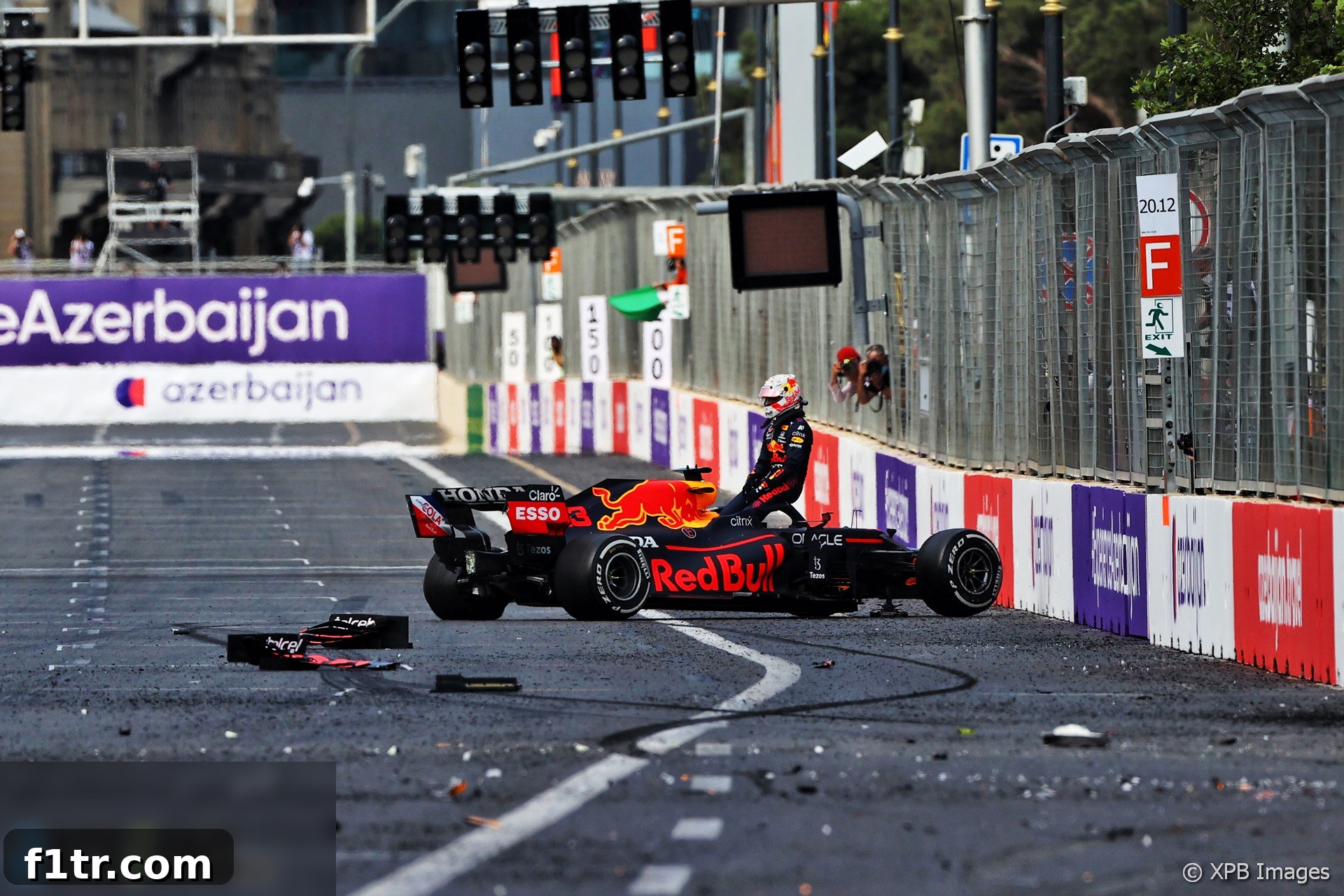
The 2021 Azerbaijan Grand Prix, a race that promised to solidify Max Verstappen’s championship lead, instead delivered a dramatic and unexpected twist, leaving the motorsport world in shock. Max Verstappen, dominant throughout the event, was cruising towards a seemingly assured victory when, without warning, his left-rear tyre suffered a catastrophic failure at high speed, sending his Red Bull RB16B violently into the wall on the main straight. This sudden retirement not only cost Verstappen 25 crucial points but also immediately triggered an intensive investigation into the underlying causes of such a profound mechanical failure in Formula 1.
Advert | Become a Supporter & go ad-free
Red Bull Racing’s team principal, Christian Horner, articulated the team’s profound surprise and unwavering confidence in their pre-race analysis regarding tyre durability. According to Horner, Red Bull had absolutely no indication that Verstappen’s hard, C3 compound tyres were under any threat of failure. Based on meticulous data collection from practice sessions and the preceding laps of the race, the team’s projections suggested that the tyres “could have lasted easy” until the very end of the Grand Prix. This assessment was rooted in comprehensive telemetry analysis and visual inspections performed throughout the weekend.
Horner further elaborated on the team’s internal findings, stating, “From the durability that we could see and from the way that Max was driving the car it should have been more than comfortable.” He emphasized that their data showed no signs of the tyre being subjected to excessive stress or abuse. “From what we could see in the race, you could see all the wear pins were there. The tyre wasn’t being abused. The temperatures were all good.” This detailed account highlighted Red Bull’s strong belief that all operational parameters were within Pirelli’s stringent guidelines, reinforcing the unexpected nature of the incident. The team’s thorough monitoring of tyre wear, pressures, and temperatures, coupled with Verstappen’s famously smooth yet aggressive driving style, provided what they believed was a robust platform for tyre management.
The moments leading up to the dramatic crash were particularly unsettling, underscoring the suddenness of the failure. In the two laps immediately preceding the incident, Max Verstappen had demonstrated exceptional pace and control, first setting the fastest lap of the race and then following it up with another lap within a mere hundredth of a second of his previous best. This indicated peak performance from both car and driver, with no evident degradation or struggle. His race engineer had just conducted a routine check-in, confirming that everything was under control and Verstappen was comfortably managing his dominant lead. Then, as Horner recounted, “Then boom.” The left-rear tyre failed as Verstappen initiated his 46th lap, catapulting the Red Bull into the barriers at frightening speed. The abruptness of the deflation, occurring without any prior warning or anomalies detected in the extensive real-time telemetry, left the entire team and the wider Formula 1 community stunned and perplexed. It was, as Horner succinctly put it, “totally unexpected.”
Despite the high-speed impact and the subsequent crash, a crucial piece of evidence remained largely intact: the failed left-rear wheel and tyre. Christian Horner highlighted the immense value of this, expressing genuine optimism that the relatively preserved condition of the tyre would prove invaluable to Pirelli, Formula 1’s sole tyre supplier, in their ongoing investigation. This was particularly significant given a strikingly similar, though less dramatic, tyre failure experienced by Lance Stroll in his Aston Martin earlier in the very same race. The existence of an intact component from such a critical failure provides forensic investigators with tangible evidence, allowing for meticulous analysis that moves beyond theoretical deductions. This physical evidence is paramount for a conclusive understanding of the incident.
“Of course we have to understand what caused the issue,” Horner reiterated, underscoring the critical importance of a thorough and transparent investigation. He emphasized the visual evidence available, stating, “Max’s tyres visually were looking in great shape.” The fact that the tyre had not completely disintegrated was a silver lining in an otherwise devastating incident. “The good thing is the tyre has remained largely intact so at least we have the evidence on. So if it is a bit of debris that’s caused the puncture or something else, at least we have all the evidence to be able to piece together the cause.” This intact evidence allows Pirelli to conduct a detailed examination, looking for potential culprits ranging from track debris puncturing the tyre, to inherent structural weaknesses, manufacturing defects, or even complex aerodynamic interactions causing specific stress points. The collaboration between Red Bull, Aston Martin, and Pirelli in this forensic analysis was vital for reaching an accurate conclusion and preventing future recurrences.
The incident placed significant pressure on Pirelli, the exclusive tyre supplier, to deliver a comprehensive explanation. As the sole provider, Pirelli shoulders the immense responsibility of developing tyres that not only offer peak performance in the demanding world of Formula 1 but also guarantee unwavering safety. Tyre failures, especially at the extraordinary speeds achieved in F1, represent a severe safety risk to drivers and have the potential to drastically alter championship narratives. The Baku failures, particularly in quick succession, reignited broader discussions about F1 tyre safety protocols and the challenges inherent in balancing performance, durability, and safety within strict regulatory frameworks. Pirelli routinely provides teams with stringent operating parameters, including minimum tyre pressures and maximum camber settings, to ensure safe operation. The investigation would ultimately aim to determine whether external factors, such as unusually aggressive debris, inherent tyre issues, or any unintentional deviations from these operational guidelines, contributed to the failures.
Advert | Become a RaceFans supporter andgo ad-free
The Azerbaijan Grand Prix tyre failure had immediate and significant ramifications for the fiercely contested 2021 Formula 1 championship battle. Max Verstappen’s retirement not only robbed Red Bull of a likely one-two finish, which would have substantially extended their lead over Mercedes, but also introduced an element of uncertainty into the season’s tyre management strategies for all teams. Beyond the immediate points loss, the incident prompted a renewed focus on tyre integrity and reinforced the critical need for seamless collaboration between Pirelli, the FIA, and all competing teams. Subsequent investigations, as detailed in later reports, ultimately concluded that neither Red Bull nor Aston Martin were to blame for the failures, having adhered strictly to Pirelli’s prescribed operating conditions. This finding underscored the complexity of the issue, shifting the focus towards potential external factors or even characteristics inherent to the tyres themselves. Such incidents serve as crucial learning opportunities for all stakeholders within Formula 1, driving continuous advancements in tyre design, manufacturing processes, and operational protocols to enhance safety and maintain the integrity of the sport.
In conclusion, the shocking and unexpected tyre failure that denied Max Verstappen a dominant victory at the 2021 Azerbaijan Grand Prix served as a stark and powerful reminder of the razor-thin margins and inherent risks that define Formula 1. Red Bull’s steadfast confidence in their meticulous tyre management, contrasted sharply with the sudden and violent deflation, highlighted the lingering mystery surrounding the incident. The subsequent, thorough investigation spearheaded by Pirelli, greatly aided by the fortuitous preservation of the failed component, was paramount in seeking definitive answers and implementing measures to prevent any future occurrences. This episode profoundly emphasized the critical and ongoing dialogue between the tyre supplier, the sport’s governing body, and the competing teams, all working in unison to uphold the highest standards of safety, performance, and fair competition. Ultimately, a complete and transparent understanding of such complex failures is not merely about assigning blame but is fundamental for the integrity of Formula 1 and, most importantly, for safeguarding the well-being of its courageous drivers.
2021 Azerbaijan Grand Prix Related Articles
- Aston Martin also confirms it followed Pirelli’s tyre restrictions before crash
- Pirelli confirm teams not to blame for Baku tyre failures following investigation
- “Tyres should not explode like that” says Villeneuve as Pirelli prepares to reveal findings
- Why Alonso is able to enjoy F1 more now than when he left
- Penalty for Safety Car error was just one of Latifi’s frustrations in Baku
Browse all 2021 Azerbaijan Grand Prix articles