Welcome to our comprehensive motorsport round-up, where we dive deep into the latest news and insights from the thrilling world of Formula 1, Formula E, and talent development programs. From McLaren’s remarkable resurgence on the F1 grid, spearheaded by the promising Lando Norris, to the increasingly fierce competition in Formula E as analyzed by its only two-time champion, Jean-Eric Vergne, and the groundbreaking initiatives within the Alpine Academy to foster new talent, this article covers the pivotal developments shaping the sport. Join us as we explore the stories behind the headlines, offering an in-depth look at the dedication, innovation, and passion that drive motorsport forward. We’ll also take a glimpse at engaging social media highlights, crucial industry links, and a thought-provoking comment from the racing community, ensuring you stay fully connected to every facet of the racing world.
In brief: Key Motorsport Developments Unpacked
McLaren’s Astounding Turnaround: Norris Reflects on Imola Podium and Car Confidence
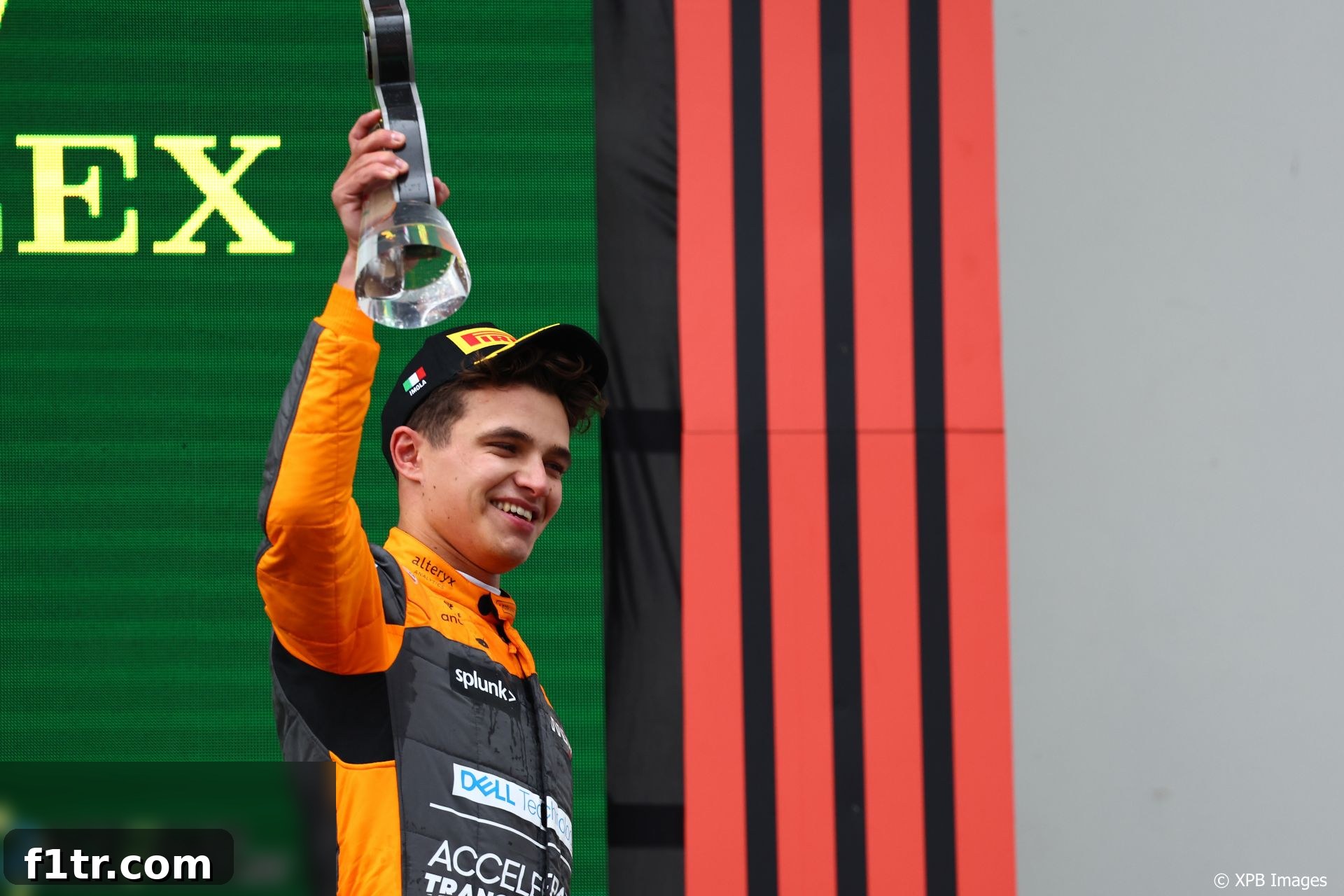
McLaren driver Lando Norris recently shared profound insights into his exceptional performance at the Emilia-Romagna Grand Prix, where he secured a coveted third-place podium finish. His comments shed light on the crucial role of car development and driver confidence, particularly in challenging wet conditions. Norris openly admitted that achieving such a result would have been impossible with the car he drove at the season-opening Bahrain Grand Prix, highlighting the significant progress McLaren has made in a relatively short period.
“When it’s raining and when it’s wet, especially, you need a car which gives you confidence,” Norris explained, underscoring the psychological and technical synergy required for success in adverse weather. “If I had the car which I had in Bahrain, I probably wouldn’t have done what I did at Imola.” This statement serves as a powerful testament to the relentless efforts behind the scenes at McLaren, transforming a struggling contender into a formidable force. The team’s initial struggles in Bahrain, where they failed to score points, painted a grim picture for their season prospects. However, their steady and strategic improvements have since been “amazing,” as Norris describes, showcasing a team that learns, adapts, and innovates at an impressive pace.
Norris further elaborated on the tangible benefits of these technical enhancements: “We made some small improvements, and it just helps me be able to find the limit easier, push the car and push it to a higher limit, and have the confidence in wet conditions in qualifying to put it P3. You do need a good car in order to do that.” His words emphasize that while driver skill is paramount, the underlying performance and predictability of the machinery are indispensable, especially when pushing the boundaries in treacherous conditions. The ability to “find the limit easier” translates directly into lap time gains and the crucial confidence needed to extract maximum performance when it matters most. For McLaren, this journey from Bahrain to Imola signifies more than just a few points; it represents a fundamental shift in their competitive outlook, signaling their intent to climb further up the F1 grid. “I have to thank the team just from where we were in Bahrain to now; it’s amazing to see the improvements we’ve made,” Norris concluded, expressing gratitude and optimism. “We have so far to go still, but we’ve made some good stuff, so we just need to continue trying to take more steps.” This forward-looking perspective indicates a sustained commitment to development, promising an exciting trajectory for the team and its star driver.
Formula E’s Evolution: Jean-Eric Vergne on Unprecedented Competition
Formula E, the world’s premier all-electric racing series, has reached an unprecedented level of competition, according to its only two-time champion, Jean-Eric Vergne. As the series progresses into its fourth year with the second-generation (Gen2) cars, the playing field has become more level than ever, demanding an obsessive focus on minute details from every team and driver. Vergne, who arrived at the recent Monaco E-Prix leading the championship and secured a valuable third-placed podium, offered a compelling analysis of this heightened competitive landscape.
“The level of competition is extremely high this year,” Vergne stated, reflecting on the intense challenges faced in the current season. He elaborated on the reasons behind this escalating rivalry: “It is now the fourth year of this car; therefore, all the drivers understand it very well, all the teams understand it very well, and to make a difference, you need to look for the details that can make that.” The longevity of the Gen2 platform has allowed teams and drivers to thoroughly explore its capabilities, pushing the boundaries of what was once thought possible. This deep understanding means that broad performance gaps have largely diminished, forcing contenders to seek marginal gains in every aspect of their operation.
The pursuit of perfection now extends far beyond the racetrack itself. “Now turning up in the races and trying to do a good job is not good enough,” Vergne emphasized, highlighting the exhaustive preparation required. “Of course, there’s huge work that’s done at the factory and also the simulator, to try and understand what we could have done better in the last race and try and improve those tiny details that we will find.” This dedication to factory-based analysis and simulator work has become indispensable. Teams meticulously dissect data from previous races, identifying even the smallest areas for improvement, from energy management strategies to software optimizations and setup adjustments. This iterative process of learning and refinement is what separates the front-runners from the rest in a series where the cars are fundamentally designed to be closely matched. Formula E’s commitment to technological parity, combined with the maturation of its Gen2 platform, has forged an environment where precision, strategy, and the ability to extract every ounce of performance from subtle details define championship success. Vergne’s insights underscore the relentless pursuit of excellence that characterizes modern electric motorsport.
Alice Powell Joins Alpine Academy: Empowering Future Motorsport Talent
In a significant move poised to bolster diversity and talent development within motorsport, W Series driver Alice Powell has officially joined the prestigious Alpine Academy. Her new role as Talent Identification and Development Mentor will see her at the forefront of identifying promising young drivers and providing crucial coaching and mentorship to those enrolled in the program. This appointment marks a pivotal step in Alpine’s commitment to nurturing the next generation of racing stars, with a particular focus on empowering women in a traditionally male-dominated sport.
Powell brings a wealth of experience and a unique perspective to the Alpine Academy, having herself navigated the challenging pathways of competitive motorsport. She has already been an instrumental figure within the Academy, serving as a mentor to Alpine Academy associate driver Abbi Pulling for several years. This pre-existing relationship and her proven ability to guide and inspire make her an ideal fit for this expanded role. Her involvement is expected to bring a fresh dynamic to the Academy’s programs, leveraging her firsthand knowledge of driver development and the specific hurdles faced by aspiring racers.
Reflecting on her new position, Powell articulated the growing opportunities for women in motorsport while also acknowledging the persistent need for support and guidance. “More and more opportunities for women within motorsport are emerging now, but budding drivers often lack guidance and experience in the early days of their career,” she observed. This gap in early-career support is precisely what Powell aims to address, providing a structured framework for growth and development. The Alpine Academy itself is recognized as an invaluable platform, offering a clear path for aspiring drivers. “The Alpine Academy is an extremely useful stepping stone for all drivers. It provides a sense of credibility and has a defined place on the motorsport ladder,” Powell added, emphasizing the program’s strategic importance.
Mentoring, Powell believes, is key to unlocking potential and fostering resilience. “Mentoring is very important. We need to change the mindset of young women that these opportunities do exist, but to also give them the resilience to reach out and grab these opportunities with both hands.” Her mission extends beyond simply identifying talent; it encompasses instilling the belief, determination, and practical skills necessary for young women to seize the opportunities available to them. By providing a strong mentorship figure like Powell, the Alpine Academy is not only nurturing skilled drivers but also cultivating confident and resilient individuals ready to make their mark on the global motorsport stage, contributing significantly to a more inclusive and diverse future for the sport.
Social Media Highlights: The Pulse of Motorsport Fans
Catch up on some of the most notable discussions and visual updates from across Twitter, Instagram and other platforms, giving a glimpse into the vibrant global motorsport community:
New F1 22 screengrabs reveal how the Miami International Autodrome looks in the game. #F1 #MiamiGP pic.twitter.com/7GZOcG2ZIC
— RaceFans (@racefansdotnet) May 3, 2022
Here’s a “fun” fact about the superstitious among you. In Monaco, Sam Bird…
– missed the duels by 0.013s
– dropped to P13 due to a penalty
– retired after 13 minutesBetter luck next time! 🤞🍀 #ABBFormulaE
— Tobi Bluhm (@TobiTweetings) May 3, 2022
Throwback to 2017 📅
Leclerc finishes his first #F1 session over three tenths quicker than team-mate Wehrlein 🔥 pic.twitter.com/lnC7oJzb8y
— Sky Sports F1 (@SkySportsF1) May 3, 2022
https://www.instagram.com/p/CdBvtXuPJ6m/
- For an even broader perspective on F1 social engagement, find more official F1 accounts to follow in the F1 Twitter Directory, an essential resource for fans.
Essential Motorsport Links: Deepening Your F1 and Racing Knowledge
Explore a curated selection of intriguing articles and reports from across the motorsport world, offering deeper insights into key stories and developments:
Column: Miami Ready to Showcase F1’s Glitz and Glamour (Miami Herald)
As Formula 1 prepared for its highly anticipated debut in Miami, Tom Garfinkel, the visionary behind the event, shared his excitement for the spectacle. He highlighted the meticulous planning that went into creating an unparalleled fan experience, emphasizing the blend of high-end hospitality, luxury suites, and diverse entertainment options. Garfinkel detailed how visitors would be able to immerse themselves in the “glitz and glamour” of F1 from various vantage points, whether enjoying Harry’s pizza on the North Campus, taking a gondola ride to the track, or experiencing the vibrant atmosphere around the yachts and DJ performances. This comprehensive approach aimed to ensure the Miami Grand Prix was not just a race, but a full-fledged festival of speed and luxury, setting a new benchmark for F1 host cities.
Webber Insists Most of Hamilton’s Struggles Are Through ‘No Fault of His Own’ (Daily Mail)
Former F1 driver Mark Webber offered a staunch defense of Lewis Hamilton amidst the challenges faced by the Mercedes team. Webber argued that much of Hamilton’s perceived struggles were not due to a decline in driver performance but rather attributable to external factors and team circumstances. He reminded critics of Hamilton’s brilliant drive to third place in Bahrain, and pointed to unfortunate safety car timings and strategic elements in Saudi Arabia that impacted his results. Webber’s comments aimed to temper the quick judgments often made in the highly scrutinized world of Formula 1, emphasizing that even the most accomplished drivers are subject to the inherent unpredictability and team dynamics of the sport.
Button: ‘I Don’t Miss Formula One’ (The Gentleman’s Journal)
In an exclusive interview, former F1 World Champion Jenson Button revealed a surprising sentiment: he doesn’t miss Formula 1. While acknowledging F1 as the “pinnacle of motorsport” with the world’s best drivers and manufacturers, Button expressed reservations about the sport’s potential future direction, particularly regarding electric powertrains. He voiced concerns that if F1 cars were to become electric tomorrow, they would inevitably become “very heavy,” a characteristic fundamentally at odds with the high-performance, agile nature of Formula 1 racing. His perspective highlights a crucial debate within motorsport about balancing technological innovation with the core tenets of thrilling, lightweight competition, suggesting a preference for traditional combustion engines in the highest echelon of racing.
Mansell’s Ferrari 640 Heading to RM Sotheby’s Monaco Auction (Dupont Registry)
A rare piece of Formula 1 history was set to go under the hammer at RM Sotheby’s Monaco Auction: Nigel Mansell’s iconic Ferrari 640. This event was particularly noteworthy as it was believed to be the first time a Works driver had publicly offered their own Grand Prix Ferrari at auction. The Ferrari 640, a V-12 F1 car, boasts outstanding provenance and a race-winning history, making it a highly coveted item for collectors. Such a vehicle, intimately linked with a legendary driver like Mansell and his memorable “Red 5” era, represents not just a machine but a tangible piece of motorsport heritage, destined to be the centerpiece of any serious collection.
Williams Racing in Grove Supports Deaf F1 Fans in New Campaign (Oxford Mail)
Williams Racing, based in Grove, demonstrated its commitment to inclusivity by actively supporting a new campaign aimed at assisting deaf F1 fans. This initiative followed an assessment by an organization that highlighted areas for improvement within Williams Racing regarding accessibility for the deaf community. Over the past year, significant strides have been made, including providing deaf awareness training for staff members. Ten employees from various departments have embarked on a comprehensive 30-week British Sign Language (BSL) course, fostering a more inclusive environment. Furthermore, the team hosted its first deaf-friendly tour for F1 enthusiasts, installed portable hearing loops in meeting rooms and the museum, and is developing BSL content for the Williams Racing website, showcasing a dedicated effort to make motorsport more accessible to all.
We always endeavour to credit original sources. If you have a tip for a link relating to single-seater motorsport to feature in the next RaceFans round-up, please send it in via the contact form. Your contributions help keep our community informed and connected.
Comment of the Day: The Debate Over Modern F1 Track Design
Today’s featured comment sparks a crucial discussion among motorsport enthusiasts, touching upon the perceived homogenization of modern Formula 1 circuits. Drawing attention to the evolution of the Miami track design, StefMeister articulates a growing sentiment that regardless of where F1 adds new tracks or on what streets, a discernible template seems to guide their creation, leading to a sense of familiarity rather than unique character. This raises important questions about the balance between safety, spectacle, and the inherent identity of a racing venue.
My biggest gripe with most of the more modern circuits, Especially the more recent temporary one’s is how they all follow the same template.
They all have to have really long straights with a tight corner at the end, The corners at the end of straights have to be really open on the entry, They all have to have a tight fiddly ‘stadium’ section, They all have to have a really long corner like Sochi turn three or a long multi-apex Istanbul turn eight replica and then they all have to have a fast sequence sort of replicating Maggetts/Beckets/Chapel.
I just struggle to get all that excited about these new additions because of this. Each circuit is clearly different in layout but when they are all following the same template they still just end up feeling too similar which just makes it tricky to get all that interested in them.
@Stefmeister
StefMeister’s observation resonates with many who yearn for the distinct challenges and iconic features that defined classic circuits. The complaint highlights several recurring design elements: excessively long straights leading into acute braking zones, often with wide, open entries designed to promote overtaking; convoluted “stadium” sections that prioritize spectator views over dynamic driving; and the incorporation of “replica” corners mimicking famous sections from other tracks, such as the multi-apex sweeps of Istanbul Turn 8 or the high-speed sequences akin to Silverstone’s Maggotts/Becketts/Chapel complex. While these elements are often introduced with noble intentions—to enhance racing, ensure safety, and create memorable moments—their widespread application can inadvertently dilute the unique character of each venue.
The core of the issue, as StefMeister points out, is that while “each circuit is clearly different in layout,” the underlying design philosophy leads to a homologous driving experience. This can make it difficult for fans and even drivers to develop a strong connection with new tracks, as they lack the idiosyncratic features that give older circuits their legendary status. The debate underscores a tension in modern motorsport: the drive for standardized safety and consistent racing excitement versus the desire for circuits that possess a truly individual soul and offer a distinct challenge. As Formula 1 continues to expand its global footprint, finding this delicate balance will be crucial for maintaining fan engagement and preserving the diverse spirit of grand prix racing.
Happy Birthday! Celebrating Motorsport Personalities
We extend our warmest birthday wishes to several members of the motorsport community and dedicated fans today: Happy birthday to Jack Sargeant, Martin Stanley, Three4Three, Skodarap, Vickyy, and F1_Barbie! May your day be filled with joy and high-octane celebration.
On This Day in Motorsport History: Celebrating Milestones
Today marks an important date in motorsport history, commemorating significant events and the birth of racing legends:
- Born today in 1946: John Watson, an illustrious figure in Formula 1 who secured five Grand Prix victories throughout his career. Notably, Watson took the 1982 F1 title fight down to the final race, showcasing his immense talent and tenacity. He also holds a unique record for winning an F1 race from the lowest starting position, triumphing from 22nd on the grid – a feat that remains an incredible testament to his skill and strategic prowess.