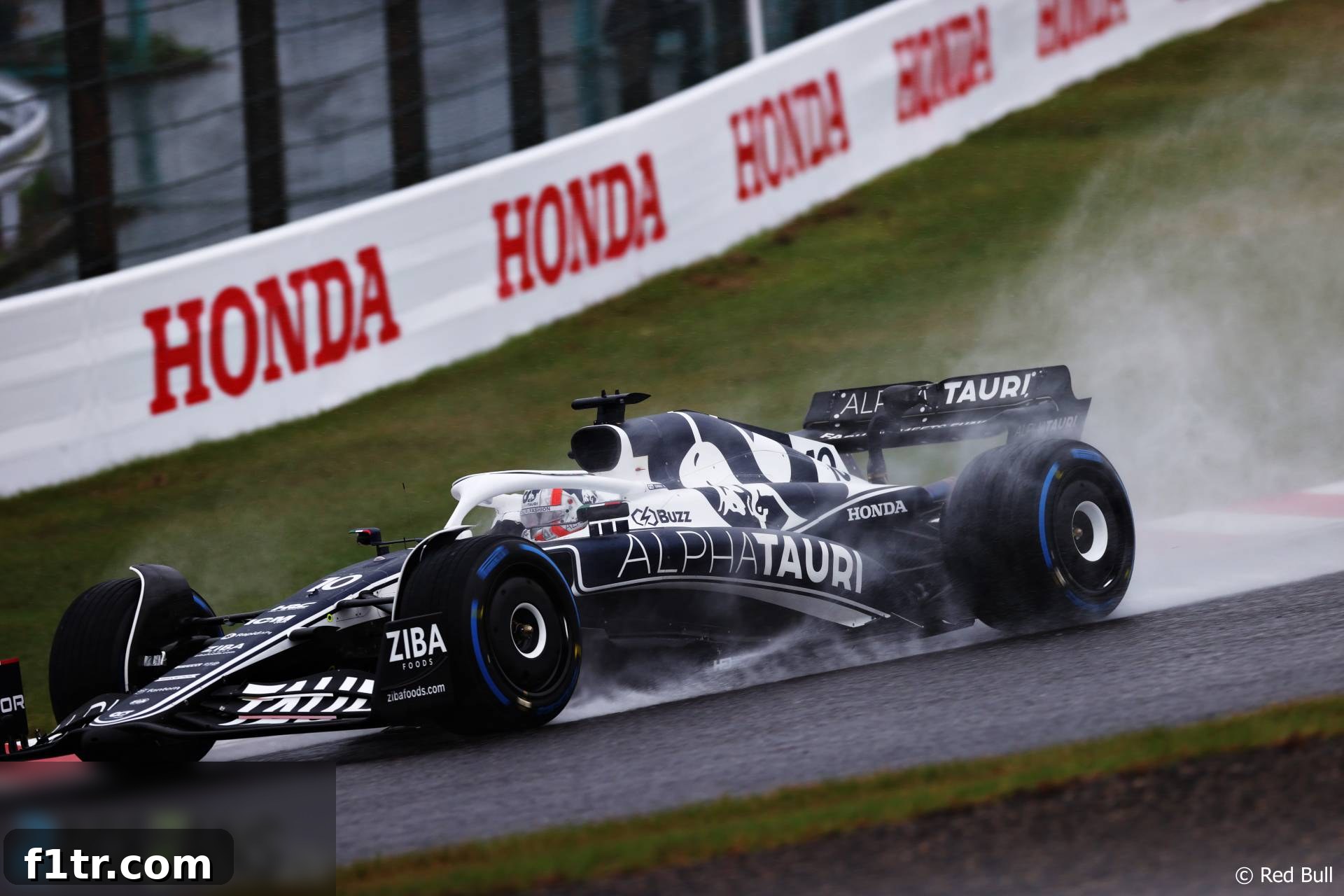
The world of Formula 1 found itself embroiled in a significant controversy following the Japanese Grand Prix at Suzuka, a race marred by treacherous conditions and a concerning incident involving a recovery vehicle on track. The sport’s governing body, the FIA (Fédération Internationale de l’Automobile), has since confirmed that it will publish the comprehensive findings from its investigation into the “procedural issues” that led to drivers encountering a crane on the circuit during the rain-hit event, sparking widespread outrage and calls for immediate safety reforms.
The announcement came after a crucial meeting of the FIA’s World Motor Sport Council in London, where the governing body deliberated on the events that unfolded at Suzuka. A statement released by the FIA indicated that the results of their thorough inquiry would be made public “in the coming days,” signaling a commitment to transparency and accountability in addressing one of the most serious safety concerns in recent F1 history.
The alarming incident occurred amidst chaotic conditions. Heavy rainfall had transformed the iconic Suzuka circuit into a treacherous, low-visibility environment. On the opening lap, Ferrari driver Carlos Sainz Jnr aquaplaned and crashed, necessitating the deployment of a recovery crane to retrieve his stricken vehicle. While under Safety Car conditions, Pierre Gasly, who was attempting to catch up to the back of the pack after an early pit stop, sped past the accident scene. His fury was palpable and immediate as he encountered the recovery crane on the track, leading to a passionate and vocal denunciation of the situation.
An incensed Gasly publicly stated that the sport had failed to learn critical lessons from the tragic loss of driver Jules Bianchi, who succumbed to injuries sustained at the very same track eight years prior. Bianchi’s devastating accident in 2014 occurred when he struck a recovery vehicle in eerily similar wet conditions, making Gasly’s close call a chilling reminder of past tragedies and a stark warning about the persistent risks involved in motorsport.
Recalling the dark memory, Gasly articulated his disbelief: “We lost Jules already. We all lost an amazing guy, an amazing driver, for the reasons that we know. Eight years ago, on the same track, in the same conditions with the crane. How? How today we can see a crane not even in the gravel, on the race track, while we are still on the track? I don’t understand that.” His words resonated deeply throughout the F1 paddock and among fans worldwide, highlighting the gravity of the situation and the perceived failure of safety protocols.
The FIA, recognizing the profound concerns raised, issued a statement assuring the public and the motorsport community of its rigorous approach. “As stated immediately after the race, the FIA has undertaken a thorough analysis of the incidents which took place at the Japanese Grand Prix in Suzuka,” the statement read. It continued, acknowledging that “procedural issues have been identified and will be corrected in the short and medium term. The findings will be made public in the coming days.” This commitment underscores the FIA’s understanding of the urgency required to address these systemic issues and restore confidence in race safety management.
Gasly was not alone in raising concerns. Several other drivers voiced their apprehension and alarm over the presence of recovery vehicles on an active circuit, particularly under such challenging weather conditions. The FIA’s initial response acknowledged this feedback: “While it is normal practice to recover cars under Safety Car and Red Flag conditions, due to the particular circumstances and also taking into account feedback from a number of drivers, the FIA has launched a thorough review of the events involving the deployment of recovery vehicles during the Japanese Grand Prix.” The governing body emphasized that such reviews are a standard part of their debrief and analysis process, crucial for ensuring continuous improvements in race operations and safety procedures.
The comprehensive review is expected to delve into various aspects of race control decisions and operational protocols. This includes the timing and method of deploying recovery vehicles, communication protocols between race control and teams/drivers, marshal training, and the assessment of track conditions. The aim is not merely to identify individual errors but to critically examine the entire system that governs safety during a Grand Prix, especially in extreme weather scenarios where visibility is severely compromised. The findings will undoubtedly lead to revised guidelines and potentially new regulations to prevent a recurrence of such a dangerous situation, reinforcing the paramount importance of driver safety above all else.
Beyond the immediate aftermath of the Suzuka incident, the FIA has also confirmed broader changes to the technical regulations for the upcoming 2023 F1 season, specifically aimed at enhancing overall safety. These proactive measures illustrate the governing body’s ongoing commitment to evolving safety standards. Notably, cockpit mirrors will be increased in size to reduce driver blind spots, a modification designed to improve situational awareness and prevent collisions. Furthermore, car roll hoop safety tests will be revised and strengthened, a direct consequence of Zhou Guanyu’s harrowing accident at the start of the British Grand Prix, where his car inverted and slid upside down. These revisions are essential to ensure that crucial safety structures are robust enough to withstand extreme impacts and protect drivers in the event of high-speed incidents. The combined focus on operational procedures, driver feedback, and car design underscores a holistic approach to making Formula 1 as safe as possible, demonstrating that the sport is continually learning and adapting to the inherent risks of high-performance racing.
The incident at Suzuka served as a stark and unwelcome reminder of the ever-present dangers in motorsport. It highlighted the critical importance of infallible safety protocols, particularly when adverse conditions push the boundaries of control and visibility. The motorsport community eagerly awaits the FIA’s detailed findings and the concrete steps that will be implemented to ensure such a perilous situation is never repeated. The collective expectation is for robust, clear, and unambiguous safety directives that prioritize driver well-being above all operational considerations, solidifying Formula 1’s commitment to continuous safety advancement.
Relevant Articles: 2022 F1 Season
- Mercedes told me “you’re wrong” about 2022 car’s problems – Hamilton
- FIA confirms all 10 F1 teams complied with 2022 cost cap
- Steiner “not ashamed” of panning “slow” Schumacher in Drive to Survive
- Albon believes year out of F1 improved him as a driver
- Hamilton sees diversity gains in F1 years on from his ‘traumatising’ experience of racism
Explore More from the 2022 F1 Season