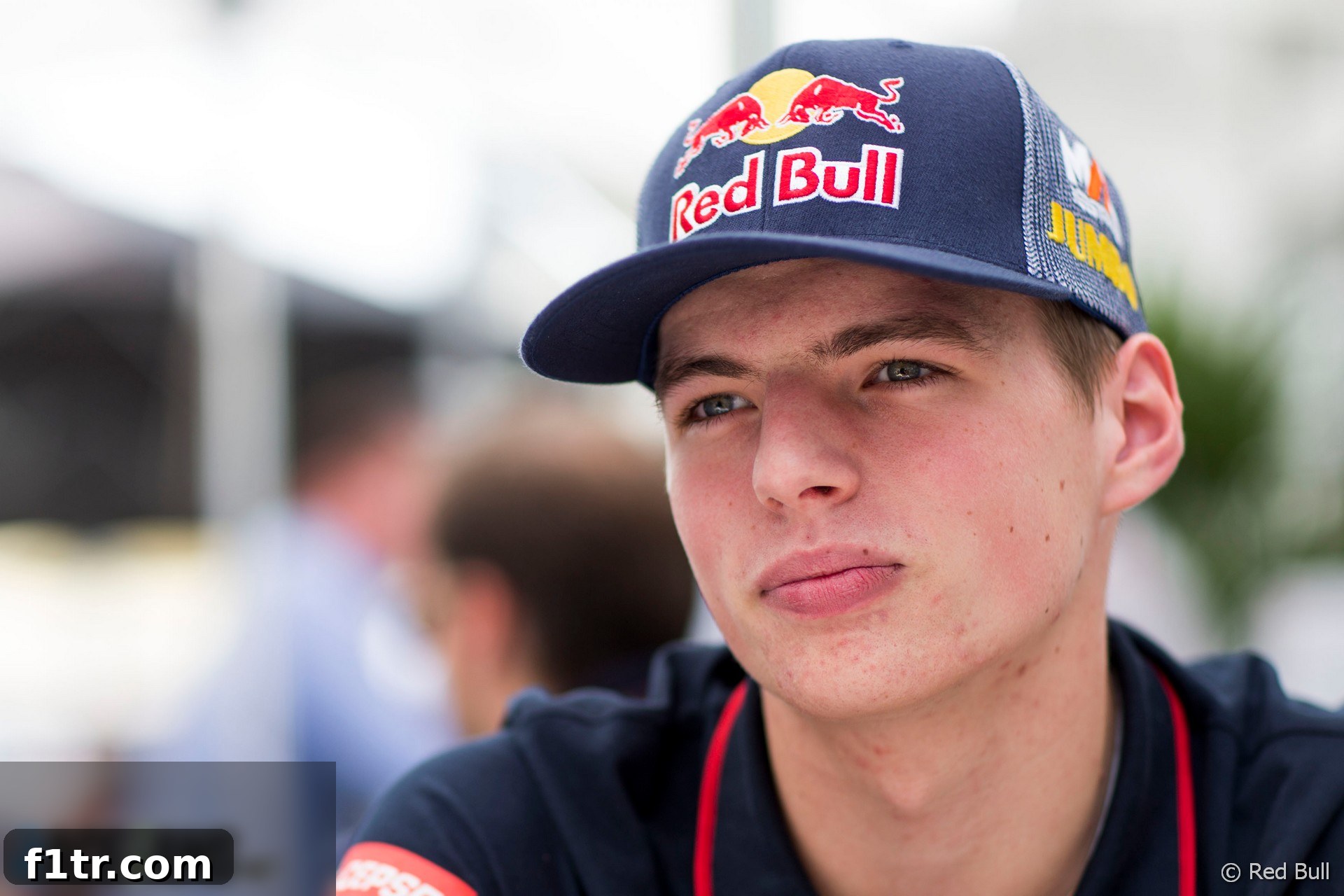
Red Bull Shakes Up F1 Grid: Max Verstappen Promoted, Daniil Kvyat Returns to Toro Rosso
In a shock move that sent ripples through the world of Formula 1, Red Bull Racing announced a dramatic driver swap ahead of the 2016 Spanish Grand Prix. From the next race at the Circuit de Catalunya, prodigious young talent Max Verstappen would step up from sister team Scuderia Toro Rosso to join Red Bull Racing, replacing Daniil Kvyat. This unexpected reshuffle came hot on the heels of the Russian Grand Prix, where Kvyat’s performance drew heavy criticism and ignited debate across the paddock.
The decision to promote Verstappen was a clear indication of Red Bull’s relentless pursuit of excellence and their proactive, often ruthless, approach to driver development. While Kvyat had shown flashes of brilliance throughout his nascent Formula 1 career, his recent outing in Sochi proved to be a costly misstep, compelling the senior team to act swiftly. This move not only highlighted Verstappen’s meteoric rise but also underscored the immense pressure and high stakes involved for any driver hoping to secure a long-term future within the Red Bull motorsport family.
The Catalyst: A Tumultuous Russian Grand Prix for Kvyat
Daniil Kvyat’s demotion was directly linked to his calamitous performance at his home race, the Russian Grand Prix. The incident unfolded dramatically on the opening lap, where Kvyat was deemed responsible for two separate collisions involving Sebastian Vettel. The first contact, a rear-end shunt, occurred as the cars braked for turn two, sending Vettel’s Ferrari veering left. Moments later, as Vettel attempted to recover, Kvyat made contact again at turn three, this time inflicting terminal damage that forced the four-time world champion to retire from the race. Vettel’s expletive-laden radio messages highlighted his extreme frustration, publicly airing the tension that immediately followed the chaotic start.
The consequences of Kvyat’s actions extended beyond Vettel’s retirement. The ensuing chaos also compromised the races of other drivers, including his Red Bull Racing teammate Daniel Ricciardo and Carlos Sainz Jnr of Toro Rosso, both of whom were impacted by the initial chain reaction and failed to score points. Stewards heavily penalised Kvyat for the incidents, further cementing the perception of a weekend gone wrong. For a driver already under scrutiny, two such costly errors in quick succession, especially at his home Grand Prix, proved to be an unbearable weight on his position within the team.
A Promising Start Overshadowed by Pressure
The abruptness of Kvyat’s demotion was particularly stark given his recent form. Just one race prior, at the Chinese Grand Prix, Kvyat had delivered one of his career-best performances, securing a commendable third-place finish. This podium, only the second of his Formula 1 career, showcased his raw talent and potential, reminding many of the speed and aggression that had seen him fast-tracked through the Red Bull junior programme. He had even engaged in a robust, yet fair, battle with Vettel on track in Shanghai, adding a certain irony to their subsequent clash in Russia.
Kvyat’s journey through the Red Bull ranks had been impressive, rising from Toro Rosso to the senior Red Bull Racing team at the tender age of 20, replacing Sebastian Vettel himself at the start of the 2015 season. His rookie year with Red Bull saw him outperform his experienced teammate Daniel Ricciardo in the drivers’ standings, finishing seventh to Ricciardo’s eighth. However, the immense pressure of competing at the sport’s pinnacle, coupled with the Red Bull team’s relentless expectations, meant that consistency and flawless execution were paramount. While the China podium offered a glimpse of his capabilities, the Russian incident served as a potent reminder of the fine margins and unforgiving nature of top-tier motorsport.
Max Verstappen’s Unstoppable Ascent
Stepping into the breach was Max Verstappen, a driver whose trajectory in Formula 1 had been nothing short of sensational. Debuting in F1 with Toro Rosso in 2015 at just 17 years old, Verstappen quickly established himself as a generational talent. His audacious overtaking moves, remarkable car control, and mature race craft, far beyond his years, captured the imagination of fans and experts alike. Throughout his time at Toro Rosso, he consistently outshone his more experienced teammate Carlos Sainz Jnr, delivering stellar performances in a midfield car and regularly challenging for points.
Verstappen’s promotion was widely anticipated, though perhaps not so soon nor in such dramatic fashion. He had already demonstrated an exceptional ability to adapt and push the limits, often extracting more from his machinery than seemed possible. His fearless approach and undeniable speed made him an ideal candidate for Red Bull Racing, a team that traditionally values aggressive, winning mentalities. This move represented the culmination of years of meticulous development by the Red Bull driver academy, confirming their belief that Verstappen was ready for the ultimate challenge and potentially, a future world championship.
Red Bull’s Strategic Vision and Christian Horner’s Perspective
Red Bull Racing team principal Christian Horner articulated the rationale behind the controversial decision, emphasizing both Verstappen’s potential and the strategic flexibility available to the organisation. “Max has proven to be an outstanding young talent,” Horner stated. “His performance at Toro Rosso has been impressive so far and we are pleased to give him the opportunity to drive for Red Bull Racing.” This statement underscored Red Bull’s conviction in Verstappen’s capabilities and their readiness to fast-track drivers who demonstrate exceptional promise.
Horner also highlighted the unique structure of Red Bull’s driver programme. “We are in the unique position to have all four drivers across Red Bull Racing and Toro Rosso under long term contracts with Red Bull, so we have the flexibility to move them between the two teams.” This flexibility is a cornerstone of Red Bull’s motorsport philosophy, allowing them to nurture talent, manage performance, and make strategic adjustments without external contractual limitations. For Daniil Kvyat, the move back to Toro Rosso was presented as an opportunity for rehabilitation: “Dany will be able to continue his development at Toro Rosso, in a team that he is familiar with, giving him the chance to regain his form and show his potential.” This framed the demotion not as an end, but as a chance for Kvyat to reset, rebuild confidence, and potentially earn his way back to the senior team.
Reactions from the Paddock and Beyond
The news of the driver swap immediately sparked a flurry of reactions across the Formula 1 community. McLaren driver Jenson Button was among the first to voice his surprise on social media. “Really?” he wrote, “one bad race and Kyvat’s dropped, what about the podium in the previous race? Short memories.” Button’s comment resonated with many who felt the decision was harsh and perhaps premature, overlooking Kvyat’s recent success in China. His sentiment captured a common concern within motorsport: the brutal, often unforgiving, nature of performance-driven industries where one mistake can sometimes overshadow previous achievements.
However, others defended Red Bull’s decision, viewing it as a pragmatic, performance-oriented choice. Industry pundits and former drivers pointed to Red Bull’s history of decisive action when it comes to driver lineups, noting that this approach, while tough, has often yielded positive results in identifying and nurturing champions. The consensus was that while Kvyat’s demotion was unfortunate, Verstappen’s undeniable talent made his promotion an almost inevitable development, merely accelerated by recent events. The move was widely seen as a bold statement of intent from Red Bull, signaling their ambition to contend for championships and their willingness to make difficult decisions to achieve that goal.
Looking Ahead: The Spanish Grand Prix and Beyond
The 2016 Spanish Grand Prix was therefore set to be an event of immense intrigue. All eyes would be on Max Verstappen to see how quickly he could adapt to the Red Bull RB12 and challenge his highly-regarded teammate Daniel Ricciardo. His debut with the senior team would be a significant milestone, testing his ability to perform under even greater pressure and scrutiny. Simultaneously, Daniil Kvyat’s return to Toro Rosso would be equally watched, as he aimed to demonstrate that he could bounce back from adversity and prove his critics wrong. The competitive dynamics within both teams, and indeed across the entire grid, were instantly reconfigured by this single, momentous announcement.
The driver swap served as a powerful reminder of Formula 1’s relentless competitive environment. In a sport where milliseconds and split-second decisions dictate fortunes, every driver is acutely aware that their performance is constantly under review. Red Bull’s decision to elevate Max Verstappen underscored their belief in his extraordinary potential, effectively fast-tracking him towards a trajectory many believe could lead to world championships. For Daniil Kvyat, it presented a formidable challenge, but also an opportunity for redemption, proving once again that in Formula 1, careers can turn on a dime, and the only constant is change.
Browse all Russian Grand Prix articles