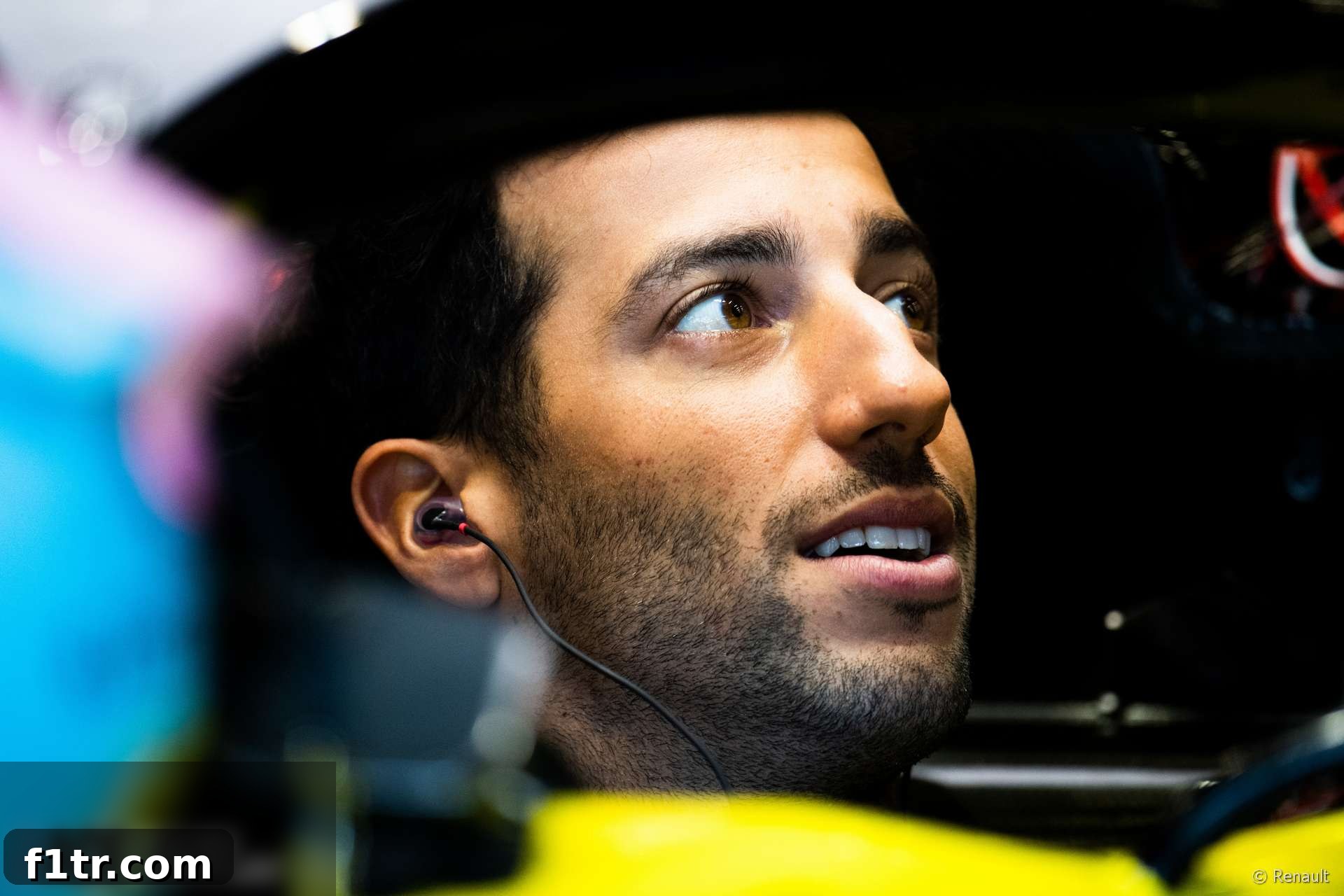
Remembering Anthoine Hubert: Daniel Ricciardo’s Profound Reflection on the Spa Tragedy
The world of motorsport, celebrated for its electrifying speed and raw passion, carries an inherent and stark reminder of its profound dangers. Few moments have underscored this reality more profoundly than the tragic passing of Formula 2 driver Anthoine Hubert at the iconic Spa-Francorchamps circuit during the 2019 Belgian Grand Prix weekend. This devastating incident cast a long, somber shadow over what is typically one of the most anticipated races on the Formula 1 calendar, deeply affecting every individual within the racing fraternity. Among those grappling with the immediate aftermath was then-Renault driver Daniel Ricciardo, who candidly expressed his profound reluctance to race and the immense emotional toll the tragedy took on him and, as he suspected, his fellow competitors.
Ricciardo’s raw honesty painted a vivid picture of the paddock’s collective grief and confusion. Having finished the Belgian Grand Prix in a subdued 14th position, far from the podium finishes he typically craved, his focus was not on his race performance but on the overwhelming weight of the events from the day prior. “I know that, weirdly enough, the best way we can kind of show our respect was to race today,” Ricciardo articulated, capturing the inherent paradox many felt between professional duty and personal sorrow. However, he swiftly added, “But I don’t think any of us actually wanted to be here or wanted to race.” This sentiment resonated deeply, suggesting a widespread unease and sadness among the drivers who, despite their professional obligations and their profound love for the sport, found themselves questioning the very act of competition in the wake of such a devastating loss.
The Unbearable Weight of Grief on the Grid at Spa-Francorchamps
For a sport built on split-second decisions and absolute, unwavering focus, the emotional burden following Hubert’s crash was immense. Ricciardo confessed that the mental struggle to concentrate was palpable, affecting not just him but likely many others. “At least, I’m speaking for myself, but I’m sure I’m not the only one,” he stated, indicating a shared experience of grief and discomfort that transcended team loyalties. The expectation to perform, to don a “brave face” for the world, clashed intensely with the internal turmoil caused by the tragic circumstances. “It was certainly tough to be here and try to put on a brave face for everyone. I know a lot of people in the paddock are hurting after yesterday so I think everyone’s relieved it’s done, we can move on from here and hopefully it’s the last time that this happens.” His words perfectly encapsulated the universal desire for closure, not just for himself but for the entire F1 community grappling with an undeniable sense of loss and profound vulnerability.
The act of racing itself, usually a source of immense joy and unparalleled concentration for Ricciardo, became a continuous battle against intrusive, haunting thoughts. He acknowledged the transient power of adrenaline to temporarily push such harrowing events to the background of his mind: “Once you get that adrenaline of the competition then you kind of put it towards the back.” Yet, this mental compartmentalization was far from complete or permanent. “But to completely remove it today was impossible. It was still there,” he admitted with stark honesty. Even amidst the intensity of high-speed corners and wheel-to-wheel duels that define the challenging Spa-Francorchamps circuit, the chilling shadow of Hubert’s accident lingered. While the immediate demands of competition could, strangely enough, sometimes demand more attention than the recent tragedy, Ricciardo stressed, “But to completely remove it, it’s still so fresh.” This powerful admission highlights the profound psychological challenge drivers face when continuing to compete after witnessing or being directly affected by such a severe incident, underlining the unique mental fortitude and resilience required in the demanding world of motorsport.
Questioning the Ultimate Price: The Existential Dilemma of Professional Motorsport
The high-speed environment of Formula 1 and its feeder series like Formula 2 inherently carries risks, a truth often acknowledged but rarely confronted with such stark immediacy as after a fatal incident. For drivers like Daniel Ricciardo, moments like Hubert’s tragic crash force a profound introspection, prompting them to question the very essence of their perilous profession. “It’s our job and it’s our profession and it’s our life but also still just racing cars around in circles,” Ricciardo mused, revealing the existential dilemma that surfaces when tragedy strikes. “It gets to a point you actually question it and you’re reminded of these things, is it worth it? So I certainly questioned it last night, had a sleep.” This poignant query resonates deeply, articulating the internal conflict between unwavering dedication to a passion and the stark realization of the ultimate price that can be paid for that pursuit. The overnight reflection provided little comfort, as the gravity of the situation continued to weigh heavily on his mind.
This questioning is not merely a momentary lapse of resolve; it is a fundamental re-evaluation of one’s chosen path. For seasoned professionals who have dedicated their entire lives to racing, to suddenly be confronted with the fragility of life within their sport is a harrowing experience that transcends mere discomfort. It moves beyond the routine dangers of crashes and injuries, touching upon the irreversible loss that underscores the brutal reality lurking beneath the glamour and speed of Formula 1. Ricciardo’s honest wrestling with this profound question provides a rare glimpse into the mental landscape of a top-tier athlete facing the most challenging and heartbreaking aspects of their profession, highlighting that even those at the pinnacle of motorsport are not immune to the deep psychological impacts of such devastating tragedies. It’s a stark reminder that beneath the helmets and racing suits, there are human beings grappling with the profound cost of their extraordinary dreams.
The Profound Strength of Anthoine Hubert’s Family: A Beacon of Inspiration
Amidst the overwhelming grief and pervasive self-doubt that permeated the Formula 1 paddock, a powerful and unexpected source of strength emerged for Daniel Ricciardo and many others: the dignified presence of Anthoine Hubert’s family at the Spa-Francorchamps track on Sunday. Their decision to attend the race, despite their unimaginable loss, provided a profound and humbling moment for everyone present. “Then, to be honest, seeing some of his family here today that’s what gave me more strength than anything else,” Ricciardo revealed, his voice tinged with awe. This extraordinary act of immense courage from the Hubert family transcended the boundaries of sport, offering a poignant reminder of human resilience and grace in the face of unspeakable sorrow.
Ricciardo’s admiration for Hubert’s family was clear, profound, and deeply moving, as he struggled to find words adequate to describe their incredible fortitude. “How they could be here after [it], taking my hat off to them doesn’t do it justice. I don’t know what to say. I could not imagine being in that position. I felt like they were a lot stronger than any of us today.” This heartfelt tribute underscores the deep respect and awe felt by the drivers for a family demonstrating such incredible composure and inner strength under the most tragic circumstances imaginable. Their stoic presence served as a silent, yet immensely powerful testament to Anthoine’s spirit and a profound source of motivation for the drivers, providing a vital context that extended far beyond the race itself. In their unwavering resilience, the motorsport community found a fragile but undeniable reason to continue, to honor Anthoine’s memory not just by racing, but by embodying a fraction of the extraordinary strength his family displayed.
The Motorsport Community’s Shared Mourning and Unwavering Commitment to Safety
The impact of Anthoine Hubert’s passing extended far beyond the immediate circle of drivers and teams, reverberating throughout the entire motorsport community. Tributes poured in from around the globe, from fellow competitors and legends of the sport to countless fans and governing bodies. The F1 paddock, usually a bustling hub of intense competition, was united in a somber solidarity, reflecting deeply on the fragility of life and the inherent dangers of racing. Moments of silence were observed with immense respect, special liveries and helmets were dedicated to his memory, and countless messages of condolence were shared across social media and traditional channels, all underscoring the collective grief and unwavering support for Hubert’s family and friends during their darkest hour.
Tragedies such as the one at Spa serve as painful, yet critical, catalysts for introspection and a renewed, unwavering commitment to safety. Motorsport has a long and storied history of evolving safety standards, with each major incident leading to significant advancements in track design, vehicle integrity, driver equipment, and medical response protocols. From the groundbreaking development of stronger chassis and improved crash structures to sophisticated head and neck support systems (like the HANS device) and advanced barrier technologies, the sport continuously strives to mitigate risks wherever possible. Hubert’s accident, though devastating beyond measure, undoubtedly spurred further analysis, research, and innovation across Formula 1 and Formula 2, reinforcing the FIA’s (Fédération Internationale de l’Automobile) unwavering dedication to making racing as safe as possible without compromising its thrilling, competitive essence. This relentless pursuit of enhanced safety is a profound testament to the community’s resolve to learn from every loss and protect future generations of drivers who dare to push the boundaries of speed.
Beyond the Chequered Flag: Moving Forward with Respect and Resolve in F1
As the chequered flag fell at Spa-Francorchamps on that sorrowful Sunday, it marked not just the end of a race but a profound emotional turning point for many within Formula 1. The immediate relief that “it’s done” was palpable, allowing a collective breath to be taken after days of intense emotional strain. Yet, the memory of Anthoine Hubert and the painful lessons learned from his untimely passing will undoubtedly endure. Moving forward means more than just turning the page; it involves carrying the weight of experience, honoring those lost with every lap, and redoubling efforts to ensure the safety and well-being of all participants in motorsport, from the youngest kart racers to the seasoned Formula 1 veterans.
The racing world, though incredibly resilient, is forever shaped by such profound events. The spirit of competition remains as fierce as ever, but it is now tempered by a deeper understanding of the human cost and an enhanced, collective appreciation for the value of every life on track. Anthoine Hubert’s legacy will not merely be that of a promising young talent whose life was tragically cut short, but also a poignant reminder of the passion, immense courage, and inherent risks that define motorsport at its highest level. His memory will continue to inspire the pursuit of excellence and, crucially, fuel the relentless drive for improved safety across all levels of racing, ensuring that his sacrifice contributes to a safer and more secure future for all those who dare to chase their dreams at the absolute limits of speed and human endeavor.