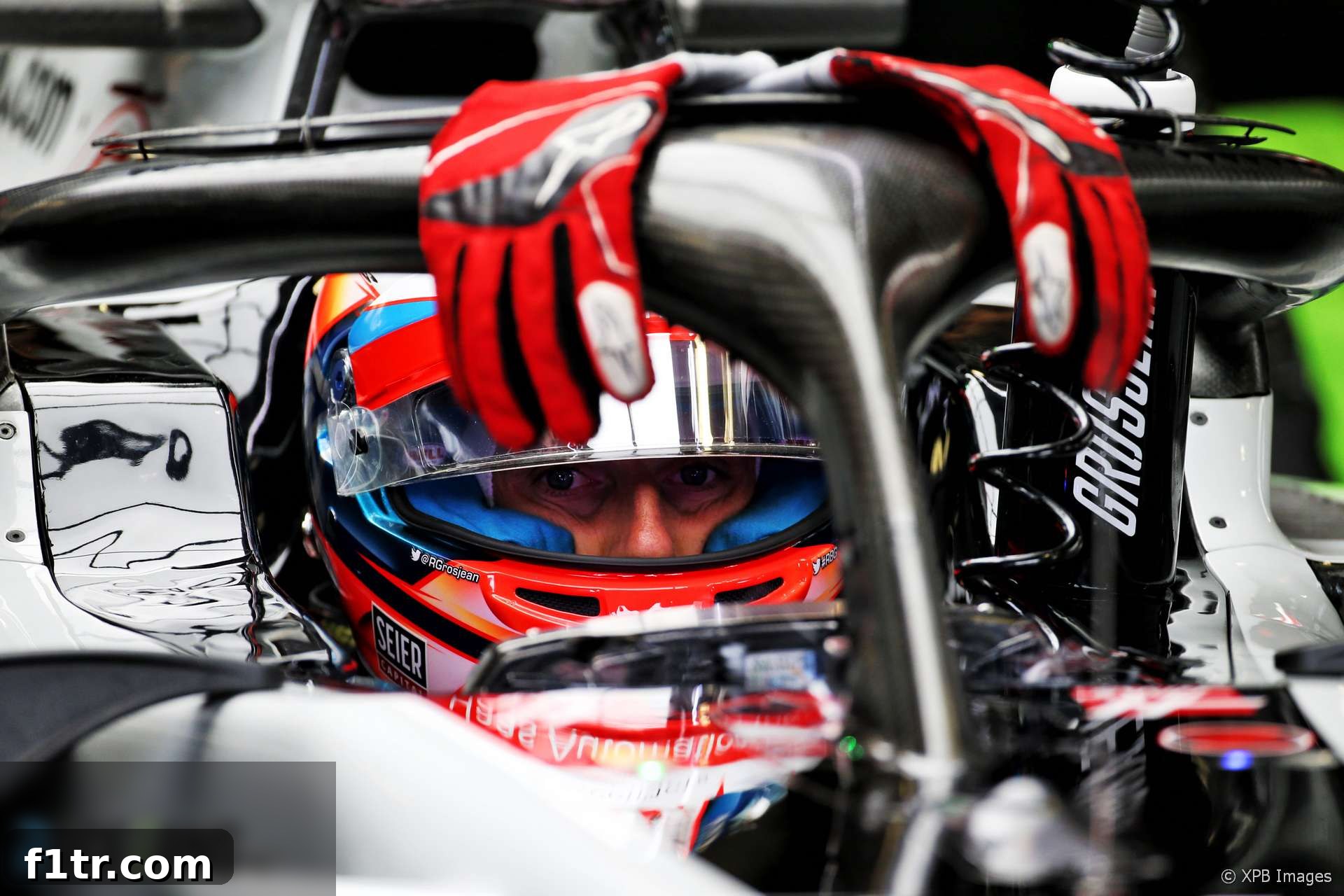
Haas F1 Team Appeals Romain Grosjean’s Italian Grand Prix Disqualification
The Haas Formula 1 team has officially confirmed its decision to appeal the disqualification of driver Romain Grosjean from the recent Italian Grand Prix. This development plunges an already fierce midfield battle into deeper controversy and has significant implications for the Constructors’ Championship standings, particularly in their ongoing fight with rivals Renault.
Romain Grosjean had initially secured a commendable sixth-place finish at the iconic Monza circuit, a result that was pivotal for Haas as it would have seen them draw level on points with Renault for a coveted fourth position in the championship. However, post-race scrutiny following a protest lodged by the Renault F1 team led race stewards to conclude that Haas’s car floor was not in compliance with a specific technical directive issued by the FIA prior to the sport’s summer break. This ruling effectively stripped Grosjean of his valuable points, sending ripples through the paddock.
Speaking on behalf of the team, Haas principal Guenther Steiner voiced strong disagreement with the stewards’ judgment. In a statement widely shared on the team’s official social media channels, Steiner asserted the team’s conviction: “We do not agree with the Stewards’ decision to penalize our race team and we feel strongly that our sixth-place finish in the Italian Grand Prix should stand. We are appealing the Stewards’ decision.” This clear declaration signals Haas’s intent to rigorously challenge the verdict and reclaim the crucial points lost.
The Heart of the Matter: F1 Technical Directives and Floor Compliance
At the core of this dispute is a technical directive (TD) issued by the FIA. Technical directives are official documents issued by the governing body of Formula 1 to clarify or interpret the sport’s complex technical regulations. They are crucial for ensuring a level playing field and preventing teams from exploiting grey areas within the rulebook. In this instance, the directive specifically addressed aspects of car floor design, particularly concerning the radius and flexibility of certain elements which can significantly impact aerodynamic performance. These directives are not regulations themselves, but they provide guidance on how the regulations will be policed by the FIA.
The F1 rulebook strictly defines the dimensions and permissible tolerances for various aerodynamic components, including the floor. Teams constantly push the boundaries of design to gain a competitive edge, often leading to interpretations of the rules that might differ from the FIA’s intent. The pre-summer break technical directive was reportedly aimed at cracking down on certain floor designs that were potentially flexing more than allowed under load, thereby generating additional downforce and an unfair advantage. While Haas maintains that their design was fully compliant with the spirit and letter of the regulations, the stewards, after careful examination prompted by Renault’s protest, found their floor to be non-compliant with the clarified interpretation of the rules.
The specific issue often revolves around the legality of the floor’s edge radius and how it interacts with the track surface. Any part of the car that runs too close to the ground, or flexes to do so, can create a sealed underfloor, dramatically improving aerodynamic efficiency. The FIA’s role is to ensure that such advantages are not gained through designs that technically circumvent the regulations, even if they don’t explicitly break a written rule. This ongoing technical arms race between teams and the FIA’s efforts to maintain fairness is a fundamental aspect of Formula 1.
The Implications for the Constructors’ Championship: A Midfield Showdown
The disqualification of Romain Grosjean carries immense weight, especially in the context of the 2018 Formula 1 Constructors’ Championship. Before the stewards’ ruling, Haas had reached a significant milestone, drawing level on points with their direct competitor, Renault, for the coveted fourth position. This was a testament to Haas’s strong season performance and their ambition to establish themselves as a top-tier midfield contender.
However, with Grosjean’s six points from Monza erased, Haas has now fallen back behind Renault. The difference in championship position at the end of the season can translate into millions of dollars in prize money, which is vital for any team, but particularly for a privateer like Haas. The financial stakes make every point critical, intensifying the rivalry between these two outfits.
The battle for fourth place is often considered the “best of the rest” title, showcasing which team outside of the traditional ‘big three’ (Mercedes, Ferrari, Red Bull) has performed most effectively. For Haas, securing this position would be their best-ever finish in Formula 1 and a massive boost to their reputation and future prospects. For Renault, an established manufacturer, maintaining their lead is crucial for validating their investment and progress within the sport.
Advert | Become a RaceFans supporter andgo ad-free
The Appeal Process: Haas’s Path to Reclaim Points
Filing an appeal in Formula 1 is a structured and often lengthy process. Once a team decides to appeal a stewards’ decision, they must notify the FIA within a specified timeframe, typically within an hour of the original ruling. This is usually followed by a formal written appeal within a few days, detailing the grounds on which they dispute the decision. The case then goes before the FIA’s International Court of Appeal (ICA).
During the appeal hearing, Haas will be required to present new evidence or demonstrate that the stewards misinterpreted existing regulations or the technical directive. They might argue that their car was fully compliant at the time of scrutiny, or that the method of measurement used by the stewards was flawed, or even that the technical directive itself was open to different interpretations. The burden of proof lies with Haas to convince the ICA that the original decision was incorrect.
The ICA is an independent judicial body within the FIA, designed to ensure fairness and impartiality in motorsport rulings. Their decisions are final and binding. A successful appeal could see Grosjean’s six points reinstated, instantly re-igniting the Constructors’ Championship battle with Renault. Conversely, if the appeal is rejected, the disqualification stands, solidifying Renault’s advantage and potentially dealing a significant blow to Haas’s championship aspirations.
Historical Context: Technical Infringements in F1
Technical infringements and subsequent appeals are not uncommon in the long history of Formula 1. Teams are always operating on the bleeding edge of engineering, constantly seeking innovative ways to maximize performance within the confines of the complex rulebook. This often leads to situations where interpretations differ between teams and the governing body. Examples range from flexible wings, ride height irregularities, fuel flow meter discrepancies, to even minor design elements like the floor that can be subject to intense scrutiny.
These incidents highlight the constant cat-and-mouse game between engineers pushing boundaries and the FIA striving to maintain fairness and consistency. While controversial, they are an integral part of the sport, ensuring that technological advancements remain within defined parameters and that success is achieved through genuine design prowess rather than regulatory loopholes. The outcome of Haas’s appeal will not only affect the 2018 championship but could also set a precedent for how future technical directives related to car design are interpreted and enforced.
Looking Ahead: The Road to Resolution
The formal appeal hearing will be a critical event in the coming weeks. Both Haas and Renault will be eagerly awaiting the ICA’s decision, which will have a direct bearing on their standings and, by extension, their financial entitlements and bragging rights in the Constructors’ Championship. The controversy adds another layer of intrigue to an already thrilling Formula 1 season, especially in the competitive midfield where every point is hard-fought and dearly won.
For Romain Grosjean, who has had a challenging season at times, reclaiming these points would be a significant personal boost, validating his strong performance at Monza. For Guenther Steiner and the Haas F1 Team, a successful appeal would be a victory not just in terms of points, but also a vindication of their design philosophy and their meticulous adherence to the F1 regulations, as they understand them. The motorsport world will be watching closely to see how this high-stakes technical and legal battle unfolds.
2018 F1 season
- F1 feared “death knell” for Drive to Survive after Ferrari and Mercedes snub
- McLaren staff told us we were “totally crazy” to take Honda engines in 2018 – Tost
- ‘It doesn’t matter if we start last’: How Red Bull’s junior team aided Honda’s leap forward
- Honda’s jet division helped F1 engineers solve power unit problem
- McLaren Racing losses rise after Honda split
Browse all 2018 F1 season articles