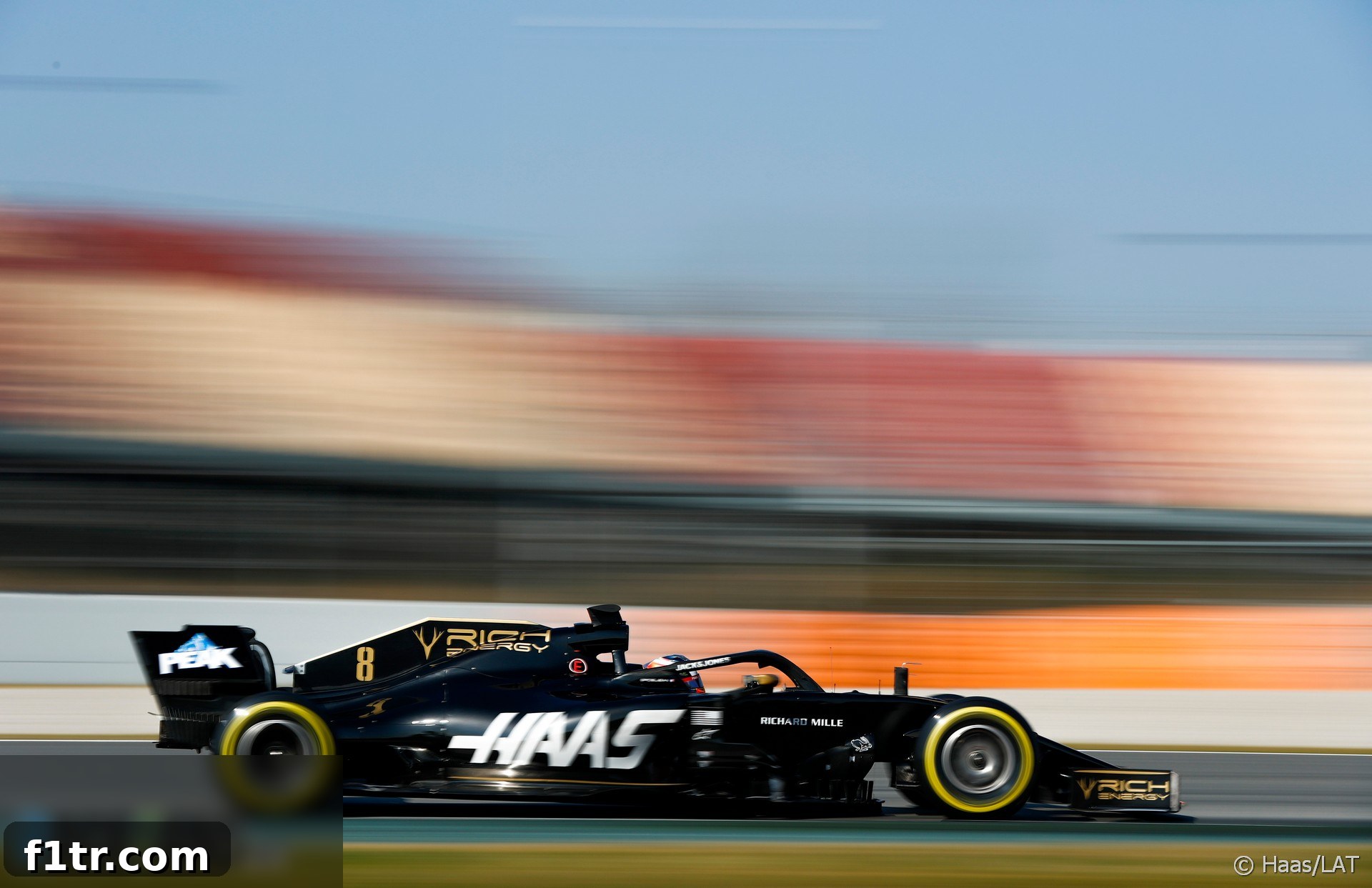
In the high-stakes world of Formula 1, where milliseconds dictate triumph and defeat, every tiny adjustment to a racing car can have profound implications. Yet, for many seasons, drivers have found their freedom to fine-tune a crucial performance element – tyres – increasingly constrained by stringent regulations. Now, a prominent voice from within the paddock, Romain Grosjean, is leading the charge, advocating for a significant rollback of these restrictions, particularly concerning tyre setup.
Grosjean, a seasoned F1 competitor and a director of the Grand Prix Drivers’ Association (GPDA), has openly expressed his desire for greater autonomy for drivers and teams in preparing their tyres. His concerns were particularly highlighted following changes introduced during pre-season testing, where the sport’s official tyre supplier, Pirelli, imposed lower maximum temperatures for tyre blankets. Speaking to RaceFans, Grosjean described the impact of this rule change as making it “fairly tricky” to extract the optimal performance from the tyres.
Advertisement | Become a Supporter & go ad-free
The Evolution of Tyre Regulations: A Decade of Constraints
The journey towards tighter tyre regulations in Formula 1 began in earnest when Pirelli became the sport’s sole tyre supplier eight years ago. Since then, a series of new restrictions have been progressively introduced, governing how teams can manage and utilise their tyres. These include strict minimum tyre pressures and maximum camber angles – parameters that previously offered significant scope for engineering ingenuity and driver preference.
The rationale behind these restrictions has been multifaceted. Initially, concerns over safety, particularly following high-profile tyre failures, prompted closer scrutiny. Standardising certain parameters was also seen as a way to control costs, prevent teams from engaging in an expensive ‘tyre war’ of development, and potentially level the playing field. However, from a driver’s perspective, such limitations often remove a vital layer of control and adaptation, impacting their ability to extract peak performance and handle their machines with precision.
Grosjean’s Call for Driver Empowerment
For Romain Grosjean, the current regulatory landscape stifles a fundamental aspect of racing – the driver’s connection to their machine and their ability to tailor it to specific conditions. “I just feel that we should be able to do what we want,” he stated emphatically, articulating a sentiment likely shared by many of his peers.
He elaborated on his vision, proposing a return to greater freedom: “Choose our tyre pressure, choose our camber, choose our blanket temperature. That’s really what I feel from the past: In Formula Renault, Formula Three, GP2, you can play and adjust to your liking a bit more.” His reference to junior categories is poignant, highlighting how emerging talents are afforded more experimental latitude early in their careers, only to face a more rigid environment upon reaching the pinnacle of motorsport.
The ability to finely tune tyre characteristics is not merely about achieving raw speed; it’s about driver confidence, car balance, and adapting to the ever-changing grip levels of a race track. Optimal tyre setup can mean the difference between understeer and oversteer, stability in high-speed corners versus nimbleness in chicanes, and ultimately, the ability to push the car to its absolute limit without compromise. By removing these setup variables, the sport arguably diminishes the role of driver and engineering skill in finding those elusive tenths of a second.
The Challenge of Cold Tyres: A Delicate Balancing Act
One of Grosjean’s specific points of contention revolves around the 80-degree Celsius blanket temperature limit. “But 80C blanket temperatures in some places could be tricky,” he observed. This seemingly minor adjustment has significant implications. Tyres operate within a very narrow ‘operating window’ where they provide optimal grip. If tyres are too cold when a car leaves the pit lane or after a Safety Car period, drivers struggle immensely to generate the heat needed to bring them into this window.
The consequences of cold tyres are varied and often dramatic. A lack of initial grip can lead to unsettling moments, spins, and even costly crashes, especially on tracks with demanding, high-speed corners. Drivers must often perform aggressive warm-up laps, weaving intensely to scrub heat into the rubber, all while managing traffic and conserving fuel. This not only adds an element of danger but also detracts from the immediate pace a car can achieve, potentially affecting race strategy and the spectacle for fans. For a sport that prides itself on precision and raw speed, forcing drivers to contend with suboptimal tyre performance from the outset can be counterproductive.
Driving Performance and the Driver’s Craft
The debate around tyre regulations touches on a core philosophy of Formula 1: the balance between technological prowess and driver skill. While F1 cars are marvels of engineering, the human element remains paramount. Drivers like Grosjean argue that greater freedom in tyre setup allows them to better exploit their individual driving styles and adapt to the nuances of each circuit and changing weather conditions. It provides another layer of skill and intuition that can differentiate truly exceptional performers.
When drivers are able to dial in their tyre pressures and camber angles, they can enhance specific aspects of their car’s handling. For instance, increasing camber might offer more grip through corners but could accelerate tyre degradation on straights. Adjusting tyre pressures impacts the contact patch with the track, influencing both grip and longevity. These are the intricate details that professional racers thrive on, transforming a technically superior car into a perfectly wielded weapon.
Furthermore, the element of surprise and variability in racing can be enhanced if teams have more freedom. Different teams and drivers might opt for contrasting setup philosophies, leading to more diverse strategies and unpredictable race outcomes. This could inject an exciting new dynamic into the sport, moving away from a more homogenised approach driven by overly restrictive regulations.
The GPDA and the Path Forward
As one of the directors of the Grand Prix Drivers’ Association (GPDA), Romain Grosjean is ideally positioned to bring this issue to the forefront. The GPDA serves as a vital collective voice for the drivers, advocating for their interests on safety, sporting, and technical matters. Grosjean intends to raise the matter at upcoming meetings, starting with the discussions slated for the Australian Grand Prix.
“We haven’t had a chance to meet everyone for the GPDA but I’m sure we will meet in Melbourne and discuss,” Grosjean noted. This forum provides an opportunity for drivers to collectively assess the impact of these regulations and formulate a unified stance to present to the FIA (Fédération Internationale de l’Automobile) and F1 management. While Grosjean acknowledged, “Maybe I’m the only one not being a huge fan of this,” he also recognised the inherent adaptability of F1 drivers. “In that case as I say I will adapt and I think already we’ve adapted quite well. It’s just that we need to re-learn a lot of things that we had nicely in our pocket.”
This statement highlights a crucial point: F1 drivers are masters of adaptation. They consistently adjust to new cars, new tracks, and evolving regulations. However, Grosjean’s underlying message is about the loss of previously acquired expertise and the potential for a richer, more challenging, and ultimately more rewarding driving experience if certain freedoms were reinstated. The “things we had nicely in our pocket” refer to years of accumulated knowledge, intuition, and finely honed skills in extracting every ounce of performance through meticulous tyre management and setup.
Advertisement | Become a RaceFans supporter andgo ad-free
Looking Ahead: The Future of F1 Tyre Management
The discussion initiated by Romain Grosjean is more than a mere complaint; it’s a significant contribution to the ongoing dialogue about the direction of Formula 1. As the sport continually seeks to enhance both safety and spectacle, finding the right balance for tyre regulations will remain a critical challenge. Will the sport lean towards greater control and standardisation, or will it embrace a philosophy that empowers drivers and engineers with more freedom, allowing for a broader spectrum of strategic choices and a greater display of individual skill?
The outcome of these discussions within the GPDA and with the sport’s governing bodies could shape not only how F1 cars are prepared but also the very nature of competition for years to come. Allowing drivers to choose their tyre pressures, camber, and blanket temperatures could reintroduce an element of variable performance that rewards ingenuity and driving finesse, potentially leading to more dynamic races and a more satisfying experience for both competitors and fans alike. The Melbourne meeting will undoubtedly be an important step in this evolving conversation.
2019 F1 season
- Crying in the Melbourne car park at 2019 grand prix was my career low – Ocon
- McLaren Racing reports reduced £71 million loss in 2019
- Kvyat: Hockenheim podium last year was “my biggest achievement” so far
- How the FIA’s new encrypted fuel flow meter targets Ferrari’s suspected ‘aliasing’ trick
- “He smashed my office door”: 23 must-see moments from ‘Drive to Survive’ season two
Browse all 2019 F1 season articles