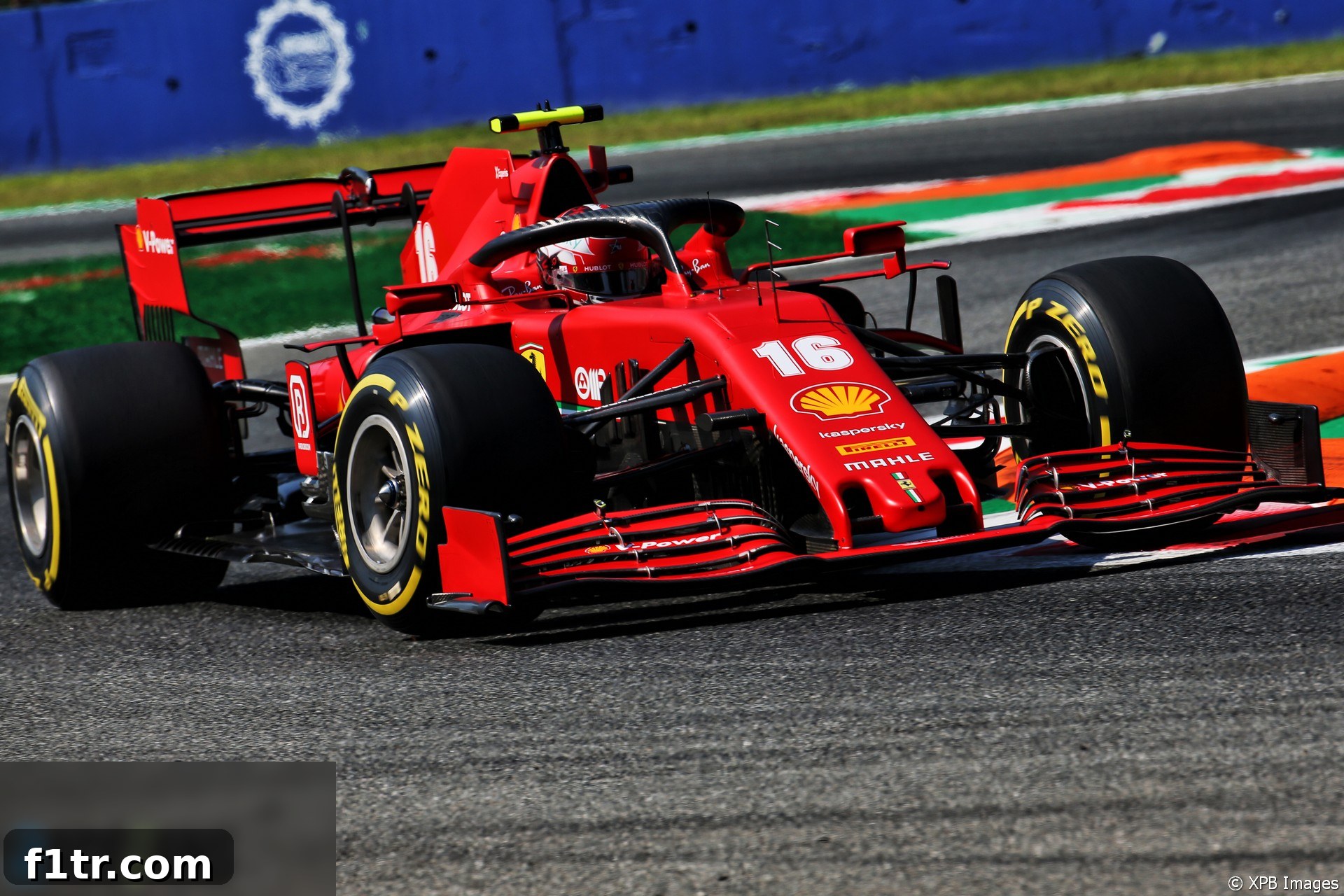
Ferrari’s Dual Challenge: Igniting Vettel’s Spark and Forging Leclerc’s Leadership
In the high-stakes world of Formula 1, team dynamics play a pivotal role in a constructor’s success. For Scuderia Ferrari, the 2020 season presented a unique set of challenges, particularly concerning the contrasting performances of its two star drivers: the seasoned four-time world champion Sebastian Vettel and the prodigious young talent Charles Leclerc. Amidst this backdrop, team principal Mattia Binotto found himself navigating a delicate balance, expressing unwavering confidence in Vettel’s ability to rediscover his championship-winning form while simultaneously nurturing Leclerc’s burgeoning potential as the team’s future leader.
Advert | Become a Supporter & go ad-free
Sebastian Vettel’s Quest for Confidence and Performance
The stark reality of the 2020 championship standings highlighted a significant performance gap between the Ferrari teammates. While Charles Leclerc had secured 45 points, featuring consistently higher finishes that showcased his raw speed and aggressive racing style, Sebastian Vettel trailed with 16 points. This disparity wasn’t lost on Mattia Binotto, who nonetheless maintained a clear perspective on Vettel’s potential. Binotto acknowledged that comparing oneself to a driver as “very fast at the moment” as Leclerc is never an easy task, even for a driver of Vettel’s caliber with a career studded with championship titles.
Binotto delved into the specifics of Vettel’s struggles, pointing to issues with “braking stability” as a key factor. This technical hurdle translated into a perceived lack of confidence with the SF1000 chassis, a critical element in Formula 1 where a driver’s belief in their machine is paramount for extracting maximum performance. A car that doesn’t inspire confidence in its braking zones can significantly impact a driver’s ability to push limits, especially on demanding circuits where precision and aggression are rewarded. Binotto’s admission that it was “down to us to help him” underlined the team’s commitment to supporting their departing driver, a testament to the professional ethos within the Maranello camp.
Despite the challenges, the Ferrari principal was resolute in his belief that Vettel still possessed the inherent speed and skill. “We know that he can be very fast, we know that he can be as fast as Charles,” Binotto asserted. The core issue, as he described, wasn’t a fundamental loss of ability but rather an inconsistency that prevented Vettel from consistently performing at his peak. Some races saw glimpses of his true pace, but others were marred by a struggle to find the rhythm and confidence required throughout an entire race weekend. Binotto concluded that there was “nothing really specific” in terms of a single, overarching problem, but rather a collective effort needed for Vettel to “find the right confidence with the car all through the weekend, to have a great quali and possibly to start as much ahead as he can.” This holistic view emphasized the intricate psychological and technical interplay that defines a Formula 1 driver’s performance.
The pressure on Vettel was immense, not only from the internal comparison with Leclerc but also from the knowledge that his tenure with Ferrari was drawing to a close at the end of the season. For a driver of his legendary status, concluding his time with the sport’s most iconic team on a high note would be crucial for his legacy and future endeavors. The quest for confidence, therefore, wasn’t just about immediate results but about affirming his enduring skill and competitive spirit.
Charles Leclerc: Embracing the Mantle of Leadership
Concurrently, Mattia Binotto’s focus was squarely on Charles Leclerc, whom he sees as the undisputed future of Scuderia Ferrari. With Vettel’s departure looming, the transition of leadership within the team was a natural progression, and Leclerc was clearly being primed for this pivotal role. Binotto’s praise for the Monegasque driver was effusive and unequivocal. “Charles is a great driver, no doubt, we all know that. He is a fantastic talent,” he declared, leaving no room for ambiguity regarding the team’s estimation of Leclerc’s abilities.
Binotto elaborated on Leclerc’s formidable attributes: his exceptional speed, his courageous battling capabilities, his adeptness at protecting positions under pressure, and his incisive overtaking maneuvers. “When he is on track, he is certainly fantastic. I think there is nothing to prove or to demonstrate on that one,” Binotto added, highlighting Leclerc’s proven track record of delivering thrilling and effective performances since his arrival at Ferrari. Leclerc’s meteoric rise in Formula 1, quickly establishing himself as a formidable contender capable of challenging the sport’s elite, solidified Ferrari’s long-term commitment to him.
Developing Leadership: More Than Just Speed
However, Binotto stressed that Leclerc’s development transcended mere on-track heroics. As the torchbearer for Ferrari, there was a deeper, more profound evolution required. “He is still very young and he still needs to get experience, and he needs to develop as a man, as a person, as a leader, finally, for the team,” Binotto explained. This comprehensive vision of leadership goes beyond pure driving talent; it encompasses a broader responsibility towards the team’s strategic direction, morale, and overall progression.
For Ferrari, nurturing a leader means cultivating a driver who can effectively communicate feedback for car development, inspire the engineers and mechanics, represent the team with gravitas in the media, and ultimately, steer the entire organization towards future successes. It means taking ownership of results, both good and bad, and embodying the spirit of the Scuderia. Binotto indicated that Leclerc was acutely aware of this responsibility, stating, “If there is anything he is focused on at the moment it is really developing his leadership. Developing leadership means as well to help the team to progress and to get better results in the future, and I think he is doing well in that respect.” This proactive approach to leadership development is crucial for Ferrari as they embark on a significant rebuilding phase, aiming to reclaim their position at the pinnacle of Formula 1.
Leclerc’s journey as a leader will involve mastering the complex interplay between individual brilliance and collective effort. He is not just a driver; he is becoming the focal point around which Ferrari will strategize its future, a critical role that demands maturity, vision, and an unwavering dedication to the team’s long-term aspirations. His progress in this area will be as significant as his on-track performances in shaping Ferrari’s destiny.
Ferrari’s Strategic Vision and Navigating Internal Dynamics
Mattia Binotto’s role as team principal during this transitional period was undoubtedly complex. Managing a seasoned champion on his way out and a young, burgeoning leader requires delicate handling. The public expressions of confidence in both drivers, despite their differing circumstances, served to maintain morale and ensure a cohesive unit, even amidst intense internal competition. Binotto’s statements reflect a strategic approach to uphold the dignity of Sebastian Vettel’s final season while simultaneously empowering Charles Leclerc to step into his future role seamlessly.
The team’s efforts to assist Vettel with his car issues, even as his departure was confirmed, underscored a professional commitment to maximizing performance from both cars. This dual focus is crucial in Formula 1, where every point and every insight gained contributes to the team’s overall development and strategic planning. Leclerc’s ascendance as the primary driver offers Ferrari a clear direction for car development and a focal point for their engineering efforts in the coming years, simplifying the feedback loop and design philosophy.
The Road Ahead for the Scuderia
The 2020 season was a period of introspection and recalibration for Ferrari, marked by significant performance challenges with their SF1000 chassis and power unit. Against this backdrop, the individual performances of their drivers and the team’s ability to foster growth became even more critical. Binotto’s forward-looking statements provided insight into Ferrari’s broader strategic vision: a future built around Leclerc’s talent and leadership, combined with a relentless pursuit of technical excellence. The challenges of the season, while daunting, also presented invaluable opportunities for the team to learn, adapt, and reinforce its foundations for a stronger return to competitiveness.
The balance between immediate results and long-term development is a constant tightrope walk in F1. Ferrari, through Binotto’s leadership, made it clear that while they desired strong finishes from both drivers, their eyes were firmly set on building a formidable future with Charles Leclerc at the helm. This strategic clarity is essential for a team of Ferrari’s stature, paving the way for sustained success in the highly competitive Formula 1 landscape.
Conclusion: A Glimpse into Ferrari’s Evolving Chapter
Mattia Binotto’s pronouncements painted a clear picture of Ferrari’s internal state: a blend of persistent belief in a struggling legend and enthusiastic investment in a rising star. The confidence in Sebastian Vettel to overcome his “braking stability” issues and match Charles Leclerc’s pace highlighted the team’s respect for a four-time world champion’s inherent talent. Simultaneously, the concerted effort to develop Leclerc not just as a fast driver but as a comprehensive leader showcased Ferrari’s long-term strategic planning. As the 2020 season progressed and Vettel prepared for his farewell, the spotlight intensified on Leclerc’s journey to embody the full responsibilities of a Scuderia Ferrari ace, guiding the team toward a renewed era of triumph. The path ahead for Ferrari is one of evolution, demanding both individual brilliance and collective leadership to steer the iconic Prancing Horse back to championship glory.
Advert | Become a RaceFans supporter andgo ad-free
2020 Italian Grand Prix
- Grosjean “obviously jealous” but pleased for Gasly after win
- 2020 Italian Grand Prix Star Performers
- Gasly: I’m ready for Red Bull return
- Ban on ‘quali mode’ reduced overtaking at Monza – Hamilton
- Gasly beats Sainz in closest F1 finish for 10 years
Browse all 2020 Italian Grand Prix articles