Unpacking Mercedes’ Tactical Engine Change for Bottas at Sochi: Strategy or Necessity?
The Formula 1 paddock and fan community erupted in debate when Mercedes confirmed a power unit replacement for Valtteri Bottas’ car ahead of the Sochi Grand Prix. This marked the second consecutive race where the Finnish driver faced a grid penalty due to an engine component change, sparking widespread speculation and accusations of strategic maneuvering.
Initially qualifying seventh, Bottas was relegated to a 16th-place grid start after Mercedes fitted his fifth engine, turbocharger, and MGU-H of the season. This move far exceeded the maximum allocation of three power units per driver for the year, triggering the significant penalty. Mercedes officially stated the change was made for “tactical” reasons, a phrase that immediately fueled the intense discussion.
The core of the controversy centered on the fierce championship battle between Lewis Hamilton and Max Verstappen. Many believed Mercedes had chosen to “sacrifice” Bottas, strategically positioning him on the grid to act as a barrier, thereby hindering Verstappen’s progress and protecting Hamilton’s championship aspirations.
The Allegations: Was Bottas Sacrificed to Aid Hamilton?
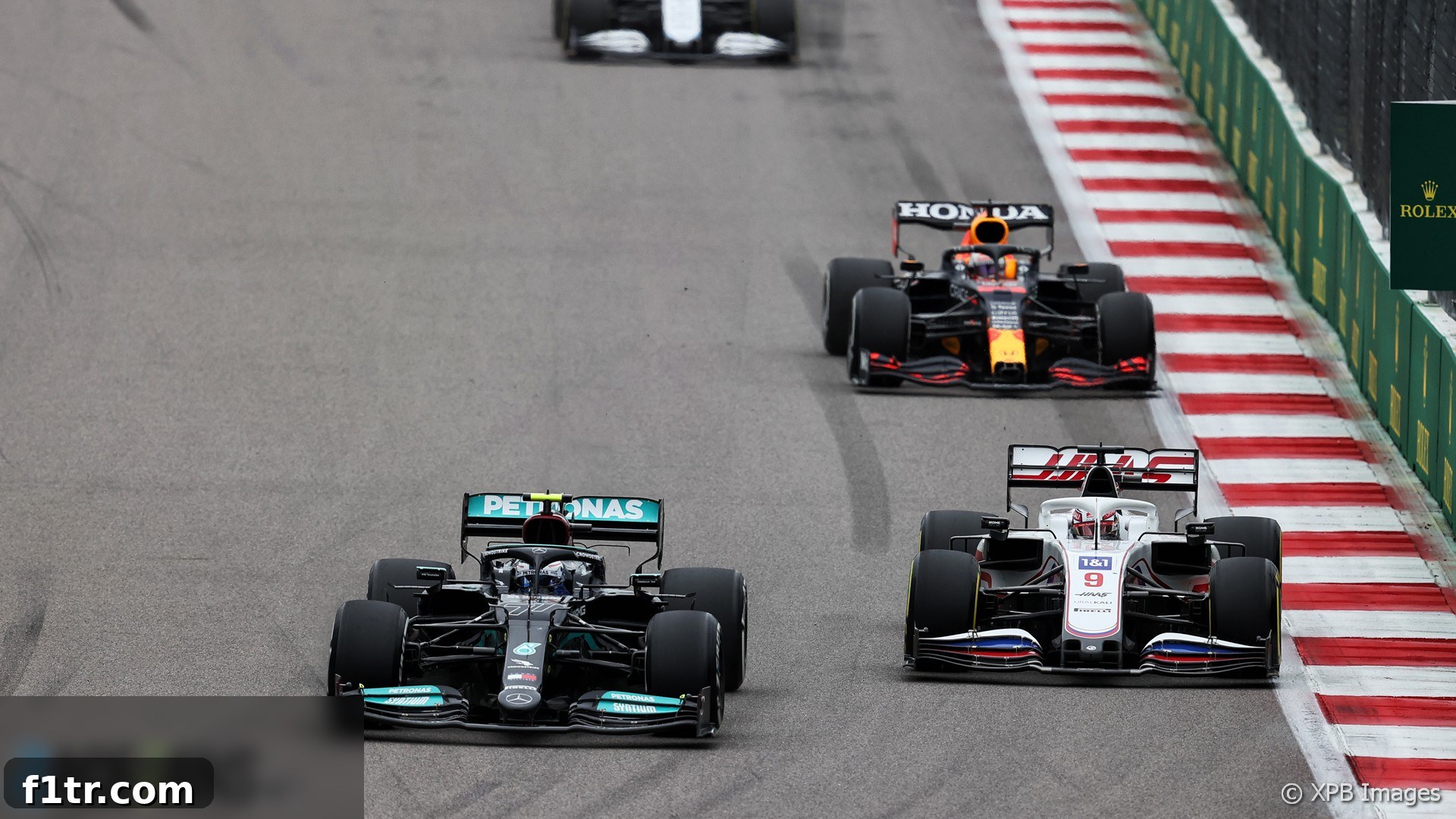
The assumption behind these accusations was straightforward: by starting Bottas further back, Mercedes intended for him to impede Verstappen, allowing Hamilton to pull away or consolidate his position. However, if this was indeed Bottas’s covert mission, the execution fell short. On the sixth lap of the race, Verstappen cleanly overtook the Mercedes at Turn 13 with apparent ease, Bottas offering little to no resistance.
Interestingly, Red Bull Racing, typically outspoken critics of their championship rivals, did not join the chorus of accusations regarding Bottas’s alleged sacrifice. When asked about Mercedes’ intentions during the pre-race drivers’ parade, Max Verstappen demurred, stating, “You’d have to ask them.”
Red Bull Team Principal Christian Horner further reinforced this measured response. Speaking to the media post-race, Horner notably passed on the opportunity to criticize Mercedes’ strategy. He specifically highlighted Bottas’s “scrupulously fair” conduct when battling Verstappen on track.
“I’m not aware of the reasons why,” Horner commented, referring to Mercedes’ engine change. “It was stated ‘tactically’ before the race. I thought Valtteri was fair with Max when they were racing wheel-to-wheel. He didn’t lose any time passing him. And that was an important move in the race.”
Horner’s team had already surpassed the power unit allocation for both their drivers earlier in the season, partly due to crash damage and reliability concerns. This experience likely informed his perspective, suggesting that Mercedes’ decision for Bottas might stem from similar underlying issues rather than purely strategic foul play.
“Obviously they’ve got issues like all of us are managing,” Horner elaborated. “We’re very much focused on our own issues rather than Mercedes.” This statement subtly deflected the notion of a deliberate sacrifice, framing Mercedes’ action within the context of common F1 power unit management challenges.
Mercedes’ Explanation: Power Unit Concerns and Unexpected Overtaking Difficulties
Following the race, Mercedes offered an explanation that mirrored Horner’s suggestion, pointing to underlying concerns about the condition of their power units. They also admitted a misjudgment regarding the race conditions at Sochi. In retrospect, they indicated they might have reconsidered the timing of Bottas’s engine swap had they fully realized how challenging overtaking would prove to be.
This marked the second consecutive Grand Prix where Bottas had been relegated towards the back of the field due to a power unit change. At Monza, he staged an impressive climb from 20th to finish third. However, at Sochi, he was heading for a non-scoring finish until a late rain shower intervened, creating chaotic conditions that allowed him to dramatically move up the order.
Andrew Shovlin, Mercedes’ head of trackside operations, clarified the rationale behind the engine change. He stated that the primary objective was to facilitate further inspection of the particular power unit on car number 77. However, he candidly conceded that the team might have deferred the change to a later race if they had accurately foreseen Bottas’s difficulties in making progress through the field.
The Technical Rationale and Miscalculation
“That power unit we need to do further investigation on and just have a look at it back at Brixworth,” Shovlin explained. “But it was simply a case of looking at where he was qualifying, thinking that we might need to take another at some point. We just decided to go for that and put a new power unit in.”
The decision was made with a specific expectation of the Sochi circuit’s characteristics. “When we made the decision, we thought it would be a race where we could recover more easily than we did,” Shovlin admitted. “I think knowing how hard it was to overtake, we might have taken a different view on that.”
The timing of the change was also influenced by the qualifying session. “It was really just a case of, with the wet qualifying and not having performed at the level of the car, we felt that would be the logical time to take it.” The fluctuating conditions presented an opportunistic window for the team to manage their engine components.
Sochi’s Unexpected Overtaking Challenges
Shovlin further elaborated on why overtaking proved unexpectedly difficult at Sochi, a factor that directly impacted Bottas’s race performance and, by extension, the perceived wisdom of the engine penalty strategy. He attributed the struggle to a significant drop in track temperatures between Friday practice and Sunday’s race.
“[In] the cooler conditions the front tyres were having a tough time, we were understeering a bit. Whereas on Friday the rears were really the axle that was suffering the most, here it was the front,” Shovlin detailed. This shift in car balance had critical implications for race dynamics.
“When you can’t follow in those last four corners, then you can’t get close enough to overtake. It was really down to car balance. But I think that the cooler conditions were actually making it more difficult rather than easier.” The unexpected understeer and difficulty in following through the crucial final sector effectively neutralized what Mercedes had anticipated would be a relatively straightforward recovery drive for Bottas.
The Broader Context of F1 Team Tactics
It’s undeniable that Formula 1 history is replete with instances of teams employing cynical tactics, including using one driver’s position or resources to benefit a championship-contending teammate. Bottas himself has previously aided Hamilton in Sochi, notably in 2018 when he ceded a victory under team orders. This history naturally feeds into the narrative of a “sacrifice.”
However, the nuanced explanations from both Red Bull and Mercedes suggest that this particular instance might not have been a clear-cut case of tactical altruism. The complexities of modern F1 power unit regulations, the relentless push for performance, and the ever-present threat of reliability issues mean that engine changes, even with penalties, are often strategic necessities rather than purely championship-manipulating moves.
While the initial “tactical” statement by Mercedes was vague enough to invite controversy, the subsequent clarifications from both sides of the paddock paint a picture of a team grappling with engine management and an unexpected turn of events regarding track conditions. The incident at Sochi underscores the delicate balance teams must maintain between maximizing performance, adhering to stringent regulations, and navigating the unpredictable nature of Grand Prix racing, all while battling for the pinnacle of motorsport success.
Quotes: Dieter Rencken
2021 Russian Grand Prix Further Reading
- Norris says he missed few chances to win in 110-race wait for first F1 victory
- Sochi disappointment will make Norris and McLaren stronger, says Seidl
- F1 race start times could be brought forward to avoid Spa-style wash-outs
- New technology in Ferrari’s power unit update vital for 2022 – Binotto
- Mercedes have left too many points on the table, admits Wolff
Browse all 2021 Russian Grand Prix articles