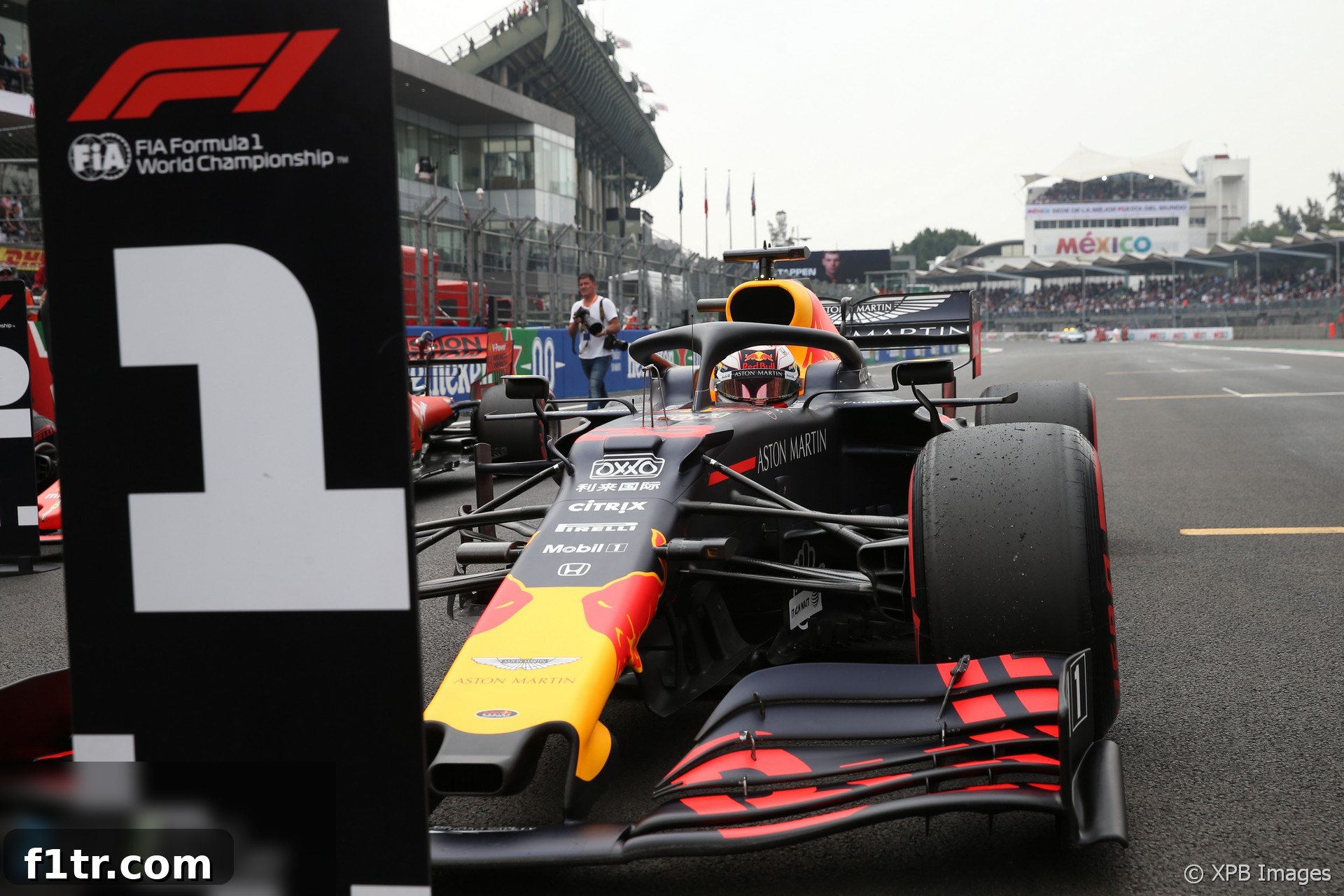
In a qualifying session that perfectly encapsulated the high stakes and unpredictable nature of Formula 1, Max Verstappen delivered a truly sensational performance at the Autodromo Hermanos Rodriguez. Despite being denied pole position for the Mexican Grand Prix due to a post-session penalty, the Red Bull Racing driver etched his name into the circuit’s history books by breaking the outright track record – albeit by the narrowest of margins imaginable. This remarkable feat underscores both his raw speed and the finely tuned capabilities of his machine on one of the calendar’s most unique circuits.
Advert | Become a Supporter & go ad-free
Verstappen’s blistering lap, a 1’14.758, stood as a testament to absolute peak performance. It was a mere one-thousandth of a second faster than the previous circuit record, which was set by his former teammate, Daniel Ricciardo, in a Red Bull just one year prior. This almost imperceptible improvement highlights the relentless pursuit of speed in Formula 1, where gains are measured in fractions of a heartbeat. However, the elation of this record-breaking pace was quickly tempered by a stewards’ decision. A three-place grid penalty was imposed on Verstappen for failing to slow sufficiently under yellow flags, a critical safety infraction. This incident occurred following a crash involving Valtteri Bottas’s Mercedes, which had careened into the barriers. Despite the penalty, which relegated Verstappen to fourth place on the grid, the phenomenal lap time itself remained valid, cementing his place in the circuit’s lore.
The Autodromo Hermanos Rodriguez: A High-Altitude Challenge
The Autodromo Hermanos Rodriguez circuit in Mexico City presents a singular challenge to Formula 1 teams and drivers, primarily due to its extreme altitude. Situated over 2,200 meters (7,300 feet) above sea level, the thin air significantly impacts engine performance, aerodynamic downforce, and cooling efficiency. Engines gasp for air, losing a considerable amount of power compared to sea-level tracks. To compensate, teams run maximum downforce configurations, mimicking Monaco-level wing settings, yet still experience far less actual downforce due to the reduced air density. This results in cars sliding more and tires working harder, demanding a delicate balance between grip and stability.
The track layout itself is a thrilling mix of ultra-long straights, where cars reach some of the highest speeds of the season, and tight, technical sections like the famous stadium section. This combination requires a car that is both aerodynamically efficient for the straights and mechanically agile for the corners. Red Bull’s strong performance at this venue, evidenced by both Ricciardo’s previous record and Verstappen’s new benchmark, often suggests their chassis, combined with the Honda power unit, might be particularly adept at handling these unique high-altitude characteristics, finding an optimal balance that eludes many of their rivals.
Team Performance Dynamics: A Year-on-Year Analysis
The 2019 Mexican Grand Prix qualifying session offered fascinating insights into the evolving performance landscape of Formula 1 teams. When comparing lap times to the previous year, only a select few managed to improve their pace, highlighting the challenges posed by the circuit and potentially, changes in regulations and tire compounds. Red Bull, Toro Rosso, and McLaren were the only teams to lap quicker at the Mexico City track this year than they did 12 months prior. This limited number of improvers points to a general tightening of the field or perhaps a struggle by most teams to adapt their 2019 machinery to the unique demands of the circuit.
Pirelli’s Influence: Harder Compounds and Their Implications
A significant factor contributing to the overall performance trends, and specifically the relative slowing of many teams, was Pirelli’s decision to bring a harder range of tire compounds to Mexico this year. Harder compounds generally offer greater durability and resistance to overheating but come at the cost of outright grip and a longer warm-up time. For teams struggling with mechanical grip or tire management, this change could have been particularly detrimental, making it harder to extract maximum performance from the tires over a single qualifying lap. Conversely, teams that could effectively generate temperature into the harder compounds and exploit their robustness might have found a subtle advantage.
The aggregated data, as illustrated in the performance improvement chart above, provides a stark visual representation of these year-on-year changes. It clearly delineates the teams that found gains from those that regressed, serving as a powerful indicator of their development trajectories and adaptability.
McLaren’s Impressive Ascent
Among the improvers, McLaren stood out dramatically. For the tenth time in the last twelve races, they emerged as the most-improved team, having shaved an impressive eight-tenths of a second off their previous year’s qualifying pace. This consistent upward trend underscores a remarkable resurgence for the Woking-based outfit. Their consistent gains are not merely isolated incidents but rather a testament to sustained development in their chassis, effective integration of the Renault power unit, and a clear understanding of their car’s strengths and weaknesses. The team’s focused efforts on aerodynamic efficiency and mechanical grip seem to have paid dividends across various track types, but particularly shone through in Mexico, indicating a genuine step forward in their competitive standing within the midfield.
Advert | Become a RaceFans supporter andgo ad-free
Haas’s Troubling Decline
At the opposite end of the spectrum, Haas endured another difficult weekend, registering as the least-improved team for the third time this season. They were a concerning 1.2 seconds slower than their performance in the previous year, highlighting persistent and deep-seated issues with their 2019 challenger. The team’s struggles throughout the season had been well-documented, often revolving around a highly sensitive car that struggled to get its tires into the optimal operating window, particularly in qualifying. This issue appeared to be exacerbated by the harder Pirelli compounds in Mexico and the unique demands of the circuit.
The comprehensive historical lap time data, presented in the all-time performance chart, contextualizes Haas’s struggles within their broader F1 tenure, showcasing the severity of their current performance deficit compared to previous seasons at this track. Their dramatic slowdown was, regrettably, not entirely unexpected within the team. Romain Grosjean, one of the team’s drivers, had candidly suggested before the race weekend even began that their season’s form, combined with their historical performance at this track, indicated they might qualify around “26th or 27th.” While a slight exaggeration, his pre-emptive assessment underscored the team’s internal awareness of their deep-seated performance woes and the considerable challenge they faced.
Further analysis, as depicted in the individual lap times chart, provides granular detail on how different teams and drivers managed their pace across the qualifying sessions, offering insight into their strategies and relative strengths on various compounds and during different stages of qualifying.
Impact and Outlook for the Race
The qualifying results, with Max Verstappen’s stunning record lap overshadowed by a grid penalty, set the stage for a thrilling Mexican Grand Prix. His raw pace, even from fourth on the grid, meant he remained a formidable contender for victory. The significant performance disparities across the grid, with McLaren’s continued rise and Haas’s concerning slump, also promised an exciting race with battles unfolding throughout the field. The unique characteristics of the Autodromo Hermanos Rodriguez, coupled with the harder tire compounds, ensured that tire management, strategic decisions, and driver skill would play an even more crucial role in determining the ultimate outcome of the race. The blend of record-breaking speed and the harsh realities of penalties encapsulated the essence of competitive Formula 1.
Go ad-free for just £1 per month>> Find out more and sign up
2019 Mexican Grand Prix
- Why Leclerc’s penalty decision took four hours longer than Kvyat’s
- Ferrari must start converting pole positions into wins – Binotto
- 2019 Mexican Grand Prix Star Performers
- Mercedes: Lost ‘wouvre panel’ cost Hamilton seven seconds
- Horner defends Verstappen’s driving after Hamilton’s “torpedo” criticism
Browse all 2019 Mexican Grand Prix articles