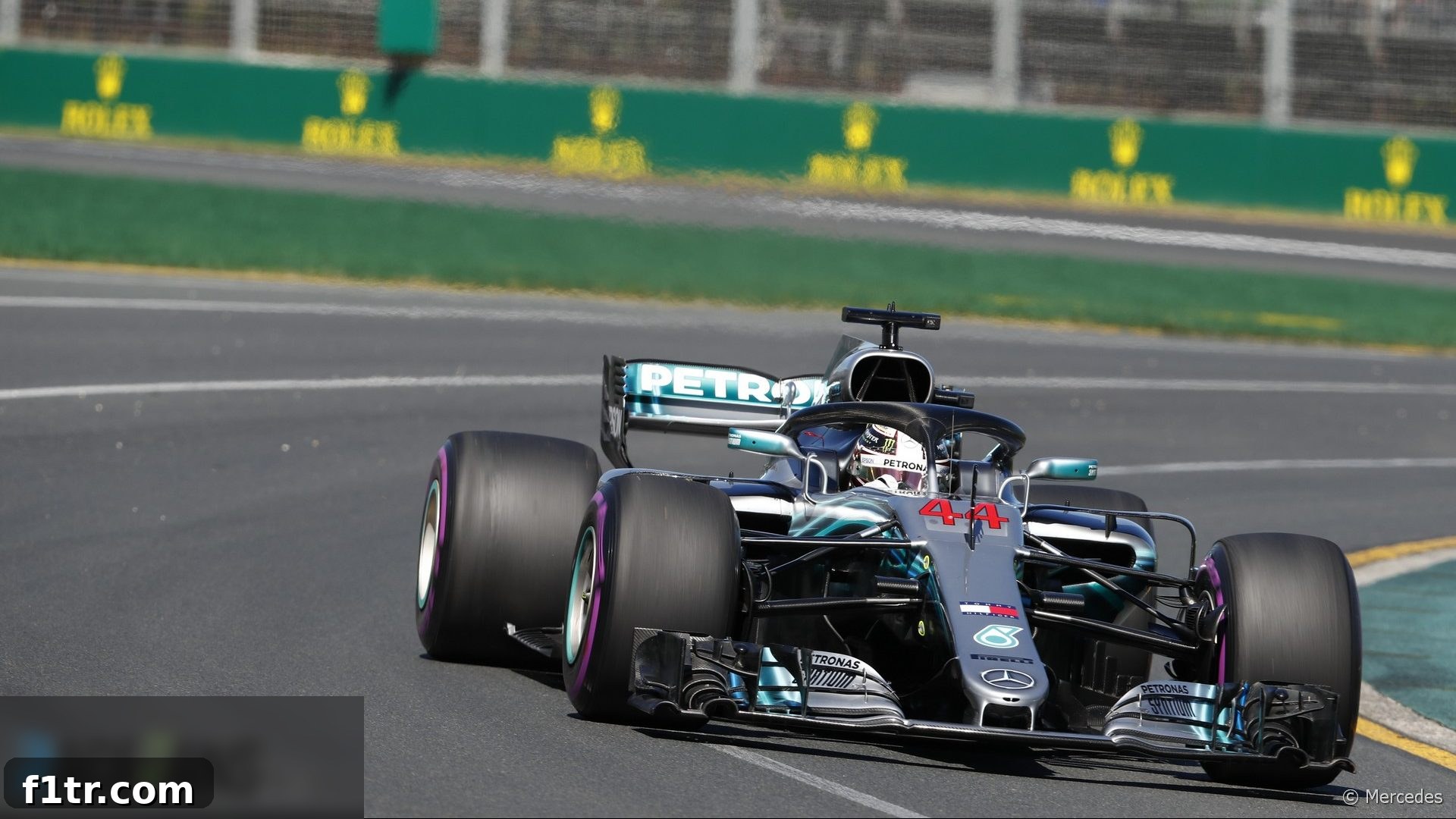
Australian Grand Prix FP2: Hamilton Leads, Rivals Close in Thrilling Session
The highly anticipated 2018 Formula 1 season roared to life at the iconic Albert Park Circuit, and the second practice session for the Australian Grand Prix delivered an intriguing glimpse into the competitive landscape. Mercedes-AMG Petronas Motorsport’s reigning world champion, Lewis Hamilton, continued his commanding form, once again topping the timesheets. However, the margins to his closest competitors were significantly tighter, setting the stage for a potentially fierce battle for pole position and Sunday’s race victory.
Hamilton’s blistering pace in the afternoon session saw him clock a best time of 1’23.931 on the ultra-soft Pirelli tyres. While this solidified Mercedes’ position at the sharp end, the performance of Red Bull Racing and Scuderia Ferrari hinted at a much closer fight than some might have predicted after the initial practice runs. The session was not without its drama, including a red flag interruption and several drivers pushing their machines to the limit around the challenging street circuit.
Mercedes at the Forefront: Hamilton’s Dominance and Bottas’s Challenges
Lewis Hamilton showcased his unparalleled talent and the inherent speed of the Mercedes W09 EQ Power+ car by setting the benchmark lap. His ability to extract maximum performance from the car, particularly on new tyre compounds, was evident, placing him firmly in contention for what could be a record-extending pole position. The Briton’s confidence heading into the weekend appears high, a critical factor at the start of any championship campaign.
Despite Hamilton’s strong showing, his teammate Valtteri Bottas experienced a slightly more eventful session. While he secured the third-fastest time, Bottas had a couple of notable off-track excursions. The first incident saw him run wide at Turn Three after encountering Kimi Räikkönen, disrupting his lap and potentially affecting his rhythm. A second moment at Turn One further underscored his efforts to find the absolute limit of the circuit and his car’s setup. These incidents, though minor, highlight the fine margins at play and the intensity with which drivers are approaching the first race weekend. For Mercedes, ensuring both drivers are consistently performing at their peak will be key to fending off a resurgent opposition.
Red Bull and Ferrari Close the Gap: A Multi-Team Fight Emerges
Perhaps the most compelling narrative from FP2 was the impressive closing of the gap by Red Bull Racing and Scuderia Ferrari. Red Bull’s young prodigy, Max Verstappen, delivered a sensational lap to place second, neatly splitting the two Mercedes cars. His best effort was a mere 0.127 seconds shy of Hamilton’s pace, a clear testament to the improvements made by Red Bull and the capabilities of their TAG Heuer-badged Renault engine. Verstappen’s aggressive yet controlled driving style around Albert Park’s demanding corners suggests he will be a serious challenger for the top spots this weekend.
Home favourite Daniel Ricciardo, in the sister Red Bull, endured a frustrating session that saw him finish seventh. His fastest lap on the ultra-soft compound was unfortunately curtailed by a red flag. The stoppage, caused by a stray wire on the start/finish line – a rare occurrence in modern F1 – denied Ricciardo the opportunity to show his true pace on a fresh set of tyres. Given Verstappen’s performance, it is highly probable that Ricciardo would have placed much higher, reinforcing Red Bull’s strong competitive stance and their potential to disrupt the traditional Mercedes-Ferrari dynamic.
Scuderia Ferrari also made their intentions clear, with both Kimi Räikkönen and Sebastian Vettel demonstrating strong, consistent pace. Räikkönen was particularly impressive, lapping within three-tenths of a second of Hamilton, securing the fourth position. Vettel followed closely in fifth. The Ferrari SF71H appeared well-balanced and responsive, suggesting the Italian team has a solid platform to challenge for race victories. Their performance in FP2 confirms that the battle at the front will likely be a thrilling three-way contest between Mercedes, Red Bull, and Ferrari, promising an exhilarating start to the new season.
The Thrilling Midfield: Haas Shines, McLaren Shows Promise
Beyond the established top three, the midfield battle proved to be fiercely contested, with several teams vying for the “best of the rest” title. Haas F1 Team, powered by Ferrari engines, was the standout performer in this segment. Romain Grosjean delivered an exceptional lap to clinch sixth position, a remarkable achievement that underscores both the efficiency of the Haas chassis and the potency of the Ferrari power unit. This strong showing suggests Haas could be a consistent threat in the upper midfield this season. His teammate, Kevin Magnussen, also placed within the top 10 (9th), further solidifying the team’s impressive start.
McLaren, embarking on a new chapter with Renault power, showed encouraging consistency. Fernando Alonso secured eighth place, with Stoffel Vandoorne not far behind in tenth. This consistent presence in the top 10, mirroring their FP1 performance, indicates that McLaren is making progress in integrating their new power unit and improving the overall package. Alonso, ever the perfectionist, voiced frustrations during the session about other drivers neglecting to use their mirrors, a common complaint in crowded practice sessions but indicative of the intense competition. McLaren’s reliability and consistent pace in Australia offer a glimmer of hope for a more competitive season.
Tight Competition: Renault, Force India, and Toro Rosso
The middle of the pack remained incredibly congested, with mere hundredths of a second often separating multiple cars. Renault Sport Formula One Team drivers Carlos Sainz Jnr and Nico Hülkenberg finished 11th and 13th respectively, demonstrating solid if not spectacular pace. Sainz narrowly missed out on a top 10 slot, with Sergio Perez’s Force India hot on his heels in 12th. Esteban Ocon in the other Force India was further back in 15th, suggesting the team may still be searching for optimal balance. These teams are poised for a fierce internal battle for points throughout the season.
The Toro Rosso-Honda partnership continued its development phase. Brendon Hartley and Pierre Gasly finished 16th and 17th, with very little separating them. While not immediately challenging the front of the midfield, the team is focused on understanding and optimizing their new Honda power unit. Their consistent lap counts indicate valuable data gathering for future improvements.
Williams and Sauber: Facing Significant Hurdles
Williams Racing faced a challenging second practice session. Lance Stroll was the faster of their two drivers in 14th place, showing flashes of speed. However, a significant reliability concern emerged when his car came to a complete halt on his return to the pits after the session. This incident will undoubtedly be a worry for the team, requiring immediate investigation to ensure mechanical integrity for qualifying and the race. Rookie Sergey Sirotkin finished 18th, still acclimatizing to the demands of Formula 1. Williams will need to work hard to find both pace and reliability to compete higher up the order.
At the very tail end of the grid, Sauber F1 Team continued to struggle for pace. Marcus Ericsson and Charles Leclerc occupied the final two positions, 19th and 20th respectively. The overall gap to the front of the midfield was substantial, indicating a significant challenge for the Swiss team. While both drivers pushed hard, the Sauber C37 appears to lack the inherent speed of its competitors. The team, with its new Ferrari engine deal, will be looking for continuous development throughout the season to bridge this gap.
A striking observation from the session was the incredible tightness of the field: nine out of the ten teams, from Mercedes down to Sergey Sirotkin’s Williams in 18th, were covered by just over two seconds. However, Sauber stood out as being a further eight-tenths behind this competitive cluster, emphasizing the scale of the challenge they face to join the main pack.
Outlook for Qualifying and the Race
The second practice session has set the stage for a truly captivating Australian Grand Prix. Lewis Hamilton and Mercedes appear to hold a marginal advantage, but the fierce competition from Max Verstappen’s Red Bull and both Ferraris suggests that qualifying will be an intense fight for pole position. The midfield is packed with talent and competitive cars, promising exciting wheel-to-wheel action and unpredictable outcomes. Teams like Haas have shown they can challenge for strong points finishes, while McLaren continues to show encouraging progress. All eyes will now turn to Saturday’s qualifying, where the true pecking order will begin to emerge. The 2018 Formula 1 season promises to be a thrilling spectacle, and the Australian Grand Prix is poised to deliver an unforgettable opening act.
2018 Australian Grand Prix FP2 Session Results
For a detailed breakdown of the lap times and statistics from the second practice session, please refer to the table below:
| Pos. | No. | Driver | Car | Best lap | Gap | Laps |
|---|---|---|---|---|---|---|
| 1 | 44 | Lewis Hamilton | Mercedes | 1’23.931 | 35 | |
| 2 | 33 | Max Verstappen | Red Bull-TAG Heuer | 1’24.058 | 0.127 | 34 |
| 3 | 77 | Valtteri Bottas | Mercedes | 1’24.159 | 0.228 | 34 |
| 4 | 7 | Kimi Raikkonen | Ferrari | 1’24.214 | 0.283 | 39 |
| 5 | 5 | Sebastian Vettel | Ferrari | 1’24.451 | 0.520 | 38 |
| 6 | 8 | Romain Grosjean | Haas-Ferrari | 1’24.648 | 0.717 | 34 |
| 7 | 3 | Daniel Ricciardo | Red Bull-TAG Heuer | 1’24.721 | 0.790 | 28 |
| 8 | 14 | Fernando Alonso | McLaren-Renault | 1’25.200 | 1.269 | 28 |
| 9 | 20 | Kevin Magnussen | Haas-Ferrari | 1’25.246 | 1.315 | 30 |
| 10 | 2 | Stoffel Vandoorne | McLaren-Renault | 1’25.285 | 1.354 | 33 |
| 11 | 55 | Carlos Sainz Jnr | Renault | 1’25.390 | 1.459 | 35 |
| 12 | 11 | Sergio Perez | Force India-Mercedes | 1’25.413 | 1.482 | 30 |
| 13 | 27 | Nico Hulkenberg | Renault | 1’25.463 | 1.532 | 35 |
| 14 | 18 | Lance Stroll | Williams-Mercedes | 1’25.543 | 1.612 | 32 |
| 15 | 31 | Esteban Ocon | Force India-Mercedes | 1’25.888 | 1.957 | 33 |
| 16 | 28 | Brendon Hartley | Toro Rosso-Honda | 1’25.925 | 1.994 | 41 |
| 17 | 10 | Pierre Gasly | Toro Rosso-Honda | 1’25.945 | 2.014 | 39 |
| 18 | 35 | Sergey Sirotkin | Williams-Mercedes | 1’25.974 | 2.043 | 37 |
| 19 | 9 | Marcus Ericsson | Sauber-Ferrari | 1’26.814 | 2.883 | 31 |
| 20 | 16 | Charles Leclerc | Sauber-Ferrari | 1’26.815 | 2.884 | 35 |
Note: This table includes all drivers who set a competitive lap time within the session. Drivers more than ten seconds off the pace are typically omitted from comprehensive analysis.
More on the 2018 Australian Grand Prix:
- Top ten pictures from the 2018 Australian Grand Prix
- 2018 Australian Grand Prix Star Performers
- Vettel can’t ignore Mercedes’ superior speed after lucky win
- McLaren equal best result of last Honda era in first race with Renault
- Vote for your 2018 Australian Grand Prix Driver of the Weekend
Browse all 2018 Australian Grand Prix articles