Ferrari’s Silverstone Strategy Under Scrutiny: Unpacking Vettel’s Puzzling Race and Leclerc’s One-Stop Triumph
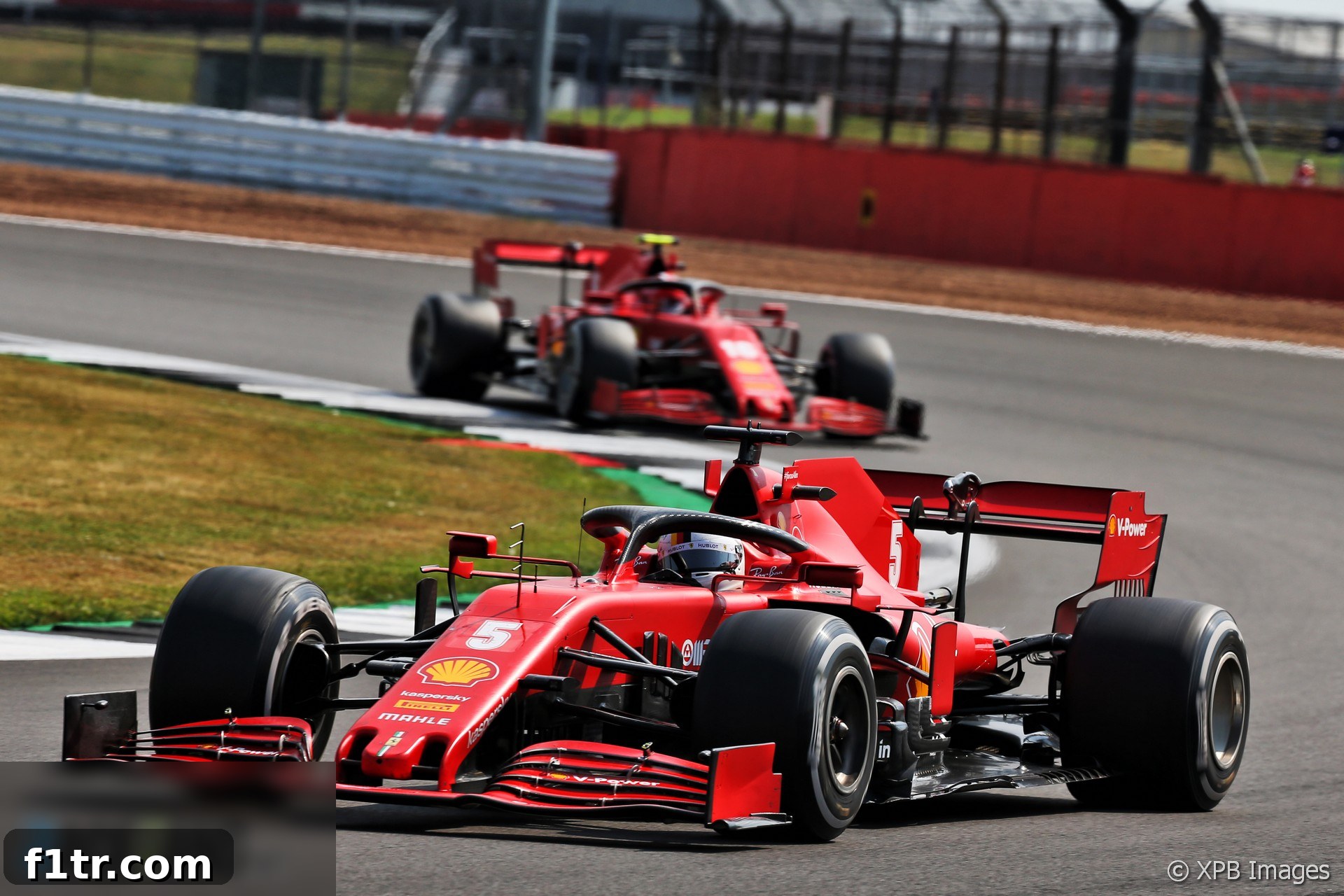
The 70th Anniversary Grand Prix at Silverstone presented a complex strategic puzzle for all Formula 1 teams, but perhaps none faced greater scrutiny than Ferrari. Following a dramatic race where Sebastian Vettel endured a challenging two-stop strategy that left him out of the points, while his teammate Charles Leclerc remarkably secured a fourth-place finish on a single stop, questions inevitably arose. Ferrari team principal Mattia Binotto was quick to deny allegations of ‘sacrificing’ Vettel’s race to aid Leclerc, a claim that fueled debate across the F1 paddock and among fans.
This strategic divergence highlighted the often-opaque world of Formula 1 pit lane decisions, particularly for a team like Ferrari, which was navigating a difficult 2020 season fraught with performance issues and internal pressures. The contrasting fortunes of their two drivers at Silverstone brought Ferrari’s decision-making firmly into the spotlight, leading to a detailed post-race analysis of what unfolded on track and why.
The Unique Challenges of the 70th Anniversary Grand Prix
The 70th Anniversary Grand Prix, held just one week after the British Grand Prix at the same circuit, presented a distinct set of challenges, primarily due to Pirelli’s tyre compound choices and the prevailing weather conditions. Pirelli opted for softer compounds for the second Silverstone event, aiming to spice up the racing and encourage more varied strategies. However, this decision, combined with high track temperatures, resulted in exacerbated tyre degradation across the grid. Teams grappled with blistering and wear, making tyre management an absolutely critical factor in determining race outcomes. The softer tyres meant that a one-stop strategy, while potentially rewarding, seemed an incredibly risky proposition for most, as it would demand exceptional car balance and driver precision to make the tyres last for an extended stint.
For Ferrari, whose SF1000 chassis was already struggling with overall performance and often exacerbated tyre wear, these conditions were particularly daunting. The team needed to find a delicate balance between pushing for pace and preserving their tyres, a conundrum that ultimately led to the controversial decisions seen on race day. The strategic landscape was constantly evolving, with teams monitoring rivals, calculating degradation rates, and making split-second choices that could make or break a driver’s race.
Sebastian Vettel’s Strategy: A Tale of Two Stops and Mounting Frustration
Sebastian Vettel’s race at the 70th Anniversary Grand Prix quickly became a symbol of his challenging 2020 season. Starting 11th on the grid, Vettel’s initial stint was relatively uneventful, but his strategic path soon diverged sharply from his teammate’s. Vettel made his first pit stop four laps after Charles Leclerc, opting for hard tyres. However, the subsequent decision to bring him in for a second stop after just 11 laps on the fresh hard rubber was met with widespread surprise and, crucially, visible frustration from the driver himself. This move saw him switch to a set of medium tyres for the final stint of the race.
The immediate consequence of this second stop was that Vettel rejoined the track deep in traffic, battling cars that were either on older tyres but positioned ahead or benefiting from a more streamlined one-stop strategy. Prior to his second pit stop, Vettel was running 10th, behind drivers like Esteban Ocon (who successfully completed a one-stop race) and Carlos Sainz Jnr. The additional stop effectively relegated him out of contention for points, a bitter pill to swallow for a driver of his caliber. On the team radio, Vettel did not mince words, expressing his displeasure and stating that the team had “messed up” his strategy. He felt that being stuck in traffic disguised any potential improvements the team had made to his car’s race pace since the previous weekend, preventing him from showcasing the SF1000’s true capabilities. His frustration was palpable, echoing a season-long struggle for consistency and competitive edge within the Ferrari garage.
Charles Leclerc’s Strategic Masterclass: The Audacious One-Stop
In stark contrast to Vettel’s race, Charles Leclerc delivered one of the most impressive strategic performances of the weekend. Before the race even began, Leclerc had conveyed his conviction to the Ferrari strategists that a one-stop strategy was feasible and worth the risk, despite the challenging tyre conditions. This foresight and confidence proved to be instrumental. Leclerc executed his single pit stop flawlessly, switching to the hard compound tyres early in the race and meticulously managing their degradation for the remainder of the laps.
His ability to preserve the tyres while maintaining a competitive pace was a testament to his exceptional driving skill and sensitivity to the car’s feedback. As other drivers struggled with tyre wear and were forced into multiple pit stops, Leclerc’s audacious one-stop strategy steadily propelled him up the order. He went on to finish fourth, a result that far exceeded expectations for Ferrari given their car’s performance deficits. This was not only the best result of any driver who completed the race with a single pit stop but also a significant morale boost for Leclerc and his side of the garage. It underscored his growing reputation as a driver capable of extracting every ounce of performance and strategic advantage from challenging situations, further solidifying his position as the future of Scuderia Ferrari.
Mattia Binotto’s Defense: Denying Sacrifice Amidst Strategic Fallout
In the aftermath of the race, Ferrari team principal Mattia Binotto faced the media, tasked with explaining the divergent strategies and addressing the accusations of favoritism or ‘sacrifice’. Binotto was adamant in his denial, stating unequivocally, “We were not sacrificing Seb.” His explanation centered on the idea that Vettel’s strategy was dictated by his specific race situation at the time, rather than any deliberate attempt to aid Leclerc’s race. Binotto suggested that, at the moment of the second pit stop decision, the team believed it “would have made no difference for him stopping a bit earlier or later.” This implies a belief that Vettel’s position was already compromised or that the alternative options would not have yielded a significantly better outcome for him.
However, Binotto’s comments also contained a subtle admission that suggested a degree of retrospective doubt within the team. He acknowledged, “I think that reviewing all the data, eventually by leaving Seb outside on track we may have left at least the one-stop strategy open to him as well, which we didn’t. It’s not a matter of ‘sacrificing’ or not.” This statement, while still denying intentional sacrifice, hinted that the team might have missed an opportunity for Vettel to also attempt a one-stop, a strategy that ultimately proved successful for Leclerc. Binotto reiterated Ferrari’s core principle, stating, “He always says that maximising the team’s points is the first priority. I think we tried to achieve that and not were trying to compromise anyone.” This explanation aimed to frame the decisions within the context of collective team benefit, even if the individual outcomes were vastly different for the two drivers.
Vettel’s Perspective: Hidden Pace and Lingering Discontent
Sebastian Vettel’s radio message during the race — “you messed up” — succinctly captured his deep frustration. Speaking to RaceFans after the event, Vettel elaborated on his feelings, emphasizing that his car felt noticeably better at the 70th Anniversary Grand Prix compared to the previous weekend’s British Grand Prix. “We worked hard in the weekend and the car felt a little bit better than last weekend,” he explained. “Maybe it didn’t show in the performance in qualifying but I think in the race we got more competitive.”
Vettel believed that the improved pace of the SF1000 was obscured by the strategic call that placed him in continuous traffic. “Last week if anything I was struggling to stay with the people. Today I was able to go faster but was still stuck,” he lamented. This sentiment underscored his belief that the team’s strategy had prevented him from showcasing the car’s true potential and his own ability to extract performance from it. His comments about the unexpected success of the one-stop strategy, “In the end we were able to do a one-stop strategy, which I think we didn’t believe we could pull off before the race on a softer tyre, one step overall, and a hotter track,” further highlighted the internal debate and the challenging nature of the weekend’s strategic choices. For Vettel, who was already navigating a difficult final season with Ferrari, such strategic missteps only added to a growing sense of discontent and reinforced the narrative of a team struggling to provide him with a competitive and consistent package.
Deeper Dive into Ferrari’s Strategic Philosophy and Team Dynamics
The Silverstone strategic controversy was not an isolated incident but rather a microcosm of Ferrari’s broader struggles during the 2020 Formula 1 season. The team consistently battled with a car that lacked aerodynamic efficiency and engine power, pushing them further down the pecking order than Scuderia Ferrari was accustomed to. In such challenging circumstances, flawless strategy becomes even more crucial, yet Ferrari often appeared to be on the back foot, making reactive rather than proactive decisions. The diverging fortunes of Vettel and Leclerc at Silverstone amplified questions about Ferrari’s strategic department, its communication protocols, and its ability to adapt quickly to changing race conditions.
Moreover, the incident highlighted the complex internal dynamics within the team. With Sebastian Vettel set to leave Ferrari at the end of the season and Charles Leclerc firmly established as the team’s long-term future, there was an underlying perception in some quarters that strategic decisions might inadvertently or deliberately favor the younger driver. While Mattia Binotto vehemently denied any such bias, the outcomes of races like the 70th Anniversary Grand Prix made it difficult for critics to entirely dismiss these concerns. The pressure on Binotto and his strategic team was immense, not only to maximize points but also to maintain team harmony and public confidence amidst a period of significant underperformance and transition.
The Aftermath and Lingering Questions
The 70th Anniversary Grand Prix left Ferrari with a mixed bag of emotions. While Charles Leclerc’s heroic fourth-place finish provided a much-needed morale boost and showcased his talent, Sebastian Vettel’s frustrating race underscored the team’s ongoing strategic challenges and the difficult relationship between driver and pit wall. The debate over whether Vettel’s strategy was genuinely his best option or if he was indeed ‘sacrificed’ for the team’s collective good, or even Leclerc’s singular success, continued long after the checkered flag fell. This race served as a stark reminder of the razor-thin margins in Formula 1, where a single strategic call can define a driver’s weekend, influencing not just their points tally but also their confidence and the team’s overall trajectory. As Ferrari continued its challenging 2020 campaign, lessons learned from Silverstone’s strategic quagmire would undoubtedly inform future decisions, hoping to avoid a repeat of the controversy and to find a clearer path towards consistent performance and cohesive team strategy.
2020 F1 season
- Grosjean to make F1 test return tomorrow for first time since Bahrain horror crash
- Pictures: Wrecked chassis from Grosjean’s Bahrain fireball crash to go on display
- Bottas vs Rosberg: Hamilton’s Mercedes team mates compared after 78 races each
- F1 revenues fell by $877 million in Covid-struck 2020 season
- Hamilton and Mercedes finally announce new deal for 2021 season
Browse all 2020 F1 season articles