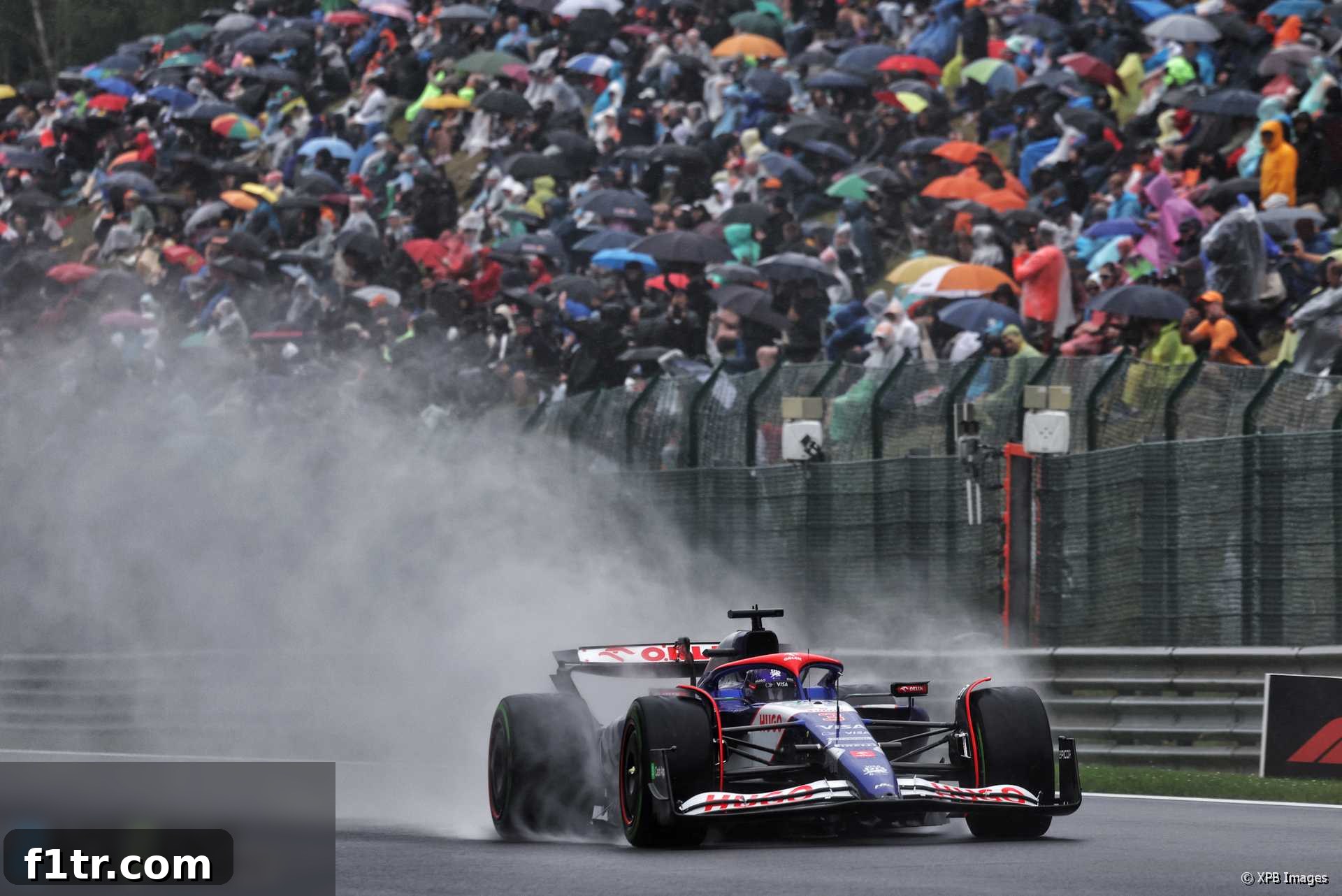
Belgian Grand Prix Qualifying: Drama, Frustration, and Unprecedented Penalties at Spa-Francorchamps
The qualifying sessions leading up to the Belgian Grand Prix at the legendary Spa-Francorchamps circuit rarely disappoint in terms of sheer drama and unexpected turns. This weekend proved to be no exception, delivering a grid that sets the stage for a potentially thrilling race day. From seasoned Formula 1 drivers grappling with strategic missteps and mechanical woes to an astonishing number of track limit infringements in the feeder series, the build-up to Sunday’s main event has been packed with critical talking points. Drivers and teams alike battled not only their rivals but also the notoriously capricious Ardennes weather, creating a tapestry of challenges and triumphs. This comprehensive roundup delves into the key events, candid reactions, and significant moments from a tumultuous Saturday, covering everything from driver frustrations and behind-the-scenes team challenges to pivotal developments across the broader motorsport spectrum.
Key Qualifying Highlights from Spa-Francorchamps
Ricciardo’s Disappointment: A Q2 Exit That Didn’t Reflect Pace
The qualifying session for the Belgian Grand Prix proved to be a challenging affair for Daniel Ricciardo, who expressed significant frustration with his 13th-place grid slot. The RB driver, known for his infectious optimism, couldn’t hide his disappointment after being eliminated in Q2, feeling that the team’s true pace warranted a much stronger showing. This sentiment was particularly acute given the promising performance the RB car had demonstrated during the preceding practice sessions at the iconic Spa-Francorchamps circuit, leading to higher expectations for the qualifying outcome.
Reflecting on the session, Ricciardo candidly stated, “I don’t love 13th. I do feel like we were better than that.” He elaborated on a crucial strategic decision made during Q2 that ultimately backfired. As light rain began to fall across parts of the circuit, the team opted to push for a representative lap time early, anticipating a worsening of track conditions. “It was a call we made at the time. It didn’t seem like a silly one, it just didn’t work out for us,” he explained. The strategy was clear: bank a competitive time before the rain potentially intensified, making the track slower and grip scarcer, a common gamble in changeable conditions.
During their initial Q2 run, Ricciardo believed they were comfortably within the top ten. When the first drops of rain appeared, the team’s intuition led them to improve their time slightly, gaining perhaps a tenth of a second. However, the capricious Spa weather had a different plan. The rain remained light enough, failing to develop into the heavier downpour they had anticipated. This allowed other competitors to make further improvements towards the session’s conclusion, as track conditions gradually improved despite the drizzle. Ricciardo and RB were already back in the garage, ultimately resulting in their elimination as others leapfrogged their time.
Despite the bitter pill of a Q2 exit, Ricciardo remained philosophical about the decision-making process. “I don’t argue with our train of thought up until that moment. If it rains heavier, then we look like the good guys,” he conceded, highlighting the fine margins and calculated risks inherent in Formula 1 qualifying. The Australian driver maintained a strong belief in the car’s underlying performance, asserting, “I’m definitely happy with the pace we had. I felt like every time we set a representative time, we were a top ten car. We didn’t get rewarded with it today.” He now sets his sights on making amends in Sunday’s race, where his renowned race craft and the car’s potential will hopefully shine through, allowing him to climb through the field and score valuable points.
Magnussen Battles Mechanical Gremlins: Rear Suspension Woes for Haas
Adding another layer of drama to an already eventful qualifying session, Haas driver Kevin Magnussen faced an unexpected and significant challenge, ultimately being knocked out of the session earlier than anticipated. Team Principal Ayao Komatsu shed light on Magnussen’s struggles, revealing that the Dane was contending with a substantial rear suspension problem throughout his qualifying runs. This critical mechanical issue undoubtedly hampered his performance, as evidenced by his lap times which placed him behind his teammate, Nico Hulkenberg, raising concerns about the car’s competitiveness and reliability.
Komatsu confirmed the technical setback, stating, “Kevin’s car looks like it had a physical issue with the rear suspension which we can see on the data.” Such a problem would severely compromise the car’s handling, stability, and ability to generate optimal grip, especially around the demanding high-speed corners and undulating terrain of Spa-Francorchamps. A compromised rear suspension can make a car unpredictable, difficult to balance, and extremely challenging to drive on the limit, which is precisely what’s required in a Formula 1 qualifying session to extract maximum performance. This issue would have made it nearly impossible for Magnussen to push the car to its absolute limits, explaining his relative lack of pace.
The Haas team immediately commenced intensive investigations into the precise nature and cause of the suspension failure, prioritizing a swift diagnosis and repair. Despite the immediate setback and its impact on Magnussen’s grid position, Komatsu expressed confidence in the team’s ability to rectify the situation ahead of Sunday’s Grand Prix. “So we’re now looking into that, but I’m sure we can put that one right tonight,” he assured. This quick turnaround is crucial for Magnussen, who will be eager to recover positions and showcase the Haas car’s true potential in the race, assuming the repairs are successful and do not incur any further grid penalties. Mechanical issues in qualifying are always frustrating, but the team’s swift response underscores their unwavering commitment to providing both drivers with competitive and reliable machinery for race day.
Epidemic of Track Limit Penalties in Formula 3: 101 Infringements at Spa
The junior categories often provide some of the most intense and unpredictable racing on the Grand Prix support bill, but the Formula 3 sprint race at Spa-Francorchamps was dominated by an unprecedented number of track limit penalties. The stewards reported an astonishing total of 101 track limit strikes throughout the 12-lap race, highlighting both the relentless enforcement of the rules and the fine margins drivers operate within at this challenging circuit. This deluge of penalties significantly reshaped the final classifications and underscored the difficulties even highly skilled young drivers face in maintaining absolute precision, especially on a track where pushing the boundaries can offer a tangible, albeit illegal, advantage.
Leading the list of offenders was Trident Formula 3 driver Sami Meguetounif, who incurred a staggering 30 seconds of time penalties. The stewards determined that Meguetounif had exceeded track limits an astounding ten times during the short 12-lap race. While he initially crossed the finish line in a respectable sixth position, the accumulation of these penalties saw him demoted dramatically to 27th place in the final official classification. This severe penalty served as a stark reminder of the zero-tolerance policy regarding track limits, especially at circuits where drivers are tempted to push wide to gain even a fractional advantage in lap time, illustrating the critical importance of staying within the white lines.
Meguetounif was far from alone in his struggles; he was one of 11 drivers who received time penalties for multiple track limit infringements. Another prominent case was Mari Boya, who was handed 25 seconds of penalties for eight separate violations, making him the second most prolific offender. The sheer volume of these penalties raises questions about circuit design, driver discipline, and the consistency of officiating, especially when it fundamentally alters race results that drivers fought hard for on track. While vital for fair competition and maintaining the integrity of racing, the impact of such widespread penalties often leaves fans and competitors alike debating the balance between strict rule enforcement and the spectacle of racing. The F3 paddock will undoubtedly be reviewing data and driver techniques to avoid a repeat performance in future races, emphasizing the critical importance of staying within the white lines at every corner of every lap.
Further Motorsport News & Insights
Beyond the immediate action at Spa, the wider world of Formula 1 and single-seater motorsport continues to generate fascinating discussions and headlines. Here’s a look at some of the notable stories making waves:
Christian Horner Questions McLaren’s Hungarian GP Strategy Regarding Lando Norris
Red Bull Team Principal Christian Horner has stirred debate by suggesting that McLaren should have allowed Lando Norris to win the Hungarian Grand Prix. Horner’s comments stem from McLaren’s pit strategy during that race, where they executed a two-lap undercut to get Norris ahead of his teammate, Oscar Piastri. While this tactical move successfully elevated Norris into a stronger position, Horner highlighted the potentially awkward and challenging situation it creates for a driver if the team then demands they cede a position back to a teammate. He argued that in a championship fight where every single point is critical, especially when Lando Norris is McLaren’s leading contender and the closest challenger to the championship leader, a team might need to “put their eggs in one basket” at some point. This perspective from a rival team principal opens up a broader conversation about team orders, driver hierarchy, and the delicate balance between internal competition and championship aspirations, particularly as the season progresses and the stakes get higher for all involved in the battle for constructors’ and drivers’ titles.
TikTok Influencers Tapped to Promote Las Vegas, Including F1 Event
In a fascinating intersection of sport, tourism, and modern marketing, recent reports from the Las Vegas Review Journal reveal that social media influencers, primarily TikTok stars, are receiving taxpayer money and complimentary travel to promote Las Vegas. These influencers are contracted to create engaging content, including Instagram posts and TikTok videos, utilizing specific hashtags to boost the city’s image and attract more tourists. The incentives provided extend significantly beyond standard flights and hotel stays, occasionally including coveted Super Bowl tickets and thrilling helicopter rides, showcasing the high value placed on their promotional reach. Notably, agency records indicate that three influencers and two representatives from the marketing agency Ykone were also granted LVCVA-purchased tickets to the inaugural Las Vegas Formula 1 racing event last November. This strategic and substantial use of digital tastemakers underscores the growing importance of influencer marketing in reaching global audiences and solidifying Las Vegas’s status as a premier entertainment and sporting destination, particularly with the high-profile F1 Grand Prix now a permanent and highly anticipated fixture on its vibrant calendar.
Tramnitz Reflects on Missing F3 Podium in Challenging Spa Conditions
Tim Tramnitz, teammate to Oliver Goethe in Formula 3, expressed his palpable disappointment at narrowly missing out on a podium finish during a fiercely contested race at Spa. Tramnitz described the conditions, particularly in the iconic Eau Rouge, as exceptionally difficult due to the track being still somewhat wet and greasy. While the slower La Source corner presented no major issues, Eau Rouge proved to be a critical and unforgiving factor, making it incredibly tough to follow closely behind other cars without losing significant momentum or risking a dangerous incident. He noted that maintaining a slight distance in Eau Rouge sometimes offered an unexpected advantage in terms of grip and stability. Tramnitz vividly recounted “four or five moments” where he felt dangerously close to hitting the wall, emphasizing just how “on the limit” he was on every single lap. His candid reflection highlights the immense skill, bravery, and precision required to navigate such a legendary circuit in changeable conditions, especially for young drivers pushing for their first taste of silverware in the intensely competitive F3 championship ladder.
We are committed to crediting original sources for all our news. If you have any tips for links related to single-seater motorsport, please reach out to us via our contact form.
Social Media Pulse from the Belgian Grand Prix
The spirit of the Belgian Grand Prix weekend, encompassing both the thrilling on-track action and the picturesque setting of Spa-Francorchamps, was vibrantly captured across various social media platforms. Here’s a glimpse into some notable posts from X (formerly Twitter) and other channels that caught the attention of fans and pundits alike:
- McLaren’s Hopes for Dry Conditions: The McLaren F1 Team shared a driver’s quote expressing optimism for Sunday’s race: “Hopefully in the dry conditions things come back our way a little bit.” This post, accompanied by the #BelgianGP hashtag, subtly hinted at the team’s struggles in the mixed and unpredictable conditions of qualifying and their anticipation for a more favorable dry track on race day, where their car’s inherent pace might be better showcased and utilized to gain positions.
- Stake F1 Team KICK Sauber’s Gratitude: The Stake F1 Team KICK Sauber posted a heartfelt thank you to their factory team trackside, highlighting the “special” feeling of having the entire squad present in Belgium. Their message extended gratitude for “their work on and off the track,” underscoring the collective effort, tireless dedication, and countless hours that go into every Grand Prix weekend from every member of the team. This post, tagged #BelgianGP, celebrated team unity and the crucial behind-the-scenes contributions.
- Spa’s Breathtaking Sunset: Motorsport commentator Sean Kelly, known widely as @virtualstatman on social media, captivated followers by sharing a stunning video of an “extraordinary sunset over Spa-Francorchamps.” Credited to kathrynn.444 on Instagram, the post served as a beautiful reminder of the natural splendor surrounding the legendary circuit, which is often overshadowed by the intense competitive fervor. It offered a moment of serene beauty amidst the high-octane racing weekend, widely appreciated by fans under the #BelgianGP hashtag.
- McLaren’s Appreciation for Fans: In another thoughtful post, McLaren extended their heartfelt appreciation to the dedicated fans who braved the often-inclement Belgian weather during the day’s events. The team’s message, “To all the fans who braved the rain today, we appreciate you. 🧡 #BelgianGP,” resonated deeply with the motorsport community, acknowledging the unwavering support and passion of spectators who endure challenging weather conditions to witness the unparalleled spectacle of Formula 1 live at the track.
- For those looking to stay even more connected and follow all the action, our F1 Twitter Directory offers an extensive list of official accounts to follow, ensuring you don’t miss any critical updates or exciting content from your favorite teams and drivers.
Fan Perspective: The ‘Comment of the Day’ on Sergio Perez’s Qualifying
While Sergio Perez ultimately secured a commendable second-place starting position for the Belgian Grand Prix, a vocal segment of fans remains unconvinced by his overall qualifying performance. Our “Comment of the Day” comes from Ben Rowe, who offers a critical and insightful assessment of Perez’s session, despite the seemingly strong grid slot, highlighting a gap between potential and execution.
Ben Rowe highlights the razor-thin margins that separated Perez from an early exit, particularly emphasizing that the Mexican driver was “0.003 seconds away from being knocked out in what was clearly the best car in this session.” This observation underscores the elevated expectation for a Red Bull driver, especially one in the championship-leading machinery, to consistently outperform competitors and avoid such close calls. Rowe argues that, given the car’s inherent superiority and Max Verstappen’s dominant performance, Perez “should have been able to claim P2 and gain pole from it,” implying that a second-place finish was perhaps an underachievement, and pole position should have been well within reach.
Furthermore, Rowe points out that Perez’s significant time gap of 0.6 seconds to his teammate Max Verstappen, even considering Verstappen might have been running with different or more optimized upgrades, is still a considerable margin in Formula 1 terms. The commenter also brought attention to Perez’s perilous journey through earlier qualifying stages. “He was incredibly lucky to even get through to Q3,” Rowe asserts, elaborating that Perez was “right in the drop zone in Q1 until the last moment.” This precarious situation highlights the potential for disaster, suggesting that a yellow flag in the wrong sector could have prematurely ended his entire qualifying effort. Rowe concludes that Perez “took his time to set good times in the sessions,” indicating a perceived lack of immediate pace, confidence, or perhaps an inability to extract peak performance when it mattered most, which one would expect from a driver at the pinnacle of motorsport in a dominant car. This fan perspective adds another layer to the analysis of qualifying, showcasing how results can be interpreted differently based on underlying performance expectations and the context of the machinery involved.
Birthday Shout-Outs!
A very happy birthday to all celebrating today! Special shout-outs go to Big Galah, Solo, Holly, and Bill Niehoff from the entire motorsport community. We hope you have a fantastic day filled with joy and perhaps some thrilling racing to enjoy as part of your celebrations!
Motorsport History: A Look Back ‘On This Day’
Exactly five years ago today, motorsport fans were treated to one of the most memorable and chaotic races of the 2019 Formula 1 season at the Hockenheimring. On this historic day, persistent rain created incredibly challenging and unpredictable conditions throughout the Grand Prix, leading to a thrilling spectacle that ultimately saw Red Bull Racing’s Max Verstappen emerge victorious after a masterful drive. The race was a truly chaotic affair, marked by numerous incidents, multiple safety car periods, and daring strategic gambles from various teams, keeping everyone on the edge of their seats.
Mercedes, celebrating their 125 years in motorsport and their 200th Grand Prix start, ran a special retro livery, which ironically coincided with one of their most difficult and error-prone races in recent memory. Despite starting from pole position, Valtteri Bottas crashed out of contention, and Lewis Hamilton, who also endured his share of incidents and costly mistakes, finished outside the points after a challenging recovery drive. Verstappen, however, remained remarkably calm and composed amidst the spray and constantly changing track conditions, delivering a masterful performance that showcased his exceptional wet-weather driving skills and race management. He navigated the treacherous circuit with precision, even overcoming a spin himself, to take a dominant and well-deserved win, further cementing his reputation as a future world champion. The 2019 German Grand Prix remains a classic example of how unpredictable weather can turn a seemingly straightforward race into an unforgettable spectacle of resilience, adaptation, and sheer driving talent.
The events preceding the Belgian Grand Prix paint a vivid picture of the relentless challenges and unpredictable nature of top-tier motorsport. From the strategic gambles that impact qualifying outcomes to the critical mechanical failures that can derail a weekend, and the stringent enforcement of rules that reshape race results, every aspect contributes to the high-stakes drama that captivates millions. As the teams and drivers prepare for Sunday’s main event at the iconic Spa-Francorchamps, these compelling narratives set the stage for what promises to be another thrilling chapter in the Formula 1 season, where resilience, adaptation, and sheer driving talent will be put to the ultimate test in pursuit of victory and championship points.