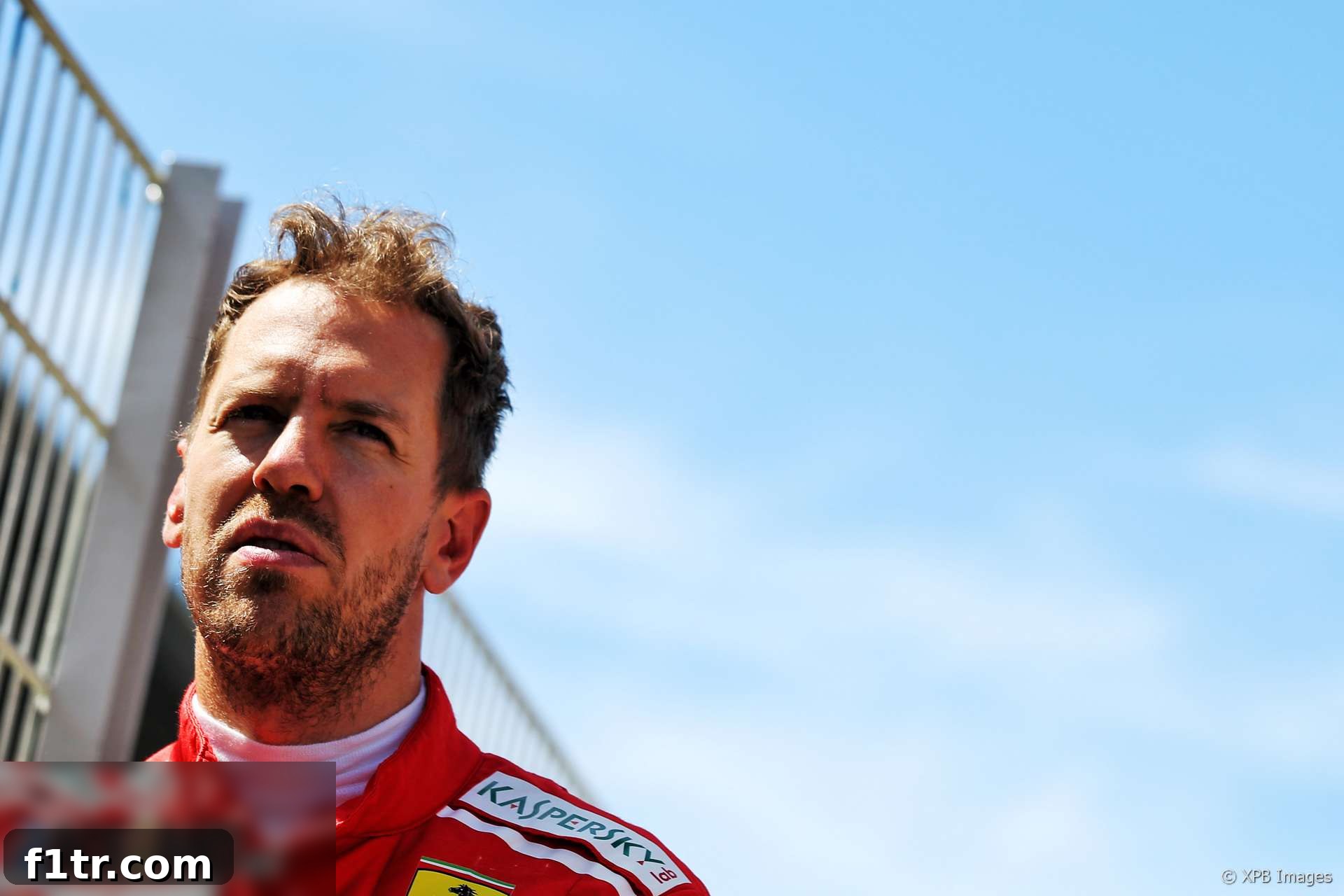
In the high-stakes world of Formula 1, where milliseconds define victory and defeat, every component of a racing car is scrutinized for performance. Among these, tires play a uniquely critical role, acting as the sole point of contact between the car and the track. Their management, degradation, and performance characteristics are often the decisive factors in a race. The 2018 Spanish Grand Prix brought this reality into sharp focus, particularly for Sebastian Vettel and the Ferrari team, who faced an unexpected challenge with Pirelli’s newly introduced thinner tire compounds.
The lead-up to the Spanish Grand Prix was steeped in controversy regarding these revised Pirelli tires. Pirelli, the sole tire supplier for Formula 1, had decided to introduce a new specification of tires that were 0.4 millimeters thinner than the versions used in pre-season testing and the opening races. This seemingly minor alteration was designed to combat issues of blistering and overheating that some teams, notably Mercedes and Red Bull, had experienced during testing. However, the decision was not universally welcomed. Sebastian Vettel, a four-time world champion and a key figure in Ferrari’s championship challenge, was vocal in his apprehension.
Vettel initially voiced concerns that this change, implemented mid-season, could unfairly disadvantage Ferrari. His public statements suggested that the revised tires were a direct response to problems encountered by rival teams, implying a potential shift in the competitive landscape that could work against Ferrari’s meticulously designed SF71H chassis. There was a palpable sense of unease within the Ferrari camp, as the team had seemingly adapted well to the original tire specifications. The fear was that the thinner tires, with their altered thermal properties and degradation rates, might not suit the Ferrari as well as they did other cars, thereby hindering their championship aspirations.
Advert | Become a Supporter & go ad-free
The Spanish Grand Prix itself served to amplify these concerns. Ferrari, particularly Vettel, struggled significantly with tire management throughout the race weekend. While other teams appeared to cope better with the new compounds, Ferrari experienced higher degradation rates and found it challenging to maintain optimal tire performance for extended stints. This led to a less-than-stellar performance for the Scuderia, fueling speculation that Vettel’s initial fears about the thinner tires proving to be a disadvantage were indeed founded.
However, the narrative took a surprising turn following the race. Formula 1’s regulations allow for in-season testing at specific circuits, and Barcelona was the venue for such a test immediately after the Grand Prix. This provided a crucial opportunity for teams, including Ferrari, to gather invaluable data and thoroughly evaluate the performance characteristics of both the original and the new thinner tire compounds in a controlled environment. For Sebastian Vettel, this test became a pivotal moment for introspection and a candid re-evaluation of his earlier assumptions.
During the post-Spanish Grand Prix testing session, Vettel had the unique chance to directly compare the performance of his Ferrari on both the original and the newly introduced thinner tires. The data gathered during this intensive session painted a clear, and somewhat unexpected, picture. Speaking after the test, Vettel made a remarkably candid admission that challenged his prior assertions. He openly stated that, based on the comprehensive data collected, Ferrari would have actually been “even worse off” had they raced on the original, thicker tires during the Grand Prix. This statement was a significant pivot from his initial complaints and underscored the complexity of tire dynamics in modern F1.
Vettel’s admission was not merely an acknowledgment of error; it was a testament to his commitment to understanding and resolving performance issues. He clarified, “Obviously normally you don’t get chance to revisit these kinds of decision that are made. Now with the data we had today, I think the result is if we had the normal tyres on Sunday we’d be even worse off. So I think it was the correct call and it was our fault not to have the same tyre wear or life as other people.” This statement shifted the blame squarely from Pirelli’s tire design to Ferrari’s own inability to effectively manage the tires, irrespective of their thickness. It highlighted that the core issue lay within Ferrari’s car setup, balance, or operational strategies, rather than an inherent disadvantage imposed by the new tire specifications.
This revelation provided critical insights into Ferrari’s challenges during the 2018 Spanish Grand Prix. The problem was not the tires themselves being “bad” for Ferrari, but rather the team’s difficulty in extracting optimal performance and longevity from them. F1 tires are incredibly sensitive to factors such as track temperature, aerodynamic load, suspension geometry, and even driver input. A subtle change in tire construction, like a 0.4mm reduction in thickness, can significantly alter how the tire behaves under these various stresses. Ferrari’s struggle suggested that their car’s setup, which might have been optimized for the thicker tires, was not effectively adapted to the revised compounds, leading to accelerated wear and reduced performance.
The timing of the post-race test proved to be incredibly fortuitous for Ferrari. Vettel emphasized its importance, stating, “It’s good to have the test to be honest to be able to compare. I think we have some idea and now it’s up to us to turn those ideas into reality.” The test allowed the team to pinpoint the root causes of their struggles, providing them with tangible data and insights that would have been impossible to acquire during a race weekend. It offered a rare opportunity for direct comparison, enabling engineers to correlate track performance with specific tire behaviors and car settings.
Vettel further elaborated on the team’s predicament and the value of the testing session: “As I said it was quite good in terms of timing. It was a poor weekend for us. We were not quite, I think more than not quick enough, we were obviously struggling to make the tyres last. Those two things are linked. But it was good to have the possibility to revisit and now as I said it’s up to us to take action.” This clearly articulated the intertwined nature of raw pace and tire longevity – a car cannot be truly fast if its tires degrade too quickly, forcing the driver to manage pace or make additional pit stops. The test provided the “possibility to revisit” their approach and formulate actionable strategies for improvement.
The lessons learned from the Spanish Grand Prix and the subsequent test were invaluable for Ferrari’s 2018 championship campaign. It underscored the relentless pursuit of perfection required in Formula 1 and the need for continuous adaptation. Ferrari now had a clearer understanding that their struggles were internal, demanding a focused effort on car setup, aerodynamic tuning, and potentially even refining driving styles to better suit the characteristics of the thinner Pirelli tires. This admission from Vettel and the insights gained from testing served as a critical turning point, allowing the team to recalibrate their efforts and aim for improved performance in the races that followed.
Ultimately, the saga of the thinner Pirelli tires at the 2018 Spanish Grand Prix, capped by Sebastian Vettel’s honest self-assessment, highlighted several enduring truths about Formula 1. It demonstrated the immense impact of tire management on race outcomes, the importance of impartial data analysis over initial assumptions, and the crucial role of in-season testing for development and problem-solving. More importantly, it showcased the leadership of a driver willing to take responsibility and guide his team towards a deeper understanding of their performance challenges, proving that even seemingly minor changes in equipment can trigger profound strategic shifts within the pinnacle of motorsport.
Advert | Become a RaceFans supporter and go ad-free
2018 F1 season
- F1 feared “death knell” for Drive to Survive after Ferrari and Mercedes snub
- McLaren staff told us we were “totally crazy” to take Honda engines in 2018 – Tost
- ‘It doesn’t matter if we start last’: How Red Bull’s junior team aided Honda’s leap forward
- Honda’s jet division helped F1 engineers solve power unit problem
- McLaren Racing losses rise after Honda split
Browse all 2018 F1 season articles