The dawn of the 2026 Formula 1 season brings with it a wave of revolutionary technical regulations, poised to dramatically reshape the sport. While these changes aim to foster closer racing and innovation, they have also ignited an urgent debate surrounding driver safety. The new regulations, particularly concerning power units and aerodynamics, have inadvertently led to scenarios where cars exhibit vastly different speeds at various points on track, resulting in alarmingly high closing speeds between competitors. This phenomenon, which has already manifested in concerning incidents, compels F1 to ask a critical question: Is merely adjusting the cars enough, or does the sport need to embrace a more comprehensive approach, encompassing changes to track layouts and even the fundamental guidelines for racing conduct?
Historically, Formula 1 has demonstrated a proactive stance on safety, often responding to critical incidents by implementing significant modifications not only to vehicle design but also to circuit infrastructure and racing protocols. The lessons learned from past tragedies and near-misses have invariably driven advancements. However, the unique challenges presented by the 2026 technical rules demand an equally inventive and decisive response. As drivers articulate their concerns regarding the safety implications of these extreme speed differentials, particularly after high-profile incidents like Oliver Bearman’s crash at Suzuka, the sport’s governing bodies are faced with a pivotal decision: how to effectively mitigate these emergent risks without stifling the spectacle or character of Formula 1.
Advert | Become a Supporter & go ad-free
The Unintended Consequences of F1’s 2026 Regulations
The core of the current safety conundrum lies within the intricate technical regulations for 2026. These rules are designed to balance power and efficiency, placing a greater emphasis on electrical energy recovery and management. The revised power unit regulations, coupled with active aerodynamic elements, mean that cars can behave very differently depending on their energy deployment strategies. Drivers are now compelled to manage their energy regeneration throughout a lap, often leading to significant deceleration in unexpected sections of a circuit, where previously they would have been flat-out. This creates substantial speed deltas – sometimes as high as 50 kph – between cars that are either managing their energy or in full attack mode, making it incredibly difficult for following drivers to anticipate and react safely.
These pronounced speed variations are particularly problematic on circuits characterized by long straights and fast, flowing corners with fewer heavy braking zones. On such layouts, opportunities for energy regeneration are scarce, forcing drivers to lift and coast or brake earlier in corners they would typically take at much higher speeds. This energy management becomes a strategic game, but one with potentially perilous consequences when two cars on different strategies converge at high speed. The risk of rear-end collisions, or incidents where a following car unexpectedly closes on a slower one, is amplified, raising serious concerns about driver reaction times and the structural integrity of the cars in such impacts.
Option 1: Rethinking Circuit Design – A Return to Track Modifications?
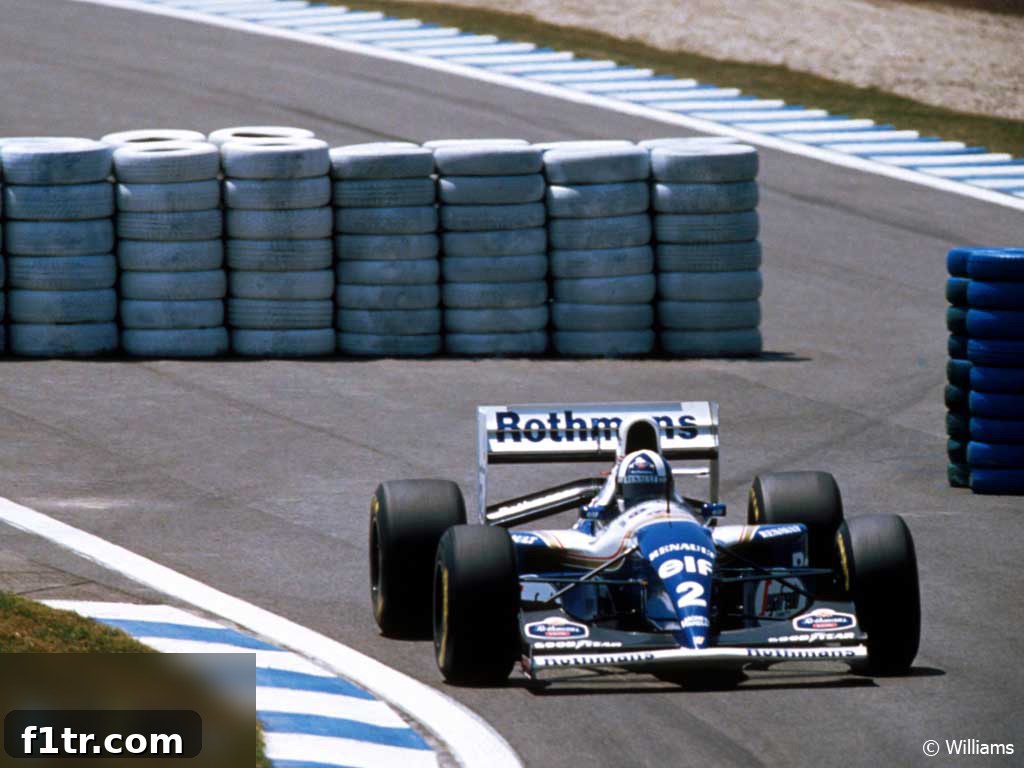
The current challenges evoke strong parallels with a critical period in Formula 1 history: the 1994 season. Following the tragic deaths of Ayrton Senna and Roland Ratzenberger at Imola, the sport underwent an unprecedented overhaul of safety standards, leading to immediate and significant changes to several circuits. Tracks like Imola itself saw its notoriously fast Tamburello corner transformed into a chicane, while Variante Bassa was also modified. The Circuit de Catalunya had a chicane added at the drivers’ insistence to slow cars before the final turn. Silverstone’s faster corners, including Abbey and Copse, were tightened, and changes were made at Spa-Francorchamps (Bus Stop chicane), Estoril, and Jerez. These were not minor tweaks but fundamental redesigns, undertaken mid-season, demonstrating the FIA’s unwavering commitment to safety, even at the cost of altering iconic layouts and increasing financial burdens on track operators.
Applying similar logic to the 2026 challenges, introducing chicanes or tightening certain high-speed corners could offer a dual benefit. Firstly, it would directly reduce speeds in the most perilous sections of a circuit, minimizing the energy of potential impacts and increasing reaction times for drivers. Secondly, it could create additional heavy braking zones, thereby providing more opportunities for the cars’ sophisticated power units to regenerate energy. This could alleviate the necessity for drivers to lift off significantly in other, less expected parts of the track, potentially standardizing speeds and reducing the dangerous closing speed deltas. For example, a well-placed chicane before a long straight could allow for greater energy recovery, ensuring cars can utilize full power for longer durations, thereby creating more consistent speed profiles.
However, this approach is not without its drawbacks. The practicalities of implementing such changes across multiple world-class circuits are immense, involving significant financial investment and complex logistical challenges. Track operators would understandably be reluctant to bear the costs for issues stemming from F1’s technical regulations. Furthermore, there’s the poignant argument about preserving the heritage and character of Formula 1’s most revered corners. Imagine altering the legendary Eau Rouge at Spa or the sweeping Becketts complex at Silverstone. While some argue that the new regulations already diminish the thrill of these corners due to energy management, a physical chicane could fundamentally change their essence, drawing criticism from fans and purists who value these iconic sections of racing history.
Advert | Become a RaceFans supporter andgo ad-free
Option 2: Refining Driving Standards and Sporting Regulations
Beyond physical track modifications, the focus shifts to the human element and the rules that govern driver behavior. The incident involving Oliver Bearman and Franco Colapinto at Suzuka serves as a compelling case study. While Haas team principal Ayao Komatsu initially absolved Colapinto of blame, and the stewards opted against an investigation, Bearman himself voiced a different perspective. He highlighted post-incident discussions among drivers regarding the perils of the new, extreme speed differentials and suggested Colapinto’s defensive maneuver had exacerbated the danger. Bearman recounted that Colapinto had not only dropped a gear earlier than usual but also moved further away from the conventional racing line, seemingly to defend his position aggressively.
Bearman articulated the critical difference: “Franco moved across in front of me to defend his position. Last year [it] would have been absolutely on the limit, but probably okay, with just 5 or 10 kph speed delta. But with 50 kph, he did not leave me enough space and I had to avoid a much, much bigger crash, basically.” This testimony underscores the new reality. What might have been considered a legitimate, albeit aggressive, defensive move in previous eras becomes a potentially catastrophic hazard with the amplified speed deltas of the 2026 regulations. The stewards’ decision not to investigate this incident, arguably, sets a precedent, implying that such maneuvers are permissible. This raises a crucial dilemma: Should the onus primarily be on the attacking driver to anticipate and navigate these extreme defensive moves, or does allowing drivers to deviate significantly from the racing line for defense in high-speed zones invite an unacceptably high risk of dangerous, potentially aerial crashes?
Therefore, a compelling argument can be made for reviewing and potentially revising the sporting regulations and driving standards guidelines. This could involve introducing clearer directives on what constitutes a safe defensive move under conditions of high closing speeds. For instance, specific rules could prohibit significant deviations from the racing line in designated high-speed zones, or impose stricter penalties for movements that create unavoidable and dangerous situations for faster-approaching cars. The objective would not be to stifle aggressive racing or tactical defense but to ensure that such maneuvers are executed within a safety framework that accounts for the unique dynamics of the 2026 cars. Regular briefings for drivers and clearer communication from the FIA on expected standards would be crucial to adapt to this evolving landscape, preventing a tragic incident from becoming the catalyst for change.
Advert | Become a RaceFans supporter andgo ad-free
A Holistic Approach: Integrating Solutions for a Safer Future
In light of the complex and multi-faceted nature of the problem, a singular solution is unlikely to suffice. While the ideal scenario would involve F1’s technical regulations being refined to inherently mitigate these high closing speeds, the immediate and urgent reality demands broader consideration. To rely solely on car-based solutions might be to overlook crucial opportunities for enhancing safety through other proven methods. The current state of racing, marked by these unpredictable speed differentials, has already drawn criticism for potentially diminishing the quality of the on-track spectacle and altering the character of traditionally thrilling corners. If the new power units already compromise the experience of sections like Eau Rouge, then exploring track modifications for safety might become a necessary, rather than undesirable, compromise.
The imperative is to prevent a foreseeable, avoidable aerial crash – an incident that could have devastating consequences for drivers and irrevocably tarnish the sport’s image. F1 has a proud, albeit sometimes painful, history of adapting for safety. This current challenge is another test of that resolve. A collaborative effort between the FIA, Formula 1 management, team principals, and drivers is essential to dissect the problem thoroughly and implement effective measures. This could involve an integrated strategy: minor adjustments to the technical rules where feasible, coupled with targeted track modifications in the most dangerous areas, and a renewed emphasis on clear, enforceable driving standards that reflect the realities of the 2026 machinery. The goal must be to strike a delicate balance: preserving the thrilling essence of Formula 1 while ensuring the absolute highest level of safety for its competitors.
Conclusion: The Imperative for Proactive Change
The 2026 Formula 1 regulations, while forward-thinking in their ambition, have unearthed a significant safety concern regarding high closing speeds. The discussions among drivers and the analysis of incidents like the one at Suzuka clearly illustrate the urgency of the matter. Relying solely on fixes to the technical regulations may not be enough, nor fast enough, to address an immediate and present danger. Instead, Formula 1 must seriously consider a multi-pronged approach: one that examines targeted changes to track layouts, particularly at sections identified as high-risk, and simultaneously reviews and potentially tightens the sporting regulations governing defensive driving. The lessons of 1994 serve as a stark reminder that when safety is at stake, radical measures are not just justified, but necessary. The sport’s leadership has a responsibility to act proactively, ensuring that the innovation and excitement of Formula 1 never come at the cost of driver well-being. Preventing a preventable tragedy must be the overriding priority, safeguarding the future of the pinnacle of motorsport.
Debates and polls
Join the conversation! What are your thoughts on the safety implications of the 2026 F1 regulations? Should the sport prioritize changes to track layouts, driving standards, or a combination of both? Share your perspective in the comments below.
- What must Formula 1 fix with its new rules – and what should it leave unchanged?
- ADUO: Do F1 teams who fall behind deserve to get help to catch up?
- F1 is considering doubling its sprint races. Do you want more or fewer?
- Will this be a fight or a rout? 20 questions for the 2026 Formula 1 season
- Which Formula 1 team has the best-looking car – and the worst – for the 2026 season?
Browse all debates and polls