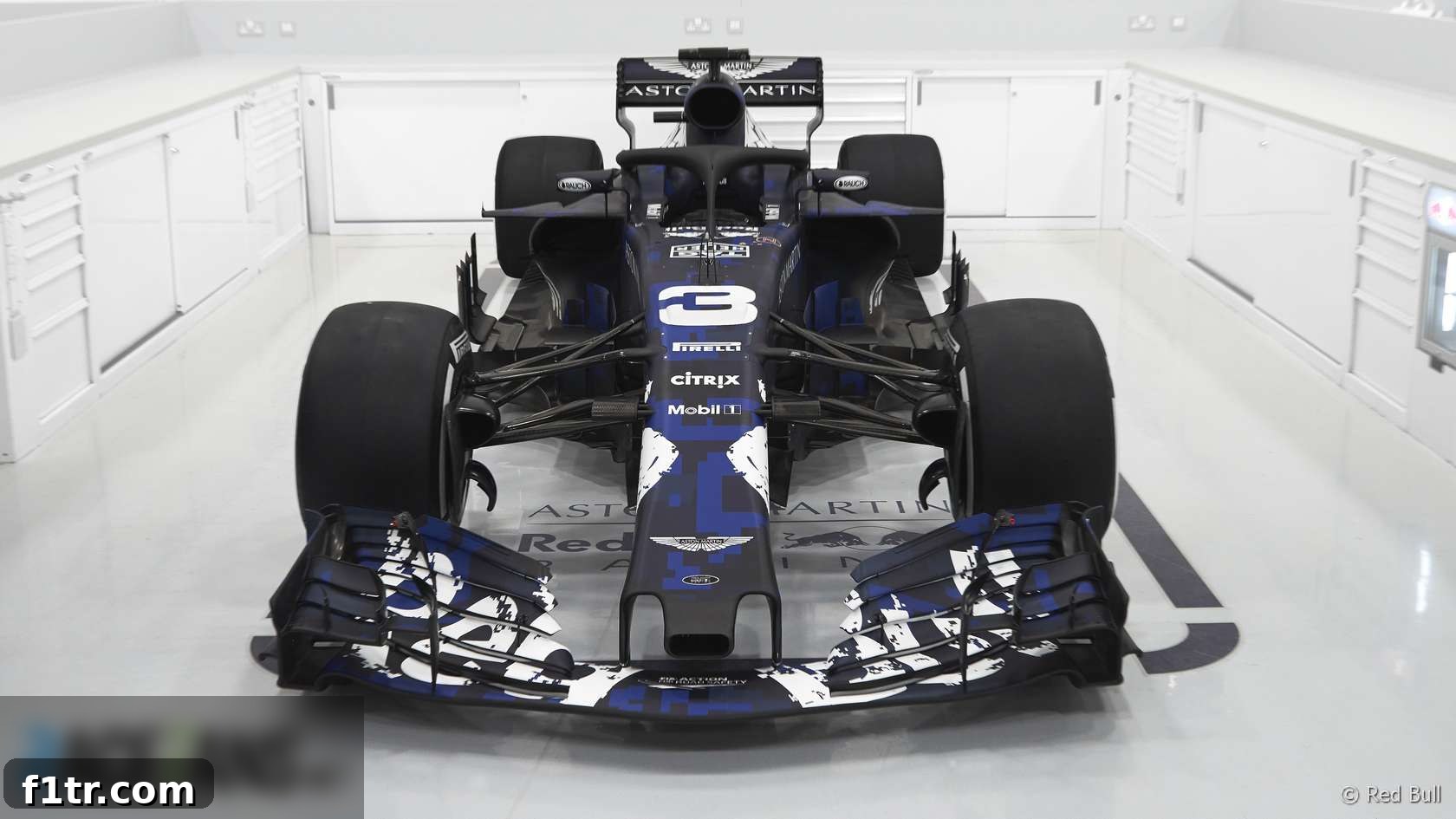
The unveiling of a new Formula 1 car is always a moment of intense anticipation, but Red Bull Racing’s approach to the RB14 launch marked a significant departure from their long-standing tradition. Historically, the Milton Keynes outfit has been famously guarded, often delaying their car reveals until the last possible moment and then offering only fleeting glimpses of their latest machinery. This strategy was designed to protect their innovative aerodynamic concepts from rival teams for as long as possible. However, the disappointing start to the previous season prompted a decisive change in strategy, signaling a new era of transparency and readiness from the team.
The RB14 broke cover much earlier than expected on a Monday, defying Red Bull’s usual secretive tendencies. Not only did the team present a more comprehensive view of the car, but they also took the unprecedented step of sending it for an immediate shakedown test at the iconic Silverstone circuit. This bold move allowed for initial system checks and data collection, a crucial advantage in the tight pre-season testing schedule. Despite this more open approach, the spirit of competition remained; the team meticulously ensured that certain design secrets, critical to their competitive edge, remained cleverly concealed, hinting at the layers of innovation yet to be fully revealed.
Adorned in a striking one-off test livery, the RB14 cut an impressive figure as it navigated the damp conditions of Silverstone. This temporary paint scheme, distinct from their eventual racing colours, served its purpose of generating buzz while perhaps subtly diverting attention from specific aerodynamic details. Beneath this fresh exterior, the initial signs were exceptionally promising. For a team that desperately needed to hit the ground running after a challenging start to the previous campaign, the RB14’s early appearance and successful shakedown test instilled a palpable sense of optimism, suggesting a renewed determination to reclaim their position at the forefront of the grid.
Innovative Aerodynamics: A Deep Dive into the RB14’s Design
As is customary with many Formula 1 car launches, Red Bull judiciously chose to retain the fundamental front wing and nose cone configuration from the conclusion of the previous season. This strategic decision allows teams to ‘keep their powder dry,’ saving more radical developments for later in the testing schedule or for the initial races. The retention of the distinctive S-duct, a sophisticated aerodynamic device designed to channel air through the nose cone and over the chassis, strongly suggests that this feature will remain a core component of the RB14’s aerodynamic package, likely undergoing further refinement and integration with subsequent updates throughout the season. This evolutionary approach to the front end highlights the intricate balance between stability and incremental performance gains in F1 design.
Front Suspension: Balancing Aerodynamics and Performance
The front suspension area of a Formula 1 car is a veritable battleground where mechanical performance and aerodynamic efficiency must coexist in harmony. Given the extremely tight packaging constraints and the overwhelming influence of airflow, the scope for groundbreaking mechanical innovation in suspension geometry is often limited. Designers are constantly challenged to extract maximum performance from minimal space, making even minor tweaks significant. This inherent restriction means that radical, disruptive changes to the basic suspension layout are rare, with most innovations driven by the need to optimize aerodynamic flow rather than purely mechanical grip.
Indeed, Red Bull has a history of pioneering innovative suspension concepts, notably being one of the first teams to reintroduce the pull-rod rear suspension configuration for its aerodynamic benefits. The overarching principle of effectively controlling the car’s dynamic behaviour under varying loads – during braking, acceleration, and cornering – is fundamentally well understood across the paddock. While the past few years have witnessed numerous clever tricks and subtle refinements in suspension design, almost all of these advancements have been meticulously engineered to yield aerodynamic gains, showcasing the paramount importance of airflow management in modern Formula 1.
In the preceding season, competitors like Mercedes and Toro Rosso pushed the boundaries with a distinctive ‘horned king pin’ arrangement for their upper wishbones. This ingenious design allowed them to orient the A-arm in a more horizontal plane and simultaneously raise the lower wishbone further below. The primary objective of this complex geometry was to strategically position the suspension elements out of the detrimental wake generated by the front wing, thereby creating a cleaner and more efficient path for airflow to travel towards crucial aerodynamic components like the bargeboards. This level of detail underscores the microscopic gains engineers strive for.
While Red Bull did not directly replicate this exact configuration on the RB14, their design philosophy clearly followed a similar trajectory, demonstrating an analogous “train of thought.” The inboard mounts, particularly for the upper wishbone, were brought conspicuously forward and protruded from the chassis. This deliberate manipulation of the mounting points is designed to sculpt and guide the airflow in an exceptionally tidy and efficient manner as it flows along the intricate contours of the car’s side, ultimately influencing the performance of the entire mid-section and rear end. Such nuanced aerodynamic sculpting is a hallmark of Adrian Newey’s design team.
Mid-Section Mastery: Sidepods and Airflow Management
The midriff of the RB14 showcases an evolution of ideas from the 2017 season, infused with a newfound aggression and aerodynamic sophistication. In line with trends observed across other newly launched cars, Red Bull has embraced the ‘low-slung impact spar’ design. This structural element is cleverly integrated to form the lower leading edge of the sidepod inlet, facilitating a remarkably aggressive undercut beneath, a crucial area for managing airflow along the car’s flanks. The impact spar extends outwards, providing support for redesigned deflector wings – a seemingly minor detail that became the subject of intriguing speculation due to an unusual photographic discrepancy.
The curious case of the disappearing deflector wing in one particular photograph raises pertinent questions. Was this a sensitive aerodynamic detail that Red Bull sought to protect, even briefly, from the prying eyes of competitors? Or was it a deliberate attempt to misdirect attention, a strategic smokescreen to draw focus away from other, perhaps more significant, hidden innovations on the car? Such mind games are an inherent part of Formula 1’s competitive landscape, where every visual cue is meticulously scrutinized and analyzed.
The sidepod inlet itself is positioned further back on the car and ingeniously sits almost perpendicularly to the oncoming airflow. This configuration is complemented by a substantial horizontal vane that hoods the opening, effectively circumscribing the angled inlet regulations. This creative interpretation of the rules allows Red Bull to achieve optimal airflow ingestion while adhering to the letter of the technical directives. The design reflects a profound understanding of how to maximize cooling efficiency and aerodynamic stability simultaneously, ensuring the engine performs optimally without compromising downforce generation.
The overall size and profile of the sidepods are arguably a testament to Red Bull’s distinctive design philosophy – a true “Red Bull bloodline” feature. They are remarkably compact, exhibiting a pronounced inward lean, and hug the car’s centerline with extreme tightness. This aggressive packaging is indicative of a relentless pursuit of aerodynamic efficiency, minimizing drag and maximizing the clean flow of air over and around the car. Such tight integration naturally sparks considerable interest regarding the internal packaging of crucial components, particularly the radiators. How Red Bull’s engineers managed to fit the necessary cooling apparatus within such a constrained volume, without sacrificing performance, will be a fascinating aspect to observe as the season progresses.
Halo Integration and Rear End PotentiaL
Moving further up the car, the airbox has undergone a significant redesign, primarily to effectively manage the complex aerodynamic wake generated by the mandatory Halo safety device. The Halo, while a vital safety innovation, presents considerable challenges for aerodynamicists, as it disrupts the airflow heading towards the engine’s air intake and the rear wing. Red Bull’s solution demonstrates their ability to quickly adapt and optimize airflow even around new, challenging structures. Furthermore, the engine cover features distinct split lines running along its spine. These lines are not merely aesthetic; they are a clear indication that the team has engineered different aerodynamic options for this critical area, which will be thoroughly evaluated and fine-tuned during the rigorous pre-season testing period. This modular approach allows for rapid adjustments to optimize cooling and airflow to the rear of the car depending on circuit characteristics and ambient conditions.
In contrast to the highly detailed and refined front and mid-sections, the rear of the RB14 appeared largely unchanged during its initial unveiling. While the intricate designs of the rear brake ducts are certainly of technical interest, suggesting attention to detail even in less conspicuous areas, it’s evident that the key, performance-defining features of the rear end were yet to receive their full development. Areas such as the diffuser, the rear wing main plane, and the beam wing are typically kept under wraps or introduced with significant updates later in testing or at the season’s opening races. This strategy allows teams to maximize development time and prevent competitors from gaining early insights into their most powerful aerodynamic assets. The promise of significant upgrades to the rear in the near future underscored the RB14’s potential for continuous evolution throughout the championship.
The RB14 launch, therefore, was not just about revealing a new car; it was a statement of intent from Red Bull Racing. It signaled a more open, yet still strategically secretive, approach to car development, driven by the imperative to start the season strongly. The detailed analysis of its visible components – from the cleverly managed front suspension and S-duct to the aggressively packaged sidepods and Halo-optimized airbox – points to a car brimming with aerodynamic intelligence. With the promise of further developments, particularly at the rear, the RB14 was positioned as a formidable contender, ready to challenge for victories and championship honours, demonstrating Red Bull’s unwavering commitment to innovation and speed.
Further Insights into F1 Technology
- McLaren, Red Bull and Ferrari Bring Rear Corner Updates to Imola
- Ferrari, McLaren and Red Bull Bring Upgrades Again for Saudi Arabian Grand Prix
- McLaren Introduce Major Floor Upgrade for Norris’ Car at Mexican Grand Prix
- McLaren, Mercedes and Red Bull Detail Upgrade Packages for United States GP
- Red Bull Remove Engine Cover ‘Cannons’ in Major RB20 Update – But They May Return
Browse All F1 Technology Articles
Go Ad-Free for Just £1 Per Month>> Find Out More and Sign Up